Covid-19

Is Brexit really to blame for fuel-rationing?

From our UK edition

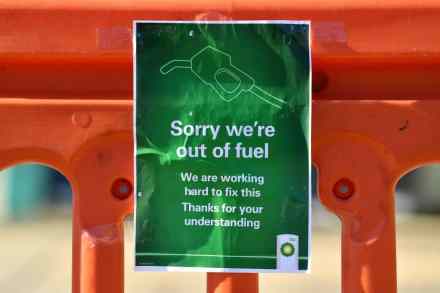
All current ills in the world, of course, can be blamed on two things: climate change and Brexit. So far, there are few people blaming the rationing of petrol and diesel on extreme weather-related to climate change (although give it time), but the usual suspects have certainly been quick out of the blocks to blame it all on Brexit. Lord Adonis, for example, has claimed:  'Brexit is now leading to fuel-rationing' BP has blamed its inability to keep petrol stations stocked on a shortage of lorry-drivers, but can that really be blamed on Brexit?  In July, the Road Haulage Association (RHA) published a survey of 615 haulage firms as to what they thought was the cause of the then already-developing driver shortage.
Government scraps mandatory vaccine passports

From our UK edition

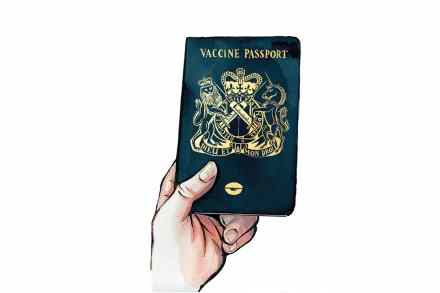
On BBC One’s Andrew Marr show Sajid Javid confirmed that plans for domestic vaccine passports in England were on the way out, even before they were formally brought in: ‘We should keep it in reserve,’ he said of the government’s plans to link vaccine status to entry into nightclubs, but ‘I’m pleased to say we will not be going ahead with plans for vaccine passports.’ Vaccine passports have been a roller-coaster policy for months now, with claims made by members of the Cabinet at the start of the year that they weren’t being considered: that nothing so ‘discriminatory’, in the words of vaccine minister Nadhim Zahawi, would be implemented.

Do vaccines pose a risk to young boys?

From our UK edition

Should we be vaccinating children against Covid-19? While some countries have been enthusiastically administering vaccines to under-18s — greatly contributing to their overall vaccination rate — the idea has greeted more coolly in Britain. The government and the NHS were relatively slow in making Covid vaccines available to 16 to 18-year-olds — although it was approved. Although we are still awaiting a formal government decision on jabbing 12 to 15-year-olds, the Joint Committee on Vaccination and Immunisation has recommended that members of this age group only be offered a vaccine if they are especially vulnerable to the virus, citing the risk of myocarditis — an inflammation of the heart muscle — following receipt of the Pfizer vaccine.

Help! I’ve got ‘schlong Covid’

From our UK edition

One of the difficulties with having difficulties in your gentleman’s area is describing it to your doctor. Saying 'I’ve got a problem with my willy,' makes you sound like a five-year-old. 'Penis' sounds whiny and American, and everything else sounds like you might be being deliberately rude. I went for 'I think I’ve got Covid on my cock,' which I hoped didn’t make me sound like a hypochondriac and was suitably forthright for a man-to-man encounter with one’s GP. 'OK,' says a politely interested Dr McCall. 'What’s precisely wrong with your cock?' I can’t find any figures for 'schlong Covid'. There are no studies in the Lancet or online support groups Now a crisis of confidence. 'Well… ever since I’ve had Covid...

Javid’s cash boost can’t fix a battered NHS

From our UK edition

The new £5.4 billion cash boost for NHS England is the easy bit of a very tricky situation for the health service and the politicians trying to work out how to deal with it. As Health Secretary Sajid Javid made clear on Monday, while the money will help deal with the backlog in treatment caused by the pandemic, it won’t do so immediately. He said that waiting lists would go up before they started to go down because people are still coming forward for treatment. Javid has been pitch-rolling for a dreadful winter ever since he took on the job, warning almost immediately that waiting lists could reach 13 million. Currently there are over five million people needing operations and other NHS services.

The ivermectin skeptics

The first time I heard about ivermectin was from my doctor early on in the Era of COVID-hysteria. The United States still had a functioning president, we had yet to arm the Taliban or give them lists of Americans and Afghan 'allies' they might want to execute, and a vaccine against the worst scourge since the Black Death was, if the experts were to be believed, years, maybe decades away. Of course, the experts weren’t to be believed. Donald Trump’s Manhattan Project approach to getting a vaccine developed in record time bore fruit. Pfizer had the first vaccine ready to go before the 2020 election, but selflessly waited until just after the election to make the announcement.

joe rogan ivermectin

Should Britain brace itself for a major flu outbreak this winter?

From our UK edition

Could flu be a bigger problem than Covid this winter? Professor Anthony Harnden, the deputy chair of the Joint Committee on Vaccination and Immunisation, has warned that it might be, suggesting that the low prevalence of flu over recent months could come back to 'bite us' as the weather worsens. There are also fears that reduced levels of flu in recent months could make it much harder to develop a successful jab. In a normal year, the route to a flu vaccine is well trodden. The annual flu vaccination programme first began in England in the 1960s, and since 2000, all over 65s have been offered the jab every year. Healthy children have also been offered a live attenuated influenza vaccine (LAIV) in school, administered as a nasal spray, for the last eight years.

The Tunisian paradox

From our UK edition

‘We swore to defend the constitution,’ shouted the deputy speaker of the Tunisian parliament, to which a young soldier retorted, ‘We swore to defend the fatherland’. This exchange in front of the locked gates of parliament last month sums up the paradox of Tunisia. President Kais Saied’s decision a few hours earlier to dismiss his government and suspend parliament had enraged the Islamist speaker and his deputy, who sought to enter the building now guarded by armed troops. Yet tens of thousands from every social class poured into the streets of Tunisian towns and villages, shouting their support for Saied.

Zero-Covid is wishful thinking if Australia wants to rejoin the world

From our UK edition

As former Australian foreign minister and High Commissioner to the UK Alexander Downer wrote in last week’s magazine, almost all Australian states, like neighbouring New Zealand, are determined to eliminate Covid-19 at all costs. At the beginning of this year, Australia seemingly had defeated Covid. Total numbers of people infected, out of 25 million, were in the few thousands, with related deaths in the hundreds (mostly in care homes). Even now, with a major Delta variant outbreak across our two biggest states, New South Wales and Victoria, less than a thousand Australians have died from or with Covid, almost all elderly or people with other health complications.

The NHS blood tube shortage should concern us

From our UK edition

One of the great lessons from the early stages of the pandemic was the need to shorten supply chains and make them more robust. This was especially true for medical supplies. Just-in-time supply chains have been developed over the years to increase efficiency, but had never been tested in a global crisis when demand for certain medical products is high and supply is weak. The government ended up paying huge sums for PPE which, in some cases, was not even suitable for use. The shortage raises eyebrows because a plastic tube is, after all, a plastic tube It seems the lesson has not entirely been learned. There is now a shortage of blood tubes – the small plastic tubes which are used for collecting samples of blood.

Britain’s economic bounce back is less impressive than it seems

From our UK edition

The UK economy is rebounding at the fastest rate in Europe, and faster even than the United States: that is the general tone of reporting of today’s GDP figures, which show that the UK economy expanded by 4.8 per cent in the second quarter of 2021. That is compared with 0.9 per cent in France, 1.5 per cent in Germany and 1.6 per cent in the US. But hang on, dig a little deeper and there is something a little odd going on with the figures. Compare nominal and real changes in GDP during the second quarter and it produces the following: UK, nominal growth in second quarter: +3.6 per cent; real growth in second quarter: +4.8 per centFrance, nominal growth in second quarter: +1.0 per cent; real growth in second quarter: +0.

Why I’m thanking God, my immune system and garlic

From our UK edition

‘Contact a GP if you’re worried about symptoms four weeks after having Covid.’ That was the NHS quote on the end of a story about Piers Morgan, who was still feeling ill three weeks after getting the lurgy. Me too, Piers. It took the builder boyfriend almost as long to get over it, and his father. We make an interesting control group, don’t we? Piers Morgan and the builder boyfriend’s father are both double-jabbed. The builder boyfriend and I are not vaccinated. And yet here we all are, going through exactly the same thing as we try to get over Covid. Of course, the government wants to argue that the vaccinated escape hospitalisation. That’s their prerogative.

Google’s war on home workers was inevitable

From our UK edition

Tapping out some code in the back garden. Working on a sales presentation while watching the school sports day. Or even better, traveling though a continent or two while still pulling down a ritzy six figure salary.  Over the last year, middle class professionals have bought into the Work From Home Dream – or WFHD as it's known in HR circles – to create a working life that combines the best of all possible worlds. It is hardly surprising that so many highly-paid workers are happy to stay away from the office on a permanent basis. Forget Zero Covid. The WFH warriors will be aiming for Zero Flu and Zero Colds before they get back to their desks Google's move illustrates two big problems with WFH But hold on. It turns out there is dark side to that dream.

Can Australia escape its Covid lockdown cycle?

From our UK edition

In the early days of the pandemic, Australia was the envy of the world. The country was lauded as a model of how to handle the virus. Australian states recorded few cases; and when there were outbreaks, authorities brought them under control quickly. All that has changed. Now, well into the second half of 2021, Australia is losing its grip on the virus. While other major cities such as New York, London, and Paris, are opening up, Sydney is under lockdown. Even outside the nation’s major cities, travel restrictions are severely limiting movement for Australians within the country. Australia’s politicians have sought to blame the Delta variant of coronavirus. But in truth, the new strain is only part of the story.

New York’s vaccine passport scheme could have a nasty side effect

From our UK edition

The latest French export to the United States is a requirement that people show proof of vaccination to visit indoor bars, concert venues, restaurants and gyms. But will it work? On Tuesday, Mayor Bill de Blasio announced that New York City will be the first American metropolis to import the French health pass. Marketed like an upscale perk, the 'Key to NYC Pass' program will begin on 16 August and become mandatory on 13 September. De Blasio is doing his best to sell the pass as a carrot, rather than the stick it really is. But his rhetoric is still ominous. He said: 'It is so important to make clear that if you are vaccinated, you get to benefit in all sorts of ways. You get to live a better life. Besides your health in general, you get to participate in many, many things.

Should Boris pay people to take the jab?

From our UK edition

The steady stream of mixed messages coming from government ministers have been one of the few constants during the pandemic. Boris Johnson's numerous u-turns have been well-documented and widely ridiculed. And while the news that the unvaccinated could be offered 'kebabs for jabs' may not constitute a full volte-face, it certainly flies in the face of the government’s 'junk food' advertising ban. Young people could now be offered discounts on Big Macs if they get vaccinated, but McDonald’s soon might not be able to promote the product on TV before 9pm or online at all. Where's the logic in that? This latest approach on encouraging vaccine uptake makes life difficult for public health experts who are keen on building up the nanny state.

Boris Johnson’s popularity problem

From our UK edition

The Westminster rumour mill is in overdrive today on the question of whether Rishi Sunak will be Boris Johnson's successor in No. 10. It's not that there's a job vacancy. Instead, the first ConservativeHome poll on who Tory members would like to be the party's next leader has put Sunak out on top, with International Trade secretary Liz Truss in second and Cabinet Office minister Penny Mordaunt a close third. The poll isn't exactly helpful timing for the Chancellor. Given the weekend papers were filled with stories of Sunak calling on Johnson to relax travel rules, anything that fuels talk of leadership manoeuvres is problematic for No. 11.  However, the poll that ought to worry the Prime Minister most doesn't relate to who will eventually replace him.

Macron’s vaccine passport is uniting French anti-fascists and nationalists

From our UK edition

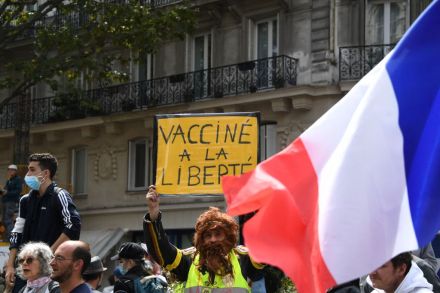
Saturday was what is known in France as the Chassé-croisé, the busiest day of the year on the roads, when those who took their holidays in July return home and those who chose August depart. By lunchtime there were 625 miles of traffic jams on the roads. The thoroughfares of many cities were also blocked, but for another reason. For the third consecutive Saturday, thousands of people marched to protest against the introduction of the government's Covid passport. Almost a quarter of a million people took to the streets in 180 demonstrations, according to the government. These numbers are disputed by the organisers, who claim they are wildly conservative. But whatever the exact figure, it was a phenomenal number of demonstrators for the final weekend of July.

NHS delays could derail Boris’s re-election campaign

From our UK edition

What is the biggest single threat to the Tories being re-elected? The NHS waiting list, I say in the Times today. Already more than five million people are waiting for routine hospital treatment in England. Sajid Javid has warned that this number could rise to 13 million — which would be one in four of the population. Simon Stevens, the just-departed head of NHS England, has warned that this waiting list could take three years to clear which takes you right up to the next election. For Labour, the backlog list offers the easiest and most comfortable of attack lines: 'You can’t trust the Tories with the NHS'. If millions are stuck waiting for treatment, this line will have huge resonance.

Vaccine passports could threaten the employment recovery

From our UK edition

Alongside the UK’s latest step in reopening, optimistic forecasts have been rolling in concerning the economy’s timeline for returning to pre-pandemic levels. This morning, we got another positive indication that businesses are resuming normal operations. The latest update on furlough figures shows 1.9 million workers are still on the scheme as of the end of June — the lowest level of people having their wages paid by the state since furlough was first introduced during last year’s spring lockdown. The number of people on the scheme fell by half a million last month, and by roughly three million since March. The continued fall is hardly surprising, as each month since April more economic activity has been permitted.