Covid-19

No, Mr Hancock, Covid didn’t cause the NHS backlog

From our UK edition

You might think that a cabinet minister and privy councillor whose reputation for truthfulness had been brought into (very public) question would be inclined to keep their public utterances strictly on the straight and narrow. You’d be failing to allow for the enthusiastic approach of the Health Secretary. Matt Hancock used his presentation to today’s NHS Confederation Conference to try to explain that the five million-strong NHS backlog, claiming it was down to Covid-19. Asked about providing guarantees of funding to address the NHS backlog, Mr Hancock told the event that 'the virus is responsible, and the backlog is a consequence of the pandemic'.  https://www.youtube.com/watch?v=qRErV48sz5I This is, quite simply, untrue.

Delay, data and the need for transparency

From our UK edition

Boris Johnson delayed 21 June, he said, because the data did not merit a full reopening. The specific data government is tracking to make these decisions remains unknown, so we are left to guess. But it’s hard to imagine the decision was disconnected from the rising Covid infection rate across the UK, due to the Indian variant’s increased transmissibility. The UK has gone from having some of the lowest Covid rates in Europe to now having the highest in just a matter of weeks. But is the story that simple? Data from areas hit hardest and fastest by the Indian variant suggest some reasons to be optimistic. In Bolton, the seven-day average for Covid cases leveled off (and started falling) weeks before the government settled on a 21 June delay.

My medical embarrassments are my business and no one else’s

From our UK edition

While we were looking forward to Freedom Day, the National Health Service was busy planning something extra special to coincide with it almost exactly. From 23 June, our medical records can be given by our GPs to other agencies and third parties for the purpose of that most ambiguous of all state activities, ‘planning’. While you thought they were busy planning Freedom Day, they were, in fact, planning Freedom of Your Information Day, in which everything you have ever told your doctor would become only marginally more secure than the information about your shopping habits that your loyalty card is collecting for the supermarket giants.

What does the latest ‘Dom bomb’ mean for Matt Hancock?

From our UK edition

When Dominic Cummings gave seven hours of evidence to a Commons inquiry into the government's Covid response, it was Matt Hancock who received the most criticism. The former No. 10 senior aide's accusation that the Health Secretary was negligent – the most serious charge being that Hancock had misled the government over testing and care homes – led to questions over Hancock's position. But it quickly became clear No. 10 had no plans to fire Hancock. The Prime Minister opted to rally round his minister rather than cast him out. So, does the publication of WhatsApp messages allegedly showing the Prime Minister heavily criticising Hancock change things?

Brexit, lockdown and the fracturing of British politics

From our UK edition

Is our society becoming less tolerant and more viscerally tribal? Or is our politics provoking people into committing more angry and desperate acts? The harassment of BBC Newsnight political editor Nick Watt in Whitehall this week by a group of anti-lockdown protestors recalled the ugly mood that descended on the environs of the Palace of Westminster during the Brexit stalemate of 2016-20. Back then, it was Remainer MP Anna Soubry who suffered the worst incident of intimidation, while the Leaver Jacob Rees-Mogg was also horribly abused by a pro-EU crowd as he walked home from a key vote with one of his children. Many of us might have hoped that such a level of polarisation was a peculiarity of how Brexit played out and would by now be securely in the political rear view mirror.

Lockdown delay is a price worth paying

From our UK edition

For the first time during this pandemic, I think we should delay lifting restrictions. Looking at the latest data, it seems that the Prime Minister was right to postpone ‘Freedom Day’. I am no zero-Covider. Its clear restrictions can be as harmful as Covid. Last September, it seemed obvious that a ‘circuit breaker’ lockdown would have just postponed the wave further into winter. In February, the government did the right thing by explicitly ruling out an elimination policy and introducing its roadmap. At the front of everyone's minds should be minimising harm. This time around, minimising harm means delaying reopening. The situation is completely different from other stages of the pandemic.

How NHS boss Simon Stevens could soon cause trouble for Boris

From our UK edition

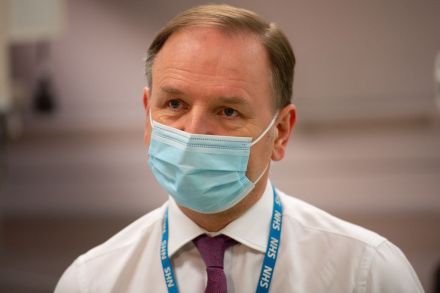
NHS England boss Sir Simon Stevens's final speech today was watched online by hundreds of health service bigwigs. But its main audience was much smaller. It was aimed squarely at just two people: Boris Johnson and Rishi Sunak. Stevens’s main message was about funding. The government, and, in particular, the Treasury, may not be thrilled once they wrap their heads around his statement on the five-million-strong (and Covid-predating) NHS backlog that 'when the health service is given the backing and the tools we need, we can deliver what's required'. Translated into plainer language, Stevens was saying: ‘Get your wallets out: this is going to hurt’.

Is furlough holding back the jobs market?

From our UK edition

The latest employment figures, published this morning, confirm a remarkable aspect of the Covid pandemic: that it appears to have caused no more than a little bump in the jobs miracle of the past decade. That is in spite of the economy shrinking by nearly 10 per cent in 2020 — a performance that in the past would have led to millions out of work. In May the unemployment rate fell by 0.3 per cent to 4.7 per cent. By contrast, it reached over 8 per cent during and after the 2008 financial crash. But of course, the unemployment figures don’t tell the whole story — not when we have a furlough scheme in operation, something that was absent from previous economic crises. To put the situation into perspective, in May there were 1.

The cost of delaying ‘freedom day’

From our UK edition

When Boris Johnson announced that unlocking would be guided by ‘data not dates’ he handed detractors ample scope for derision and defiance. In the four months since, lockdown critics have rightly insisted that he uphold the slogan and accelerate a roadmap, designed to move at such a glacial speed, that it risked fraying the DNA of our economy and permanently crushing our joie de vivre.  Why did we spend Easter isolated from loved ones? April in wintry beer gardens? Why did we roll out the vaccine at phenomenal pace only to keep restrictions in place as the number of Covid deaths hit single digits? Contrary to expectation, however, that mantra was probably a good hill to die on.

Speaker blasts Boris again over lockdown announcement

From our UK edition

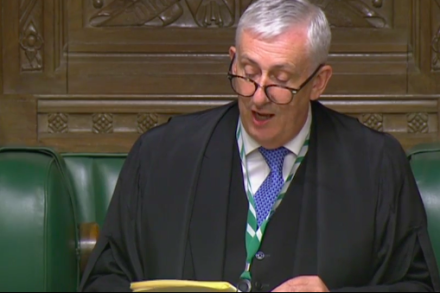
The government has just suffered a further verbal drubbing for the way it announced it would be delaying the roadmap out of Covid restrictions.  Matt Hancock gave a statement in the Commons tonight, a couple of hours after the Prime Minister announced all the details of the delay. Before he spoke, though, he had to listen to a still-angry Speaker explaining why this was so unacceptable.  Hoyle wasn't the only one to complain about the way ministers had behaved Hoyle once again described the government's behaviour as 'entirely unacceptable', adding that it was 'disrespectful to the House and to our constituents'.

Boris Johnson delays the end of lockdown

From our UK edition

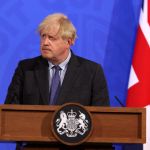
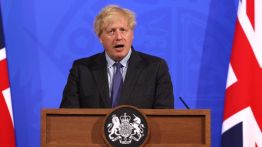
Boris Johnson has this evening confirmed that he will delay the lifting of all Covid restrictions by four weeks to 19 July. Announcing the decision in a press conference, Johnson said the Indian variant – also known as the Delta variant – has changed the picture and meant the government was no longer able to proceed with the full unlocking plan they had first hoped.  The Prime Minister said two jabs were very effective against the new variant. The problem? 'There are still millions of younger adults who have not been vaccinated and sadly a proportion of the elderly and vulnerable may still succumb even if they have had two jabs,' Johnson said.

The lockdown delay has triggered a constitutional crisis

From our UK edition

It is not the Battle of Marston Moor, but it strikes me that we are now in something of a constitutional crisis following the Speaker’s dramatic outburst this afternoon. In response to points of order about the fact Boris Johnson is announcing lockdown changes in a press conference rather than to parliament, Hoyle said that he had been told no decisions had been taken only to find out that there was an embargoed document setting out what changes were coming. A visibly furious Hoyle declared from the chair that: ‘This House is being misled’. Considering that misleading the House is a resigning matter, this is a remarkably serious accusation for the Speaker to level against Downing Street.

What Tory MPs fear most about a lockdown delay

From our UK edition

As Boris Johnson prepares to announce a four-week delay to the final stage out of lockdown, he faces a mixed reaction. Labour plans to back the delay but make clear that it was avoidable and is down to bad leadership. The public is seen to be more forgiving — with a Times/YouGov poll over the weekend finding that 53 per cent think that restrictions should remain beyond 21 June, compared with 34 per cent who say they should end. Many Tory MPs, meanwhile, are opposed to the delay on the grounds that they are losing faith all restrictions will be lifted this year.

The risky business of delaying 21 June

From our UK edition

It seems almost certain that ‘freedom day’ will be delayed. So now we consider the details. On the latest episode of Coffee House Shots, we debate the implications of extending restrictions and what that would mean – not just for the summer – but for the rest of the year. Fraser Nelson makes the case for caution on the podcast (and on Coffee House here), arguing that the Delta variant has changed the equation and the PM should be given the benefit of the doubt, as well as a little more time to get a 'reasonable grasp of the risks and trade-offs.' There was broad agreement between us that the issue isn’t so much the date itself.

The case for delaying 21 June

From our UK edition

Word is that Boris Johnson will delay the 21 June re-opening by two weeks, possibly even a month — an announcement that has caused some division of opinion in the offices of The Spectator. In the circumstances (the Indian variant growing exponentially) I can see the case for waiting another week or so until we have more data. That's not say that I want delay, just that the rise of the Indian variant in the UK has made me see the abolition of remaining restrictions as a finely-balanced argument. Whereas, a few weeks ago, I thought the facts heavily favoured going ahead with a full reopening.  I discuss this with Kate Andrews, Katy Balls and Cindy Yu in today's Coffee House Shots podcast.

The manhunt dividing Belgium

From our UK edition

Belgium's leading virologist is in hiding, holed up with his family in a government safe house. The reason? A right-wing Flemish soldier. Jürgen Conings disappeared from his home on 17 May, leaving behind a booby-trapped car and a series of letters laying out his grievances against 'the regime'. In a goodbye letter to his partner, Conings wrote: The so-called political elite, joined now by the virologists, are deciding how you and I should live... I don't care whether I die or not, but I will live my last days the way I want. The muscular 5ft 9in former corporal is now officially a grade-4 terror risk. But that hasn't stopped the emergence of pro-Conings groups in Flanders, the richer, Dutch-speaking part of Belgium.

How Starmer can beat Boris

From our UK edition

How should Keir Starmer deal with a problem like Boris Johnson? Despite the Prime Minister's mistakes in the handling of the pandemic – and a string of embarrassing stories about his private life and finances – Boris seems unassailable. Johnson is seen as best suited to be Prime Minister by 40 per cent of voters compared to just 23 per cent for Starmer; most surveys give the Tories a double digit lead over Labour. Party leaders receive much unsolicited and often useless advice. Starmer is not alone in that. Over the years, Sun Tzu’s The Art of War has been scoured for helpful aphorisms, while Machiavelli’s The Prince is still seen as a repository of sage advice. But relevance – and obscurity – are often a problem with such sources.

How serious is Britain’s third wave?

From our UK edition

The link between Covid cases and hospitalisations has been broken, we keep being told – vaccination having reduced the severity of infections, especially among more vulnerable older groups. It is a point reinforced this morning by Public Health England which reveals that the number of cases of the delta (formerly Indian) variant have increased from 12,431 to 42,323 in a week, but without a corresponding rise in hospitalisations. But how true is it that what looks like a third wave in new infections will not be accompanied by a large wave of hospitalisations? Previous experience with Covid – using PHE data – suggests there is not a very long lag between cases and hospitalisations.

Boris’s three unlocking options for 21 June

From our UK edition

What will Boris Johnson announce on Monday? The Prime Minister is due to update the nation on whether the final stage of the roadmap out of lockdown can proceed on 21 June as planned. However, with cases on the rise and the Indian variant spreading, various government advisers have spent the past few weeks taking to the airwaves to warn of calamity ahead should Johnson lift all restrictions. There is also a push from some in the Cabinet to either delay the roadmap or opt for a more limited easing. In truth, no final decision will be made until Sunday. The Prime Minister is currently busy in Cornwall attempting to woo world leaders (and avoid a diplomatic row with the US over the Northern Ireland protocol).

Does the data justify a delay to lifting lockdown?

From our UK edition

There are still six days to go before the Prime Minister has to decide whether or not to go ahead with the full reopening of the economy and society on 21 June. But there seems little doubt in which way the government is travelling.  It is reported this morning that, following a pessimistic presentation by Chris Whitty and Sir Patrick Vallance the likelihood is that the reopening will be delayed by a fortnight, the lifting of some measures perhaps a little longer than that. Is this yet another shifting of the goalposts? It is true that there has been an increase in cases over the past couple of weeks – not so far accompanied by a rise in hospitalisations and deaths.