Covid-19

Is Boris feeling lucky?

From our UK edition

The political and economic new year is all about surging Covid and a surging cost of living. The list of what families in particular will contend with in the coming weeks is enough to induce tears of exasperation. Take schools for starters. Staff absences, largely caused by coronavirus, were 8 per cent at the end of last term. On the Department for Education's own projections, the Omicron surge means these absences will rise to between 9 per cent and 13 per cent at the beginning of this term, and it is not inconceivable the upward path in absences will peak at between 20 per cent and 25 per cent. The Education Secretary, Nadhim Zahawi, is determined schools should remain open.

Exclusive: Georgetown’s Covid restrictions served with a side of hypocrisy

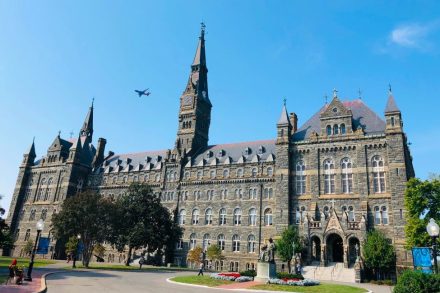
Georgetown University announced on December 14 that, due to a rise in Covid cases, students would not be allowed to eat or drink in public spaces on campus. All university-sponsored indoor events were canceled or moved outdoors. And, in the name of public health, campus fitness centers would be closed starting on December 16. The email to students announcing these onerous restrictions came from Dr. Ranit Mishori, the chief public health officer for the university. "I recognize this news is distressing, especially during the final exam period and ahead of holiday travel and gatherings. I urge all community members to use the Every Hoya Cares website to connect with mental and emotional health and well-being resources, should you need them," Mishori told students in her email.

georgetown

Five lockdown questions the cabinet must ask

From our UK edition

The cabinet will meet this afternoon, with more restrictions and even a new lockdown on the agenda. But have ministers been given the information they need to make an informed decision? There are rumours of briefing documents being sent around over the weekend with a pro-lockdown bias (i.e., heavy on the worst-case scenarios and not much said about potential side-effects). But the Times today reports that this time around the cabinet wants a full discussion — with at least ten ministers demanding a better quality of briefing before decisions are made that affect the lives of millions. The below is a list of questions that ministers need answered: 1. What is Sage’s central scenario for Omicron — and what assumptions lie behind it?

Is the EU heading for a booster crisis?

From our UK edition

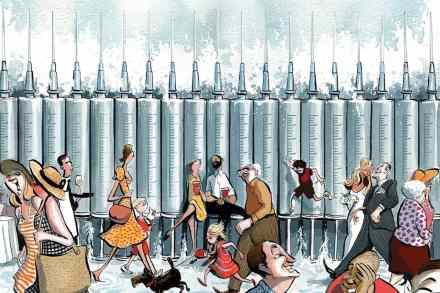
The Omicron variant spreads far more quickly. It infects far more people. And it is already rampant around the world, and probably unstoppable no matter how quickly borders are closed, or restrictions on socialising are put in place. Still, despite that, the one thing we already know for sure is that booster jabs are very good at controlling serious disease, and governments are scrambling to get as many shots into arms as quickly as possible. There is just one problem. If you happen to live in Germany, there are not enough of them to go round. And, even more worryingly, that may be the first sign the European Union is about to head into a booster crisis every bit as serious as the vaccine crisis that delayed the roll-out of the inoculation campaign at the start of this year.

Why a large rebellion matters for Johnson

From our UK edition

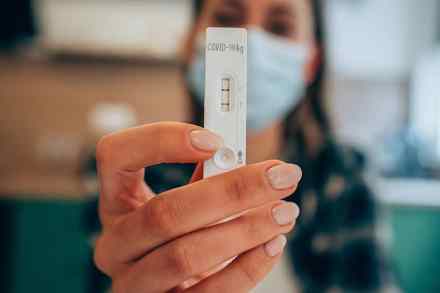
Boris Johnson will this evening face his largest Tory rebellion yet as the issue of vaccine passports comes to a vote in the House of Commons. Today MPs will vote on various aspects of the government's Covid Plan B proposals — much of which has already come into force. There will be four votes: one on face masks being mandatory in venues like the cinema and theatre; another on daily lateral flow testing to avoid self-isolation if you are a close contact of a positive Omicron case; a third on mandatory vaccination for NHS staff and finally — and most controversially — the introduction of vaccine passports.  The Spectator has a live tally of the Tory MPs planning to rebel on the issue of so-called Covid passports.

Johnson is imperilled. So why are his enemies helping him?

From our UK edition

It's a topsy turvy world when your friends and allies do you all kinds of damage and then your enemies and detractors accidentally ride to the rescue. But that’s what's going on in the life of Boris Johnson. His lax approach to the conduct of his own circle is a major factor in his popularity slump. Whether that be backing Owen Paterson, wilfully being taken in by partying Downing Street staffers or over-indulging his wife’s focus on animal rights, utopian environmentalism and support for the Stonewall agenda.  Yet now the cavalry has appeared over the brow of the hill and it is made up of people who wish to bring him down. But they serve only to remind the Tory tribe why it turned to him in the first place.

Boris Johnson is becoming a risk to his own Covid rules

From our UK edition

'It feels like a tipping point. Trust in Boris is collapsing. It could be fatal'. So spoke a senior Tory, who hitherto has been a great cheerleader for the Prime Minister. Sunday night's address to the nation by Boris Johnson won’t, he says, change the perception of Tory MPs that his recent performance has been wholly inadequate. That feeling may in fact be reinforced by Johnson’s choice of simply speaking sombrely down the barrel of a camera lens rather than holding a press conference and taking questions.

Will the public take Plan B seriously?

From our UK edition

After holding strong for two weeks, fears over the Omicron variant look set to change the government’s course on Covid restrictions. Reports this morning suggest that Plan B could be implemented as early as tomorrow, including advice to work from home and — more controversially — the introduction of vaccine passports. The timing is interesting: rumours about the possible decision landed hours after a video clip — showing the Prime Minister’s former press secretary joking about last year’s alleged Downing Street Christmas party with No. 10 aides — was leaked. Downing Street still adamantly denies the party took place.

Omicron: cause for hope?

From our UK edition

It will be weeks before we know just how worried we should be about Omicron — but the first indications seem hopeful. The epicentre of the first recorded outbreak has been the subject of a study that suggests that it may be milder than Delta. Early data from 166 patients in the Tshwane district comes with the usual caveats, especially that very little Omicron has been found among South African over-65s. But the study nonetheless has two weeks of hospitalised Omicron patients to analyse — more than any other country. Here are the main indications so far:  Fewer people hospitalised with Omicron have ended up in intensive care: 8 per cent, compared to 25 per cent for Delta.Fewer patients need oxygen: only about a third.

Why there is more Omicron than we know

From our UK edition

Yesterday the UK Health Security Agency (UKHSA) announced it had identified another 26 Omicron cases, and the total number of cases in the UK had reached 160. The rate of increase from zero in little over a week seems significant. But the one thing we know is these official figures are a significant underestimate of how many cases are actually in the UK. Here’s why. Omicron is already with us in much greater size than we know. There will already be significant transmission within communities.

Do masks really halve the risk of Covid? A note on the evidence

From our UK edition

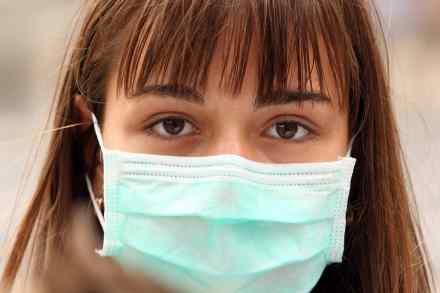
‘Most of the trouble in life comes from misunderstanding’ as Willy Loman said in Oscar Wilde’s masterpiece An Inspector Calls. Grating isn’t it? But also a reasonable facsimile of how science reporting often reads, at least to those of us self identifying as scientists. Pre-Covid it was so. With Covid the problem has become, well, an epidemic. Recent reporting about the efficacy of masks is a classic case in point. You might remember the study in question: it certainly made headlines when it came out. 'Mask-wearing cuts Covid incidence by 53 per cent, says global study', stated the Guardian: 'results from more than 30 studies from around the world were analysed in detail'.

Chris Whitty on the Omicron variant

From our UK edition

This is an edited transcript of Professor Chris Whitty's remarks at today's Downing Street press conference The existing situation is almost entirely Delta.  In terms of numbers of cases, it is broadly flat. In younger children, there is quite significant transmission at this point in time, and rates are increasing in many parts of the country. At the other end of the spectrum, as a result of the booster programme almost certainly, rates are beginning to drift downwards in people over 60 and particularly people above 70. So we're seeing an improvement in the group who are most vulnerable.  The numbers going to hospital are gradually decreasing. This is not a sudden drop. This is a gradual drifting down.

The Omicron variant: what we know so far

From our UK edition

Will the Omicron variant of SARS-CoV-2, the virus which causes Covid-19, be the black swan that pulls the world back — just when the pandemic seemed to be fading? Global markets certainly seem to think so, with sharp falls on Asian and European trading this morning. But what do we know about the new variant? The variant — otherwise known as B.1.1.529 — was only identified in Botswana on Tuesday. We have had numerous variants emerge this year, few of which have succeeded in establishing themselves as a real concern. But what is worrying virologists about Omicron is that it has an unusually high number of mutations — 50, according to South Africa’s Centre for Epidemic Response and Innovation.

What explains Germany’s vaccine scepticism?

From our UK edition

By the end of winter, Germans will be ‘vaccinated, recovered or dead,’ according to the country's health minister Jens Spahn. Yet as Germany battles another wave of Covid outbreaks with renewed restrictions, the outgoing Merkel administration is failing to inspire public confidence in the central government. In the city of Dresden, which usually hosts some of Germany’s most iconic Christmas markets, the mood is particularly glum. Businesses in the capital of Saxony had been looking forward to welcoming locals and tourists back to the smells of Glühwein and Bratwurst. Months ago they received the green light from state authorities to open up, but then came a shock last Friday: lockdown in Saxony, no Christmas markets, no tourism.

Austria will regret mandatory vaccinations

From our UK edition

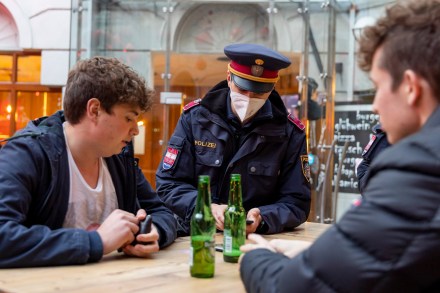
So, Austria’s experiment to persuade more people to get vaccinated by placing the unvaccinated in lockdown didn’t last long. A week, to be precise. From Monday, the entire country will be placed under stay at home orders and other restrictions — this, after it seemed that the era of lockdowns was over. But perhaps more significantly is Austria’s announcement this morning that from 1 February next year Covid vaccination will be compulsory, with large fines for those who refuse to be jabbed.

Should Covid booster jabs be rolled out to the over-40s?

From our UK edition

The Joint Committee on Vaccination and Immunisation has recommended that Covid booster jabs be offered to people in their forties, after they became available to the over-fifties earlier this year. But, as recently as August, the World Health Organisation opposed booster jabs. It said in a statement:  ‘In the context of ongoing global vaccine supply constraints, administration of booster doses will exacerbate inequities by driving up demand and consuming scarce supply.

The trouble with Austria’s vaccine passport plan

From our UK edition

Are vaccine passports being used in other countries in an attempt to cut Covid infections – or to try and boost vaccine take up by curtailing the social lives of those who refuse? The latest change in policy in Austria would appear to confirm that for them, it’s the latter. From today, access to restaurants, bars and any event with more than 25 guests will be limited to people who can prove they have been fully vaccinated, that they have previously recovered from Covid or that they have had one jab and a negative PCR test. In four weeks’ time, only the double-jabbed and those who can show they have recovered from Covid will be allowed in. Austria, like many EU countries, has had a vaccine passport scheme for several months.

My pro-vaxxer friends are changing their tune

From our UK edition

My pro-vaxxer friends have been a lot nicer to me since they started testing positive for Covid. I’m calling my vaccinated friends ‘pro-vaxxer’, by the way, just so they can see how it feels to have a quirky-sounding label applied to them based on their personal choices about how to withstand a pandemic. Meanwhile, I’m most certainly not going to call myself an anti-vaxxer because I’ve had dozens of vaccines, just not this one. I don’t need a label that’s become a term of abuse and was used by an MP while condemning people who don’t want the vaccine as the sorts of scoundrels who might launch a physical attack on him.

Did Covid first emerge at the Wuhan Institute of Virology?

From our UK edition

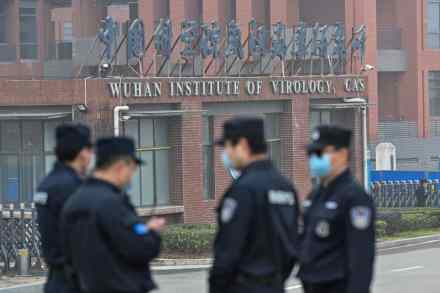
The net around the Wuhan Institute of Virology continues to tighten. A letter from Lawrence Tabak, principal deputy director of the National Institutes of Health (NIH) in the United States, has shed more light on the grant which the institute made to the EcoHealth Alliance for work at the Wuhan Institute.  One of the experiments, it reveals, involved testing to see whether the spike protein of a naturally-occurring coronavirus found in the bat population was capable of attaching itself to a human receptor, via experiments with mice engineered with a human gene. The experiment amounted to ‘gain of function’ research (something the NIH has denied) – modifying viruses so that they have qualities which don’t exist in nature.

Liberty is the American virus

From our UK edition

If I wanted to persuade my fellow Americans to eat more cheese, I would begin by launching a campaign to ban cheese. This might start with the argument cheese clogs arteries or lowers IQ. I’d find some doctors willing to testify that cheese inhibits testosterone, and some other doctors to insist it fouls up estrogen.  Then I would move on to the damage cheese does to the climate: too many cows, goats, sheep — methane, don’t you know. Greenhouse gases. Deforestation brought to you by cheddar. 'Cheese kills!' might serve as a motto. Next, I would sort out the cheese-producing states that would have to be melted into submission, perhaps with the promise of extravagant subsidies.