Covid-19

Closing churches again would be a big mistake

From our UK edition

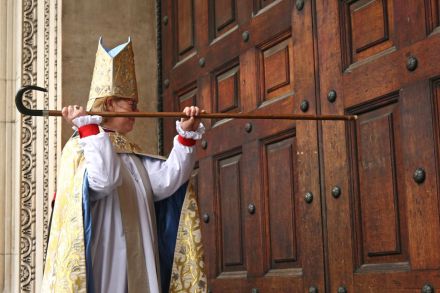
It’s somehow not that surprising to find that the Bishop of London has gone on Twitter to suggest that churches should consider closing. Sarah Mullally wrote:  'The situation is serious in @dioceseoflondon do read the request from @londoncouncils and consider the seriousness of the situation as you take your local decisions.' Well, thanks for that. Her observation is plainly intended to push for closures; it’s the only possible way of interpreting her contribution. And duly, she led the news this morning. She’s following Sadiq Khan here, mayor of London, who, when he declared a state of emergency yesterday, called for places of worship to close.
Boris’s latest lockdown rules are more baffling than ever

From our UK edition

When Boris Johnson rolled back the legal restrictions over summer as Britain emerged from the first lockdown, he was clear that enough was enough: 'Neither the police themselves, nor the public that they serve, want virtually every aspect of our behaviour to be the subject of the criminal law...After a long period of asking…the British public, to follow very strict and complex rules to bring coronavirus under control…we will be asking [people] to follow guidance on limiting their social contact, rather than forcing them to do so through legislation'. Alas (as Boris Johnson keeps saying), trust in people doing the right thing voluntarily, rather than under legal obligation, turned out to be short-lived.  Pressure from enforcement agencies played a part.

Covid sparks a major incident in London

From our UK edition

Is the NHS at risk of being overwhelmed? That's a question of increasing concern in Westminster as hospital admissions rise. Sadiq Khan has today declared a 'major incident' in London — calling the situation 'critical' with the spread of the virus 'out of control'.  With the coronavirus infection rate in London now exceeding 1,000 per 100,000 people, Khan said that the London Ambulance Service was currently taking up to 8,000 emergency calls a day (compared to 5,500 typical for a busy day). It comes as the reported daily death toll on Thursday — 1,162 — reached the highest recorded since April. There’s little, too, to suggest things are about to improve anytime soon.

Dementia brings a unique pain to the misery of lockdown

From our UK edition

Three days into 2021, an aunt texts to inform that my grandfather has died. In November he was admitted to hospital after a fall at the London flat where he has lived alone since the death of my grandmother in 2008. Just before New Year’s Eve he was tested for Covid-19 then sent home, only to be urgently readmitted when the test came back positive. By then my aunt and her husband had been in contact and were urged to isolate, causing a huge knock-on effect for the family. Whether it was the virus that finally saw off this 97-year-old former station master, war hero and lifelong Stalinist is unclear, but as he’d tested positive a few days before dying that’s what will be recorded; just another statistic from a virus that keeps on giving.

Students are the forgotten victims of the pandemic

From our UK edition

University is supposed to be among the most enjoyable and formative periods of a person’s life. Spare a thought then for the class of Covid-19. This week’s lockdown announcement again dealt yet another blow to an already disastrous year for university students. Despite having paid the usual tuition fees – and forking out thousands of pounds for pre-paid accommodation – the majority are now stuck at home, learning exclusively through Zoom. Universities cannot be blamed for the seemingly unrelenting succession of lockdowns caused by the pandemic. But that doesn’t alter the fact that we students have been compelled to pay £9,250 for a programme of often poorly-organised video lectures, alongside limited access to books and libraries.

When will Covid restrictions end?

From our UK edition

When we interviewed Matt Hancock this week, he was clear that the government isn’t going for herd immunity through vaccination. Instead, the government is seeking to use the vaccine to protect the vulnerable and break the link between cases, hospitalisations and deaths. Once that is done, the government will start to ease restrictions. Crucially, he was also clear that the government now regards the first shot as the most important metric when counting vaccinations. In his Monday night address, Boris Johnson said that if the government could succeed in giving a first shot to the first four groups in the vaccination programme by mid-February then the government would start ‘cautiously, to move regions down the tiers.

Lockdown was Boris Johnson’s only option

From our UK edition

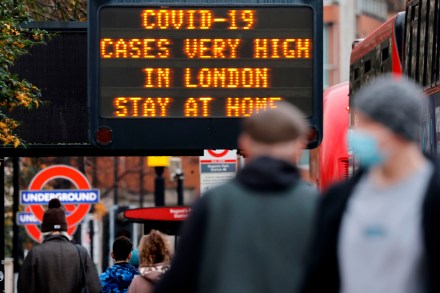
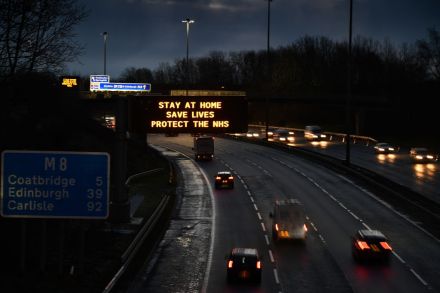
Lockdown is brutal. I don’t want it, you don’t want it, nobody ‘wants’ it. We are, however, at an intensely difficult moment in our fight against Covid-19. The latest wave of the virus is out of control, with the new variant significantly contributing to the huge hike in coronavirus cases. Our healthcare system is reaching the point of no return. This means that there is little choice than for us to face up to the reality that we are in the midst of a crisis – and that Boris Johnson had little choice but to tell us all to 'stay at home' once again. 1,041 deaths from Covid-19 were recorded yesterday, and the high number of those dying from this disease looks set to continue.

Cancelling exams shows Boris has failed to learn his lesson

From our UK edition

'Don’t worry, they won’t cancel exams again,' I confidently assured my fifteen-year-old middle son shortly before Christmas. He was sitting his mock GCSEs, and fretting over how much they might matter, admitting: 'I haven’t done enough work.' Only a month ago, education secretary Gavin Williamson gave a 'cast-iron guarantee' exams would 'absolutely' go ahead in England. It seemed clear he and Boris Johnson had learnt their lesson. They’d not be so foolish as to do the same thing over again: pull exams without a proper plan of what to do instead. More fool me. For my family – and for plenty of others in a similar position – it’s once bitten, twice shy.

The censorious war on lockdown sceptics

From our UK edition

Britain at the start of 2021 doesn’t only have a Covid problem — it has a censorship problem, too. The germ of intolerance is spreading. Anyone who dissents, however slightly, from the Covid consensus will find him or herself branded a crank, even a killer. They will be hounded and demonised; online mobs will demand their expulsion from media platforms and from public life. I fear that this Salem-like hatred for sceptical voices will, like Covid itself, have a long-lasting and severely detrimental impact on this country. In recent days, the censorious fury over Covid scepticism has intensified. The pitchforks are out for experts and commentators who query the seriousness of the pandemic or who suggest that lockdown is not an ideal policy.

Closing schools was inevitable. But cancelling exams is a mistake

From our UK edition

On Sunday morning, Boris Johnson told us that schools were safe but, tellingly, did not rule out further closures. By Monday evening he had shut every school in England to most pupils. By then, of course, many primary schools had opened for just one day. Children mingled – as they do – and went home not to return. But after those bubbles were mixed, fewer grandparents may be willing to look after them. When will they return? Johnson said not until half term, at least. But when policy can reverse so quickly in less than 36 hours, just about the only certainty is that it is far easier to close schools than it is it reopen them again.

Merkel’s government faces civil war over vaccine failures

From our UK edition

European health ministries have not been happy places of late. Earlier this week, the German daily Bild reported a spat between national governments and the EU, frustrated at the bloc’s failure to procure vaccine doses in any serious numbers. That failure has now ricocheted back from Brussels, destabilising Germany’s increasingly fragile coalition government. So infuriated are Angela Merkel’s junior partners that they are now calling for a parliamentary inquiry into Germany’s vaccine failures, centring on one of her possible successors. Problems began when health ministers in Germany, France, Italy and the Netherlands (the four countries with the most advanced pharmaceutical industries in the EU) joined forces to try to get their order books filled.

Lockdown sceptics should support this lockdown

From our UK edition

Scepticism is supposed to be the bedrock of science. But where scepticism shades into cynicism it can be as blind to changing events as the unexamined credence it claims to displace. Scientific belief should be based on informed supposition which is then rigorously tested against the evidence — that is the basis of the scientific method. There should be no shame in changing opinions and assumptions when facts change. We start with assumptions, test them against the evidence (which itself changes) and then use that conclusion to repeat the process, ad infinitum. So if conclusions don’t change when facts change, something might have gone awry. As an example: your view on the merits of the current winter lockdown versus the Halloween lockdown.

Britain’s vaccination programme is running out of time

From our UK edition

Was the latest release from the Office of National Statistics the shocking piece of evidence that led the Prime Minister to change his mind on children going back to school, and to introduce a full lockdown in England?  The ONS does not usually publish its infection survey on Tuesdays – it usually comes out on Fridays – yet today we seem to have a special release. It shows that the sharply rising numbers of new infections as picked up through the NHS Test and Trace system, and which have shown 60,000 new infections today, are not the result of distortions caused by Christmas. The ONS survey is based on testing a random sample of the population for prevalence of the disease and from that estimating a nationwide figure.

Can Boris hit his vaccine target?

From our UK edition

The government has failed to meet so many Covid-related targets so far that many will be extremely sceptical of the Prime Minister’s pledge on Monday evening to get the over-70s, front-line care workers and vulnerable people of all ages vaccinated by the middle of February. That is around 13 million first doses which will have to be delivered over the next six weeks – compared with just over a million which have been administered since the Pfizer vaccination programme began four weeks ago. We now have the AstraZeneca vaccine as well as the Pfizer one, but can the NHS really increase the rate of vaccination tenfold, as would be necessary to meet the PM’s target? There ought not to be a problem with the vaccination process itself.

Gavin Williamson is the least convincing education secretary ever

From our UK edition

It was Michael Gove who declared today that the Government was closing schools with the 'heaviest of hearts' and confirmed that A levels and GCSEs were off. Where, you wondered, was Gavin Williamson, the actual Education Secretary? Busy, no doubt, preparing for his own announcement on Wednesday, which, on the basis of his previous record, will reassure no one. Personally, I think the decision to cancel exams is really bad. I can’t remember whether it was Einstein we credit with that quote about repeating the same thing and expecting a different outcome being the quintessence of stupidity, but it pretty well sums up the situation here.

The new variant: a note on the evidence

From our UK edition

Boris Johnson introduced a third lockdown last night after an assessment by Britain’s four chief medical officers that the NHS wouldn’t be able to cope within three weeks on present trends. ‘Cases are rising almost everywhere, in much of the country driven by the new, more transmissible, variant,’ the medical officers said in a statement. With Covid caseloads clearly rising in hospitals nationwide, the grounds for action are pretty clear. But how sure can we be that the new variant is to blame?  One question seems to be asked again and again: if the new Covid variant is much more transmissible, why isn’t it rising everywhere? Why just in London and the South East?

Britain has two key advantages in the vaccine race

From our UK edition

Everything now turns on how quickly the vaccines can be rolled out. When this lockdown ends – and when all the restrictions can be lifted – depends on how fast people can be immunised. Last night, Boris Johnson set the state the target of having vaccinated 13 million people by the middle of February so that the lockdown measures can be eased later that month. There is an understandable scepticism about this target —people remember when test and trace was meant to prevent the need for a second national lockdown.  But the UK has two great advantages when it comes to rolling out a vaccine. First, it has a domestically-manufactured vaccine approved which only needs to be kept at fridge temperature.

SNP vs Celtic: Why their Covid showdown matters

From our UK edition

Football and politics seldom mix well and especially not when it comes to Scotland’s Old Firm. Yet the SNP government in Edinburgh has got itself into a war of words with Celtic FC after the club’s squad flew out to Dubai for a training camp. Asked about the Parkhead side’s decision on BBC Radio Scotland, Nicola Sturgeon’s deputy John Swinney said: I don't think it's a particularly great example to set. When we are asking members of the public to take on very, very significant restrictions on the way in which they live their lives, I think we have all got to demonstrate leadership on this particular question.