Covid-19

Vocational students are being treated with contempt – again

From our UK edition

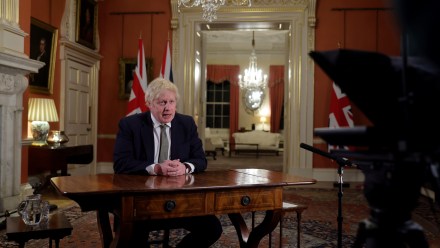
England’s third national lockdown is an avalanche of news, affecting just about every bit of our lives. It’s a lot for anyone to grasp, but that’s still not an excuse for the fact that, once again, young people studying for technical qualifications such as BTECs have been ignored and let down. According to the Association of Colleges, around 135,000 students are due to take assessments or sit exams in colleges this week: some exams are due today. And while the Prime Minister in his televised address last night talked about school and the need to cancel summer exams such as GCSEs and A-levels, the Government currently considers that BTEC tests should still go ahead this week. Not that the kids taking those tests would have learned that from the PM.

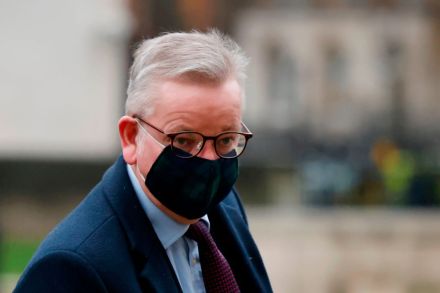
Michael Gove suggests lockdown could continue until March

From our UK edition

When Boris Johnson addressed the nation on Monday evening, he was keen to offer a glimmer of hope as he announced a seven-week lockdown. The Prime Minister said that the lockdown would be reviewed in the week commencing 15 February – with a hope of sending pupils back to school after the February half term. This is the date by which Johnson aims to have vaccinated 13.2 million people, making up the most vulnerable and elderly. However, anyone thinking about making firm plans for the following week may need to think again. As has become a trend in this pandemic, Michael Gove has embarked on a morning round in which he has painted a more pessimistic picture.

Lockdown 3: the rules in full

From our UK edition

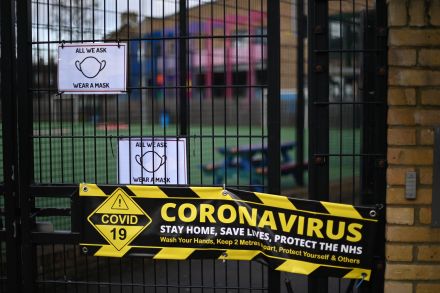
Boris Johnson has announced a third national lockdown to last until at least the middle of February. But there are more stated exemptions than in the first lockdown. The new laws are expected to follow shortly, while the formal advice is below:  ● You must not leave home without a ‘reasonable excuse’. This will be put in law with fines for non-compliance ranging from £200 (for a first offence) to £6,400. ● Work — You can go to work 'where it is unreasonable for you to do your job from home'. The examples given are 'critical national infrastructure, construction or manufacturing' but the advice says it’s 'not limited to' those jobs. Workers such as cleaners will still be able to go to work.

Nicola Sturgeon orders another lockdown in Scotland

From our UK edition

Nicola Sturgeon called it ‘not the New Year statement I wanted to give’. The SNP leader addressed the Scottish parliament earlier this afternoon to confirm reports of a new, March-style lockdown across mainland Scotland. It came as 1,905 positive cases were recorded yesterday, though this is likely to be a significant under-calculation as most registry services are closed on Sunday. The positivity rate now stands at 15 per cent, up from 10.1 per cent on New Year’s Eve, and since Christmas there have been 289 deaths recorded in relation to Covid. Against this backdrop, Sturgeon’s government is taking Scotland into the most severe lockdown since the outset of the pandemic.

How will Tory backbenchers react to another lockdown?

From our UK edition

Boris Johnson is coming under increased pressure from Tory MPs on both sides of the Covid debate today. On the one hand, there is former Health Secretary Jeremy Hunt calling for schools and borders to close and a ban on all household mixing straight away in order to prevent the NHS from collapsing. On the other, there is Mark Harper, chair of the influential Covid Recovery Group, who has just issued a call for the government to start relaxing restrictions from February. The two demands aren't necessarily mutually-exclusive: the two men just have rather different timescales.

The UK’s vaccine approach isn’t ‘anti-science’

From our UK edition

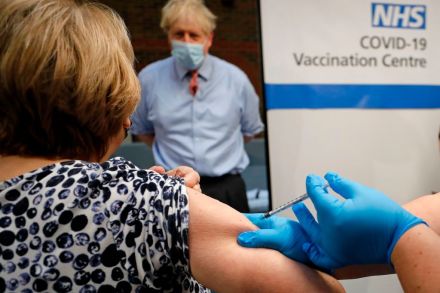
In order to vaccinate as many people as possible, the government has decided to change the length of time between the first jab and the second. What’s more, there has even been a suggestion that — in exceptional circumstances — the NHS could use a different vaccine for the second jab from the one used in the first. Cue a wave of criticism, not least from medical professionals and academics, concerned the government is pushing for something different to what the science suggests. The New York Times reported that the government’s decision had ‘confounded’ experts, while the MP Claudia Webbe called the move ‘dangerously anti-science’.

Could the South African strain affect the vaccine?

From our UK edition

Today begins the second phase of the Covid-19 vaccine programme, with the first members of the public receiving doses of the easier to use Oxford-AstraZeneca vaccine. But will the effort be thwarted by the emergence of two new variants of the SARS-CoV-2 virus, the Kentish strain and the South African strain? Yesterday, Sir John Bell, regius professor of medicine at the University of Oxford, gave his opinion. The Kentish strain, he said, does not greatly worry him. Although it has mutations that appear to make it more transmissible, they should not, he says, interfere with the working of any of the vaccines.

Schools should stay shut

From our UK edition

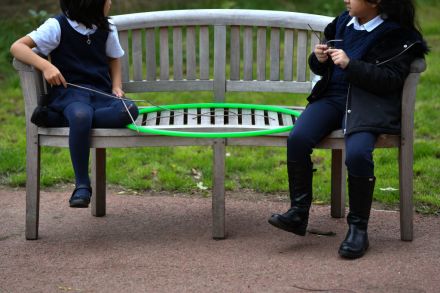
­­During the battle against Covid-19, the government’s priority has been to ensure that schools remain open. Their rationale has been that closing schools would threaten children’s life chances. Covid’s risk to children, ministers argued, is relatively low while the cost of stunted learning is severe. But the new variant has changed that calculation. Prior to this mutation, children accounted for only a small percentage of Covid-19 infections and therefore keeping schools open was a reasonably safe course of action. Now case rates are rapidly increasing to previously unseen heights, leaving the NHS creaking at its seams.

Sunday shows round-up: primary school children should ‘absolutely’ return, says Boris Johnson

From our UK edition

Boris Johnson - Restrictions 'probably about to get tougher' The Andrew Marr Show returned this morning, and with it came an in-depth interview with the Prime Minister. It will surprise no one to hear that the bulk of the interview focused on the coronavirus, and Boris Johnson signalled throughout that the new year could see fresh restrictions being brought into place. He did not go into any detail about what measures could be introduced under a potential 'Tier 5', but it was clear enough that his 5pm Downing Street press conferences were not yet a thing of the past: https://twitter.com/BBCPolitics/status/1345670653463191552?ref_src=twsrc%5Etfw BJ: It may be that we need to do things in the next few weeks that will be tougher in many parts of the country.

Do we finally have an answer on Covid immunity?

From our UK edition

How likely are you to be reinfected with the SARS-CoV-2 virus for a second time? It is a pertinent question because, at present, all government policy is predicated on the assumption that developing Covid-19 cannot be relied upon to offer you any immunity from reinfection whatsoever. Remember the Prime Minister telling us from his Number 10 flat, where he was incarcerated for 10 days after being ‘pinged’ by NHS Test and Trace, that it didn’t matter that he had already had the disease and must be ‘bursting with antibodies’ – he had to do his duty and self-isolate nonetheless?

The school closures debate exposes Britain’s class divide

From our UK edition

There have been many shocking sights in this cursed year. For me, one of the most shocking has been the sight of comfortably off, Oxbridge-educated experts and journalists agitating for the closure of schools even though they know this will hit poor kids hardest. This alarmingly cavalier attitude towards the education of the less well-off has exposed the class tensions that lurk behind the lockdown. Once again, depressingly, school closures are back on the agenda. SAGE says the only way we can get the current wave of Covid infections under control is by enforcing a proper lockdown, including the closure of schools and universities. Many in the media, long smitten with SAGE, agree.

Is the new variant of Covid really more transmissible?

From our UK edition

When the story of the new Covid-19 variant broke, my initial reaction was scepticism. I thought this new strain could just be a random genetic marker that coincided with an outbreak of cases that was caused by behaviour (or even “chance”) rather than by any important biological differences. We have more sophisticated measurement capability for biological data than for social data, and I worry that not enough has been done to rule out social explanations. For example, despite Covid-19 cases rising dramatically since September mobility indices have remained above the levels they saw in June, which were significantly higher than their April lows. So the UK’s November lockdown only temporarily slowed large scale community spread and did not get it under control.

Why 2020 was the fourth best year in history

From our UK edition

The Spectator has a long and proud history of fact-based optimism, sometimes represented by an end-of-the-year article explaining that statistics bear out that this was the best year ever, even if you didn’t get that impression when following the news. Well, 2020 is not a good candidate for such an article. 'The worst year ever', according to a Time Magazine cover story. We all share that sentiment to some extent. We will remember 2020 as a year of disease and death, and lockdowns that separated friends and relatives, and businesses from customers, causing depressions of both the economic and clinical sort. But if we were to take it literally – the worst year ever – it’s the kind of statement that can only be explained by a spectacularly short memory.

Hancock urges fed-up Brits to ‘just hold on’

From our UK edition

As expected, the government has just announced more areas of England are to move to Tier 4 from Boxing Day in an attempt to slow the spread of the new variant of coronavirus. But rather more unexpectedly, Health Secretary Matt Hancock told this afternoon's Downing Street press conference that a second, highly transmissible, new strain which 'appears to have mutated further' has been found in two people who were contacts of cases who had travelled from South Africa over the past few weeks. Hancock was at pains to seem apologetic to those affected by the new restrictions, telling people in those areas that the government was 'truly sorry'.

Britain is leading the world in the fight against Covid. Seriously

From our UK edition

How is Britain doing in the battle against coronavirus? Many have repeatedly declared we have the worst track record of any country, with both the highest death rate in Europe and suffering the highest economic hit. Newspaper headlines have constantly loud-hailed our alleged failings, from the shortage of ventilators to putting ourselves at the back of the vaccine queue by not joining the EU’s programme. The only trouble is that this is just not true. In many ways, the UK’s response to coronavirus is quite literally, dare I say it, world-beating. Clearly there have been many setbacks and hiccups. Clearly there are many lessons to be learned. But just as clearly, we are leading the world in many of the most important ways.

Could 30 per cent of Brits have some Covid immunity?

From our UK edition

How big is the job of vaccination? The aim is herd immunity, to protect enough people so that the virus starts to run out of people to infect and rates fall. This is expected to happen when between 60 to 80 per cent of the population is protected, so quite a job for the NHS. Until this is achieved, ministers seek to use lockdown as a tool to keep the R below 1. This means the cycle of lockdown and release could be with us for some time, especially in light of the new ‘mutant’ strain of the virus. But are ministers seeing the whole picture? As a professor of risk management, my coronavirus modelling has shown a large gap in the data on coronavirus cases between the government’s dashboard figures and the ONS weekly surveillance data.

Is the new Covid strain more deadly?

From our UK edition

The new variant of Sars-CoV-2 is, according to government experts, 71 per cent more transmissible than the previous dominant form, increasing the reproductive rate by between 0.39 and 0.93. But is it any more or less deadly than the older version? All Nervtag has revealed is that there have been 4 deaths recorded among 1,000 cases of the new variant. A rough estimate of the infection fatality rate based on those figures would not be out of line with estimates for the virus as a whole — although the advisory group adds there is not yet enough data to draw any conclusions.

Why a spring return to normal might still be possible

From our UK edition

The new mutant strain of Covid-19 is concerning and is likely to make the next few months particularly difficult. But here's the good news: its emergence doesn't necessarily mean that the government's previous optimism about a spring return to normal is off the cards During this Covid-19 outbreak, a common mistake has been to adopt a binary outlook: things are either good or bad, ‘getting better’ or ‘getting worse’. But pandemics are not linear – they are curves. Things can be getting better in the long term, but worse in the immediate short term. The events of the last few days are a good example. It's worth then seeing the decision to 'cancel Christmas' and the imposition of Tier 4 rules in this wider context.

Why Boris Johnson can’t solve the UK’s crisis

From our UK edition

The Brexit and Covid crises have merged into one. As of today, 21 December, France has blocked trucks from crossing the Channel as fears about a new strain of Covid — ‘the Kent virus’ to coin a phrase — sweep the continent. Perishable food was rotting, approach roads were jammed… it was as if we were living under a wartime blockade. By the time you read this, the French may have shifted from an outright ban to stringent health checks on exports and imports, but the pressure will still be on. In less than a fortnight, on 1 January, we will have the real Brexit. It will be either without a deal or with a thin deal.