Covid-19

The difficult vaccine debate we’ve shied away from

From our UK edition

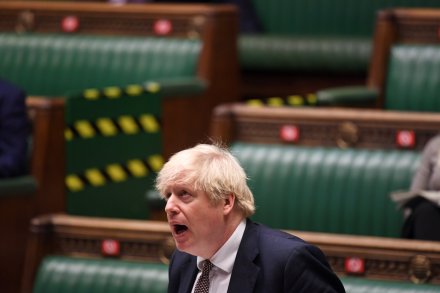
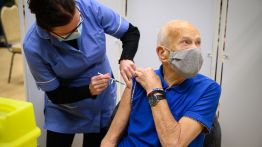
The Prime Minister only has himself to blame for the public outcry over 70-year-olds being vaccinated when there are still many over 80-year-olds waiting even to be invited to be vaccinated. What I mean by this is that there was a perfectly good argument for vaccinating 70-to-80 year olds before the more elderly, or at the same time. But Boris Johnson eliminated all debate about that when he ordered the Joint Committee on Vaccination and Immunisation to organise the vaccination programme so that deaths from or with Covid-19 should be cut as rapidly as possible.
Matt Hancock tight-lipped on when Covid restrictions might end

From our UK edition

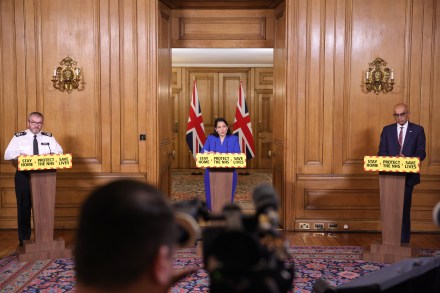
As ministers voice their hope that the country can start to lift restrictions from early March, questions are being asked as to when restrictions can go altogether and normal life resume. Members of the Tory Covid Recovery Group have argued that most restrictions should go as soon as the vulnerable are protected. While officials remain tight-lipped on the issue, Matt Hancock did offer an insight in today's press conference as to the key factors the government will consider when making that decision. Announcing that over four million people have now been vaccinated in the UK, the Health Secretary urged the public not to blow it as the route out was clear. In the Q&A, he pointed to the factors that will decide when restrictions can go.

Gavin Williamson licks his wounds in the Commons

From our UK edition

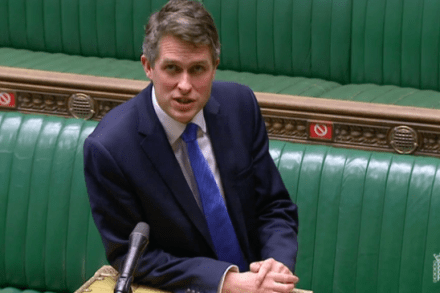
Of all the government ministries grappling with the impact of the pandemic, the Department for Education has probably had the most torrid – and least impressive – time. There is currently no sign that things are improving, either: in the past week, ministers have had to deal with a highly politically-toxic row over the quality of free school meals for children during lockdown. That row formed the backdrop to today's education questions in the Commons, where Gavin Williamson and his colleagues were very visibly licking their wounds. Williamson was accused – as he is every time he appears in the Chamber – of being 'incompetent', with Labour's Kate Green complaining that the food parcels were 'entirely in line with the government's own guidance.

Is the one shot jab a game changer?

From our UK edition

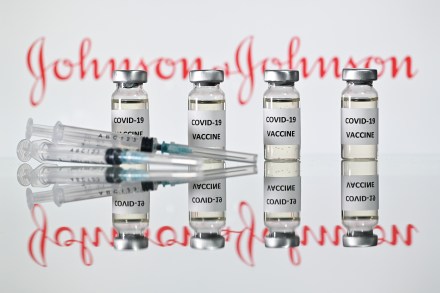
The UK’s decision to lengthen the gap between first and second doses of the Pfizer and AstraZeneca vaccines has been criticised by some. But what if we had a vaccine which only needed one dose, and had been tested on that basis? A vaccination programme could progress far more quickly and without the complication of having to ask people to come back to a clinic a second time. In particular, it would simplify the distribution of vaccines in countries with less-well developed public health systems. That is the promise of the latest vaccine candidate for which results have been reported: the Johnson & Johnson vaccine, which is based on an existing Ebola jab.

Johnson is learning to curb his vaccine enthusiasm

From our UK edition

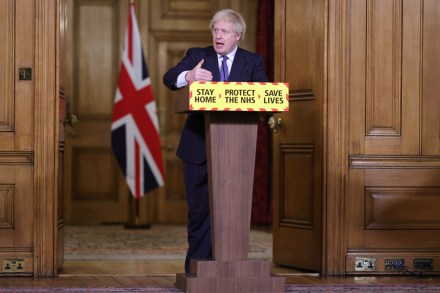
Boris Johnson had a few positive things to offer this evening's coronavirus briefing. Speaking alongside chief medical officer Professor Chris Whitty and chief scientific adviser Sir Patrick Vallance, the Prime Minister announced that 3.3 million people had received their vaccines, including nearly 45 per cent of the over-80s. Whitty, meanwhile, had the sort-of good news that the government thinks the peak of infections has now passed in London, the South East and East of England. The considerably less cheery flip side of that, of course, is that we have yet to reach the peak of hospitalisations and deaths in these regions, let alone the rest of the country.

Has the economy developed lockdown immunity?

From our UK edition

This morning’s update from the Office for National Statistics has boosted optimism about the prospect of the UK’s economic recovery. GDP fell 2.6 per cent in November last year, reversing the trend of six consecutive months of increases since April’s significant contraction. This takes GDP back down to 8.5 per cent below last February’s levels — wiping out the recovery gains made between roughly the end of July and November. Not, on the surface, good news — but there is a case for optimism. Cast your mind back to the economic conditions in November: England’s second lockdown had just been announced and there was a host of fire-breakers and circuit-breaks throughout the UK.

Jabs for jailbirds: why prisoners should skip the vaccine queue

From our UK edition

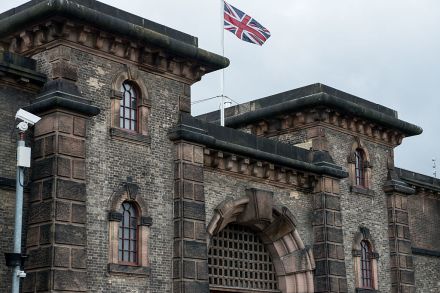
Labour MP Zarah Sultana has caused a bit of a stir by proposing that prisoners be allowed to skip the queue for the Covid-19 vaccine. She’s even been Steerpiked, a rite of passage for any aspiring 'Loony Left' Labour MP. If anything, her compassion for lags marks a welcome development in someone who six years ago was pledging to celebrate the deaths of Tony Blair and Benjamin Netanyahu.  Sultana asked vaccines minister Nadhim Zahawi at the science and technology select committee yesterday whether the government had considered ‘prioritising vaccinating detainees as well as those who work in prisons’.  Despite the backlash to Sultana's suggestion, the problem is that there’s evidence to back up her argument.

My future hangs on the result of this blood test

From our UK edition

A new year and another round of medical treatments in the French health system. On Saturday morning, needing a blood test pronto, I drove to the local branch of a chain of commercial laboratories, arriving before daylight. I joined a queue of the worried and unwell that had already spilled out of the door and into the icy car park. Except for a old chap behind me trying to cough up a lungful of warm porridge, and someone else’s lilting accordion ringtone, we were a silent, stricken field. After shuffling forward for 20 minutes, I celebrated the achievement of reaching the outer door and passing through into the interior warmth with a double toot of hand gel from the public dispenser.

What we learnt from the PM’s Liaison Committee hearing

From our UK edition

Boris Johnson has previously enjoyed Liaison Committee hearings rather too much, trying to get through the long session with select committee chairs using humour and optimism. Both were in rather short supply on Wednesday, as you might expect given the UK's current predicament in the pandemic. The Prime Minister covered a lot of ground, and not just when it came to coronavirus. On the pandemic, he warned that the 'risk is very substantial' that hospital intensive care capacity is 'overtopped'. He also said that the government did not know whether the vaccines stop transmission of the virus as well as reduce the severity for each person, or indeed whether the South African and Brazilian variants of the virus were vaccine resistant.

Watch: Labour MP pushes for prisoners to skip the vaccine queue

From our UK edition

Who should get the vaccine first? Those most likely to die from Covid, you would have thought. Luckily the Corbynite twenty-something Zarah Sultana was on hand to question such ill thought out assumptions.  During a science and technology select committee hearing earlier this morning, the Coventry South MP quizzed the vaccines minister Nadhim Zahawi over the government's decision to prioritise the old and infirm. Instead, the government, according to the socialist MP, should consider doing the 'humane' thing by prioritising 'disenfranchised' prisoners as it would be 'good for public health'.  Zahawi politely suggested that it was perhaps best to stick to the current plan, vaccinating those most at risk of, you know, dying...

Brexit Britain should help vaccinate Ireland

From our UK edition

I’m worried about Ireland. My family’s homeland is being ravaged by Covid-19. It now has the highest infection rate in the world, according to the expert Covid-watchers at Johns Hopkins University in the US. Ireland’s seven-day rolling average is an eye-watering 1,394 Covid cases per million people. That is way ahead of the UK (810 per million), the US (653 per million) and Germany (248 per million). It has been a sudden and startling decline. Back at the start of December, following a six-week lockdown, Ireland had the lowest infection rate in the European Union. Now it has the highest in the world. Many of the newest infections — around 45 per cent — are of the new variant that was first identified in the south east of England.

Priti’s lockdown muddle

From our UK edition

At tonight's Covid press conference, the Home Secretary Priti Patel sought to defend the coronavirus restrictions against suggestions that the law was confusing and hard to follow. She said: 'The rules are actually very simple and clear. We are meant to stay at home and only leave home for a very, very limited number of reasons'. What were those reasons? A list followed, including: 'outdoor recreation but in a very, very restricted and limited way, staying local, I’ve said that several times over the last week.' Except, outdoor recreation was specifically deleted as a deemed reasonable excuse to leave home by the regulatory amendments bringing into effect the national lockdown. Presumably the Home Secretary meant outdoor exercise (an exception retained in the regulations).

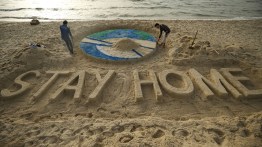
Measuring the impact of stay-at-home lockdown measures

From our UK edition

With Covid-19 cases still rising a week into the third lockdown (and after several weeks of Tier 3 restrictions in London and the South East) the questions are inevitably being asked: why isn’t lockdown reducing transmission of the virus and do we need even more stringent rules, whatever they might be? While some studies claim to have quantified a beneficial effect from lockdown measures during the first wave of Covid-19, a study at Stanford University questions this.

The EU’s vaccine shambles is turning into a re-run of the euro crisis

From our UK edition

Rewind a few months, and it was all meant to be very different. With Covid-19 rampant across the world, the European Union would take charge of sourcing vaccines from the major drugs companies. Its massive buying and regulatory power, coupled with its finely-tuned administrative machine, would make sure its 440 million people were protected from the virus before anyone else. It would be a magnificent demonstration of the whole point of the organisation. The trouble is, not only has the project already started to come off the rails, it is getting worse with every day that passes. Europe’s vaccine alliance is crumbling with potentially far-reaching consequences. Europe’s vaccine alliance is crumbling with potentially far-reaching consequences.

A lockdown crackdown is no walk in the park

From our UK edition

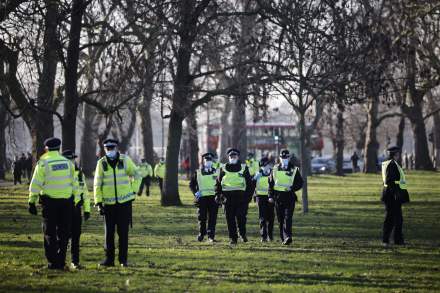
Jessica Allen and Eliza Moore had a bad experience with the Derbyshire police last week. The two women met for a socially distanced walk roughly a five-mile drive away from their home. This resulted in the pair being ‘surrounded’ by police officers, who fined them £200 for leaving their local area and drinking takeaway coffee, which the officers classified as a ‘picnic’. Since the story broke last week, the police force has backed down significantly and are reviewing their policies as a result of the incident. Allen and Moore were not, it seems, breaking any laws (although No. 10 and other departments remain unsure about how this fits into government guidance). Claims that coffee amounted to a picnic made the debate around Scotch eggs look credible.

Six things we need to know about the vaccine rollout

From our UK edition

We are supposedly getting a lot more data on the numbers of us being vaccinated, later on Monday. What's less clear is whether we will be getting data that is useful. Here is what we should be told on a granular daily basis, to reinforce confidence both that the vaccination operation is efficient and effective and to provide hope that the end of this social and economic misery is a realistic prospect: 1. Numbers vaccinated per day should be published. 2. This number should be broken down between first and second dose so that we know how many are protected to the maximum possible. 3. The status of those vaccinated – are they in the 80 plus category, or healthcare workers, for example? 4.

How we can save our summer

From our UK edition

The crisis facing hospitals is truly awful and cannot be understated. But while the short term situation is grim, it is important that we detach the immediate challenges from the post-vaccine outlook. They are radically different landscapes and must be addressed separately. Before enough people are vaccinated against Covid-19, we can't pull any punches in cracking down on the virus. This is not just because of the increased transmissibility of this new variant, or the huge challenges facing the NHS, but because with the vaccine being rolled out we are so close to success against this awful virus. The lower the infection rates, the sooner we can relax restrictions properly. So it is in all our interests to do everything we can to suppress infections rates now.

This lockdown is the worst yet for parents

From our UK edition

Lockdown is no fun for anyone, but spare a thought for those of us with kids. The third lockdown has, once again, made full-time teachers of parents. But this time, things are much harder. Why? Because during the current restrictions, teachers have been turned into a sort of truancy police force.  ‘Important information. If your child is working from home, they MUST register online daily by 9:00 by submitting at least one assignment….a follow up attendance phone call will be made for those pupils who have not submitted.’  This was the text I received several times last week from my two elder children’s school. Of course it's right that kids still received their education.

What Amnesty International gets wrong about Israel’s vaccine programme

From our UK edition

Israel's remarkable vaccine rollout has been deservedly praised. But not everyone is full of goodwill. Depressingly and inevitably, commentators and human rights groups have queued up to find a reason to condemn the Jewish state.  Israel, which is leading the world in the speed of the rollout, has been accused of ‘excluding’ the Palestinians from getting the jab and giving it to ‘settlers’ instead. 'Denying Covid-19 vaccines to Palestinians exposes Israel’s institutionalised discrimination,' Amnesty International has claimed. To people familiar with stories about bogeyman Israel, this is an easy narrative to get behind. But it fails to account for a simple fact: the Palestinian leaders themselves haven’t complained.

Despite Covid, things really are getting better

From our UK edition

If Covid-19 had swept Britain in 1800, the chances are that no one would have noticed. The clinical signatures of plague, smallpox and cholera, for example, are hard to miss, but you need a laboratory to diagnose coronavirus. Nor is it (relatively speaking) that deadly: its case-fatality rate is scarcely enough to feature on the Richter scale of pestilence and its victims are overwhelmingly the elderly. In 1800, however, life expectancy was 40. The big difference between people now and two centuries ago is that we feel so much more secure – or we did until Covid shattered the illusion of control. My great-great-grandfather, a seaman, was about to get married in 1800. Each voyage was as dangerous to him as childbirth was to his wife.