Covid-19

When will unemployment peak?

From our UK edition

Unemployment continues to rise. Today’s update from the Office for National Statistics estimates that unemployment in the three months to November hit 5 per cent — that’s an estimated 1.7 million people out of work, a 0.6 per cent rise on the previous quarter.    Not every figure is as positive as the surface data would suggest The gradual climb suggests that the furlough scheme continues to hold off mass redundancies and provides further evidence that England’s second national lockdown didn’t hit as hard as the first. But the unemployment rate is set to worsen before it improves, with more optimistic forecasts estimating a peak of around 6 per cent later this year, while others (including the Bank of England) estimate around 8 per cent.

German paper’s excruciating Oxford vaccine muddle

From our UK edition

The Düsseldorf offices of German daily newspaper Handelsblatt will not be a happy place this morning. Last night, the respected financial paper published a 1,200 word piece claiming that the Oxford-AstraZeneca vaccine is only 8 per cent effective among the over-65s. The claim, based on anonymous sources within the German government, caused outrage.  AstraZeneca responded quickly, saying the allegations were 'completely incorrect' while a spokesperson for Oxford University said there was 'no basis for the claims of very low efficacy', pointing to five peer-reviewed papers into the vaccine's efficacy.

Why is a trade union spreading doubt over the vaccine roll out?

From our UK edition

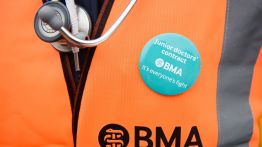
We hear a lot these days about the need for responsible discourse around the pandemic. People who put into the public domain arguments and claims that are not fully supported by evidence and which can have harmful consequences are being called to account for their actions. Anyone with a public profile should always be willing to answer for their words. And in the midst of a public health emergency, it’s only reasonable that anyone with a voice in the public square should take care to avoid unduly eroding public trust in Covid mitigation measures by spreading baseless claims and sowing unjustified doubt. This is especially true of the Covid vaccination programme.

Lockdown learning is no match for the joys of the classroom

From our UK edition

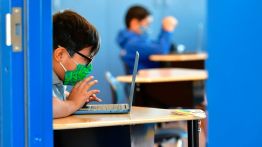
Schools in January are usually full of life, but not this year. At the start of my day, I walk alone down silent corridors to an empty classroom. There are no children lined up outside; the bustle of school life is gone and the only voice I hear is my own. Welcome to lock down learning where my pupils are miles away at the far end of fibre optic cables. Teachers like me are doing our best to make it work but, although we are not teaching blind, our vision is so restricted that we might as well be looking at our classes down long cardboard tubes. We never did have eyes in the back of our head, but we had peripheral vision and we are missing it. It was from the corners of our eyes that we noticed the children who were confused or unmotivated or upset.

What role do schools play in the spread of Covid-19?

From our UK edition

Schools were the last institutions to close and can be expected to be the first to reopen. But just how big a part do schools play in the spread of Covid-19? The European Centre for Disease Prevention and Control has published a review of the evidence from 17 countries and concluded that the reopening of schools cannot be blamed for a resurgence in the virus. Most countries closed their schools during the first wave of the epidemic in spring 2020. From 15 April, Denmark reopened schools – with social distancing – for 2 to 12 year olds. There was no increase in cases following this reopening, according to the ECDC.

Matt Hancock is right: we are in a vaccine race with France

From our UK edition

There are plenty of different ways in which Matt Hancock, the health secretary, can be criticised for his handling of the Covid-19 crisis. Track and trace didn’t work, lockdowns were sporadic and probably too late, and the messaging wobbled all over the place. But comparing the British vaccination drive to France and the rest of the EU? That was completely right. When Hancock remarked on Sky News yesterday that the UK had vaccinated more people in just three days than France had managed in total, his critics on social media went into a predictable meltdown. It’s not a competition or a race lectured the finger-waggers. We have only done one dose.

The rise of the super pessimist

From our UK edition

Covid isn’t the only thing to have developed a dangerous strain in the UK; pessimism has also mutated and is on the rise. BBC news recently reported in horrified tones that the economy had contracted 2.6 per cent in November, barely mentioning the fact that this was largely down to the nation being in lockdown. I don’t know what our national broadcaster has up its sleeve next but I’m expecting a dambing connection between home schooling and black market valium. That kind of contraction during lockdown is actually something to be proud of. The resilience of British consumerism during this last year has been this generation’s Dunkirk. Instead of hopping in tiny boats we’re resolutely buying tiny dresses for parties we’ll never attend.

Why Imperial College’s REACT study is so problematic

From our UK edition

There was very gloomy news this week. ‘Coronavirus infections are not falling in England, latest REACT findings show,’ said a press release from Imperial College. It was widely covered in the press in this vein: Covid levels ‘may even have risen’ since the latest lockdown, BBC news reported. This reignited fears that further tighter lockdown measures might be needed to contain it. It was all a result of Imperial College's latest REACT study of Covid-19 infections, a massive study of 143,000 people and one of the biggest Covid surveys around. So its findings - and talk of rising cases - were taken very seriously. And understandably so.  The study’s author, moreover, was adamant that the virus has had a resurgence.

Word of the week: Sceptic

From our UK edition

Definition: A person who questions the beliefs of others Lord Sumption, is a sceptic. The former Supreme Court judge has questioned the government’s lockdown policies and raised uncomfortable questions: ‘are we punishing too many for the greater good?’; ‘is the life of my grandchildren worth more than my own, because they have much more of it ahead?’ These are moral questions about the value that we place on each life, as well as the price that we are prepared to pay to prevent death. There are no easy answers.  But now is not the time for debate. The enlightenment spawned an array of critical thinkers, sceptics and dissenters.

‘Feathers have been ruffled’: Life after Cummings at No.10

From our UK edition

Boris Johnson used today's press conference to issue sobering news: warning that the new Covid strain may be more deadly. The better news? The vaccines that have been approved are likely to be as effective against the new strain as the original. There were also figures to suggest things are slowly improving: the R number has fallen to a rate of between 0.8 and 1. And 5.4 million people, around one in ten of the adult population, have now received their first dose of the vaccine. Yet despite the good news on the vaccine rollout, there is little in the way of optimism in 10 Downing Street this week.

Boris Johnson warns that new Covid variant could be more deadly

From our UK edition

Those in the lookout for good Covid news will found precious little of it in Boris Johnson's latest Covid press conference. Although the Prime Minister had cause for optimism in the form of the vaccine rollout – over 5.4 million people have now received their first dose of the vaccine, one in ten adults, – the overall message was of difficult times ahead. Johnson said there was evidence to suggest that the 'Kent variant' not only spreads faster but is deadly. The PM pointed to data assessed by scientists on the New and Emerging Respiratory Virus Threats Advisory Group which, he said, suggested the variant could be up to 30 per cent more deadly than the original.

Netherlands’ Covid crackdown blamed on ‘English variant’

From our UK edition

It is more than two centuries since the last Anglo-Dutch war, but our neighbours across the North Sea are once again fearful of an English invasion. Last night, the Dutch parliament voted for an unprecedented restriction on personal freedoms, a curfew between 9pm and 4.30am, because of fears that the new B117 variant of the coronavirus discovered in the UK, will flood the Netherlands. While infection levels seem to be creeping down to around 5,400 a day, after a spike over the Christmas break, the Dutch public health institute reckons that ten per cent of new cases are what they variously (and carelessly) call the 'British', the 'English' or, 'the UK' variant. This number is expected to rise.

When will Boris come clean to Tory MPs about the length of lockdown?

From our UK edition

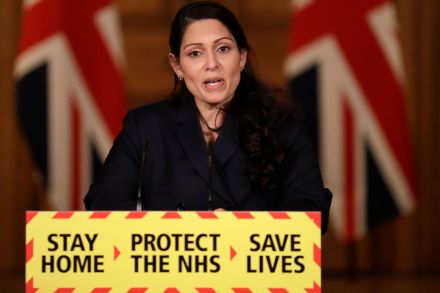
This evening's Downing Street coronavirus press briefing showed that ministers are still focused on enforcement of existing restrictions, rather than introducing even tighter curbs. Home Secretary Priti Patel announced £800 fines for people attending house parties, which will double for each repeat offence, up to a maximum of £6,400. Patel said the police would target the 'small minority that refuse to do the right thing', and warned that the police were increasingly enforcing the rules.  Speaking alongside her, NHS England regional medical director for London Dir Vin Diwakar issued a moral warning to members of the public who think it is acceptable to flout the rules.

Are infections rising?

From our UK edition

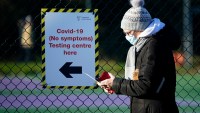
Not for the first time, people could be excused for feeling a bit confused by conflicting data on Covid-19. This morning, many news outlets reported claims from the latest React study that levels of Covid-19 infections are no longer falling and may, in fact, be rising. This is somewhat at odds with government data that shows cases have peaked since the beginning of the third English lockdown. For days, the figure for new infections, as detected by NHS Test and Trace, and published on the government’s Covid-19 dashboard, have been falling. In the past seven days, the number of new infections recorded across the UK was 294,172 — 21.5 per cent down on the previous seven day period. What's going on?

My unlikely friendship with Sir David Barclay

From our UK edition

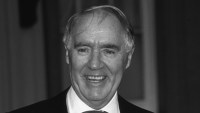
Gstaad This might surprise a few people, but I was very friendly with our late co-proprietor Sir David Barclay, a man who treasured his privacy and was not drawn to alpine high jinks and gossip. It was an unlikely friendship. We met on the slopes a long time ago. I had just finished a run and was taking off my skis when he approached me and asked if my name was Taki. I nodded, and he said: ‘I like your column.’ After all these years, I have a standard answer when a rare compliment comes my way: ‘What is an intelligent person like you doing reading the rubbish I write?’ His answer was quick and to the point: ‘I own The Spectator, I have to read it, but I still like your column.’ And that, as they say, was the beginning of a beautiful friendship.

Covid-19 is hampering efforts to clear the world’s mine fields

From our UK edition

How has Covid affected your life? For those in the world's war zones, the impact of the pandemic has been truly devastating. Coronavirus is one of many dangers facing those who have fled violence and bloodshed. It has also left refugees with agonising choices: to remain in lockdown in camps, where resources may become scarce; or to return home, and risk death. In north east Nigeria, which is at the epicentre of a grave humanitarian crisis, there was a landmine casualty every single day for the first 20 weeks of last year. Here, food and other humanitarian aid has been disrupted by the pandemic. Strains on the system have prompted the government to accelerate its plans to resettle displaced people, including to areas heavily contaminated with improvised landmines planted by Boko Haram.

Silencing Ian Blackford is one upside to PMQs tech troubles

From our UK edition

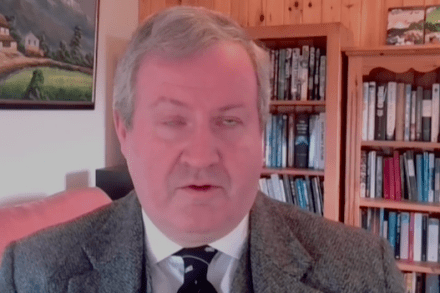
Parliament, 0. Computer Bugs 1. That was the score at PMQs today after a software glitch turned the debate into a cyber-shambles. The disaster unfolded as Ian Blackford asked his two questions. The SNP member, wearing a smart three-piece suit, joined the chamber from his sumptuously appointed country seat in the Hebrides. Blackford is known as a champion of the people and today he had a golden opportunity to stir up trouble for Boris. The very fishermen whom the PM had promised to enrich after Brexit are facing ruin because paper-wonks at sea-ports are holding up the transit of fresh fish. A perfect issue for the SNP.  But Blackford ignored the plight of Scottish trawler men and turned instead to the presidential inauguration.

Priti Patel admits Boris got borders wrong

From our UK edition

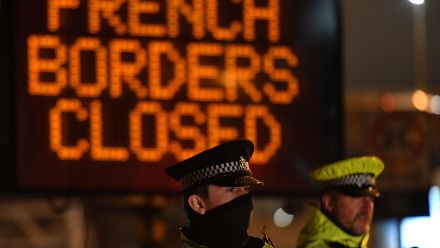
The government's border policy has become an increasing cause of bemusement among MPs and the country at large. The UK did not close its borders during the first lockdown when countries such as New Zealand did. When they did eventually bring in tighter border restrictions, it was just at the point Conservative MPs thought they ought to be opening up.  This time around, things are stricter, yet there were still delays. A new requirement to have a negative Covid test 72 hours before travelling to the UK has been brought in but even that had little sense of urgency with confusion over whether it would come into effect last Friday or Monday. Border restrictions will be in place for some time, even if the vaccine rollout goes well.

Why ban goal celebrations?

From our UK edition

Football is an emotional sport, as anyone who has ever had the misfortune of being in Glasgow on derby day will attest. When your team wins, or even just scores a goal, that emotion can be hard to contain. Players, on occasion, have been known to celebrate such occurrences; sometimes they even make physical contact with each other. And why not?  The FA has announced that it will take a dim view such behaviour from now on, after criticism from politicians that some players have reprehensibly been breaching social distancing guidelines that the wider public have to follow.