Covid-19

Are we ready for Britain’s looming cancer crisis?

From our UK edition

Cancer, cardiac and countless other patients are crying out for help – but are ministers listening?  Over the last year, politicians have been adopting untried and untested policies, the consequences of which none of us can yet fully grasp. The main aim, of course, of these extraordinary lockdown measures has been to suppress Covid-19 in order to reduce pressure on our hospitals. That has been the metric on which Government approval has been judged. Whether or not you agree with every restriction, it is clear that this focus has sucked the oxygen away from other pressing health issues. Covid-19 required a response unlike anything we have seen in modern times.

At last, the Lib Dems are behaving like liberals

From our UK edition

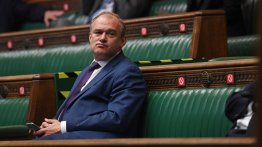
Last night in the House of Commons, MPs voted to give the government six more months of emergency powers by a tally of 484 to 76. Simple maths will tell you that the Tories could not have achieved this on their own; Starmer whipped the parliamentary Labour party to vote the measure through. It makes one wonder why — or even if — we have an official opposition at all any longer. The only party that voted as a bloc against the extension of emergency powers was the Liberal Democrats.

Kids will thank us for shortening the school summer holidays

From our UK edition

Oh for a normal summer – so close now, but Covid remains capricious, a wave across Europe threatening to wash it all away. But just think: for some schoolchildren, and their parents, the normality of the long six-week summer break may not be such an appealing prospect. Sure, the middle-classes are able to pack it with enriching activities – exciting new skills, friendships and memories. But, for kids in families with stretched budgets, it can be isolating, impoverishing, boring. And, as quite a substantial body of evidence now shows, very bad for their emotional and cognitive development – some studies even conclude that the majority of the attainment gap between rich and poor children can be explained by the cumulative impact of successive summer breaks.

Does the data support renewing Covid emergency powers?

From our UK edition

Last night MPs voted by 484 to 76 to renew the Coronavirus Act, which grants the state emergency powers to further control – and shut down – most parts of society. The Liberal Democrats voted against the extension, along with 35 Conservative MPs who rebelled and voted against the government, citing as their main concern the widening gap between these unprecedented powers and the danger Covid-19 presents in the UK. The latest iteration of the bill has been renewed until September – three months after the last date in Boris Johnson’s roadmap – and includes the toughest restrictions on international travel yet.

On vaccines, the EU is getting what it paid for

From our UK edition

Remember when the EU was going to provide an antidote to the spectre of vaccine nationalism? While Italian authorities are raiding pharmaceutical plants for vaccines, the European Commission is pushing for measures to block vaccine exports to countries that do not 'reciprocate'. Unfortunately, European authorities have it exactly backward. Instead of seeking to expand the existing supply, their ham-fisted policies risk having the opposite effect. The ongoing war on AstraZeneca is bound to make every pharmaceutical firm think twice before signing a contract with the EU. And with vaccine production chains spanning across numerous jurisdictions, including non-members of the EU, export restrictions increase legal uncertainty and can disrupt supplies further.

What will it take to tackle long Covid?

From our UK edition

With just under 500,000 patients admitted to hospitals in Britain since the start of the pandemic, we need to talk about 'long Covid'. Why? Because while the vaccine rollout is undoubtedly saving many lives, there is going to be a forbidding secondary impact from this virus on the nation’s health, the scale of which is only just becoming apparent.  What does 'long Covid' conjure in your mind? For many, it has become synonymous with fatigue and brain fog, symptoms which are fairly common. But what is less well known is that the impact of Covid-19 on patients can extend far beyond these symptoms alone.

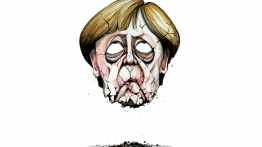
Why can’t other politicians say sorry like Angela Merkel?

From our UK edition

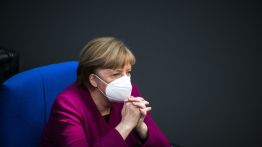
Angela Merkel did something remarkable this week: she said sorry. Having announced an Easter lockdown in Germany, the Chancellor partly reversed her decision. ‘This mistake is my mistake alone,’ she said, urging ‘all citizens to forgive’ her. Was this a particularly groundbreaking speech? Perhaps not. But one thing is clear: it is exceptionally rare to hear a politician admit blame and take responsibility so explicitly, unconditionally and openly. And when it does happen, it is more often than not from a woman. Last summer, Nicola Sturgeon apologised to pupils over the controversial exam results in a similar fashion to Merkel: ‘Despite our best intentions, I do acknowledge that we did not get this right and I'm sorry for that.

Merkel’s blundering lockdown U-turn

From our UK edition

During her 16 years in office, Angela Merkel has produced a couple of memorable sentences that will be imprinted into her legacy. She added a few more on Wednesday, when she announced that the government rescinds plans of a radical Easter shutdown, saying: ‘This mistake is my mistake alone.’ Merkel’s CDU is rapidly losing the support of voters — their approval rating has dropped 9 per cent to just 26 within a week It is quite remarkable to see a leader taking the full blame for what has been perceived as a hasty and impetuous decision. Merkel and Germany’s 16 state premiers had agreed on a radical lockdown over the Easter holidays in yet another attempt to curb the rise of coronavirus infections.

Is AstraZeneca’s Covid jab effective against the South African variant?

From our UK edition

The AstraZeneca vaccine has been under attack ever since the results of its phase three trials were announced in December. When the results of US trials were released this week showing 79 per cent efficacy against symptomatic disease and 100 per cent protection from serious cases of Covid 19 – and failing to show up any serious side-effects – it seemed to help bolster its reputation.  Yet some of that was undone by subsequent accusations by the US Data and Safety Monitoring Board that AstraZeneca may have included out of date data in its trial results. The company has been asked to come back and present new calculations, using data gathered from its study up until March, rather than data up until February.

Boris, ‘greed’ and the moral case for capitalism

From our UK edition

I, for one, was not surprised by the Prime Minister’s remark to his parliamentary colleagues about greed fuelling the race to develop a vaccination for Coronavirus. I well remember some years ago, when he and I were both on the Any Questions panel, he said to me in an audible aside:  'Bishop, greed is good isn’t it because it makes us rich?'  I replied quickly to say something like you would expect me to say no, and the reason is that it makes a few people rich but it impoverishes many. Greed also causes some to fall into debt and even crime, because of the desire to ‘get rich quick’. Greed makes us turn in on ourselves The Judaeo-Christian tradition is uniformly negative about greed.

Should we vaccinate kids against Covid?

From our UK edition

Children could start getting Covid vaccines over the summer as part of the government's herd immunity strategy. As Katy Balls reported last month, the current thinking in government is that vaccinating the majority of the population is the best way to stop the virus in its tracks. But where does this leave parents like me who have concerns about giving their children the jab? NHS England’s chief executive Simon Stevens has already mooted the idea of combining the flu and Covid vaccinations into one dose. And streamlining the two vaccinations makes perfect sense for adults. But it could put parents in a difficult position.

Boris is right: ‘greed’ did give us the Covid vaccine

From our UK edition

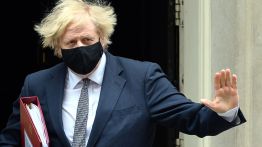
Boris Johnson might have started back-pedalling furiously. He might have tried to dismiss it as an off-the-cuff comment. And the spin doctor might have preferred it to have remained private. Even so, the Prime Minister was surely right when he told MPs last night that ‘greed’ and ‘capitalism’ gave us the Covid-19 vaccine. And rather than backing away from the remarks, the PM should be doubling down on them. He was spot on. Free enterprise and the multinational corporation are getting us out of this mess, and we need to talk about that a lot more than we do. The pioneering MRNA technology used by BioNTech and Moderna was funded by Wall Street through years of hopeless losses It was typical Boris.

Merkel declares a ‘new pandemic’ as Germany locks down again

From our UK edition

A year on from the onset of the Covid crisis, Angela Merkel had grim news for Germans this morning: our country is in the midst of a 'new pandemic'. 'The British mutation has become dominant,' she warned, as she announced a strict new lockdown, which will shut almost all shops and churches over Easter.  The new lockdown rules were thrashed out in a tetchy 12-hour meeting between the chancellor and Germany’s state premiers. It used to be EU summits that prevented Merkel from catching some sleep. Not any longer. The leaders struggled to find common ground on an approach to contain the spread of coronavirus, amidst a worrying spike in infections which has seen cases climb to 7,500 a day.

Why did unemployment dip as Covid restrictions tightened?

From our UK edition

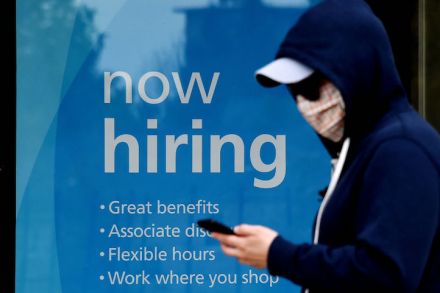
Slowly but surely, forecasts for unemployment in the UK have been revised downwards. Alongside Rishi Sunak’s Budget earlier this month, the Office for Budget Responsibility significantly changed their prediction for peak unemployment: from the 11.9 per cent predicted in the July forecast down to 6.5 per cent. This was spurred on by an extension of the furlough scheme, a growing economic resilience to lockdowns and, of course, the spectacular rollout of the vaccines (over half the adult population has now been vaccinated with at least one dose). But the latest update from the Office for National Statistics, published today, has provided an early surprise. The headline unemployment figure has fallen slightly again: from 5.

Is Boris right about a third wave?

From our UK edition

Covid deaths fell to 17 on Sunday, the lowest daily figure since 28 September and no higher than the levels being recorded throughout much of last summer. Deaths are down over 40 per cent on the week, hospitalisations down 21 per cent. Yet the better the news on vaccinations and serious illness, the longer the road seems to be out of lockdown. The latest potential roadblock seems to be the threat of a third wave in Europe. The Prime Minister said this lunchtime: 'On the Continent right now, you can see, sadly, there is a third wave under way. And people in this country should be under no illusions that... when a wave hits our friends in Europe it washes up on our shores as well. I expect we will feel those effects in due course.

Oxford vaccine gets a boost from US study

From our UK edition

The hesitancy of many European countries to use the AstraZeneca vaccine (between bouts of complaining the company hasn’t delivered enough doses) has been widely reported. Less discussed is the delay in US authorities approving the vaccine for use there. But with the reporting of results from a US trial, that should now be a formality. The trial, run by Rochester and Columbia universities, involved 32,449 volunteers in the US, Peru and Chile. Two thirds were given the actual vaccine and the rest a saline placebo. In all, 141 people developed a symptomatic Covid illness. Those who were given the vaccine, however, were found to have their risk of developing symptomatic infection cut by 79 per cent. Their risk of developing serious illness was reduced by 100 per cent.

Is the UK about to be forced into a vaccine war?

From our UK edition

Is the UK about to be forced into a vaccine war? That's the concern in Westminster after Brussels upped the ante over a potential vaccine export ban. Ursula von der Leyen suggested last week that the European Commission could block vaccine exports to countries with a high volume of jabs already. Now an EU official has said that the EU will rebuff any British government calls to ship Oxford AstraZeneca vaccines from a factory in the Netherlands.  The primary complaint among EU leaders is that AstraZeneca is yet to make good on its contractual obligations to them and deliver them the number of doses first promised. The Dutch plant can make between five and six million doses a month so has the potential to boost supply for both the UK and EU.

Let’s call time on Britain’s gerontocracy

From our UK edition

The boomers are eating their grandchildren. They don’t see it this way, of course, but they are doing it nonetheless. Covid, or rather the British state’s response to the pandemic, is just the latest evidence of this. Whatever you make of Boris Johnson's handling of the pandemic, one thing is clear: the cost of lockdown will be funded by young people in taxes for years to come. But it will most of all be paid for with time. We can find ways to minimise the impact of the government debt, but we can’t give people a year of their lives back. It is a natural part of history that good fortune is not distributed evenly. That some generations are lucky and others are not is obvious, as is the fact that some will be called upon to make greater sacrifices.

Will Covid cost less than expected?

From our UK edition

It’s no surprise that the bill for Covid-19 keeps racking up. The Office for Budget Responsibility's latest forecast predicts borrowing will reach £355 billion for the financial year: decisions to extend furlough, boosting public sector spending and supporting businesses that have been closed for months at a time all come with a price tag attached. But that doesn’t stop the sums from creating shock and awe each time they’re announced. Today’s update from the Office for National Statistics shows that government borrowing hit £19 billion last month — more than £17 billion from the previous year and the highest borrowing recorded for February since records began in 1993.  Source: ONS.

Has Britain fallen victim to the Asian vaccine war?

From our UK edition

The success story of Britain's vaccine rollout has hit its first major obstacle: five million doses of the AstraZeneca vaccine will be held up for a month. But how many of us knew it was India, not manufacturing plants in the UK or Europe, that was supplying a considerable amount of our vaccine needs? And does the delay show that Britain is now caught in the middle of an emerging vaccine war in Asia? The delayed jabs are being manufactured in the Indian city of Pune (pronounced Poona).