Covid-19

What is Michael Gove up to in Israel?

From our UK edition

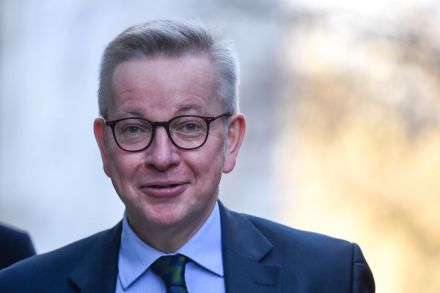
Boris Johnson may have had to cancel his trip to India but that hasn't stopped his colleagues embarking on trips overseas. Michael Gove is in Israel today on a fact-finding mission ahead of his review into immunity vaccine passports. The Cabinet Office minister has been meeting with Israeli politicians, including prime minister Benjamin Netanyahu as well as the foreign minister and health minister.  The trip – which I reported earlier this month – is focussed on what the UK can learn from Israel's Covid response. Discussions are also taking place on a possible green travel corridor between the two countries for when overseas holidays are allowed again.
India’s selective Covid crackdown

From our UK edition

India's Covid crisis is raging out of control. Over the past two months, the country has witnessed a staggering ten-fold increase in infections. On Monday alone, 259,167 cases were reported. And there are fears the true infection rate might be much higher. Yet India's government is turning a blind eye to certain religious festivals which may be fuelling the problem. In recent days, millions of Hindu devotees have thronged the banks of the river Ganges for a dip in the water to commemorate the Kumbh Mela festival. The second and third Shahi Snan (holy bath) last week coincided with hundreds of Hindu pilgrims testing positive for Covid-19, as India recorded its highest spike since the start of the pandemic.

Why Boris was so reluctant to cancel his India trip

From our UK edition

Just a few hours after Boris Johnson confirmed that his trip to India had been postponed, the country has been placed on the government's red list. Following reports of a new India variant of Covid, travel to the UK is to be banned — with those returning from the country facing hotel quarantine as of 4 a.m. Friday. Announcing the news, Health Secretary Matt Hancock told MPs that initial data on the new strain meant that the travel ban had been put in place on a 'precautionary basis'.  Johnson's supporters believe he works better in person than on Zoom calls The decision was viewed as inevitable after the Prime Minister's trip to India scheduled for next week was cancelled.

How worried should we be about the Indian variant?

From our UK edition

The Prime Minister has cancelled his trip to India, due to happen next week, though travellers coming from the country are yet to be told to quarantine for two weeks. But the fact India is yet to be put on the red list has caused some surprise given the surge in cases of Covid-19 — up from 12,000 a day in early February to 270,000 on Sunday, many of which will be the new Indian variant. The whole reason for the red list was to guard against new variants gaining a foothold here. Is India heading for the red list shortly — possibly even later today — or on what grounds might it escape?

Need we fear a third wave after lockdown ends?

From our UK edition

When Boris Johnson revealed his roadmap out of lockdown at the end of February he promised a ‘one way road to freedom.’ Since then, it has seemed that instead of freedom we may end up with continued social distancing, perhaps Covid passports and mandatory mask-wearing. The justification offered is that the virus might come back. But does the data back up this pessimism? I’m an academic at Bristol University and have developed the Predictor Corrector Coronavirus Filter (known as PCCF) model, updated daily on The Spectator’s data hub. It confirms that we can safely return to the ‘old normal’ on 21 June with no need for extra measures. It predicts that a complete abolition of restrictions on that date will not see a third wave of any significance.

Labour’s problems are piling up

From our UK edition

Can things get any worse for Keir Starmer? Yes appears to be the answer, if the latest YouGov poll is anything to go on. While the Tories have surged ahead to 43 per cent, support for Labour has tumbled down to 29 per cent. It's important not to blow a single poll out of proportion, but nonetheless these numbers make for grim reading for the Labour leader. That 14 per cent lead for the Conservatives is the largest since mid-May 2020, when the recently elected Starmer was still digging his party out of the polling abyss of the Corbyn period. A year on – and coming weeks before a crucial set of local elections and a by-election – it shows all too clearly that Starmer has so far failed to rescue Labour.

Why vaccinated Israel is worth a visit

From our UK edition

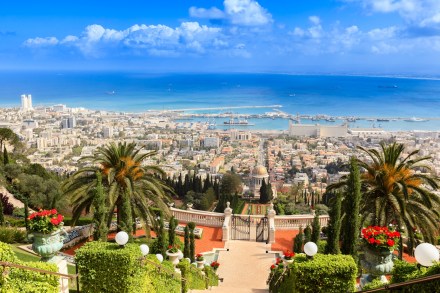
Have you been watching Shtisel during lockdown? Or maybe you are just one of the hundreds (thousands?) of us eyeing vaccination rates and realising the obvious candidate for this year’s summer holiday green list: Israel. Land of mountains, sea, multiple religions, ancient and knotty history, and copious amounts of houmous. Whether the 8,550 square mile country, just a fifth of the width of England and its widest point, can fit us all is another matter but if you are searching for more or less any type of holiday, it’s likely that Israel can provide. Historic city break The Western Wall, Jerusalem (iStock) No prizes for guessing Israel’s most storied city. Legends, tales and parables seem to hum from Jerusalem’s old town walls.

How much of a threat is the South African variant?

From our UK edition

For residents of six London boroughs, as well as those in Smethwick in the West Midlands, the partial relaxation of lockdown rules this week hasn’t quite gone according to plan. They’ve had a day out in the sun, alright, but not necessarily sitting enjoying food and drinks in a pub garden – more likely they have been standing in a long queue to get ‘surge tested’ for the South African variant of SARS-CoV-2, the virus which causes Covid-19. So how much of a threat is the South African variant? In spite of anecdotal claims from South Africa that the new variant was affecting younger people, there is no evidence that it causes more severe illness.

Merkel’s radical lockdown plan could quickly backfire

From our UK edition

In its flailing response to the Covid crisis, the German government appears to have finally given up on federalism. Angela Merkel's latest idea is to introduce nationwide ‘emergency brake’ measures to combat rising case numbers, replacing a patchwork system across the 16 federal states. But will it help bring Germany's third wave under control? Legal changes to grant the federal government unprecedented power to enforce coronavirus regulations in all states have been backed by ministers. The final obstacle for the German Infection Protection Act is parliament. If Merkel's plan is approved, it will mark a big change in the way Germany is governed. It will also make it clear that Merkel is increasingly desperate for answers.

Locked-down students are paying a heavy price

From our UK edition

Students are the forgotten victims of lockdown. Having worked hard to achieve their grades, undergraduates have been consigned to their bedrooms to learn online. There's been no socialising, freshers fun or the chance to make new friends. The only thing that has been the same for the Covid class of 2021 are sky high fees. Finally, the government has announced that all university students will be able to return from the 17 May. While some undergraduates may be relieved to get some much-needed clarity, most will be deeply, deeply frustrated. Many students are asking why universities did not open again when schools did.

Covid and the lockdown effect: a look at the evidence

From our UK edition

What forces Covid into reverse? To many, the obvious answer is lockdown. Cases were surging right up until the start of the three lockdowns, we’re told. It’s often said that all else failed. The Prime Minister said on Tuesday that lockdown, far more than vaccines, explains the fall in hospitalisations, deaths and infections. But how sure are we that only lockdown caused these falls — in the first, second and third wave? Or were other interventions, plus people’s spontaneous reactions to rising cases, enough to get R below one? In a peer-reviewed paper now published in Biometrics, I find that, in all three cases, Covid-19 levels were probably falling before lockdown.

Will Boris the liberal ever return?

From our UK edition

During his time in City Hall, Boris Johnson managed to be all things to all people. He called for an amnesty for 400,000 illegal immigrants. He backed the London living wage but also managed to keep the City happy. His opponents on the left found it difficult to attack him as a result. But if his success back then was a result of his liberal tendencies and his ability to be 'carefree', the pandemic appears to have changed Boris's political convictions. He could pay a big price if he fails to find his old self again. As Prime Minister, Boris's liberal side has barely reared its head.

Why is Boris talking down Britain’s vaccine success again?

From our UK edition

A few months ago, the Prime Minister was describing the jabs as the 'scientific cavalry’ that was on its way to save us from our Covid – and lockdown – woes. But now the cavalry has arrived in the form of a vaccine rollout of unqualified success, the rhetoric has changed. The vaccine is no longer enough, according to Boris. Today we've seen another worrying shift in the PM’s words. In an interview with the BBC, Johnson broke the link between the UK's ability to reopen and its vaccination programme success: The reductions in these numbers, in hospitalisations and in deaths and in infections, has not been achieved by the vaccination programme...

Why the High Street won’t be another Covid casualty

From our UK edition

Can the High Street recover from the Covid crisis? Even before lockdown, around 14 shops were shutting every day, and 2019 was the worst year for sales in a quarter of a century. After months of enforced closure, shops have finally reopened. But with mandatory face masks, social distancing and roped-off fitting rooms – and no indoor cafes, or restaurants to punctuate a day of retail therapy – shopping will be vastly inferior to the pre-Covid experience.  Nonetheless, there are good reasons to be bullish on the future of the high street – and too many commentators are being needlessly gloomy on its prospects. For a start, households have accumulated significant savings during lockdown.

What lessons can be learnt from Britain’s vaccine success?

From our UK edition

The NHS vaccination programme has reached its latest big milestone of offering a jab to everyone in the top nine priority groups three days ahead of schedule. Everyone in government and the health service is celebrating. Boris Johnson has been busy thanking 'everyone involved in the vaccine rollout which has already saved many thousands of lives', while NHS chief Sir Simon Stevens has said:  'Thanks to our NHS nurses, doctors, pharmacists, operational managers and thousands of other staff and volunteers, the NHS Covid vaccination programme is without a doubt the most successful in our history. It's one of our tickets out of this pandemic and offers real hope for the future.

The snobbery of ‘staycations’

From our UK edition

Last summer, when Covid forced the cancellation of our holiday, my husband and I had a staycation. We read books, played games, drank Pimm’s on our patio and invented ever more imaginative ways to avoid our DIY to-do list. Each morning brought the usual bills and junk mail to our door rather than a hotel breakfast tray, and there was no one else to do the washing up or freshen up the bathroom towels. As of this week, apparently, millions of other people are doing the same thing. The Sunday Times heralded ‘the return of the staycation’ as ‘the great unlocking begins in earnest and we are allowed to stay away from home overnight’, while the Daily Mail declared ‘It’s staycation mania!

It’s time to revive the handshake

From our UK edition

Those with a watchful eye might spot something this week (or next)  not seen in a while. And I’m not talking about a freshly poured pint, or the sight of your forehead after three months without a barber’s care. Rather, as England and the whole of the UK, begins to ‘open up’ after the third national lockdown, and as we emerge socially emboldened into the spring sunshine inoculated to the tune of some 32 million first doses of Covid vaccine, there's a chance we might see the handshake make a tentative return. I can't be the only one who has begun to wince slightly every time I see someone on TV shaking hands in a social setting, in a film or programme evidently filmed in the world before Covid robbed us of such basic, everyday civilities.

Europe’s human rights judges are right not to ban compulsory vaccines

From our UK edition

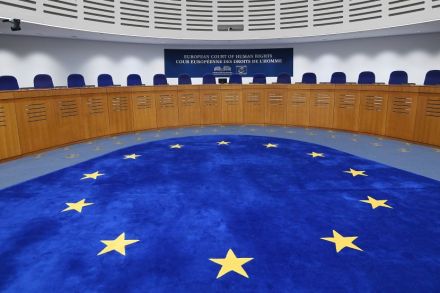
If you think public health authorities in England are overbearing, spare a thought for the Czechs. Parents who fail to have children vaccinated face being fined or having their offspring excluded from nurseries. Now, in a landmark ruling, the European Court of Human Rights, has backed that policy. But even critics aghast at the thought of compulsory vaccinations should welcome the court's verdict. Why? Because human rights judges should not be butting in here. The Czech law bends over backwards to accommodate welfare concerns: vaccinations are free; there are exceptions for good medical reasons; and any vaccine-generated injury is automatically compensated. Yet it was still an obvious target for human rights challenge on individualist grounds.

Boris will need Labour support for vaccine passports

From our UK edition

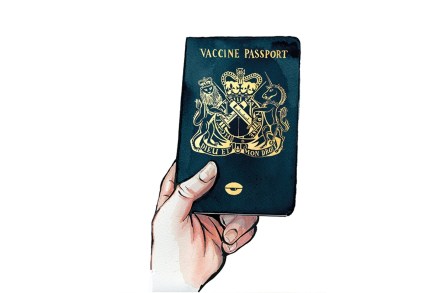
No prime minister wants to be dependent on the opposition to get the government’s business through the House of Commons. But this is the position Boris Johnson will likely find himself in when it comes to ‘Covid status certificates’, I argue in the magazine this week. Labour are sounding sceptical of vaccine passports at the moment More than 40 Tory MPs have already signed a pledge to oppose vaccine passports, and the government’s majority is 80. ‘It is just down to Starmer. If he whips against, Boris will lose,’ says one of the leaders of the Tory rebellion. The policy has hit a nerve in the Conservative party.

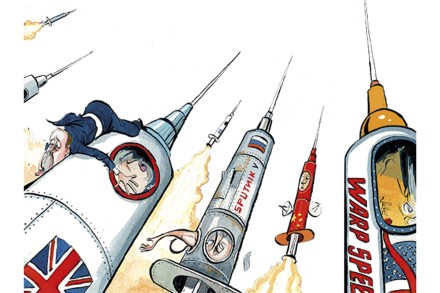
Berlin has been bounced into accepting Sputnik

From our UK edition

Munich has had enough of the vaccine chaos in Berlin and Brussels. In a surprise announcement on Wednesday, Bavaria’s minister president Markus Söder stated that he would sign a preliminary purchase agreement for the Russian Sputnik vaccine. The leader of the Bavarian Free State explained that he would pre-order two and a half million doses of Sputnik V in the hope of receiving these by July. Söder, who is a potential candidate to replace Merkel, was keen to stress that this was dependent on regulatory approval by the European Medicines Agency.