Covid-19

Boris Johnson attempts to calm vaccine concerns

From our UK edition

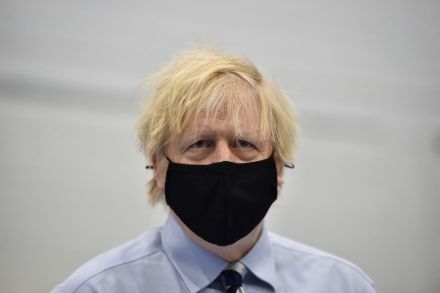
The message from Boris Johnson's press conference this evening was one of reassurance. Following the decision by several EU member states to suspend use of the Oxford-AstraZeneca vaccine over concerns about a potential link with blood clots, the Prime Minister said that the vaccine is safe and that 'the benefits of the vaccine in preventing Covid far outweigh any risks'.Pointing to statements from both the UK and EU regulators on its safety, Johnson said the thing that 'isn't safe is catching Covid'. Johnson was also at pains to calm concerns over vaccine supply. The Prime Minister admitted that the UK was experiencing a supply issue — but said that despite this, there would still be more vaccinations in April than there were in February.
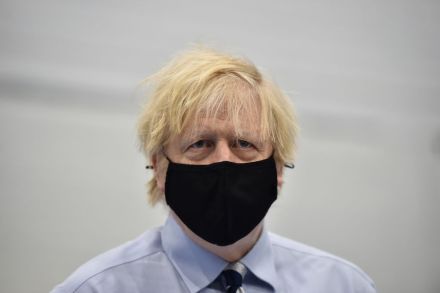
Who pays the price for Boris governing without scrutiny?

From our UK edition

Bailiff-enforced evictions have been banned during the pandemic. But landlords eager to give tenants the boot are finding ways around this rule. Since the start of lockdown, there has been an extraordinary increase in the number of tenants facing applications from landlords to control the terms under which people live in their homes.  Sometimes the playing of loud music is given as the reason. Other times it's because the TV is left on when neighbours are trying to sleep. Perhaps they have had visitors who slammed the front door of their block. But while the circumstances are often mundane, the effect on those who find themselves kicked out can be devastating.

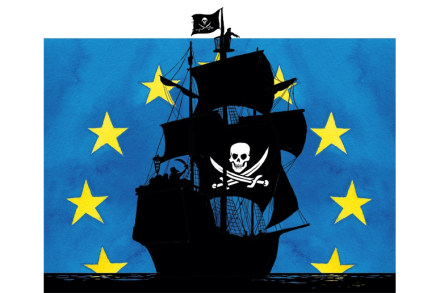
The EU’s jab snatching ruse is legally absurd

From our UK edition

For some months now, increasingly disturbing statements on the law or legal threats have emanated from the EU. Some of these focus on AstraZeneca and if you were a drug company who had committed so early on and so successfully to helping develop and distribute a vaccine for the current pandemic (at cost price), you might reasonably feel hard done by. But that is not for me. What is for me is the latest, oddest statement, that the EU may seize AstraZeneca's manufacturing plants and their produce and possibly their intellectual property rights (the recipe). Can they? The EU has form for making statements on the law which are wrong. A summary of the issue is this: the UK and other countries moved very quickly to order batches of vaccines from lots of manufacturers.

Germany’s vaccine debacle goes from bad to worse

From our UK edition

Germany's decision to stop using the AstraZeneca Covid vaccine has been condemned internationally. It has also gone down badly with Germans. Once again, the country's health minister Jens Spahn is under fire.  A year into the pandemic, Germans are fed up with what they see as a government which is too cautious to use its only weapon out of this crisis. Even before the suspension of the vaccine this week, the rollout was painfully slow. While Britain has issued 22million doses, Germany is lagging way behind: only 9.3million of its people have received their vaccinations. This latest hold-up will only further slow down the vaccine programme. And Germans fear that this means the anticipated end of most corona-related restrictions by summer is now more and more unlikely.

Why isn’t Britain adopting the Danish roadmap?

From our UK edition

Denmark’s greatest philosopher, Søren Kirkegaard, experienced only one epidemic in his lifetime, the cholera outbreak of 1853, which occurred after Denmark foolishly lifted the coastal quarantine that had saved the country from Europe’s miserable 19th century cholera pandemics. Yet he aptly sensed our response to indeterminate lockdowns: ‘the most painful state of being is remembering the future, particularly the one you'll never have’. Danes and Britons are keenly ‘remembering’ summer 2021 and are desperate for lockdown to be over.

Don’t blame the EU for the latest Covid vaccine clash

From our UK edition

Far from subsiding, as it seemed to be doing last week, the European war over the AstraZeneca vaccine has intensified. Over the past few weeks, EU leaders have swung from accusing the company – and Britain – of hoarding the vaccine and failing to supply it to EU countries, to claiming that it is ineffective, back to accusing us of hoarding it again. But the decision by several European countries to suspend rollout of the vaccine over fears of blood clots is the most serious challenge yet. This time, however, the blame cannot be laid at the door of the EU – the European Medicines Agency continues to declare the vaccine to be safe and has said that any negative side-effects are outweighed by the benefits.

Support for Merkel’s party is crumbling

From our UK edition

On Sunday, Angela Merkel’s Christian Democratic Union of Germany (CDU) suffered a historic election defeat in their former heartlands of Baden-Württemberg and Rhineland-Palatinate. ‘The state elections struck deep at the heart of the union of the CDU and CSU,’ said Markus Söder, leader of the CDU’s Bavarian sister party, the Christian Social Union. To an increasingly frustrated public, the ruling parties in the capital look tired and devoid of ideas. There is no incentive for Merkel and her cabinet to turn things around. After 16 years in government and on the brink of retirement, she has become a lame-duck chancellor. Some German journalists have even begun to call the whole sorry saga ‘the duck tales’.

Andrew Bailey’s note of Covid caution

From our UK edition

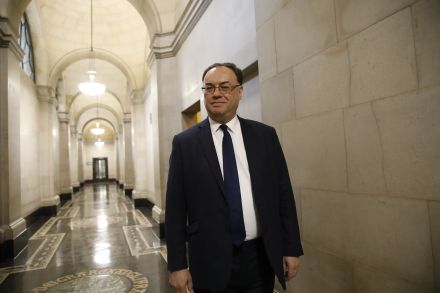
Speaking to BBC Radio 4’s Today programme this morning, Andrew Bailey threw his support behind one of the more optimistic scenarios for a post-Covid economic recovery: that the UK will be back to pre-pandemic levels by the end of the year. The combination of the UK’s hugely successful vaccine rollout combined with increased levels of lockdown immunity – that is, the economic impact of restrictions ‘reducing as we all adapt’ – had the Governor of the Bank of England suggesting that we could see a full recovery by the end of the year (notably earlier than the Office for Budget Responsibility’s Budget forecast of roughly the middle of next year).

Europe’s vaccine suspensions could come back to bite Britain

From our UK edition

Germany is the latest country to suspend the Oxford-AstraZeneca coronavirus vaccine over concerns about possible side effects. The Netherlands and Ireland have taken similar steps. So too has Denmark, Norway, Bulgaria and Iceland, while Italy and Austria have halted the use of certain batches of the drug as a precautionary measure.  Britain has done many things wrong in its handling of the pandemic, but it has done one thing well: the rollout of the jab. It's the one place where we have useful lessons to teach the world in Covid-19. Europe, in particular, does not appear to be listening. Vaccine programmes as ambitious as the one needed now require joined-up international co-ordination and action.

Priti Patel’s cowardly response to the Clapham Common debacle

From our UK edition

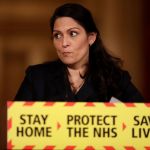
Priti Patel's reaction to the ugly scenes on Clapham Common on Saturday has been to point the finger. ‘Some of the footage circulating online from the vigil in Clapham is upsetting. I have asked the Metropolitan Police for a full report on what happened', she has said. But do we really need to wait for a report to work out what has happened?  Perhaps, instead, the truth is rather simpler: the police were enforcing laws put into places by Priti Patel's own government. Of course, there is some debate as to whether officers should have exercised more judgement in the applications of these laws. On this point, though, Patel has been clear: there should be no ifs or buts in the way officers enforce lockdown rules.

Boris, Biden and the era of big government

From our UK edition

Bill Clinton’s declaration that ‘the era of big government is over’ summed up the late 1990s political zeitgeist. Centre-left political parties could win if they accepted the small state model bequeathed by the Thatcher-Reagan consensus. Now things feel very different, as I say in the Times today. The stimulus Joe Biden signed into law is huge, $1.9 trillion (£1.4 trillion): three times larger than the financial hole created by Covid. Here there has been nothing as dramatic. But it is still telling that Boris Johnson is insistent that the public finances won’t be brought back into order by ‘austerity cuts'. Big government appears to be back. Politics is going to become very scratchy This isn’t just about Covid ether.

The UK economy is suffering worse than most

From our UK edition

Last week The Spectator highlighted new data from the OECD that offers a weekly update comparing a country’s current GDP levels to the previous year. It continues to show the UK experiencing some of the highest levels of economic damage. If you factor in lockdown stringency, you can also make out a rough correlation between countries under the strictest lockdowns and countries taking the biggest hits to GDP. Just how reliable are these calculations? A cross-check between the OECD data and the Office for National Statistics' monthly GDP update would suggest it’s pretty spot-on, if not slightly more positive. Today’s update from the ONS shows the economy to be 9.2 per cent below where it was in January 2020.

My €25 Covid jab surprise

From our UK edition

Around the time that poor M. Macron was casting televised aspersions on the AstraZeneca jab, I was offered one by Mme Michaud, our hardworking French village GP. Concerned about her bosoms, Catriona had visited for a routine appointment and while there had asked what the chances were of getting a Covid jab. By a stroke of good luck, Mme Michaud said she had a batch of the AstraZeneca vaccine arriving in a fortnight and would her friend like one as well? Consequently my name was pencilled on her list, but with a question mark against it. My busy oncologist at Marseille replied to my email within two minutes.

Vaccines are testing Central Europe’s loyalties to the EU

From our UK edition

In a fresh embarrassment for the EU in its vaccine rollout, breakaway member Hungary is now at the top of the bloc’s vaccine league table. The Czech Republic, Hungary’s Visegrád Four ally, languishes near the bottom of the list, having so far stuck with the EU’s centralised procurement programme. Meanwhile neighbouring Slovakia has now opted for the Hungarian approach, having taken delivery of its first shipment of Sputnik V vaccines last week. Problems are certainly piling up for Brussels – and in Central and Eastern Europe, a region with a long history of EU rebellion, the idea of ‘going it alone’ is heightening tensions between pro- and anti-EU factions.

UK summons EU officials over ‘false’ vaccine claims

From our UK edition

Foreign Secretary Dominic Raab has blasted claims by a senior Eurocrat that the UK is hampering the bloc's vaccine rollout, calling the questionable assertions 'completely false'. Charles Michel, president of the European Council, initially argued that Britain had imposed an 'outright ban on the export of vaccines or vaccine components' leaving the country in an EU blog on Tuesday. (Michel then subtly soften his claim after commentators pointed out there was no such 'outright ban', instead he said there were 'different ways of imposing bans or restrictions on vaccines'.) But London was having none of it.

Rishi Sunak’s real opponent

From our UK edition

Things are starting to get more awkward for Rishi Sunak — something the Chancellor has long been prepared for. He knew that the early months of the pandemic, in which he gave out billions in taxpayers' cash, would fade to the rather more difficult landscape he now faces: trying to rein that spending in — and stop ministers from eking more and more out of the Treasury for their own departments.  At this morning's Treasury questions, Sunak inevitably faced questions about the bombshell dropped by NHS chief Sir Simon Stevens in a select committee hearing that the NHS had been budgeting for a 2.1 per cent pay rise.

How worried should we be about a third wave?

From our UK edition

At the beginning of the year, Boris Johnson and his advisers were at pains to tell us that by spring we would be in a vastly better situation with Covid. Well, spring is here, the number of new infections and deaths is falling by around 30 per cent week on week, deaths are back to where they were last October and new infections last September. The vaccine programme is running on time, and take-up has been high. Why, then, was the chief medical officer Chris Whitty so downbeat when he addressed the House of Commons science and technology committee this morning?

Sunak’s NHS pay rise headache

From our UK edition

Will the government press on with a 1 per cent pay rise for nurses? Despite the Chancellor announcing tax rises in his Budget, it's a recommendation over NHS pay that is proving the most contentious for ministers. The Department of Health has recommended a 1 per cent rise to the independent panel that advises the government on NHS salaries. This is below what had been expected — with nurses' unions campaigning for a pay rise as high as 12.5 per cent. Government aides are keen to stress no decision has been made as the independent body is not due to make its recommendation until May.  Speaking today before the health select committee, NHS chief Simon Stevens has confirmed that the NHS had budgeted for a higher pay rise of 2.1 per cent.

Will reopening schools set back Boris’s lockdown timetable?

From our UK edition

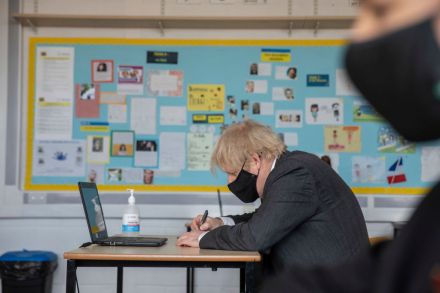
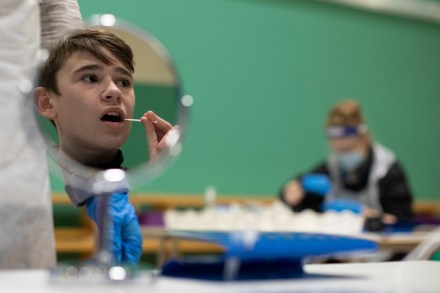
Schools in England have gone back today, with pupils taking lateral flow tests and being asked to wear masks in order to keep the risk of infections as low as possible.  Today Boris Johnson held a special press conference to mark what he described as an 'emotional' moment in the exit from lockdown. He said that the 'overwhelming feeling is one of relief' and that the 'greater risk now is keeping them out of school for a day longer'.  There are rumblings about whether the current plan for lifting restrictions is sustainable He praised teachers for getting schools ready and for teaching throughout the lockdown period, and parents for homeschooling while trying to hold down their own jobs.

What the return of classrooms means for Covid

From our UK edition

Will the return of schools reverse, or dramatically slow, the sharp downwards trend in new Covid-19 infections, which is currently falling at more than 30 per cent a week? No one knows for sure, but it seems unlikely that the mass return of schools today will not have some effect on infections in England, especially given that it involves a section of the population that has not been vaccinated.  While few children suffer serious symptoms of Covid-19, they can carry the disease — older children, especially. For that reason, a return of unvaccinated children to school is likely to have a greater effect on raw infection numbers than, say, a return of vaccinated over-70s to bowls clubs and whist drives.