Covid-19

Vaccine hesitancy is more dangerous than rare side effects

From our UK edition

‘If you sail a massive liner across the Atlantic, you are going to have to make at least one course correction.’ This was the analogy used by professor Jonathan Van-Tam, the UK’s deputy chief medical officer, when explaining why the UK has opted to change its approach to vaccinating healthy 18 to 29-year-olds. For this group, officials argue, there is no point in taking any risk whatsoever, no matter how negligible, and that instead they should be offered the Pfizer-BioNTech or Moderna vaccines instead of Oxford-AstraZeneca. What we need now is urgent action to re-vitalise vaccine confidence On the one hand, from a clinical perspective, this seems very reasonable — why take any risks if there is a better choice available?
‘Protect the NHS’ is all very well, but when will the NHS protect us?

From our UK edition

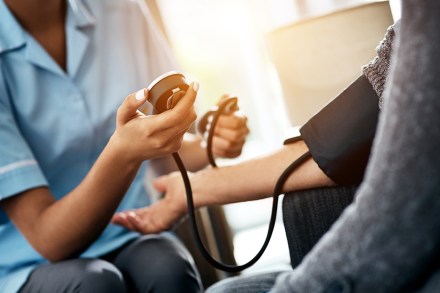
After refusing to issue my HRT without a blood pressure test, the GP surgery rang to offer me an appointment. ‘I can come any time,’ I said, trying to be accommodating. Having complained about this particular practice before, I felt guilty. They have been very good at issuing me with repeat prescriptions through their online service during lockdown. When a polite, cheerful receptionist said I could not have my HRT without an appointment this time, because my annual blood pressure test was due, I saw that as a good thing, a sign they were doing their job properly. I made a mental note to write about how nice and efficient they were being in this case. Then the receptionist said: ‘I can offer you a telephone appointment next Wednesday.

Vaccine passports are a kick in the teeth for young people

From our UK edition

After a year in which young people have lost their jobs, been denied time in the classroom and at university and not been allowed to see their friends, could they now be penalised again? Boris Johnson said we 'have to be very careful how you handle this and don't start a system that is discriminatory' when vaccine passports, or 'Covid status certification', were raised at a briefing this week. Yet it's hard to imagine a more grossly unfair, discriminatory system than introducing vaccine passports before young people have the opportunity to be vaccinated. Young people have sacrificed so much for a disease that they are relatively invulnerable to.

Are we at risk of another Covid wave?

From our UK edition

Could we really see another peak in Covid-19 hospitalisations as bad as January once society reopens in June? That was the story widely reported this morning, based on the latest modelling from SPI-M, the government’s advisory committee on modelling for scientific emergencies. The study caught attention not least because back in January very few people had received a vaccine: now, 56 per cent of the adult population has been vaccinated. By July, on current forecasts, every adult in Britain will have been offered at least a first vaccine dose. How, if vaccines actually work — and there is a lot of evidence to suggest they do — could we end up in as bad a situation as we did before we had population-wide vaccination?

Johnson is in trouble over vaccine passports – and it’s showing

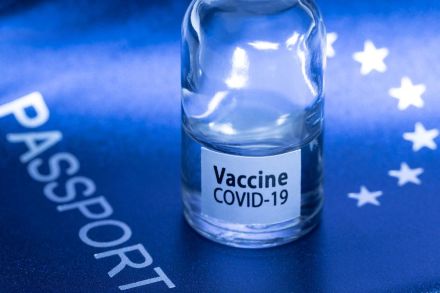
The biggest question facing Boris Johnson is the future of his so-called vaccine passports. A few months ago, the idea was dismissed by No. 10 as 'discriminatory'. Matt Hancock, the Health Secretary, said: 'We are not a papers-carrying country.' But now, without debate or democratic scrutiny, vaccine passports are quickly heading from unthinkable to unstoppable. Today, No. 10 released more details — hence the questions Johnson is facing. But bizarrely, the Prime Minister was unable to admit to any of it, and pretended to be confused by what he was being asked. This matters.

Johnson takes the next step out of lockdown

From our UK edition

When Boris Johnson first unveiled his roadmap out of lockdown, there was a promise of an end to restrictions by 21 June. That date was quickly dubbed 'freedom day' online and in the press. However, many of the tricky decisions on social distancing, travel abroad and IDs were pushed later down the line into various government reviews. Today, the Prime Minister offered an update. Johnson had some good news — confirming that phase two of the roadmap would go ahead on 12 April. But his address also pointed to how there is unlikely to be a quick bounce back to normal come 21 June.

Go with the flow: how helpful is mass testing?

From our UK edition

Over half the adult population has been vaccinated, new infections and deaths have plummeted to their lowest level since last September — and the government chooses this point to launch a programme to test every adult for Covid twice a week. The Prime Minister is due to announce this afternoon that lateral flow testing kits will be distributed by the million, free of charge to anyone who wants them. We will all be encouraged to test ourselves — and be placed under an obligation to self-isolate if they are positive. Why? We have spent the past three months on a massive vaccination programme, using vaccines that have proved pretty well 100 per cent effective at preventing deaths and serious illness.

Macron’s Napoleon complex

From our UK edition

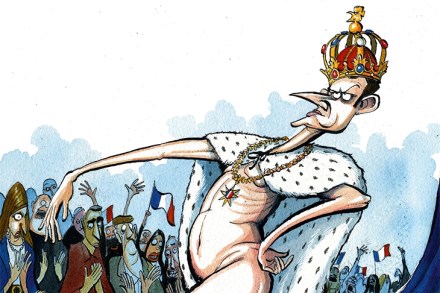
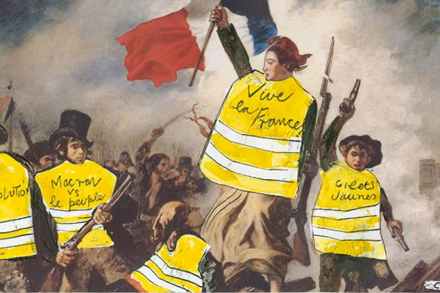
May 5th this year will be the two hundredth anniversary of Napoleon’s death on Saint Helena, the tiny island in the south Atlantic where the British confined the Emperor to Longwood House after defeat at Waterloo in 1815. After much hesitation, Emmanuel Macron has decided that France will commemorate the Emperor’s place in French history. Though the most recognisable historical figure in all surveys of the French, almost no public spaces or institutions bear his name. Monarchy and Republic cancelled him. Bonaparte divides. He is at once the figure who tamed the Revolution, drastically reformed France and yet the dictator who overran Europe and reinstated slavery.

Lockdown and cancer: are we getting the full story?

From our UK edition

The 10 Downing Street press conferences on Covid-19 tend not to show graphs about cancer care. We see various charts by statisticians and epidemiologists, but the impact of lockdown on patients with time critical conditions such as cancer has been largely ignored. The disruption of cancer services is a global phenomenon, but the suspension of screening services and failure to protect cancer services in the UK has resulted in 40,000 less cancers being diagnosed last year, compared to 2019. The true scale of the cancer backlog has yet to be acknowledged by the UK government, far less prioritised with specific additional funding. Denial could cost lives.

Covid has forced ministers to reassess mental health

From our UK edition

Has the pandemic really been good for the way the NHS treats mental health? That’s the rather startling claim I report on today in my i paper column. Ministers have started to talk — equally surprisingly, it has to be said — about the possibility that they are close to reaching parity of esteem between the treatment of mental and physical health, and that the chaos of Covid is partly responsible. Covid has certainly made it harder for the government to just offer talk and no cash on mental health Now, it slightly depends on what your definition of ‘parity of esteem’ is.

Pfizer trial finds vaccine ‘100% effective’ against South African variant

From our UK edition

Pfizer and BioNTech have released some extraordinary findings from a Phase 3 trial involving 46,307 participants, between seven days and six months after a second dose was administered. The vaccine was found to have a 91.3 per cent efficacy rate. These findings line up with the real world data coming out of Israel, which has used the Pfizer vaccine to inoculate its population, and reported several weeks ago that it proved 94 per cent effective in preventing symptomatic illness. But on top of the overall efficacy rate came even better news: Pfizer is reporting that the ‘vaccine was 100 per cent effective in preventing severe disease’ as defined by the US Centers for Disease Control.

My password amnesia got me into hot water

From our UK edition

Chelsea/Gstaad Oh, to be in England! But let’s start at the beginning. I challenge any reader to claim they are more technologically disadvantaged than yours truly. Or anyone not suffering from Alzheimer’s, at least. I resisted getting a mobile telephone until my days on board a sailing boat became a nightmare. I missed get-togethers, lost friends, and finally gave in around ten years ago. More trouble followed. For example, I get pings all the time and can see on screen the names of Pugs members sending messages to each other. But I don’t know how to put in my five cents. Prince Pavlos of Greece set my phone up so that it rings, but in the meantime poor little Taki is voiceless. And it gets better — or worse rather.

Macron’s latest lockdown fiasco

From our UK edition

On New Year’s Eve, Emmanuel Macron promised France an economic revival by the Spring. Cancel that. Instead, as the intensive care units are saturated by a third wave of Covid, we have a new lockdown light and a new message from the president: ‘Don’t panic.’ More than a year after Macron the general took personal command of the war on the new coronavirus, the vaccination program has still to get into high gear, the doctors are threatening to triage patients, abandoning those with little hope, yet there was no hint of contrition from the president. Instead, he announced that we are to be subjected to yet another baffling set of rules which together comprise a sort of ‘confinement,’ although Macron never used the word.

What should we make of the WHO Covid report?

From our UK edition

Should we believe the conclusions of the World Health Organization (WHO) report into the origins of the SARS-CoV-2 virus which, as expected, dismissed the possibility of a laboratory accident while giving credence to the theory that the virus was imported via frozen foods? The first thing to note is that the report does not even claim to be independent — it is billed as a 'joint WHO-China study'. It deserves to be read as such: as the product of an undemocratic government that has every incentive to deflect any responsibility for a pandemic that has, to date, been blamed for 2.7 million deaths globally.

Can we see the vaccine effect?

From our UK edition

Britain’s Covid data is moving in the right direction. Today’s update from the Office for National Statistics confirms this on one of the most critical measures: excess deaths. For the second consecutive week, deaths in England and Wales are below the five-year average. In the latest week ending 19 March, there were 10,311 registered deaths — 676 fewer deaths than the week before and down 8 per cent on the average. The good news doesn’t stop there. Not only are deaths down (more than 90 per cent below the peak of the latest wave) but the vaccine factor is also showing its effect.

Boris Johnson’s vaccine problem

From our UK edition

On the day that people are finally allowed to gather in groups of six outside, tennis games get underway and wild swimmers take to Instagram en masse, Boris Johnson attempted to land a message of caution with the nation. Speaking at today's press conference, the Prime Minister spoke of the need to 'proceed with caution' as the country takes a 'small step to freedom today'.  The nerves in government point to a problem that will only grow as the vaccination programme continues at pace The PM pointed to Covid cases rising across the Channel as a cause for concern that shows the need to 'continue flat out to build the immunity of our population (and) build our defences against that wave when it comes'.

Covid virtue-signalling has infected our TV dramas

From our UK edition

Not for the first time in its history, Eastenders managed to make a bit of a stir last week. In a break from the more harrowing stuff, viewers were treated to the sight of the ever-sprightly Patrick Trueman waltzing into the Minute Mart to jubilantly announce he’d received his second Covid vaccine. ‘Good for you! I’m due my first one later today,’ replied the shop-keeper, before dismissing the objections of a vaccine hesitant customer (called Karen, of all things). As you can imagine, the scene went down like a cup of cold sick with conspiratorially-minded types online. But you don’t have to believe odd things about Bill Gates to ask the more obvious question: which is why soap operas are tackling the pandemic in the first place. I get it.

Zoomers like me don’t realise how lucky we are

From our UK edition

For millennials like me, talkin' 'bout our generation usually involves complaining. We Generation Zs – or zoomers – can’t seem to catch a break. Even before the pandemic, we were on track to be the first generation worse off than our parents since the Great Depression. It takes us twenty-somethings six times as long to save for a deposit as forty years ago. Having been told by Tony Blair a university education was essential, we leave, saddled with debt, to confront an over-stuffed and unwelcoming graduate market. After spending 2020 locked up against a disease that has a limited impact on young people, we face unemployment and decades of higher taxes to pay off Dishi Rishi’s debt mountain. Unsurprisingly, we’re a tad cross.

Sunday shows round-up: ‘every confidence’ future lockdowns can be avoided, says Dowden

From our UK edition

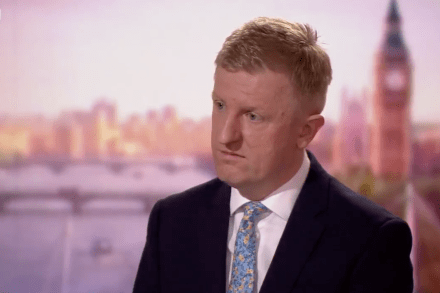
Oliver Dowden – We have ‘every confidence’ there will not be future lockdowns The Culture Secretary Oliver Dowden was in the hot seat this morning amid reports that a third wave of Covid-19 is engulfing much of continental Europe. Many of the UK’s close neighbours, including France, Germany and the Netherlands, are re-introducing or extending measures to combat the so-called ‘Kent variant’ of the disease. Andrew Marr sought to get reassurance from Dowden that the government would not end up plunging England back into a fourth nationwide lockdown: https://twitter.com/BBCPolitics/status/1376097151437135876?

France accuses Britain of vaccine ‘blackmail’

From our UK edition

In some ways you have to admire the sheer shamelessness of the French government. To spend the start of the year slagging off the AstraZeneca vaccine before threatening the seize those very same jabs showed a degree of brazenness that excelled even the usual French standards. But to accuse the UK of blackmailing Paris and her European neighbours must be the peak of Gallic gall.  The French foreign minister Jean-Yves Le Drian spoke to a radio show this week in which he criticised the UK's vaccine programme. He told listeners: 'You can't be playing like this, a bit of blackmail, just because [the UK] hurried to get people vaccinated with a first shot.' He then denounced the British government's plan to ensure that it...