Consumerism

The stealth philanthropy of buying a Range Rover

Even though Christmas is over, I’ve been thinking about the season just gone. There is a tradition of complaining about its commercialisation, portraying Christmas as a grotesque manifestation of consumer excess. But it’s strange to use our seasonal extravagance to attack consumer culture. That’s almost diametrically wrong. What Christmas really shows is that consumer capitalism is doing a cracking job: it’s the rest of the economy that’s a mess. Consider food. The median family today, even if they’d spent December shopping at Fortnum & Mason and Daylesford Organic, would have spent a lower proportion of their income on food than an equivalent family would spend just to survive in the

Why religious societies succeed – with Rory Sutherland

35 min listen

Advertising guru – and the Spectator’s Wiki Man columnist – Rory Sutherland joins Damian Thompson for this episode of Holy Smoke. In a wide ranging discussion, from Sigmund Freud and Max Weber to Quakers and Mormons, they discuss how some religious communities seem to be predisposed to success by virtue of their beliefs. How do spiritual choices affect consumer choices? Between Android and Apple, which is more Protestant and which is more Catholic? And what can modern Churches learn from Capitalism? Produced by Patrick Gibbons.

Is China riding for a fall?

The West gets China wrong. Spectator readers know the country as a vampire state feasting on foreign intellectual property and spewing out phony economic data in its thirst for wealth and power. It certainly is these things – but it also isn’t. It is more complex, and telling only half the story is ultimately self-defeating. While there is plenty to appal us about modern China, there is also much that we can learn from it. In Breakneck, Dan Wang reveals both sides of the ledger. ‘Too many outsiders see only the enrichment or the repression,’ he complains. His ‘big idea’ is that China is an engineering state, building at breakneck

The artists ensnared by the capitalist system they affect to despise

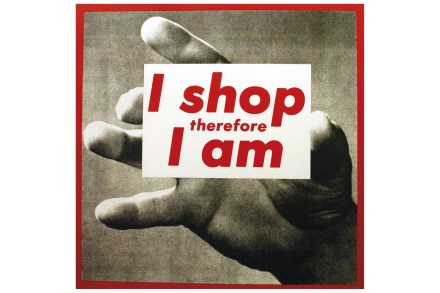
A few years ago, the American artist Barbara Kruger covered the façade of Frankfurt’s Kaufhof department store with a pair of huge eyes. It was as if Big Brother had come out of retirement. Above that unsparing gaze was the slogan, in Kruger’s signature Futura bold italic font: ‘You want it. You buy it. You forget it.’ It was a typical work of art by Kruger. She made her career from what’s called culture jamming, subverting media messages by transforming them into their own anti-messages and by indicting the business of capitalism. In 1987, for instance, she took an advertising image of an all-American boy flexing his juvenile biceps before

Join the counter culture, continue Christmas

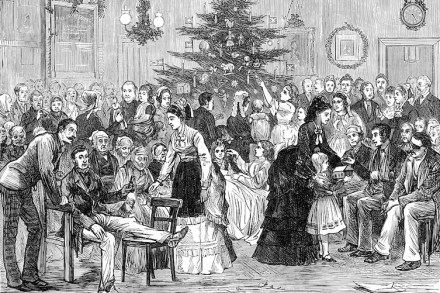
The great Joan Collins, this paper’s occasional diarist, was quick off the mark in putting up her Christmas decorations… around November, I recall. But the really sane and sensible thing to do is to go retro and be late taking them down. Today is, I need hardly say, the Twelfth Day of Christmas when the three wise men turned up at Bethlehem with their gold frankincense and myrrh. Happy Epiphany. But in happier days, viz, before Christmas was commercialised last century, and in even happier times before the Reformation, the season didn’t turn out like a light. It went into a kind of slow-burn right down to Candlemas on 2