Conservative party

The Tories should pledge to cut the BBC’s licence fee

There has not been much good news out of Greece since the eurozone powers decided to crush the country, but it is heartening that the state broadcasting company, ERT, has been closed down. All such broadcasting systems, including the BBC, are attempts to impose certain political and cultural norms upon the population, and force them to pay for them. ‘This is how fascism works,’ protested one ERT ex-employee, as the riot police evicted her colleagues — who were trying to keep the service running — ‘slyly and in darkness’. She has got it back to front. Fascism (or communism) can prevail only if a state broadcasting system exists. Now that the conservative dominated Greek government has stopped it and won its parliamentary vote of confidence, I hope that

David Cameron: Miliband's Labour poses the same old danger

David Cameron’s speech at the Lord Mayor’s banquet yesterday evening rehearsed some basic political arguments that will be honed between now and 2015. Cameron made a decent assault on Labour over the cost of living: ‘There are some people who seem to think that the way you reduce the cost of living in this country is for the state to spend more and more taxpayers’ money….At a time when family budgets are tight, it is really worth remembering that this spending comes out of the pockets of the same taxpayers whose living standards we want to see improve.’ The logical corollary of that statement is pretty obvious: smaller government and

Can the Tories become a mass membership party again?

In the average Tory seat, only around 0.5% of Tory voters are Tory members. Grants Shapps, the Tory chairman, wants to change this. He’s written to every Tory MP asking them to take charge of a push in their seat to raise this percentage to 3. If this drive succeeds, Tory membership would rise to 800,000 plus. Opinion among Tory MPs on this move is divided. Some think that the era of the mass membership political party is over. Others, though, argue that increasing membership is doable—even if Shapps target is a tad too ambitious. There is also the issue of how the Tories can increase their presence in areas

Can we expect more social conservatism from the Tories?

The Telegraph reports that the Relationships Alliance, which is to launch in the House of Commons, warns that the ‘disintegration of romantic, social and family relationships costs the average taxpayer around £1,500 a year’. Apparently this amounts to £50 billion a year. The story is of course familiar, even if the figures involved are new. Broken relationships can cause immense social and economic damage to the wider community. The Relationships Alliance, which is a union of charities, actions groups, politicians and individuals, has come into being to convince the government to adopt a national strategy to counter these costly ills. Relationships do break down, and some relationships should be dissolved. The question is how to limit the

How 'Help to Buy' helps the Tories

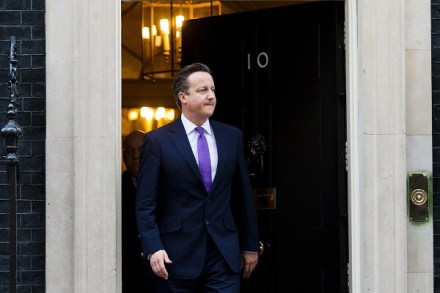
Few images are more seared in the Tory consciousness than that of Margaret Thatcher handing over the keys to people who had brought their council house under ‘right to buy’. The image seemed to sum up the aspirational appeal of Thatcherism. I suspect that there’ll be a slight homage to these images when Cameron meets some of those that the government’s ‘Help to Buy’ scheme is helping onto the housing ladder tomorrow. Number 10 wants to show that the full scheme, which has only been running for a month, is already being used by a large number of people. The economics behind ‘Help to Buy’ might make many on the

There mustn't be a north / south divide when it comes to fracking

Michael Fallon, who among his many roles is the minister in charge of fracking, has told the Telegraph’s Jame Kirkup that ‘right across the South’ people should prepare for fracking coming to a neighbourhood near them. Considering that fracking will bring with it jobs, growth and cheaper energy this is good news. But it is also good news because it should prevent a north / south fracking divide. There was a danger that fracking would appear to be something that the Tories were happy to have happen in the north but not in their own southern backyards. The former Tory Cabinet Minister Lord Howell’s call for fracking to be concentrated

Anna Soubry’s attack on Nigel Farage was planned

There’s a rumour doing the rounds that Anna Soubry’s comments on immigration during Thursday night’s edition of Question Time did not come as a surprise to Tory High Command. Apparently, Soubry refused to take direction from the party machine and made clear that she would say, more or less, what she said. Coalition has certainly bred independent-minded ministers. The Lib Dems pick and choose which government policy to support in public, so it’s not wholly surprising that Tories sometimes follow suit. But, tough immigration policy is a key part of the Tories’ grand strategy and Soubry’s open disregard for the party line was striking. Plainly Lynton Crosby and Craig Oliver

Crispin Blunt and Reigate are fighting for the future of the Conservative Party

Senior Reigate Conservatives are trying to de-select Crispin Blunt as their MP, who lost a re-selection ballot of just 22 Executive Council members. Blunt came out as gay in 2010, which didn’t seem to bother his local electorate one jot. However, it seems that his own Association’s elite was disconcerted that he was coming to terms with his sexuality. Former Reigate Association Chairman, Tony Collinson, said that Blunt would not necessarily have been selected as a candidate if he come out before, and he was not alone. One of Blunt’s supporters, Dr Ben Mearns, has resigned from his local Conservative branch over the issue of the executive council’s treatment of Mr Blunt. Blunt now

Spineless Anna Soubry spouts hypocritical bilge about immigration

I can just about take bien pensant lefties attacking UKIP for ‘scaremongering’ about immigration and accusing the party of being racist and prejudiced and so on. After all, a good many of them would have unlimited and unrestricted immigration to this country – and I can at least see a logical and moral case to that argument, even if I don’t agree with it. But from a front bench Tory? I don’t know if you saw the ridiculous Anna Soubry MP spouting hypocritical bilge on Question Time. It was emetic. Accusing Nigel Farage of ‘putting fear into people’s hearts’ over the issue of immigration. How she could do that with

How Tory Euroscepticism has changed

In just over half an hour, MPs will flock to the Chamber to watch the report stage and third reading of the Wharton Bill. I explained yesterday that there will be a chunk of Tories  who find themselves forced to support Adam Afriyie’s call for an early referendum because it is a UKIP ‘red line’, but there is little good feeling about it. One MP, who was going to back the amendment for those reasons, told me this morning that he’d decided to abstain because the amendment does not help the eurosceptic cause at all. Before #LetBritainDecide reaches fever pitch in the Commons, though, it’s worth considering how that eurosceptic

Letters | 7 November 2013

Counting on the country Sir: I spent many hours helping to canvas for local Conservative candidates before the last two elections (‘The countryside revolts’, 2 November). I was motivated to do so because of the Labour government’s prejudice against the rural community. The Conservative party offered a chance to redress this prejudice through repealing or amending legislation on small employers, hunting, communication, transport, fuel, immigration and the EU. But progress on these issues has been negligible. We see no action on the Hunting Act, and no action to stop the harassment of country people by vigilante pressure groups, despite managing a more robust reaction to anti-fracking campaigners. Huge effort has

Tory MPs flee dreaded 'Europhile' tag to Adam Afriyie referendum bill bid

In case you’ve been wondering what that strange feeling of tension in the air across the country is, the #LetBritainDecide bill returns to the Commons tomorrow for its report stage and third reading. There is, actually, rather a lot of valid tension – in as much as a backbench bill that will never become law can create valid tension – over the legislation this time around. The first reason is that Labour’s Mike Gapes has tabled a fantastic series of amendments to try to wreck the bill, which join his fantastic series of amendments that he tabled at committee stage. The second is that there are many more Tories planning

Hugo Rifkind: Yes, I'm apathetic about politics. But isn't Russell Brand?

Since I was a child, pretty much everybody I have ever met has asked me if I want to be a politician. The answer has always been no. Once, at university, I dimly remember giving this answer with so much vigour and conviction that I was escorted from the room, and the guy I’d given it to — an almost perfect stranger — came back to find me the next day, to apologise for asking in the first place. Even these days, the phrase ‘follow in your father’s footsteps’ drifting across the table at a dinner party can cause my wife to shoot me a warning look. My point here

How the Tories will write their manifesto

This week, David Cameron will announce the creation of a series of policy commissions charged with drawing up policies for the next Tory manifesto. Strikingly, every commission will include on it the chosen representative of the Tory backbenches. The groups will, as I say in the Mail on Sunday, be made up of the relevant Cabinet Minister, a member of the Prime Minister’s policy board and the MP in charge of the 1922’s policy work in this area. The Downing Street Policy Unit will provide the secretariat. Number 10’s hope is that by bringing MPs into this process, they’ll feel more loyal to the manifesto once it is produced. As

Why do the Tories lead on the economy and leadership but trail overall?

One of the odd things about the polls at the moment is that the Tories lead on economic competence and leadership, traditionally the two most important issues, yet trail overall. There are, I argue in the column this week, three possible explanations for this polling paradox. The first possibility is that Ed Miliband is right, that the link between GDP growth and voters’ living standards is broken. A consequence of this is that voters put less emphasis on economic management in the round. Instead, they want to know which party will do most to help them with their cost of living. Then, there’s the possibility that the traditional political rules

Police drop investigation into Grant Shapps' former business

One of the stranger rows since the Coalition formed has been over Tory chairman Grant Shapps/Michael Green, and whether or not businesses he ran before entering politics were engaged in unlawful activity. How To Corp, which Shapps founded before passing his share to his wife in 2008, sold a software called TrafficPaymaster, which copied content from other websites so that clients could make more money from Google advertising. Labour MP Steve McCabe complained about the firm to Director of Public Prosecutions Keir Starmer and the Metropolitan Police, and today the Met have responded. The letter, which you can read in full here, says that while legal advice to the Met’s

High-speed fail

A year ago the electoral strategies of the two main parties seemed set. The Conservatives would stand as the party of prudence, claiming to have saved Britain from a Greek-style meltdown through austerity measures which, though painful at the time, had eventually borne fruit in the shape of a private sector-led recovery. Labour, meanwhile, would stand as the party for public investment, promising to repair what it saw as the damage wrought by cuts. Since then, things have got better for the Tories than they could have imagined. Not only did a threatened triple-dip recession fail to materialise, but revisions to economic data concluded that Britain did not even suffer a

Whips declare victory in HS2 vote

As expected, the government’s high-speed rail preparation bill cleared the Commons this evening, with 350 votes in favour and just 34 against. Only 18 of those were Conservative MPs, which deputy chief whip Greg Hands seems very keen indeed to highlight (see here and here), perhaps to suggest that he’s already working his magic in his new job. But we reported earlier that one of the whips’ strategies was to let any possible rebel have the day off to spend with their children over half term. How family-friendly. What was of more interest was Labour’s position before, during and after the debate. Summing up, Mary Creagh argued that ‘it is we on this side of the House who

Tory MPs: here's how you can get half-term off with your kids

Don’t expect this afternoon’s vote on HS2 to be the biggest insurrection of all time: it is the preparation bill and there are a number of reasons why MPs who could yet oppose the project won’t cause trouble this afternoon. One is the rather technical reason that some want to support this legislation in order to secure adequate compensation for constituents whose property will be blighted until an alternative route is chosen or all three parties agree to invest in existing lines. Another is that some remain to be convinced of the case for the line: the whips have been working rather hard on this, I hear. But the third

David Cameron has lost the countryside

When hunt supporters visit the office of a Tory cabinet minister these days, they like to turn up armed and dangerous. And so it was when a delegation from the Countryside Alliance arrived for a private meeting with the Environment Secretary Owen Paterson a few weeks ago, wielding an alarming new poll of their membership. Setting the dossier down in front of Mr Paterson (one of their few allies in government), they spelt out the bottom line: 13 per cent of Countryside Alliance members now intend to vote Ukip in the next general election. Let’s be clear: given that the CA is basically the voice of the shires, that is