Conservative party

Are the cultural Marxists in retreat, or lying low?

In his Memoirs, Kingsley Amis includes a story about meeting Roald Dahl at a party in the 1970s. Dahl advises him to write a children’s book — ‘That’s where the money is’ — and brushes aside his objection that he doesn’t think it would be any good. ‘Never mind, the little bastards’d swallow it,’ he says. Then, a few minutes later, Dahl raises himself to his full height and, with the air of a man asserting his integrity in the face of an outrageous slur, says: ‘If you do decide to have a crack, let me give you one word of warning. Unless you put everything you’ve got into it, unless you write it from the heart, the kids’ll have no use for it.

Drugs are a waste of time, but so is the Psychoactive Substances Bill

The Conservatives might have gone in softer than Russell Brand and the gang predicted, with very little change announced in the Queen’s Speech last week, but they didn’t fail to cause a stir. The proposed 'Psychoactive Substances Bill' is designed to provide a blanket ban on all substances which produce a mind-altering effect, with several allowances made for booze, fags and chocolate. The idea is to protect the public from any psychoactive substance that ‘affects the person’s mental functioning or emotional state’. Rather than replying to a public demand for such drastic measures, the Home Office stated the purpose of the bill was simply to 'protect hard-working citizens'.

The march of the ‘yes’ men

Forty years ago this week, Britain voted to remain part of the European Community. That remains the only direct vote on the European question that the country has had. The promise of a say on the EU constitution was shelved when that document metamorphosed into the Lisbon Treaty, and the ‘referendum lock’ that the coalition introduced has not yet been triggered by a transfer of power to Brussels. So it’s a historic process that the government will begin on Tuesday, with the first Commons vote on its referendum bill. Straight after the election, there was much speculation that the government would opt for an early referendum on EU membership, rather than leaving it until the 2017 deadline set in the Tory manifesto.

Cameron has a PMQs trump card – he won the election

The first PMQs after an election victory is a moment to savour for a Prime Minister. He knows that the result gives him a trump card he can play again and again. So, it was unsurprising that Harriet Harman made little progress against Cameron. He treated it as a gentle net session, meeting each question with a slightly more aggressive and expansive answer. He did, though, seem slightly discombobulated by Ed Balls’ absence. Early on he made a joke about Balls’ defeat and then looked over to where Balls used to sit to drive the point home, but Balls – of course — wasn’t there.

SNP and Conservatives find a common cause

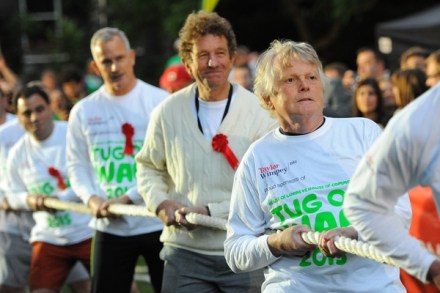
Ever since the 56 SNP MPs arrived in Parliament, their main focus seems to be battling Dennis Skinner for his seat. Happily, the Scottish Nationalists appeared to have a night off from pestering the 83-year-old MP yesterday, with Angus MacNeil teaming up with the Conservatives to take on the Lords in Macmillan Cancer Support's annual Parliamentary Tug of War: [caption id="attachment_9147112" align="alignnone" width="510"] Angus MacNeil, the SNP MP, helps his team to clinch victory against the Lords[/caption] Although the battle was close, the Commons men, captained by Mike Penning MP, came out on top over the Lords, who were led jointly by Lord Dobbs and Lord Collins of Highbury.

New head of Conservative Way Forward aims to keep Tory activists busy

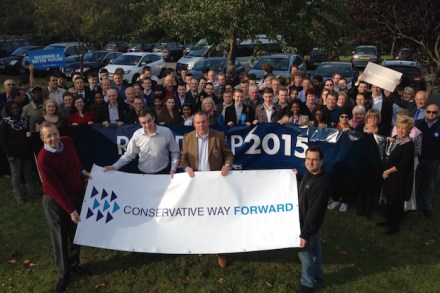
Westminster is still recovering from the 2015 election but some Conservatives are already thinking ahead to 2020. Two of Conservative HQ’s activist movements, Team 2015 and Roadtrip 2015, were key in mobilising support on the ground, as well as getting out the vote. Although Team 2020 is a long way off from hitting the stump, a key member of the Tories’ operation is planning to continue this work from outside the party. Grant Shapps’ former chief of staff Paul Abbott is leaving Conservative HQ to run Conservative Way Forward, the Thatcherite pressure group that counts tub-thumpers Norman Tebbit, Liam Fox and Conor Burns among its patrons.

David Cameron is putting himself in the firing line on immigration

One of the important but unglamorous adjustments that the Conservatives have had to make in majority government is the structure of government itself. It’s the sort of thing that was particularly important under the Coalition, as Nick Clegg had managed, rather cannily, to gather a great deal of power for himself on powerful but unheard of Cabinet committees. Now there is no Nick Clegg, and Oliver Letwin has taken the former Deputy Prime Minister’s place on the Cabinet Committees where he wielded unseen power by blocking Tory policies.

Human rights reform: will the Tories end up with the same bill but under a new name?

Number 10 has not given an official denial that David Cameron has ruled out pulling out of the European Convention on human rights, with the Prime Minister’s official spokeswoman today saying that the manifesto was ‘absolutely’ the best guide to the Prime Minister’s position on human rights reform. This is what the manifesto says on human rights: We will reform human rights law and our legal system We have stopped prisoners from having the vote, and have deported suspected terrorists such as Abu Qatada, despite all the problems created by Labour’s human rights laws. The next Conservative Government will scrap the Human Rights Act, and introduce a British Bill of Rights.

The two tightropes that Cameron must walk on Europe

David Cameron has to walk two tightropes on Europe, and at the same time too. The first is to negotiate a deal with other European leaders that satisfies the bulk of his Euro-sceptic party. If this was not difficult enough, simultaneously Cameron has to show voters that the European question isn’t consuming all of his government’s energies. For despite its importance, it still rankles relatively low on the public’s list of priorities. To address the latter point, I’m told that Cameron will make a major domestic policy announcement in the week of every EU summit in an effort to show that he is not taking his eyes off the home front.

Why the Tories will probably get away with defence cuts

On election night, between the exit poll suggesting the Conservatives would be back in a coalition government and the slow realisation that they were heading for a majority, Defence Secretary Michael Fallon was heard remarking to colleagues that the UK might just end up maintaining defence spending at 2 per cent of GDP after all. He was banking, for a few hours anyway, on the DUP playing enough of a role in the formation of the next government that the Tories would have to commit to maintaining spending at that level - the target set by Nato and endorsed by David Cameron - in order to bring Nigel Dodds and co on board. But as today’s Times reminds us, that hasn’t happened and so now Fallon is having to find £1 billion of savings from the defence budget.

Ben Harris-Quinney suspended from Conservative party

Earlier this month Ben Harris-Quinney stepped down as the chairman of the Bow Group, following internal frictions over the Conservative think tank's partial Ukip endorsement ahead of the election. Now Harris-Quinney, who was elected as a Tory councillor earlier this month, has been suspended from the Conservative Party. In an email circulated to staff, a Conservative spokesman reveals the suspension is pending an investigation into the circumstances in which he joined the party ahead of running as a council candidate: 'Ben Harris-Quinney has been suspended from the Party with immediate effect pending an urgent investigation by the Disciplinary Committee on behalf of the Board.

Cameron’s EU rollercoaster

[audioplayer src="http://rss.acast.com/viewfrom22/defeatingisis/media.mp3" title="James Forsyth and Rob Oxley discuss David Cameron's EU negotiations so far" startat=1493] Listen [/audioplayer]We have just had a very insular general election campaign, but the mood at Westminster is now determined by news from foreign capitals. There was a flurry of excitement last Wednesday when the German finance minister, Wolfgang Schaüble, suggested linking the British renegotiation to eurozone reform.

Podcast special: the 2015 Queen’s Speech

In this View from 22 special podcast, James Forsyth, Isabel Hardman and I discuss the first Conservative Queen's Speech in 19 years and the government's legislation plans for the next 12 months. We discuss the challenges David Cameron will face trying to pass these bills, as well as the traps for the Labour leadership contenders.

Cameron will struggle to get human rights reform past parliament at any stage

David Cameron has decided to stall on human rights reform for now, partly because the Tories couldn’t quite work out how to get the reforms they wanted, and partly because the Prime Minister knew that he had a rebellion in his own party on his hands, opposition from almost all other parties bar the DUP, who Sam Coates explains in the Times have said they are unlikely to give their backing to the bill in the early part of the parliament. Opponents of big changes to human rights legislation within the Tory party are not surprised by the delay. They also don’t think that it is likely to pass at any stage in this Parliament, unless it is dramatically slimmed down to the point that it makes very little difference.

2015 Queen’s Speech: the new bills announced

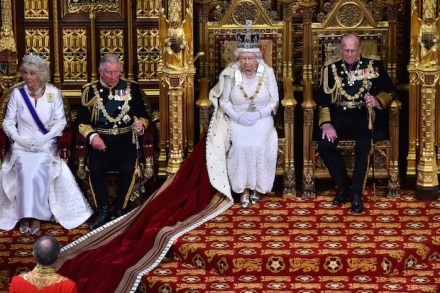
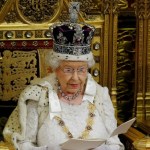
Her Majesty has just delivered the first Conservative Queen’s Speech in 19 years — or as David Cameron described it, a ‘One Nation Queen’s Speech from a One Nation Government’. Here are the key pieces of legislation the government will be looking to pass over the next 12 months. Full Employment and Welfare Benefits Bill (and related legislation): To freeze the main rates of the majority of working-age benefits, tax credits and child benefit. Pensioners and extra costs relating to disability will be protected. The benefit cap will be reduced to £23,000 per year. A new Youth Allowance for 18-21 year olds will be introduced, with stronger work conditions. Automatic entitlement to housing support for 18-21 year olds will be scrapped.

What to expect in today’s Queen’s Speech

The new parliament officially begins with the grand State Opening of Parliament ceremony today. The Queen will deliver the first Conservative Queen’s Speech in 19 years this morning, outlining the topics her government intends to legislate on over the next year. Plenty of details have appeared in the press already, with numerous reports suggesting that it will be 'one-nation' speech, with a blue-collar tinge. But what will actually be in the speech, and what's expected to be missing? EU referendum: as per the Conservative manifesto, the government is likely to introduce a bill for a referendum on Britain's EU membership (again) — to take place before the end of 2017.

Cameron tries to bring the campaign into government

Tomorrow’s Queen’s Speech will be almost cut and pasted from the Tory manifesto. Partly, this is because Number 10 believes that the Salisbury convention dictates that the House of Lords will not block policies that have a manifesto mandate. But it is also because the Tories wish to carry on in office where they left off in the campaign. They believe that continuing with both the message and the discipline they exhibited in the election is crucial to their future success. This desire to bring the campaign into government can be seen in Cameron’s latest staff appointments too. Giles Kenningham, who has been in charge of the highly effective CCHQ press operation for the last two and a bit years, is moving to Downing Street to become one of Cameron’s special advisers.

Michael Gove: Tories will not be forgiven for ‘fudging’ the EU referendum

Michael Gove’s gusto has returned after his elevation back to top level of the Cabinet. On Friday evening, the Justice Secretary spoke to Hampshire Conservative activists and members of the AECR group in the European Parliament. In his first speech since joining the Ministry of Justice, he acknowledged the role Daniel Hannan MEP has played in fighting for the upcoming EU referendum and said the government has to deliver ‘fundamental reform of our relationship with the European Union’ — and not just for Britain’s sake: ‘The exertions that the Prime Minister will devote to that task are driven not just by a desire to get a better deal for Britain, and to fulfill our manifesto promises, but also a desire to transform Europe for the better.

Peter Hitchens lets his election thoughts be known

Given that Peter Hitchens' weekly column was absent from the Mail on Sunday the week before the general election, Mr S was glad to have the opportunity to hear his thoughts on the election at the Hay festival. Taking to the Telegraph stage this morning, Hitchens joined Johann Hari, David Aaronovitch and Bronwen Maddox for a panel discussion titled 'Election 2015: How was it for you?'. True to form, he began by criticising the Conservative government, claiming the Tories' majority win was down to 'lies and money'.

David Cameron is trying to manage the referendum – and his party – properly

The government’s announcement that EU migrants will not be able to vote in the EU referendum tells us a number of things about the way David Cameron is approaching this vote. Firstly, he’s keen to show everyone that he’s getting on with it - indeed, the Prime Minister seems reinvigorated on all fronts at the moment - and making announcements about the franchise is just one example of that. The second is that Cameron does not want the debate about the referendum to be one of an Establishment stitch-up. Allowing EU citizens to vote would be one way of encouraging such a narrative from certain parts of the ‘Out’ camp. And thirdly, Cameron is keen to preserve party unity as much as he can on an issue that naturally splits his party.