Conservative party

Camilla Cavendish to head Number 10 policy unit

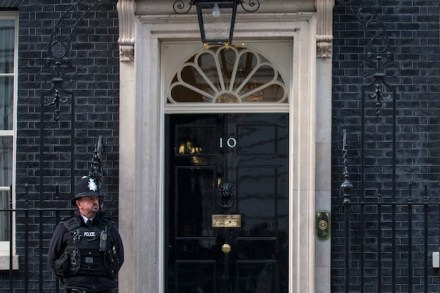
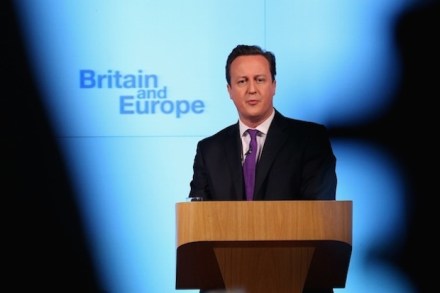
As British politics becomes more presidential, the structure of Number 10 matters more and more. David Cameron values continuity, collegiality and calmness in his senior team and what is striking is how many of his team are staying on post-election. The word coming out of Downing Street today is that Ed Llewellyn will remain as chief of staff in this parliament. But Llewellyn will also be the Prime Minister’s point person on the EU renegotiation, a hugely time consuming task. Number 10 is emphasising that the two deputy chiefs of staff, Craig Oliver and Kate Fall will be taking on more responsibilities to ensure the efficient running of the Cameron operation when Llewellyn is absent. Oliver becomes the Political and Communications director.

Podcast: Gove’s battle for justice, the perils of a small majority and the Labour leadership contest

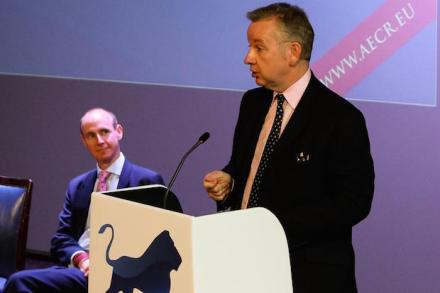
Repealing the Human Rights Act is one of the most difficult tasks the government faces. On this week’s View from 22 podcast, the Conservative MEP Daniel Hannan and barrister Greg Callus discuss how and why Michael Gove intends to break Britain’s link with the European Court of Human Rights. Is it a purely symbolic gesture to repeal the HRA or should ordinary people care about this? Is the legal community generally supportive or against the move? And how does Gove’s personality help this battle? James Forsyth and Isabel Hardman also discuss the perils of a small majority government and how the Tory rebels intend to make life difficult for David Cameron.

Germans propose linking the British renegotiation to Eurozone reform

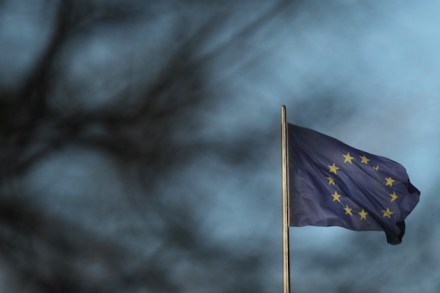
Wolfgang Schäuble’s decision to link the British renegotiation to changes to the governance of the Eurozone is highly significant. In an interview the German Finance Minister told the Wall Street Journal that he has discussed George Osborne ‘coming to Berlin so that we can think together about how we can combine the British position with the urgent need for a strengthened governance of the eurozone’. Schäuble went on to say that ‘the structure of this currency union will stay fragile as long as its governance isn’t substantially reinforced. Maybe there is a chance to combine both goals’. Schäuble’s comments are the most encouragement that the government has had on the renegotiation front.

Does David Cameron have the patience to achieve substantive EU reform?

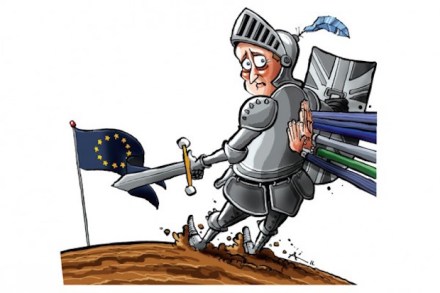
David Cameron is wisely using his first 100 days to tackle the biggest challenge of this parliament head on: the EU referendum. This morning’s papers report that a new referendum bill will be a core part of next week’s Queen’s Speech and Cameron is keen to accelerate the vote to 2016. The logic behind this is sound: by seizing on his fresh democratic mandate, Cameron can hope to convince Brussels he is serious about achieving substantive reforms and his Cabinet now includes those who would definitely consider voting Out (Philip Hammond, Boris Johnson, Sajid Javid). If they decline to play ball, then it’s goodbye to Blighty. This strategy all hinges on whether Brussels will listen.

What Michael Gove told his civil servants

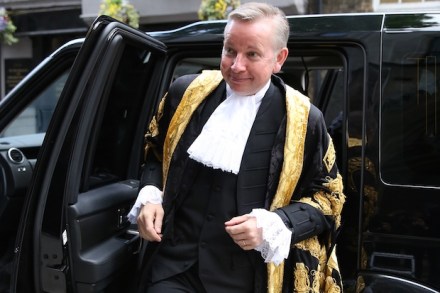
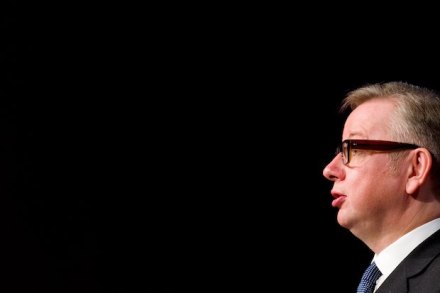
Michael Gove has been keeping a relatively low profile since being made Justice Secretary and Lord Chancellor last weekend. I understand that he is keen to master the brief, and particularly the complexities around the creation of a British Bill of Rights, before he starts hitting the TV studios. But an address he gave to staff at the Ministry of Justice on Wednesday gives some clues as to the direction he is heading in. Interestingly Gove didn’t simply declare that the Tories would be scrapping the Human Rights Act. Instead, he said, ‘We’ll be seeking to ensure that human rights are enhanced and preserved by modernising and reforming the framework of rights in this country’.

George Osborne poaches Daily Mail’s political editor

George Osborne has moved to strengthen his personal, political operation by hiring the political editor of the Daily Mail James Chapman as his director of communications. This beefing up of his media team will be seen in Westminster as a statement of political intent by the Chancellor; it gives him a more formidable operation than any of the other likely contenders for the Tory leadership. I am told that Chapman will be handling communications for Osborne in his role as both Chancellor and First Secretary of State.

A very modern Parliament causes problems for the Tories

With 190 women elected last week and the number of ethnic minority MPs hitting record levels, Parliament is slowly beginning to look a little bit like modern Britain. Settling in, one male MP, proudly wearing a green new members' badge, was sitting on the Terrace on his first night in the Commons. He proceeded to use his iPad to conduct a noisy bedtime video call with his wife and young children back in his distant constituency. The sweet scene did not amuse everyone however, with one member of the Tory old guard nosily tutting and harrumphing about a total lack of 'decorum' displayed by new Nationalist MPs.

Portrait of the week | 14 May 2015

Home David Cameron, the Prime Minister, soon got used to the surprise of the Conservatives being returned in the general election with a majority of 12. He retained George Osborne as Chancellor of the Exchequer and made him First Secretary of State too. Theresa May, Philip Hammond, Michael Fallon and Iain Duncan Smith also stayed put, but Chris Grayling replaced William Hague, who had left the Commons, as Leader of the House, to be replaced as justice secretary by Michael Gove, who was replaced as chief whip by Mark Harper. Amber Rudd became Energy Secretary. John Whittingdale became Culture Secretary in place of Sajid Javid, who became Business Secretary. Boris Johnson was to attend weekly political cabinets.

Podcast: the end of Miliband and the Tories’ one nation challenge

Ed Milband and his team were not ready for their major defeat on election night. On this week's View from 22 podcast, Dan Hodges discusses the final days of Miliband's leadership with Andrew Harrop of the Fabian Society. What were the majority mistakes of the Labour campaign? Was vital polling information about his seat kept from Ed Balls? Will Labour be able to regenerate into a party ready to govern within five years? Isabel Hardman and James Forsyth also discuss the first week of the new Conservative government and the challenges facing David Cameron. Few in the Tory party were expecting a majority, so how will the ideological vacuum be filled? And what does the new Cabinet show about the Prime Minister's strategy to manage his party?

London can be Blue again

In the midst of a glorious election night for the Conservatives on 7 May, London stubbornly resisted the swing across the rest of the country and went a darker shade of red. Why is that and why does it matter when overall we have a majority Conservative government for the first time in 18 years? The loss of four London seats (including mine) to Labour may have been offset by the high profile gain of Vince Cable Twickenham, and by us retaining Labour’s number one target of Hendon after a spectacular result from Matthew Offord. But to ignore what is going on elsewhere would simply put future working Conservative majorities at risk.

How Tory ministers could sneak out policies the House of Lords blocked

Now that we can’t brace ourselves for the SNP ruling over Westminster and the Labour party as we’d been warned (though they still seem to be having a bit of fun), the House of Lords has become the location of potential uprisings against the Tory government. The bulk of Lib Dem and Labour peers, along with a good number of cross benchers, who could work together to defeat a government bill does look rather threatening, though it’s worth remembering that even on a good day, attendance in the Lords isn’t anywhere near 100 per cent, and crossbenchers do tend to pull back rather nervously from anything that they think is too ‘political’. But before big bills start causing rows in the Other Place, there could still be trouble ahead.

Tory rebels wait for first chance to pounce

That some Tory MPs wouldn’t like the idea of Michael Gove scrapping the Human Rights Act has been known for some time, but there is something else worth keeping an eye out for in the next few weeks as the Tories draw up their proposals. Some Conservatives, like Dominic Grieve, have long been opposed to this sort of reform. But many others are waiting to see the detail before they react - and are still minded to rebel on the legislation. Depending on what Gove and his team produce, they could find themselves with a group of rebels considerably larger than the majority of 12 the government has, who will enjoy the support of Labour and the SNP (oh, and the Lib Dems, but they won’t be necessary, really, will they?) in blocking the legislation.

Pandering to animal rights extremists will get MPs rejected, not elected

The reasons why England and Wales voted so convincingly for a Conservative Government on Thursday will be debated forever, but one of the most obvious is the complete rejection of both Labour and Liberal Democrats in any constituency that has a hint of the countryside about it. This is graphically illustrated by the post-election constituency map. Actually, suggesting that the voters rejected those parties is probably the wrong way round. The truth is that those parties have rejected rural voters.

How the polls got it so wrong

Not all the pollsters got it wrong. On the morning of the election, a set of strikingly accurate predictions was slapped on David Cameron’s desk. They had been compiled by Jim Messina and Lynton Crosby, the strategists who had been running a campaign derided as dull and repetitive. But, as their research showed, it was also effective. Messina is now back in his office in Washington DC. ‘We predicted 312 seats that morning to Lynton,’ he says. This was in line with the exit poll (316 Tory seats) that shocked Westminster. Yet, every day of the campaign, the polls had the Tories and Labour neck and neck. Did he ever doubt his methods? ‘No, not at all,’ he says. Crosby carried out daily tracker polls and Messina was conducting analytics.

Cameron’s great secret: he’s not a very good politician

This was a vital election. A Tory failure would have been an act of political treason. Five years ago, the UK was grovelling with the PIGS in the fiscal sty. Our public finances were in a deplorable state, the financial system was in crisis and growth had disappeared over the economic horizon. No one has paid enough tribute to Messrs Cameron and Osborne for the sang-froid they displayed in the face of such adversity, and for their success. Not only that: we have two long-term structural problems in this country, both of which Lady Thatcher sidestepped, both of which David Cameron tackled. The first is welfare. In its corrosion of morale, its sabotage of élan vital, our welfare system creates an underclass.

Tory MP teaches SNP MPs Westminster etiquette

On Monday when 56 SNP MPs descended on Westminster, the youngest of the new intake Mhairi Black gushed that everyone had been so nice. Two days in, and cross-party relations have begun to cool. Carol Monaghan, the MP for Glasgow North West, claims that Simon Burns, the Tory MP for Chelmsford, scolded her as well as her fellow SNP politicians for their bad etiquette: https://twitter.com/Carol4GlaNW/status/598423992509321216 However, Burns has clarified the situation to Mr S: 'I was giving a talk about how to debate in chamber. If you agree you say 'hear, hear' and I mentioned that in recent years an unfortunate habit of clapping has occurred and that is deplorable.

Cameron, May and Javid are trying to prove the Tories are the natural party of government

The Tories are already putting some clear blue water between the coalition and the present majority government. Firstly, the new Business Secretary Sajid Javid has promised new tougher strike laws — ensuring that a minimum turn out of 50 per cent turnout is required for all strikes, while 40 per cent of all members will need to back a strike affecting essential public services. The TUC's Frances O'Grady has already hit back, arguing the new rules will make 'legal strikes close to impossible'. Secondly, Theresa May and David Cameron are promising to tackle our ‘passively tolerant society’.

Rory Stewart’s mysterious promotion to Defra

One of the stranger appointments of this reshuffle so far has been Rory Stewart being sent to Defra. The former chair of the Defence Select Committee does represent a rural constituency, but the obvious choice given his service in Iraq and Afghanistan would have been the Ministry of Defence. Perhaps this wasn’t possible given his passionate arguments in favour of maintaining defence spending at 2 per cent of GDP, which the Tories have refused to do. But another obvious choice would have been the Scotland Office, given his passion for the Union - and the location of his seat. During the referendum campaign, Stewart organised his own event called ‘hands across the border’, which involved building a large cairn of painted stones in honour of the Union.