Conservative party

A game of chicken with the electorate

I have worked in advertising for 28 years. In that time I have seen many briefs for communication campaigns, but none contained the line ‘It is important to insult the target audience, or at least treat them with barely disguised disdain.’ So I wonder whether the referendum result might have gone the other way had Remain supporters refrained from using social media in the days before the vote. Impossible to enforce, of course. The problem with the self-righteous is that they are so eager to virtue-signal to each other that they will go on doing it even when it is completely counterproductive. One American expert has written a blog post entitled ‘Liberals, Want Trump to Win? Keep Calling Him Racist.

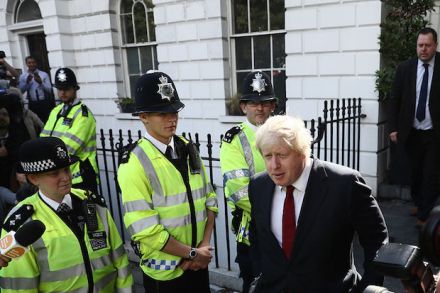
So will it be Boris?

The Tory party is in a deeply emotional state. Remain-supporting MPs cry tears of rage when they discuss the referendum. Bitter emails and text messages have been exchanged. Leave-supporting MPs have been accused of unleashing dark forces that they cannot control, of putting immigrants in Britain at risk. Yet the leadership candidates who have so far emerged seem strangely united in their vision for post-Brexit Britain. All want to heal the divide between rich and poor that the referendum has exposed. It is tempting to concentrate only on the division in the party, the fear that David Cameron’s resignation has injected even more poison into the Tory system than either the downfall of Margaret Thatcher or the Maastricht debate.

Why I lie about voting Leave

There are lies, damned lies and pretending to back Remain. I lie because I am a coward. I hug friends who burst into tears, petrified by life without the European Union. I sympathise with strangers, who act like Lady Di just died and there’s nowhere to lay flowers. I obfuscate, I mutter, I am evasive. And I am not alone. There are hordes of us who’ll not admit we voted Leave to our best friends, our next of kin. We learned to keep schtum a long time ago — thanks to social media — since they’d defriend us if said we’d vote to leave. Now they are outraged, deeply confused — and unsure which of us to blame.

Three questions Stephen Crabb will have to address in his leadership campaign

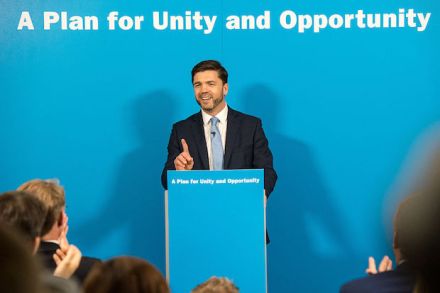
Stephen Crabb is the first Tory leadership contender to formally declare his candidacy for the job, with a rousing speech about his working class Conservative values this morning. The Work and Pensions Secretary pitched himself as the candidate who not only understands the people who ‘are really struggling, who look at us all in Westminster and […] see nothing to believe’, but who also understands how to hold the Union together - both of which are rather big claims. He used his now-famous (in Westminster, anyway) backstory as someone born in Scotland and brought up in Wales in a working class household to argue that he was uniquely placed to understand these challenges.

Tory leadership contest: the state of the race

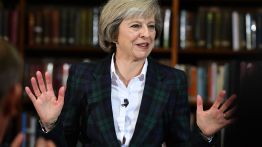
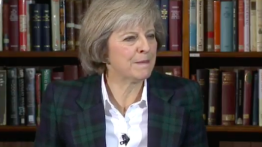
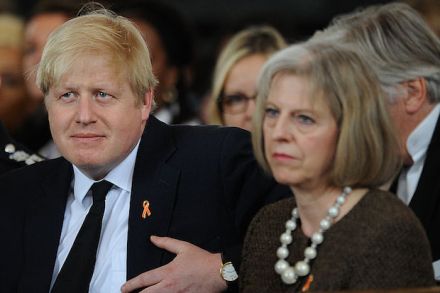
Westminster is at its fastest-moving and most unstable for years. Portcullis House and the tea rooms are buzzing with MPs discussing the demise of their leader and who they’ll back in the contest to replace him: and that goes for both main parties, though of course the golden rule of politics still applies, which is that no matter how colossal the Tory mess is, Labour’s will always be gargantuan in comparison. Today the Conservatives decided to move back the date by which their leader must be confirmed to 9 September, which will come as a relief to those Tories who were grumbling about being hauled back from the Mediterranean a week early. The consensus in the party is that the two frontrunners in the leadership contest are Boris Johnson and Theresa May.

George Osborne rules himself out of Tory leadership race

George Osborne has ruled himself out of the Tory party leadership contest. The Chancellor said that whilst he accepted the outcome of the referendum, 'I am not the person to provide the unity my party needs at this time'. Osborne went on to say that: 'As for my ow future, I will not be a candidate in the Conservative leadership election to come' Osborne's decision is hardly a surprise. He had become the face of a 'Remain' campaign which angered many Tory MPs. In particular, his 'punishment Brexit budget' - which he suggested would be implemented in the event of a vote for 'Out' - had a large group within his party furious at what they saw as an attempt to scare voters into sticking with the status quo.

Jo Johnson backs Boris

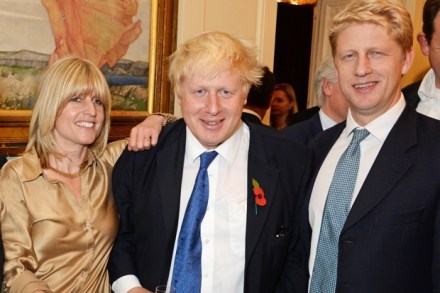
Jo Johnson has declared his support for his brother’s leadership bid. In a statement to The Spectator, the minister for universities and science says: ‘Boris and I were on different side of a hard fought referendum campaign. But it is time to move on, time to unite and time to deliver. I have known my brother for longer than anyone in parliament. He is the great communicator—and I have no doubt at all that he is the person best placed not just to secure a new settlement for Britain in Europe but also to provide the optimistic, confident and outward-looking leadership we will need in months and years to come.’ Now, on the one hand Jo backing his brother is not that surprising.

New Tory leader in place by 2 September

Senior Tories have decided that their new party leader will be confirmed by 2 September, which means that the timetable for the leadership contest will be very short indeed. The decision was taken for a short, sharp battle so that there was as little uncertainty about the government as possible. This means that nominations for the race will close at noon on Thursday, which gives the candidates very little time to get their bids together. Votes will take place every Tuesday and Thursday until the party produces the two candidates that will be taken to the party membership, which means that Conservatives will be voting on who their new Prime Minister is from their yachts in the Mediterranean.

Brexiteers need to act now, or become the most hated people in history

The British constitution is built on compromise and moderation; it's one of the main reasons why this country enjoyed a period of relative domination in the 19th century while our neighbours tore themselves apart. Referendums do not encourage compromise, which makes them such bitter devices, and why the last few weeks have been so painful. But now that the British people have made their choice – and I have no idea if it was the right one – we have the opportunity to make a compromise that will cause the least amount of pain. I'm talking about the Norway option, which an increasing number of Conservative MPs are coming around to. This is a half-way house between membership of the EU and separation.

Set out your Brexit model, Foreign Secretary tells Tory leadership contenders

This morning, Philip Hammond has insisted that those running for the Tory leadership explicitly set out how they intend to leave the EU. The Foreign Secretary told Robert Peston that he wanted to know how they would manage the trade-off between single market access and free movement. Hammond himself appears to favour a version of the Norwegian model; in the single market and accepting free movement. Now, I think we can take this as meaning that Hammond won’t back Boris Johnson. Hammond accused Boris and other Leavers of making ‘contradictory promises’ in the referendum campaign.

Senior Tories push for longer leadership contest

The Tory leadership contest is looking decidedly sedate compared with the ructions in the Labour party this morning. But tomorrow the 1922 Committee Executive will meet to discuss the timetable and rules for the battle to replace David Cameron as Tory leader and Prime Minister. As I report in the Observer today, senior Tories are concerned that the timetable that Cameron sketched out in his resignation statement on Friday morning is actually rather tight, and are pushing for the contest to take longer. Liam Fox echoed this on the Sunday Politics, telling Andrew Neil that he favoured the contest going on until November.

A new home for Old Labour

On the eve of last year’s general election result, many pundits predicted the demise of Britain’s two-party system. The likeliest outcome was another hung parliament in which one of the smaller parties — the Lib Dems or the SNP — held the balance of power. These same pundits pointed to the steady decline in membership of the two main parties, as well as the success of insurgent parties in the European and regional elections, as evidence of this sea change. In the event, the pundits were ridiculed for getting it wrong. Yet is it possible they were just a year too early? The surprise Brexit win in yesterday’s EU referendum looks like it may bring about some kind of political realignment.

Can you forgive him? | 23 June 2016

David Cameron bet everything on winning this European Union referendum. He lost. His resignation was inevitable, but the timing was not. Indeed, scores of pro-Brexit Tory MPs had signed a letter asking him to stay as Prime Minister - or, at the very least, not walk out of No.10 on the morning after the vote. Yes, he would not be the best person to lead Brexit talks – but these talks could be several months, perhaps years away. So there was no reason to rush for the exit and plenty reason not to do so. Brexit vote was always going to create uncertainty in the financial markets. Adding political uncertainty, in the form of a Prime Ministerial resignation, was never going to help.

Ruth Davidson is not the answer to English Tory prayers

Tacitus argued that, after 68, 'the secret of imperial rule was revealed: an emperor could be made somewhere other than Rome'. It has taken metropolitan observers some time to wake up to the fact the same is true in Britain today. A star can be born far from London. The difference, however, is that not all roads lead to Westminster. It takes time for change to work its way through the system so perhaps it is not surprising that it is only now that we are seeing the fruits of devolution. In their different - very different - ways Nicola Sturgeon and Ruth Davidson have each demonstrated that devolution works. It has, at least in Scotland, established an alternative to Westminster. Careers and reputations can be made and won 400 miles from the House of Commons.

‘Our Jo’: MPs unite in grief to pay tribute to Jo Cox in Parliament

MPs from all parties have gathered in the Commons to pay tribute to murdered Labour MP Jo Cox. Parliament was recalled today following the terrible events last Thursday. The Speaker John Bercow opened the moving session by saying politicians were gathered in 'heartbreaking sadness'. He went on to say: 'An attack like this strikes not only at an individual, but at our freedom. That is why we assemble here, both to honour Jo and to redouble our dedication to democracy.' Jeremy Corbyn then delivered his tribute to Jo Cox: David Cameron followed Corbyn in paying tribute to Jo Cox.

Boris makes it clear he isn’t interested in a coup against David Cameron

The murder of Jo Cox was a moment that leaves you numb; an MP paying the ultimate price for the open society we live in. For the fact that our representatives live and work among us. Despite this tragedy, democracy must go on. By this time next week, the EU referendum will be over. The country will have made up its mind. Whether it is Leave or Remain, the UK will need a period of stability. This means David Cameron staying on as Prime Minister and, as I reveal in The Sun today, plans are already well advanced to ensure that this happens. Boris Johnson has signed a letter saying that Cameron must carry on as Prime Minister regardless of the result; making clear that he isn’t interested in any coup attempt.

Gove wouldn’t support Osborne’s ‘punishment Budget’

One consequence of David Cameron’s refusal to take part in any ‘Blue on Blue’ debates is that he and Michael Gove are appearing several days apart on BBC Question Time. Tonight, it was Gove’s turn to face the studio audience. In reply to the first question, Gove made clear that—in the event of Britain voting to leave—he wouldn’t support the so-called ‘punishment Budget’ that George Osborne set out today. Gove said that the Remain campaign were ‘turning it up to 11’ on the scare stories as polling day approached. Though, interestingly, he studiously avoided any personal criticism of Osborne. With the polls tightening the Remainers are getting more passionate, and Gove faced some fairly hostile questions from the audience.

David Cameron’s Brexit threat to pensioners is a new low

Campaigns only last for a few weeks, but politicians can be defined by what they say during those campaigns. Ed Miliband will never live down the #EdStone, Zac Goldsmith will always be stained by his murkier attacks on Sadiq Khan – and I suspect David Cameron will never manage to shake off the threat he made to pensioners today. At times, it can seem as if he’s got confused and has set out to attack his own reputation, rather than that of his opponents. Those who watched George Osborne grilled by Andrew Neil last week will know the issue: the Remain campaign has decided to pretend that pensioners will be worse off after Brexit.