Conservative party

An efficient response 

Both parties want to be seen as the party of public sector efficiency. The Tories want to be able to show that they can do more with less and that cuts therefore need not mean worse services. While Labour wants to contrast their supposedly ‘smart cuts’ with the Tories’ ‘hatchet approach.’   So, this morning we had Gordon Brown delivering a speech outlining how the government would save £12 billion over the next three years; many of the policies he proposed were rather familiar to those of us who have been listening to the Tories on this subject.  The Tories then tried to trump Brown’s speech by announcing the formation of a Public Services Productivity Advisory Board.

This week’s PBR looks set to be Brown’s most political Budget yet

Ok, so all Brown Budgets are political – but signs are that this week's PBR could be his most blatantly partisan yet.  I mean, just look at his speech this morning on improving efficiency in the public sector.  Some of its measures are welcome – for instance, pledging to cut the pay of senior servants, and the general idea of using technology more effectively in government.  But, as other folk have pointed out (see Guido and Iain Dale), the measures are insufficient to the scale of the debt crisis, and many are old news.  All in all, the signs are as we expected: Brown is paying only lip service to cuts. Instead, Brown is going to go heavy on soak-the-rich measures; thereby strengthening what Labour see as two dividing lines.

The politics of distraction

If everyone concentrates on the actual numbers in the PBR then it will be a disaster for Labour. So, instead Labour will try and distract us all with small but eye-catching measures — a new rate of inheritance tax for estates worth more than £5 million, that kind of thing. The aim will be to move the debate from the grim reality of the country’s fiscal situation to Labour’s dividing lines. There will be a lot of pressure on Cameron and Osborne to denounce Labour’s soak the rich measures. But the most important thing for them to do is to get the debate back to the state of the public finances and that is inevitably going to involve side-stepping the arguments that Brown wants to pick.

Cameron and Ashcroft should come clean

David Cameron’s ‘nothing to do with me guv’ response to the Ashcroft tax question on yesterday’s Politics Show has not put the issue to bed. In fact, his obfuscation has the reverse effect. The Independent runs an article today describing how little is known about individuals and authorities. ‘The House of Lords Appointments Commission says that it does not know whether Lord Ashcroft is UK resident. The Cabinet Office and HM Customs and Revenue have declined to answer questions about his status, on grounds of privacy.

Brown waits to strike

Things are shaping up nicely for Gordon Brown ahead of the Pre-Budget Report next week. The Tories were 17 points ahead on ICM in October – now it’s 11. Cameron would have a narrow majority on this basis but, given the margin of error, we’re back into hung parliament territory. And this has a self-reinforcing effect on the Tories. A shrinking opinion poll means they tend to get paralysed, avoid arguments, play it safe, wait for Labour to screw up again. As I say in my News of the World column today, the voters who are looking for leadership then don’t really see it. This, of course, softens the Tory vote further. So the stage is set for Labour to get away with murder next week.

Recognising the best

On Thursday night Michael Gove announced that a Conservative government would pay off the student loans of those with good science degrees from quality universities. The move, paid for by cutting out a level of bureaucracy in teacher development, would help address the shortage of science and maths specialist in state schools. It was a smart piece of policy that even Ed Balls didn’t attack. But the Telegraph reports carping amongst various unions that the scheme does not go far enough. The NUT says that, “It is a real mistake to think that they can designate small number of universities as being better than the others.” This quote sums up so much of what is wrong with the British edcucational establisment.

What possible justification can there be for this?

From The Guardian’s write up of the latest TPA report on public sector pay: “Those earning more than the prime minister include Professor Salman Rawaf, the director of public health in Wandsworth, who has a package of up to £370,550” I can accept that some people in the public sector with certain particularly valubale skills might have to be paid more than the PM. But I find it hard to see why Wandsworth is offering its director of public health a package worth more than a third of a million pounds. One hopes that the Tory policy which will see the Chancellor having to sign off on any public servant being paid more than the PM will put an end to this kind of excess.

Another vindication of open primaries

Local girl Caroline Dinenage has won the Tories’ Gosport open primary race. Congratulations to her and commiserations to the other candidates: James Bethell, Julia Manning and Sam Gyimah. By all accounts the open primary process is proving hugely popular – over 12,000 votes were cast by post in this election. It is clear that the format encourages local political engagement; the Totnes primary was not a one off and evidently this process will become increasingly more common. Also, both elections have produced women, an indication that there is a clear alternative Central Office’s unintentionally divisive A-list strategy.

Don’t give us your unwashed masses

Downturns turn people against immigrants. That’s normal. But even according to the statistical average, Britons are particularly unhappy about the state of immigration these days. In a new survey undertaken by the German Marshall Fund, seventy-one percent of Britons polled disapproved of Labour’s immigration policy. Spaniards (64%), Americans (63%), Italians (53%) are also sceptical of government action.  In contrast, 71% of Germans, 59% of Canadians and 50% of French approved of the steps their countries had taken. In fact, Britons are the most sceptical about immigration, with 66% seeing it as more of a problem than an opportunity – a jump of seven percentage points on 2008 figures.

Who cares about the playing fields of Eton?

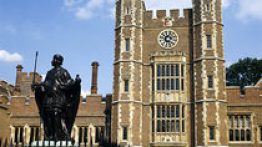
The Eton question came up on Question Time – is Labour right to use class in the run-up to the election? I have a piece in The Guardian tomorrow on this theme. The answer should be that which Andrew Lansley read out on Question Time:  that this shows Labour is living in the past, what matters is where you’re going to not where you came from. He’s right. But I do wish the Tories would believe it. The Eton taunt is still taken far too seriously by the Cameroons: it hurts them. It’s a piece of verbal kryptonite. They go to great lengths to defend themselves from such an attack: the 50p tax, for example, is embraced by the Conservatives just so Brown can’t say “Cameron’s looking out for rich folk, just like him.

Could Brown go for a March 25th election?

The conventional wisdom in Westminster is that the election will be on May 6th. But a few shadow Cabinet members have told me that they think Brown will actually go in March, an idea that they have been pushing for a while. Their argument is that this quarter’s GDP figures will be quite good, boosted by the Christmas rush, and Brown would want to go to the country before, another more disappointing set of numbers came out. Second, Brown will want to avoid people seeing the effects of the new tax arranegements which will come into force in April. Finally, if the election was on May 6th, the first week of the campaign would be lost to the school holidays.

The Tories, money and inheritance tax

Key to Labour’s emerging strategy is promulgating the myth that raising the inheritance tax threshold is designed to protect the Tories’ rich friends from the great unwashed. Despite its sojourn in the wilderness, the politics of envy remains crude at best. Raising IHT thresholds favours hardworking, modest Middle England. The super rich can protect their fortunes without the help of threshold raises, which are negligible by their standards in any event. James Macintyre proves as much in his latest New Statesman column. When detailing Tory donor Lord Harris’s IHT avoidance, Macintyre writes: ‘The Tory peer, whose wealth is estimated at roughly £285m, donated £90,000 to Cameron's campaign.

Risky business | 3 December 2009

With the largest transfer of liabilities in British history – the insurance of the risk of loss on £240 billion of toxic RBS assets by taxpayers – proceeding, there is worryingly little information being given about either what these assets may be or what risks there are to the taxpayer. Rather than the parliamentary enquiry and detailed disclosure Swiss parliamentarians demanded when UBS needed similar assistance, a small press release noting such exotics as “structured credit assets “ has been issued. The spin continues to be that there is nothing to worry about and all this money will come back fine. Bank of England data shows that UK bank exposure to the US increased increased by over half a trillion dollars between 2004 and 2007 to 1.2 trillion.

The choice facing the Tories

If you'd like a step-by-step preview of Labour's next election campaign, then do read Alastair Campbell's latest blog post.  All of Brown's attacks from PMQs are in there, and then some: "tax cuts for the rich"; a lack of "policy heavy lifting" on Cameron's part; the Tories "haven't really changed", etc. etc.  The spinmeister has been in closer contact with Downing Street recently, and it shows.  It's all gone a bit bar-brawling. The Tories now face a choice between, broadly speaking, three different responses: i) Ignore Campbell.

Might there be some fight left in the class war after all?

The Tories are in mild shock following PMQs, they never expected Cameron to get clunked like that. Brown is clearly going to try and use Tory inheritance tax policy to ram home the message that a Cameron government will be a government of the rich, by the rich, for the rich. But the Tories are taking comfort from their belief that Brown’s ugly class war politics won’t work, pointing to how they failed in Crewe and Nantwich. But the attacks on Edward Timpson backfired, at least in part, because Timpson was a bad target. It is hard to portray someone as an out of touch, uncaring toff when their family have fostered 80 odd children and have a long history of local philanthropy.

Graph of the day

Here's a neat little graph from PoliticsHome, which plots the three main parties' opinion poll ratings alongside their "party morale rating" from the PHI100 tracker.  As PolHome put it, it kind of tells us what we know already: that party morale more or less correlates with poll position.

Testing times for the Tories

The opinion polls are continuing to feed the story that the Tories are in trouble. Tonight’s Politics Home data which shows Cameron’s personal ratings dropping 15 points in the last 10 weeks follows a string of polls where the Tories have failed to break through the forty percent mark. Tory morale has been a bit shaken by these polls; Cameron could do with a decisive win at PMQs tomorrow to gee up the Parliamentary party. But turning these numbers around is, I suspect, going to require some policies that show us what David Cameron’s irreducible core is. Oddly enough, I don’t think these policies have to be particularly popular but they have to show the electorate that Cameron stands for something, that he isn’t just another say anything to win politician.

Love and marriage

It’s all a bit of a puzzle. How will David Cameron incentivise marriage? In an interview with the Mail, Cameron dismisses IDS’s transferable tax allowance scheme. “It would be wrong to say that they are Conservative Party proposals.”                      Considering the scheme will cost £4.9bn, the pro-cuts Tories can ill-afford an incentive that would benefit the middle class in the immediate term. Cameron and Osborne are searching for a cheaper way to honour the pledge. Pete and Fraser debated whether marriage should and could be financially incentivised. On balance I side with Pete, marriage should not be financially incentivised.

The case for NHS reform

Britain remains the sick man of Europe. Professor Sir Mike Richards’s report finds that although progress has been made on cancer treatments, diagnosis rates, and therefore the chances of survival, lag behind European standards. A deluge of statistical analysis supports Richards's findings. The European Journal of Cancer’s recent research into solid cancers, such as breast cancer and melanoma, demonstrated that the speed of diagnosis and survival rates in the UK were “20% below” the European average. Additionally, the table below, which is taken from 2009’s OECD health data, illustrates that the gap between the number of cancer deaths per 100,000 population in Europe and the UK has widened.

The good and/or bad news for the Tories is that there hasn’t been a Brown Bounce

If you're still scratching your head over the latest opinion polls, then I'd recommend you read Anthony Wells' latest post over at UK Polling report.  In it, he outlines four potential reasons for the diminishing gap between the Tories and Labour: Cameron's "reverse" over the Lisbon Treaty; increased economic optimism; Labour performing better; and the absence of positive feeling towards the Tories.  To my mind, it's probably a case of "all of the above," to varying degrees – but, as Anthony concludes, "we can't tell for sure." One further point that's worth making is that the reduced gap between the parties isn't due to a "Brown bounce".