Conservative party

The truth behind the election’s so-called fact checkers

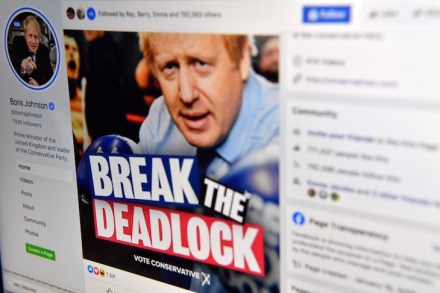
All election campaigns see politicians exaggerate, stretch the truth and make promises they can't keep. But if a report issued in early December is anything to go by, the 2019 general election campaign was a particularly dishonest affair - and one party was particularly guilty. On 10 December, Metro reported: Similarly, the Independent reported: Websites which make no attempt to be impartial were more vociferous. Under the headline, The Tory war on truth – and how to fight back, Open Democracy reported: Independent fact checkers have found that 88% of Tory Facebook adverts contain lies, while 0% of Labour’s do.

Nine lessons from the election: Boris was lucky – but he also played his hand right

The 2019 general election will be remembered as one of the most consequential elections in Britain's recent history. Aside from rejecting a more economically radical Labour Party, the British people used the election to provide what their elected representatives had been unable to provide: an answer to Brexit. For Boris Johnson and the Conservative party, the election was a triumph. They won their largest majority since 1987 and the largest majority for any party since New Labour's second landslide in 2001.

Boris Johnson: Perhaps my campaign was ‘clunking’. But sometimes, clunking is what you need

You may wonder why I am up at 4.45 a.m. writing this diary when I have a country to run, Queen’s speech to prepare, vast mandate to deliver, and so on. The answer is simple. It is a question of obligation. When I bumped into the editor (at Sajid Javid’s 50th birthday party) a couple of nights ago, he explained — with a slightly glassy expression — that he had taken a gamble. He had already printed the cover of the Christmas treble issue, he said. I know all about the Xmas cover. It is lavish, laminated, and on much thicker stock than the normal cover. It costs a bomb. Once you have printed it, you can’t change it. ‘Your name is on it,’ said Fraser. What could I say? I became editor 20 years ago. I owe this magazine.

Boris’s Britain: How the PM intends to deliver for his new friends in the North

The era of uncertainty has ended. Boris Johnson’s decisive victory has not only broken the Brexit deadlock created by Theresa May’s disastrous 2017 campaign, but also turned the page on almost a decade of weak government. The previous three general elections have all resulted in constrained prime ministers. First, David Cameron was forced to govern in coalition with the Liberal Democrats. Then, in 2015, his slim majority left him dependent on Tories who would be on the other side from him in the EU referendum he had had to promise. The May debacle left her at the mercy of — and defeated by — her own warring factions. But now we’re looking at something very different: a Prime Minister who is king of all he surveys at Westminster.

Politics has fractured along new fault lines – those elected must repair the cracks

Boris Johnson stood for party leader as a One Nation Tory, he fought the campaign as a One Nation Tory and this is the agenda that has given him the largest Tory majority since 1987. Much is being made of the collapse of the Labour party’s vote, but something more profound is under way. The Tories are changing, and they have a message that was directed at – and understood by – a new cohort of voters. It has the potential to transform British politics. It’s wrong to say – as many do – that the phrase ‘One Nation Tory’ is senseless. Its meaning comes from Disraeli’s dictum, in Sybil, that Britain was divided into two nations: the rich and the poor.

The new Conservatism has begun

Elections should be carnivals of democracy, yet the campaign we have just been through has felt more like amateur dramatics at times – the standard of debate has not risen to the importance of the issues at stake. Yet this election will go down as one of the most consequential in British history. It has brought a profound change to our politics: not just that Brexit is now certain to happen, but also in the way that both main parties have transmogrified before our eyes – in terms of what they stand for, and who they appeal to. The list of Tory gains shows the extent of the change that has just taken place: Leigh, Workington, Clwyd South, Darlington, Wrexham, Burnley, Redcar, Scunthorpe and a slew of other working-class seats north of the Watford Gap.

What are the parties trying to tell voters in their leaflets?

What's the point of political leaflets, anyway? Many voters in target seats will be asking that very question on an almost daily basis, as they shovel the latest snowdrifts of election literature into their recycling bin. We have social media, party election broadcasts and phone banks to reach voters. Who needs leaflets? There is a (I believe only half-serious) 'test' that some Liberal Democrat campaigners apply to the amount of information they think it is possible for a voter to absorb from a leaflet they're carrying from the letterbox to the bin. Given the parties keep sending them, particularly in those marginal seats where it's just not clear where the result is going to go, it's worth having a look at what they think is going to appeal to voters as they trudge once more to the bin.

The three things that would have to happen to block a Tory majority

In 72 hours time, voting will be well underway. We will be talking about turnout being ‘brisk’. Right now, the polls are indicating that a Tory majority is the most likely result. But it is not certain and a combination of three things could still stop it. First, mass Remainer tactical voting. The margins in this election are fine and if Remainers starting backing whoever was most likely to defeat the Tories in their seat, that could put a Tory majority at risk very quickly. There will be lots of calls for tactical voting in the coming days. But it is worth remembering that in 1997, when there was widespread anti-Tory tactical voting, the Labour and Lib Dem leaderships were politically close and hadn’t spent the campaign attacking each other.

Boris should threaten to back Corbyn’s ridiculous Brexit plan

The decline of the Liberal Democrats continues to give Labour a boost and rattle Tory nerves. Middle class Remainers who dislike Jeremy Corbyn are nonetheless deciding that he is their last best chance to thwart Brexit. Electing an anti-Semitic government so you don’t need to show a passport at Paris Charles de Gaulle is quite the ethical choice but there you go. It’s also a pretty big gamble. We know that Corbyn is a Brexiteer who believes freedom of movement drives down workers’ wages because he has told us as much. Voting for him to stop a hard Brexit isn’t so much holding your nose as poking your own eye, but Remainers know Labour backbenchers will hold him to his promises on a second referendum. Right?

Has Boris Johnson changed his campaign strategy?

Stump speeches and battle bus stop-offs are a staple of political campaigning. And while much of the battle for votes now happens online, as Katy Balls points out in this week's Spectator, the constituency fly-by remains a central element of any party's election schedule. So what can we learn about the Conservative strategy from Boris Johnson's tour across the country? It could reveal that the Tories are starting to panic. The Prime Minister's campaign machine has shifted into a surprisingly defensive gear over the last week or so. Rather than descending on top target seats, Johnson is now focusing on Conservative held marginals.

This is the most important election in modern history – so vote, and vote Tory

Next week, voters will decide the future of the government, of Brexit, and perhaps of the Union. Jeremy Corbyn has been admirably clear on what he offers: a radical experiment in far-left economics, going after the wealthy to fund the biggest expansion of government ever attempted in this country. Boris Johnson proposes to complete Brexit and restore much-needed stability to government. But given that about half of voters still oppose Brexit, the race is close. Corbyn offers a new referendum on Brexit. It is easy to snigger at his declaration that he would be neutral during this campaign. But his pledge to be an ‘honest broker’ conceals the deceit that his referendum represents.

Why YouGov’s MRP poll will worry the Conservatives

When the 2017 snap election result came through, it proved a shock to many who had been covering the campaign in depth. The bulk of the polls had suggested Theresa May was on course for a comfortable majority. However, there was one poll that had predicted a hung parliament – YouGov's MRP model. This poll of 100,000 people uses a different method than normal – with predictions focussed on small geographic areas based on a mix of data and demographic. In 2017, it suggested the Tories were on course to lose 20 seats. Tonight's poll paints a different picture – it suggests the Tories are on course for a large majority in the region of 68. The YouGov/Times poll says in an election held today, the Conservatives would win 359 seats, Labour 211, the SNP 43 and the Lib Dems 13.

Can the Tories really underpromise in their manifesto and overdeliver in government?

Boris Johnson is today launching the Welsh Conservatives' manifesto. For the Tories, this event comes with a trigger warning: it was where Theresa May defended her party's social care U-turn in 2017 after its disastrous manifesto launch. The clip of her insisting that 'nothing has changed' became one of the defining moments of the election campaign. So far, it seems that today's Welsh event won't be quite so dramatic, which is just what the Conservatives wanted. They have devoted an entire page of their 2019 manifesto to social care, but what it amounts to is little more than thin air. It even promises to search for a 'cross-party consensus', which is something politicians of all hues have spent the past two decades trying and failing to reach.

Boris promises an extra 50,000 nurses – but where’s he going to find them?

This election campaign has long since descended into a contest to see who can spray around the largest sums of cash. So it should come as no great surprise that the Conservatives promised an eye-catching initiative to outdo Labour on nurse numbers. Jeremy Corbyn wants to provide an extra 20,000 new nurses but Boris has now promised an extra 50,000 - topping the Labour leader (until tomorrow morning, of course, when Corbyn can be more or less guaranteed to up his offer to 100,000 nurses). We seem to be heading for the NHS equivalent of a military state. Instead of seeing people in military uniforms on every train, bus and street corner, we will have a Benny Hill-esque society where every other person is in a nurses’ uniform. But are the numbers remotely credible?

Tories under fire over fake Labour manifesto

The Tories were accused of spreading fake news during the election debate after they changed the name of the official CCHQ Twitter account to 'factcheckUK'.  Now it seems they're at it again. On the day of Labour’s manifesto launch, the Conservatives published their own version. Voters searching for Labour's manifesto might reasonably think that they could find a copy at www.labourmanifesto.co.uk. Not so. The site is, in fact, a Conservative platform for attacking Labour over their lack of a Brexit position and plans to increase taxes. The official Conservative Twitter account has also tweeted out what they claim is the front page of Labour's manifesto. In fact, they've switched out the title, It's time for real change, with the phrase 'It's time for higher taxes'.

Sunday shows round-up: Jeremy Corbyn- There will be a great deal of movement

Jeremy Corbyn - 'I want a close relationship' with the EU The Labour leader was Andrew Marr's chief guest of the day. Marr began by asking for Corbyn's personal stance on Brexit, something which has proved highly elusive since the referendum result in 2016. Corbyn happily gave the Labour party's position, but once again refused to be drawn on the issue:   [embed]https://youtu.be/blSSOZYAQA0[/embed] AM: Do you want this country to leave the EU or not? JC: We're going to put that choice to the British people, and they will make that decision... I want a close relationship with the EU in the future. 'You don't know' who I'm going to negotiate with If Labour wins the upcoming election, the party plans on re-negotiating a Brexit deal with the EU.

Boris’s fate will be decided by Lib Dem voters

The Tories’ great fear in this campaign is that they can get their vote out, squeeze the Brexit party right down and still lose. Why? Because their strategy relies on the Liberal Democrats taking a chunk out of Labour’s Remain vote. If Labour manages to rally the Remain vote in the way that it did in 2017, then we are heading into hung parliament territory and a situation where the Tories cannot govern because they have no potential partners. The complication for the Tories is that they also need to win back a chunk of their Remain voters who have gone over to the Liberal Democrats and hold off a challenge from Jo Swinson’s party in a host of constituencies.

I’ll vote Lib Dem – but I can’t join them

I don’t believe that before last week I’ve ever quit any organisation on an issue of principle. I tend to find people tiresome who make a song and dance about doing so. I never thought that one day I’d be ‘making an exhibition of myself’ (as my father used to say) and certainly not so late in my life. But in my Times column on Saturday that’s what I did. And it’s futile to deny I was attention-seeking. Of course I was. A columnist earns his bread by drawing attention to himself and his opinions. Quitting the party you joined 50 years ago is just a rather theatrical way of doing that. But I haven’t enjoyed the attention much. A sadness has hung over me since: the sadness, really, of parting from an old friend.

What Farage’s Brexit ultimatum means for the Tories

There's been much speculation this week about how the Brexit party will approach the incoming general election. Varying reports suggested Nigel Farage's party could choose to target anything from 20 to 100 seats. However, speaking in Westminster this morning, Farage made clear that he had bigger ambitions. The Brexit party leader said that unless Boris Johnson changed his Brexit position, his party would stand candidates in every seat in England, Wales and Scotland: 'We will contest every single seat in England, Scotland and Wales. Please don't doubt that we are ready. Do not underestimate our determination or organisation.

Boris is taking a huge gamble with an election – but it could pay off

Contrasting Boris Johnson’s enthusiasm for a general election with Jeremy Corbyn’s reluctance, it would be easy to assume that the result was pretty well assured: the Conservatives will win a majority. The pollsters and the bookmakers seem to concur — as they have done before misjudging the result of virtually every major election on either side of the Atlantic in the past few years. But make no mistake: the Prime Minister is taking a huge gamble in pushing for an election now. In the Conservatives’ favour is the prospect that the resurgent Lib Dems could split the Remain vote, and that Jeremy Corbyn’s popularity seems to have reached depths seldom seen in democratic politics.