Conservative party

Dirty money and dirtier politics

Busted.  Yep, that's the word which first sprung to mind when I read the Sunday Times's expose of MPs and their dirty lobbying work.  Hoon, Hewitt, Byers – they're all revealed as providing influence and access for cash, and a lot of cash at that.  But it's Byers who comes out of it the worst.  You can read his story here, but suffice to say that it involves boasts about successfully lobbying ministers to change policy, and about parading Tony Blair in front of his clients.  He even describes himself as "a bit like a sort of cab for hire".  I imagine he'll pick up fewer fares now. Our democracy could hardly bear another major political scandal, but here we have one: as grubby, underhand and dispiriting as last year's expenses revelations.

Pot, kettle, black

George Boateng, Alan Milburn and Andrew Smith have written a letter to George Osborne, calling him to task over the contradictions in his policy. 'It is not clear to us whether these mixed messages are a deliberate attempt to obscure your plans or a symptom of a confused approach to policy but either way the public deserves better.' Fair enough. Osborne's policy has become more concrete in recent weeks, but much remains still to do. Peversely, I think they've given too much detail, and have been found out because they haven't seen the nation's books.The reduction in the amount of cuts that are planned is a case in point. But talk about hypocrisy: take a look at Labour's economic policy in the run-up to the budget. They are certainly clear on cuts: there aren't going to be any.

No place for porkies in digital politics

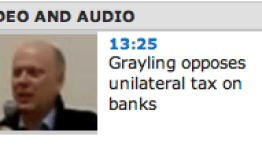
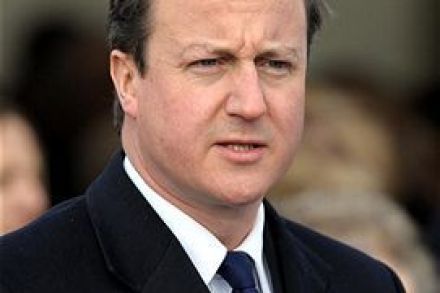
We have just witnessed a fascinating glimpse of the use of the internet in elections. This morning, Cameron proposed a unilateral bank tax - moving, I suspect, ahead of what he believes Darling will announce in next week's budget. Next, at 1.19pm, Will Straw digs up a selectively-edited version of Chris Grayling speaking in his local constituency (put online by the Labour candidate, Craig Montgomery). Straw's headline: "Calamity Grayling opposes Cameron’s unilateral bank tax." Now, this headline - a lie - might have worked on a Labour Party press release. But it's far harder to lie on a blog. Grayling is quoted saying "there is absolutely no point on earth is any one country doing this unilaterally, because otherwise all the banking transactions will simply move to another one".

Clegg’s consigliere: Lib Dems would “sustain the Tories in power”

Everyone has been guessing at what Nick Clegg and the Liberal Democrats would do if the voters return a hung parliament after the next election. The Lib Dem leader has sent all kinds of mixed signals. But if there is one person worth listening on the party’s intentions it is Julian Astle, the head of CentreForum, Britain’s leading Liberal think-tank, and a former political advisor to Paddy Ashdown. Astle has, in recent years, acted as one of the Lib Dem’s unofficial consiglieri – but one that has never shied away from challenging party orthodoxy. He has, for example, argued against the Liberal Democrat pledge to abolish tuition fees – showing it would involve a significant redistribution of resources from poor to rich.

Ed Miliband’s new investment vs cuts battleground

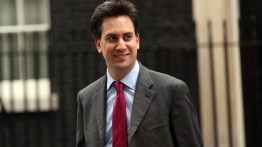
Ed Miliband certainly isn't one for holding back, is he?  In an interview with today's Guardian he discusses what we might expect from the Labour manifesto, and there's some pretty noteworthy stuff in there: a People's Bank based around the network of Post Offices; an increase in the minimum wage; a reduction in the voting age to 16; things like that. But, as Sunder Katwala suggests over at Next Left, the most eye-catching passage is when Miliband discusses Free School Meals for all: "The manifesto could well include a pledge to provide free school meals for all children, Miliband says. 'I think a lot of people would like free school meals.

Why Cameron must never say “deficit”.

Listening to BBC news, it's striking how they are still using Labour's politically-charged vocabulary. When the universities are kicking off about their budgets being cut, the BBC newsreaders are told to talk about "investment" in higher education, rather than spending. Why, though? An "investment" would be to put £1 billion of taxpayers’ money into an Emerging Markets fund, and hope it grows. Giving it to universities - many of which serve neither students nor society - is not an investment. But using the word "investment" is Labour code for "good spending". There is one particularly frequent example if this: the BBC regularly confuse the words "deficit" and "debt" - a bugbear of mine, and something James Forsyth deals with in his column in this week's magazine.

Mr Blond goes to Washington

The Red Tory, Phillip Blond, is spreading the faith in the States. The New York Times’s David Brooks is impressed, very impressed. In fact, he is a proselytising convert. ‘Britain is always going to be more hospitable to communitarian politics than the more libertarian U.S. But people are social creatures here, too. American society has been atomized by the twin revolutions here, too. This country, too, needs a fresh political wind. America, too, is suffering a devastating crisis of authority. The only way to restore trust is from the local community on up.’ Blond’s premise is unanswerable – the twin revolutions of left (prescriptive rights) and right (free market liberalism) have, perversely, centralised power. Everything is highly contestable.

Darling’s Budget takes shape

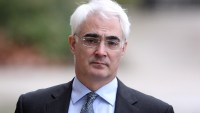
Yep, it's that time of the year again – when the government starts briefing about the contents of the Budget.  First up, there's the news that Alistair Darling may cut projected borrowing figures by £5-10 billion, thanks to higher-than-expected tax receipts.  And then there's Peter Mandelson's claim that new tax rises would have to be considered a year from now – implying, perhaps, that there won't many in this year's Budget. Many folk around Westminister were surprised that the government was putting out a pre-election Budget – especially given the sorry state of the public finances.

It’s turning into an extremely good week for Osborne

The gods are smiling on George Osborne. On Monday, he wrote an excellent article in the FT, explaining why he opposed the government’s fiscal plans and giving a brief sketch of his alternative vision. It was a short, sharp, shock article that contrasted with the tentative and nebulous announcements that characterised the Tory post-New Year slump. They were immediate benefits. On Tuesday, the EU Commission broadly supported the Conservative position on reducing public spending, and today a City AM poll indicated that 77 percent of a panel of City experts think that cuts must be made this year. Indeed, many panellists rejected Samuel Brittan’s contention, elucidated in last week’s Spectator, that the markets expect the continuation of current strategy.

When does reputational damage become real damage?

So has the Lord Ashcraft saga fouled the Tories' reputation?  Well, looking at this One Poll survey in PR Week it would seem it has.  52 percent of respondents feel that the party's reputation hasn't improved since the start of the year – and 37 percent think that the Ashcroft revelations are the biggest contributing factor to that. But what does all that really mean?  After all, another finding is that 20 percent of respondents believe that the 2006 story about a bike-riding Cameron being trailed by his chauffeur is "still damaging" to the Tories.  That may be so.  But will that kind of reputational "damage" really stop people voting for the Tories come the election?  Similarly, will the Ashcroft story actually sway hearts and minds?

The Lib Dems keep ’em guessing

Last week, Nick Clegg was singing the blues.  But, this week, it's clear that he's doing as much as possible to distinguish his party from the others.  Indeed, his performance in PMQs yesterday was a case in point: he went out of his way to attack both Brown and Cameron, and positioned his side as the non-Unite, non-Ashcroft choice.  Given the Lib Dem's recent history with dodgy donors, that's a move which - at the very least - is going to ruffle a few red and blue feathers. So it's striking, today, that the Lib Dems are probably going even heavier on the Ashcroft story than Labour.

The Tories and Lord Ashcroft – stupidity rather than wrongdoing?<br />

So the Lord Ashcroft story is back on the airwaves, courtesy of a document leaked to the BBC.  That document shows William Hague was "satisfied" with the discussions about Ashcroft's undertakings in 2000 – so the Tories wheeled the shadow foreign secretary onto the Today programme to explain himself to Evan Davis.  Three things struck me: i) Stupidity rather than wrongdoing.  When the Ashcroft story first broke a couple of weeks ago, Labour seemed eager to turn it into one of Tory wrongdoing – they called for inquiries left, right and centre (indeed, there's one taking place today), in the apparent hope that they'd find something improper had gone on.   But the more that's emerged, the less likely that has become.

The Tories’ growing mood of quiet confidence

It is worth pointing out, because it is so different from what was happening a few weeks back, that the Tories are having another good day today. Gordon Brown has been forced to admit at PMQs that he had got his defence statistics wrong when addressing both the Commons and the Chilcot inquiry, the Unite story is rumbling on and there are various rows breaking out over Labour’s process for selecting candidates. All of this has led to a distinct improvement in Tory morale. A few weeks ago, Tory MPs were irritated and despondent. Some had even started ruminating on the leadership challenge that would occur if the Tories were not returned as the largest party. But there is now a mood of quiet confidence among Tory MPs that the party will win a small but workable majority.

Two blasts from the past

Michael Savage observes that Cameron’s denunciation of Brown’s 'weak' premiership recalled Tony Blair’s famous savaging of the ‘weak, weak, weak’ Major government . Here it is: After watching that, I chanced upon an exchange between Blair and Cameron, dated November 2006. Their subject? NHS budget cuts. The first two minutes of the clip reinforce just how complicit the Conservatives were in Brown and Blair’s free for all. Cameron was aghast that "budgets were being raided to solve financial deficits".

PMQs live blog | 17 March 2010

Stay tuned for live coverage from 1200. 1201: And here we go. Brown starts with condolences for fallen troops, and also for the late Labour MP Ashok Kumar and his family.  For the first question, Tony Baldry takes on Brown over his claim that defence expendintue has risen in real terms under Labour.  A note from the House of Commons library has since shown this to be "incorrect".  Brown says that he is already writing to Chilcot to correct this.  Brown: "I do accept that, in one or two years, defence expenditure did not rise in real terms" - but it did rise in cash terms.  Not a good start for the PM. 1203: The Tories are up in arms about Brown's jibe, in response to the second question, that they'd cut SureStart centres. 1205: Cameron now.

The Tories’ Unite strategy is paying unimagined dividends

The Tories Unite strategy has been so effective, even Peter Mandelson is peddling it. Led by Mandelson, Labour’s isolated right has questioned Unite’s influence over candidate selection. James Purnell’s preferred successor, Jonny Reynolds, was omitted from the Stalybridge and Hyde shortlist, compiled by the NEC, which has two Unite members on its board. Mandelson and Purnell have urged Downing Street to reopen the race. For its part, Unite responded. One of its preferred candidates for the seat, Glyn Ford, who failed to make the cut, demanded a right to appeal also. The Tories’ must be ecstatic. Their strategy, initially conceived to nullify the Ashcroft scandal, is paying unimagined dividends.

For the workers?

One of the defences that Labour types are mustering over Unite is, bascially, that it's better to be funded by a body which represents some two million workers than by Ashcroft type figures who may have their own personal agendas. In which case, the question is: do Charlie Whelan and his coterie really represent the views and interests of Unite's members?  And, in answer, it's worth pulling out two snippets from today's papers. EXHIBIT A, courtesy of Danny Finkelstein: "A Populus poll of Unite members last year showed the majority preferring David Cameron to Gordon Brown and opposing Unite donations to Labour.