Conservative party

Osborne comes out fighting

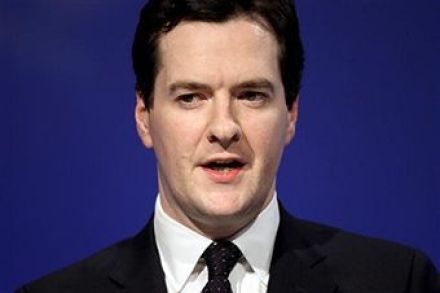
George Osborne put in a fiery and impressive performance in the Chancellor’s debate today, firing off some memorable one-liners as well as unveiling a letter from the former head of the anti-avoidance group at the Treasury questioning the sums on which the Lib Dems’ tax plans depend. Indeed, since the Lib Dems surged, Osborne has found another level to his public performances. Today’s debate win followed a good spot by Osborne on the Politics Show on Sunday.   One striking thing about the debate was how it was Darling who signaled the assault on Cable when he started querying Vince’s numbers. It’ll be fascinating to see if Brown takes any similar swipe at Clegg tomorrow; his interview in the Indyhttp://www.independent.co.
A New Tory Policy: Back to the Eighties

I cornered Ken Clarke after the press conference on employment and welfare today and asked him a direct question about my pet subject - Margaret Thatcher's Enterprise Allowance Scheme. I couldn't get in a question during the press conference itself, which was dominated by journalists from Channel 4 (three questions, come on chaps, fair's fair!) and some bloke called Forsyth from the Spectator. I asked Clarke about his post on the Linked In social networking site asking for people's experiences of the 1980s scheme for people wanting to come off the dole and set up their own small businesses. I have been lobbying for this for some time, as has the Federation of Small Businesses.

Taking the attack to Vince

With Cable's and Clegg’s personal ratings being so high, the trick is to play the ball not the man. Ken Clarke and George Osborne achieved that at this morning’s press conference. Clarke said: “(Nick Clegg’s father was) a very nice, very wise guy, he was a very successful City guy, but he wasn’t a flashy guy... he was a Tory. It would have been better if Nick had stuck to the political principles of his father. (Nick Clegg) must regret going into the strange wastelands of Liberal Democrat politics.” He added that whilst he agreed with “70 percent” of Vince Cable’s analysis on the financial collapse, Cable’s solutions left him “bewildered”.

The Tories need to get economical

Nick Clegg handed Gordon Brown a lifeline in one respect: the economy’s old hat compared to the Clegg frenzy. Not any more. The news that unemployment rose by 43,000 between December and February, together with yesterday’s dramatic inflation rise, has dumped the economy back onto the front pages. The Tories must keep it there; this election should be about the economy and nothing else. Obviously, these figures, which are worse than expected, lend weight to the argument that Brown’s policies impair recovery. Also, they demolish Brown’s claim that he ran up a deficit in the boom years to protect employment: unemployment is now higher than it was 16 years ago.

What happens if this is the result?

Tonight’s YouGov poll has the Lib Dems three point ahead. They are on 34, the Tories on 31 and Labour on 26. In terms of working out what this would mean in seats, I doubt that uniform national swing is that useful. But for the sake of argument, let’s imagine that did occur. These poll numbers would leave Labour as the largest party in the Commons and the Lib Dems as the third party. One wonders what on earth happens then.   The Palace would pretty much have to summon Brown, he’s the sitting Prime Minister and would be the leader of the party with the most seats. But I can hardly imagine the Lib Dems, if they had the most votes, agreeing to serve as junior partners in anyone’s coalition let alone Brown’s.

A poster that cuts to the chase

This feels like a first for this election campaign: a poster which gets quite specific on policy - and not another party's policy either.  It comes courtesy of the Conservatives, and, as you can see above, carries the message: "Let's cut benefits for those who refuse work". You can expect plenty of handwringing about whether this message is too tough, or whether it represents the Tories shifting rightwards in the aftermath of the Lib Dem surge.  But I imagine it will play well with the many voters who are frustrated at the unfairnesses and inconsistencies of the welfare system.  And it does, at the very least, present one reason to vote (or not to vote) Conservative.

Where is the killer poster?

Most politicos agree that a vote for Nick Clegg will likely prop up a Labour government, even if it will be led by someone else than Gordon Brown. Most voters, however, may not realise this. So what the Tories need is a poster which shows in easy-to-understand ways, the causal link. CoffeeHousers, surely the idea of the Lib Dems propping up Labour lends itself to a number of images - if you have any ideas then either mention them below, or send them in to dblackburn @ spectator.co.uk or phoskin @ spectator.co.uk and we'll post a selection of the best.

Clegg the politician

Every time a Conservative is asked by the media about Nick Clegg they should reply, ‘Nick Clegg’s a clever politician, a formidable opponent.’ This formulation won’t make the voters think that the Toires are being nasty about their opponent but it will remind them that Clegg is a politician which is a problem for him because so much of his popularity stems from being seen as not just another politician. This, obviously, isn’t the whole answer to stopping and then reversing the surge in Lib Dem support. But it would be of use and, to borrow a phrase, in the current situation every little helps.

Where will Clegg meet his Waterloo?

The FT’s Jim Pickard writes: ‘Cameron will be cursing the order of the debates. He’d much prefer to be attacking Nick Clegg on domestic issues than foreign affairs on Thursday.’ I’m not so sure. Foreign Policy is the arena where the Tories are concrete, populist and accessible. The same is not true for the Lib Dems. Along with Iain Martin and John Rentoul, Pete noted that Ed Davey is vague on the Lib Dem Trident replacement policy. Davey's vague with good reason: the policy is hopelessly confused. The manifesto says: ‘Rule out the like-for-like replacement of the Trident nuclear weapons system.

Cameron’s two-pronged counterattack

A freewheeling, shirt-sleeve kind of speech from Cameron in Kennington this morning. But not one that was without substance. His main purpose was, as he put it, to "redouble the positive" - which meant more about the Big Society. Cameron has fashioned a persuasive narrative out of this, but question marks still remain over whether it will mean much to voters who just want CHANGE, without the nuance and jargon. As I suggested earlier, this is perhaps the biggest question hanging over the election campaign right now. The other part to Cameron's speech was a warning about a hung parliament. Or as he put it: "If we get any other result, then we could be stuck with the problems we've got now." I lost count of how many times he used the word "decisive" as part of this.

Can the Tories turn things from personality to policy?

If the Lib Dem surge shows anything, then it's the growing power of personality politics in this country.  A few days ago, they're languishing in third place with around 20 percent of the vote.  One dose of TV razzmatazz later, and they're topping the polls on over 30 percent.  Yes, even though I admire much of what Nick Clegg has done with his party, there's little doubt that all this has been catalysed by simply putting him in front of the cameras.  Like someone with an okay singing voice reaching the X-Factor final, the Lib Dem leader triumphed in what was essentially a clash of personalities.

YouGov have the Lib Dems on top

Tonight's YouGov tracker has the Lib Dems on 33 percent (up 4), the Tories on 32 percent (down 1) and Labour on 26 percent (down 4).  So the topsy-turviness continues – but for how long?

How Cameron can stem the Lib Dem tide

If the Tories are to beat back this Lib Dem surge, there are three things they need to do. First, they need to establish Cameron as the insurgent, anti-establishment candidate. It might seem odd to urge the leader of the Conservative party to be the anti-establishment cadidate, but the establishment in this country is now essentially soft-left. Just look at how senior police chiefs are threatenting to resign over Cameron's plans for elected police commissioners who would be accountable to the public and set the priorities of the local force (another transformative Tory policy that Cameron didn't mention during the debate) Cameron needs to run against these people. He should be the tribune of the people pledging to return power to them from the unaccoountable and the unelectable.

Cameron has a policy agenda to change Britain – he should tell us about it

Cameron has not, alas, broken free of the never-ending opinion poll bungee jump which is the story of his leadership of the Conservative Party. Cleggmania is a bubble – but the thing about bubbles is that one can never quite tell when they will burst. The Tories, who have lost the most votes due to this bubble, will have their needles out. But in my News of the World column today I suggest they focus on policy because they do have hard ideas that could radically change Britain. Cameron missed a trick by failing to mention his single best policy, Gove's school reform, last week.  On immigration, his plan for reducing it is the most radical promise on the market, and his linking it with welfare shows maturity and sophistication.

Brown’s mindset on full display

Labour high command will be very satisfied with Brown’s performance on Marr this morning. There was far less of the tetchiness that we usually see from Brown in interviews and by being invited to talk about the ash cloud and the government’s response to it at the beginning, Brown was able to assume some of the aura of his office as Prime Minister. The interview saw the debut of Brown’s latest rewriting of history. Apparently he has always been for bringing in the liberals (exact quote to follow when the BBC release the transcript) and a ‘progressive consensus’. This will come as a shock to anyone who has read Paddy Ashdown’s diaries or talked to those involved in the discussions between the two parties in the mid to late nineties.

Mandelson contra Cameron

So far as the Tories are concerned, Peter Mandelson is the political equivalent of an itch that you can't scratch: irritating, elusive and impossible to ignore.  And he's at it again today, with an article in the Independent on Sunday chiding the Tories' over their Big Society agenda.   It's not the "agenda of abandoment" attack that Mandelson made a few days ago.  But, rather, a return to the "cross-dressing" territory of last year.  As Mandelson puts it, "[Cameron's] tightly knit group of associates has simply pinched a few ideas from our campaign manual, rather than fundamentally reforming the party to make it fit for office.

Responding to the Lib Dem surge

We've had the insta-polls and that eyectaching YouGov poll, and now we get the political reaction to Thursday's TV debate.  Interviewed in the Times, Alan Johnson plays up what Labour and the Lib Dems have "in common," and opens the door on a potential coalition.  While, in the Telegraph, David Cameron sets about Lib Dems policies – attacking, for instance, the "flimsy backing" to their plan for making the first £10,000 of income tax-free These different responses to the Lib Dem surge are stiking, if predictable.  Labour see Clegg as an opportunity: an opportunity to whitewash Brown's mechanical performance in the TV debate, and to keep the Tories out of government.