Conservative party

Bad banking

No wonder the banks like Britain’s corporation tax regime. This morning’s newspapers all tell that Barclays paid just £113m in corporation tax in 2009, despite making profits of more than £11bn. In a rare instance of justified anger, Labour’s chosen men have launched an attack on the government’s failure to ‘take the robust action needed to make sure that the banks which caused the crash pay their fair share, and will stick in the stomachs of small businesses struggling to borrow and ordinary people feeling the pinch of the government’s austerity measures.’ Whatever the absurdities of Labour’s position, this news will ‘stick in the stomachs’ of the little people, whose

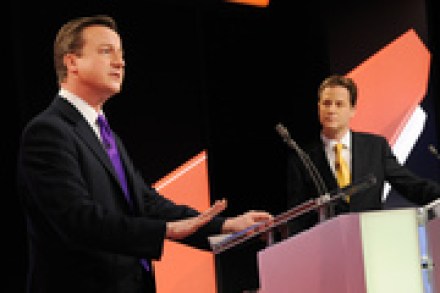
Cameron and Clegg, head to head

Now here’s a shock: something to trump the relentless tedium of the Cricket World Cup. The AV referendum. Labour MP Jim Murphy held his constituency surgery in a large supermarket today and it was well attended, but no one asked about the referendum. Murphy ruefully tweeted: ‘the public are so out of touch with today’s politicians.’ But it is odd, or at least it should be, that the nation’s second ever plebiscite has inspired only indifference; then again, electoral reform is not a subject to quicken the pulse. Even the campaigners are resigned to expect scant enthusiasm for their cause. The campaign is days old and already its emphasis has

The government has been weak over forests

A very dangerous precedent has been established today over the forest fiasco. Caroline Spelman earlier gave the most extraordinary interview on Radio 4’s PM. “We got it wrong,” she said in the Commons. “How so?” asked Eddie Mair. She wouldn’t say. As he kept asking her, it became increasing clear that she didn’t think they got it wrong. They conducted the U-Turn because they were losing the media war.   Really? Is that all it takes to defeat Cameron’s government? A decent two-week campaign with a couple of celebs? The forest policy was a good one: why do we need state-run timber farms? Not that this argument was ever aired.

In the AV referendum, either Clegg or Cameron has to lose

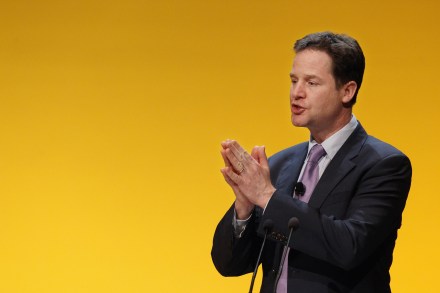
Tomorrow both Clegg and Cameron will give speeches on AV, Clegg for and Cameron against. They’ll be very civil about their disagreement. But the truth is that one of them has to lose in this vote and the loser will have a very unhappy party on his hands. As Steve Richards points out in The Independent today, there’s been a lot more talk of the consequences for Clegg of AV going down than of what happens to Cameron if it passes. But Cameron would have almost as many problems if it passes as Clegg would if it failed. Fairly or not, a large number of Tory MPs will blame Cameron

Laws’ return is imminent

Tomorrow’s New Statesman speculates that David Laws is about to return to government. Kevin Maguire reckons that it is significant that Laws is turning down invitations to events after an unidentified date in mid-March. Laws is still awaiting the verdict of the Parliamentary Standards Commissioner, but he is expected to be exonerated. Preparing for a return to government, he has been writing sharp columns in defence of the coalition’s economic policy and expanding into future policy areas like the 50p rate and increased spending on the pupil premium. But Laws has also been keeping close to Clegg in recent months, tasked with building a strategy for the next election –

The Tories’ secret weapon

Too much time at the barbers. That’s the opposition’s problem. Ed Miliband showed up at PMQS today after a long morning lounging in the chair having his hair coiffed and burnished. His darkly gleaming scalp now looks like the kind of thing toffs scrape their boots on after a morning’s shooting. And that’s precisely what the Prime Minister proceeded to do with him today. With no time for a strategy meeting beforehand Ed had just grabbed a list questions from the last PMQs-but-three.   He began by having a go at Cameron on youth unemployment. But we know how Cameron deals with that one. Been a problem for decades, old

Parliament is not sovereign

Enough is enough. The British Bill of Rights is set to return: a consequence of the government’s running battle with parliament over the European Convention on Human Rights. Recent days have been filled with clues and suggestions of imminent reform: Dominic Grieve, a former advocate of the ECHR, went so far as to assert that Britain may leave the convention. Cameron let slip the news that a Bill Of Rights commission is to be convened at PMQs; at the time he was answering a question about the Supreme Court’s controversial sex offenders’ register decision. There are no details as to what the commission will consider, but Theresa May aired the

Cameron breaks from the norm at PMQs

PMQs today contained a rare moment: the Prime Minister admitting that he wasn’t happy with government policy. Ed Miliband, who split his questions up this week, asked Cameron if he was happy with his position on forestry and Cameron replied, ‘the short answer to that is no.’ The answer rather drew the sting from the rest of Miliband’s questions on the topic. But it was a rather embarrassing admission for the PM to have to make.    Cameron made quite a lot of news at the despatch box this week. He accused Manchester City Council of making “politically driven” cuts, said that more regulations needed to be scrapped and announced

More trouble for the government over the military covenant

The news that serving soldiers have been given notice by email has been met fury from ministers. Liam Fox has answered questions in the House about this story and why 100 RAF pilots discovered they were redundant in yesterday’s newspapers. Fox was both livid and contrite, decrying the ‘completely unacceptable’ practices and reiterating the MoD’s ‘unreserved apologies’. He announced that an internal inquiry has been called, which Patrick Mercer believes will expose negligence among those officers who manage personnel. Fox also conceded that the sacked pilots, many of whom were ‘hours from obtaining qualification’, cannot be retained in some form of volunteer reserve, such is the squeeze on the MoD.

The AV referendum hasn’t captured the public’s imagination

It is odd to think that in just a few months we’ll be having only the second nationwide referendum in our history and no one is particularly excited about it. This is largely because the plebiscite is on AV, an unloved voting system that is a half-way house between first past the post and a proportional system. (Just imagine the level of conversation there would be if the vote was to do with Europe not electoral reform). At the moment, the yes side has a growing lead in the polls http://ukpollingreport.co.uk/blog/archives/3115. But, given the vast number of undecideds, this could change very quickly. The No campaign, though, will have to

Why work experience matters more than ever

In my recent BBC2 documentary, Posh & Posher, I explained how networking and contacts played a crucial role in giving those with the right connections an early leg up in their careers. Internships and work experience are proving increasingly crucial to opening doors and opportunities in later life. Many have expressed the view that the best intern and work experience opportunities in fields like politics, finance and the media are going disproportionately to those who are already privileged and well-connected. From what I’ve seen myself in recent years I suspect that to be true. The Mail on Sunday gives a classic example (and a potentially embarrassing one for the Tories) of how it

Conservatives and Prisons: A Study in Contradiction?

Grover Norquist, president of Americans for Tax Reform, asks a good question: When it comes to education, pensions, health care, Social Security, and hundreds of other government functions, conservatives are a beacon for fiscal responsibility, accountability, and limited government — the very principles that have made this country great. However, when it comes to criminal-justice spending, the “lock ’em up and throw away the key” mentality forces conservatives to ignore these fundamental principles. With nearly every state budget strained by the economic crisis, it is critical that conservatives begin to stand up for criminal-justice policies that ensure the public’s safety in a cost-effective manner. He’s writing about the United States where these problems are

Today’s battlefield

Today’s PMQs threatens to be overshadowed by the statement on Project Merlin, the government’s deal with the banks, expected at one o’clock. I suspect that Cameron will try and push away any questions on banks with the line that Miliband should wait for the Chancellor’s statement. But PMQs will still be a far livelier affair than last week’s one. Watch to see whether Miliband tries to attack Cameron for hurting the Big Society. Miliband has moved Labour away from ridiculing the idea to embracing it and saying that ‘Tory cuts’ are the threat to it. This is all part of Labour’s strategy to try and ‘recontaminate’ the Tory brand. But

What’s Labour’s alternative to the Big Society?

After a difficult few weeks for the Big Society, culminating in Liverpool’s nakedly political ‘withdrawal’ from the vanguard projects, Peter Oborne has already drafted an obituary for the Conservative’s policy agenda.   As Oborne says, the Big Society goes to the heart of this government’s reason for existence, and its (real or perceived) failure would damage the Conservatives. But it’s notable Labour has yet to come up with an alternative to the Big Society, or even a substantive critique of the idea. The problem for Miliband is that the Big Society agenda captures the centre ground of social policy – neither pro nor anti-state – and risks sidelining his party.

A good team with good policies

When the Tories were in opposition, non-aligned friends used to complain to me that the party’s front bench was unimpressive. Labour politicians had walked the political stage for more than a decade; many were household names, while the Tories were unknown. But eight months in and Labour’s top team is a largely unknown entity, with even its few ex-Ministers looking decidedly smaller without their briefcases, officials and government-issued cars. The Tory front bench, meanwhile, is the one looking serious and worthy of power. There is William Hague, a brilliant parliamentarian and that even rarer beast: a well-liked politician. Though currently suffering from a little newspaper criticism, he is seen as

The laddie is for turning

In opposition, one of David Cameron’s strengths was the speed at which he dumped bad ideas. But, now, he is starting to acquire a habit for U-Turns – especially those called for by minor celebs. We’ve seen Scottish school milk, NHS Direct, BookStart, school sport – and soon, I suspect, forests, World Service cuts and (the biggie) NHS reform. A depressing pattern is emerging: anyone with a decent two-day campaign and a splattering of celebrities can probably force a concession out of the government. I make this case in my News of the World column (£) today. Here is a summary of my main argument. 1. Cameron seems to be

A disheartening story

A sad juxtaposition between David Cameron’s defence of liberal values and the Times’s interview (£) with Paul Maynard, the Tory MP for Blackpool North & Cleveleys. Maynard – who has cerebral palsy – describes his experiences in what ought to be a bastion of British decency: “Mr Maynard knew that people could be unkind, perhaps unconsciously. Nevertheless his worst experience in Parliament came as a shock. A few months later he stood up in the chamber to defend the Government’s decision to cut the Child Trust Fund. Mr Maynard admits that it was a controversial issue but still could not believe what happened. Each time that he lifted his head,

Body blow for the Big Society

A major setback has befallen David Cameron’s Big Society. One of the four pilot schemes opened by Cameron as the ‘vanguard of the Big Society’ last autumn has fallen under a barrage of government cuts. Using unaffordable start-up costs as an excuse (although unidentified structural impediments were also mentioned), senior councillors of Labour controlled Liverpool Council have insisted that the scheme be curtailed immediately. Courtesy of Andrew Sparrow, the Liverpool Echo has the story. To dismiss the council’s decision as politically motivated would be transparent. Naturally, politics lurks behind the scenes; but this is an acute embarrassment for the Prime Minister. Despite a glamorous inauguration and two subsequent re-launches, the

Coulson’s replacement

Downing Street have announced that the BBC’s Craig Oliver will be Andy Coulson’s replacement. Oliver, who has been editor of both the Six and Ten o’clock news, will bring a broadcasting perspective to Downing Street. Former BBC colleagues stress that he knows how to tell a story in pictures and, in contrast, to Coulson is unlikely to ever become the story. Oliver, who is in his 40s, was never obviously political. He won’t provide the kind of counterweight to Steve Hilton that Andy Coulson did. But he will run an efficient ship. Some people are saying that the appointment shows that newspapers are less powerful politically than they used to

PMQs live blog | 2 February 2011

VERDICT: What a refreshing change that was. After several weeks of Punch ‘n’ Judy rivalry, the two party leaders finally put down their batons and stumbled upon a new way to do it. Much of the credit must go to Ed Miliband, for asking pacific questions about Egypt and Afghanistan in the first place. But credit, also, to Cameron, for answering them in a straightforward and statesmanlike manner. The rest of the House, for its part, was stunned into silence by this peculiar scene. Some of the blood rushed back into proceedings with the backbench questions, and as Cameron directed attacks at Ed Balls, but this must still go down