Conservative party

Exposing the con man

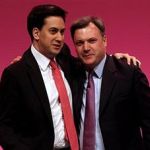
  To the chagrin of CoffeeHousers, I have long rated Ed Balls and his abilities. He has a degree of brilliance, albeit tragically deployed in the services of a destructive economic agenda. But as we welcome him back, it’s worth reminding ourselves that his abilities are of a specific type. He understands economics (even though he did PPE) but his speciality is in creative accounting. His only tactic is to spend, borrow and cover both up by cooking the books. He is a trickster, not an economist. More Arthur Daley than Arthur Laffer. In my News of the World column today (£) I say he is dangerous to Labour as

Hague hasn’t lost his mojo

There has been no shortage of depressing news for the Tories lately. But, the other day, Benedict Brogan wrote a lengthy post about William Hague that must have made particularly unpleasant in-flight reading for the Foreign Secretary as he jetted around the South Pacific. It argued that: “In his absence – and even when he is back in Britain – Mr Hague is the subject of a whispering campaign among his colleagues, who say that the spark of ambition has died in his heart, and with it his effectiveness as the front man for the nation’s diplomatic effort. The Foreign Office has got its mojo back, just when Mr Hague

Why Coulson’s departure matters

Courtesy of the ConHome tag team of Paul Goodman and Tim Montgomerie, two articles that are worth adding to your Saturday reading list. Both capture why Andy Coulson’s resignation matters, if not to the general swell of British politics, at least to internal operations in Coalitionville. The wider argument of Paul’s article for the Guardian is captured by its headline: “Andy Couslon had a nose for the view of the aspirational voter.” But it also homes in on the point that Coulson’s departure tilts No.10 in favour of Steve Hilton – something that, rightly or wrongly, will bother the Tory right far more than it does Lib Dems of any

And what about the Lib Dems?

After the gales of recent weeks, the past few days must have been relatively blissful for the Lib Dems. No fake constituents with hidden dictaphones. No massive student protests. No especial focus on their opinion poll ratings. But, instead, a mephitic heap of problems, or at least embarrassments, for Labour and the Tories. Warsi, Johnson, Coulson, even EMAs – Clegg & Co. have been spared the worst of it. Which isn’t to say that the Lib Dems will be unaffected by recent events. For instance, as Paul Goodman suggests, Andy Coulson’s departure unsettles the delicate balance of the coalition – and that will always have ramifications, however minute, for the

Two days, two major resignations

Of the two resignations of the past 24 hours, it is Alan Johnson’s that will change the contours of politics. The appointment of Ed Balls makes the dividing line on the economy far starker. But the Coulson resignation is still a highly significant moment. Those Tories who worked with Coulson are downcast today and will brook no discussion of what the whole episode says about Cameron’s judgment. But there’s little doubt that the PM has been harmed by this episode. Not in any limb-threatening way but harmed nevertheless. Cameron also needs a find to way to organise his operation to both ensure that there is someone at the table who

The Coulson story won’t be buried – but will it matter?

There’s not much chance that the Andy Coulson story will be buried in tomorrow’s newspapers. Blair’s appearance at the Chilcot Inquiry will scatter a handful of earth across it, as will AJ’s travails. But it’s not as though people outside the Westminster bubble will fail to notice all this. Watching the 24 hour news channels now, it’s all Coulson, Coulson, Coulson. In which case, this is bound to inflict some damage on the government in the short term. The public is not inclined towards liking, or trusting, spin doctors. And Andy Coulson leaving Downing Street through a fug of phone-hacking allegations will not do anything to change that. Questions will

Coulson’s resignation statement

Here’s Andy Coulson’s resignation statement: “I can today confirm that I’ve resigned as Downing Street director of communications. It’s been a privilege and an honour to work for David Cameron for three-and-a-half years. I’m extremely proud of the part I’ve played in helping him reach No 10 and during the coalition’s first nine months. Nothing is more important than the Government’s task of getting this country back on its feet. Unfortunately, continued coverage of events connected to my old job at the News of the World has made it difficult for me to give the 110% needed in this role. I stand by what I’ve said about those events but

Coulson resigns

Andy Coulson has resigned today. David Cameron has issued a statement paying effusive tribute to his departing communications director. But there will be questions asked about his judgment in appointing Coulson after he had resigned from the editorship of the News of the World over the phone hacking scandal.

Gove raises the spectre of an electoral pact

Michael Gove has reignited talk of a Tory Lib Dem pact by urging people in Hull to vote Lib Dem to keep Labour out at the local elections. Gove’s intervention was not planned but it does reveal how he thinks. Gove’s department is the most coalitionised. Not only is there a Lib Dem minister there in Sarah Teather, tellingly the only Lib Dem minister not to moan to the Telegraph’s undercover reporters about her colleagues. But there is also David Laws, who is acting as an unofficial adviser to Gove. Anthony Wells’ thorough analysis of an electoral pact suggests that it could do well in the seats where it matters. 

How truly liberal is the coalition government?

Mark Littlewood is Director General of the Institute of Economic Affairs and contributed an article to the recent collection Big Brother Watch: The state of civil liberties in Britain. He summarises his argument here. It’s not fanciful to argue that the formation of a Liberal-Conservative coalition government last May was helped by the fact that Lib Dem and Tory parliamentarians had worked closely together in the previous Parliament to thwart or temper some of the Labour administration’s more aggressive assaults on civil liberties. The two parties – then in opposition, now in government – seemed to find common ground in defending the rights of the individual against the increasingly shrill

PMQs live blog | 19 January 2011

VERDICT: No winners, and no real losers, from this week’s PMQs. Miliband’s questions were insistent and straightforward. Cameron’s answers were forceful and, in themselves, fairly persuasive. A no-score draw, then, if you want to look at it like that. There were one or two worrying leitmotifs for the coalition, though. First, the PM’s tendency towards grouchiness under fire; far less pronounced than it was last week, but still present. And then the continuing absence of any clear explanation of the NHS reforms, beyond “well, we had to change what was there previously.” The PM has a point about cancer survival rates and the like, but he’s not yet setting out

Cameron’s public service reforms are still stuck in New Labour’s intellectual territory

The man known to the Cameroons as ‘The Master’ casts a long shadow. David Cameron has re-launched his public service reform agenda and there was more of a whiff of Blair in the air. His speech was understated. He eschewed references to radicalism and appealed to continuity instead. The favoured phrase of the moment is ‘evolution not revolution’, and Cameron traced the lineage of his reforms to those of the thwarted Blair administration (and the market reforms of the Thatcher and Major years). He was so deep in New Labour’s intellectual territory that he was at pains to stress that the ‘spending taps have not been turned off’. As a

Purple Pritchard

It’s a far cry from the egregious Tory right of Sayeeda Warsi’s imagination. Mark Pritchard, Secretary of the 1922 Committee, has looked at the result of the Oldham and Saddleworth by-election and has concluded that the Tories and Liberals may have to reach an arrangement for future by-elections. He said: “I think this has wider questions for other by-elections that will invariably come along over the next few years, and that is whether we have an open discussion now over whether we have some sort of close co-operation with the Liberal Democrats in Westminster by-elections…a quid pro quo type of arrangement. “It is absolutely clear that every by-election that comes along there

Ditching Clegg won’t help the Libs

Despite the brave smiles, the senior Lib Dems are wearing long faces. Matthew Parris considers (£) the collapse of the Conservative vote in Oldham East and Saddleworth as a disaster for the Lib Dems, their own vote sustained by an influx of Tory voters. The Tories may not recover that support, but that does not ease the Liberal Democrats’ dilemma. Parris observes: ‘Privately Nick Clegg will have drawn from this the only sane conclusion, but it is one that I’ve found the Liberal Democrats strikingly reluctant to discuss. It is that in the seats where his party stands a chance next time, it must either re-engage the sympathies of its

Cameron hopes to lessen fuel woes

Today saw the latest Cameron Direct event, and the Prime Minister defended his government’s position of bankers’ bonuses and Europe, and he devoted a section to profess the fortitude of the coalition itself. But Cameron realises that he needs to offer positive news, both to a country acclimatising to austerity and to a party that has broken out in a rash of ill-temper. Fuel duty was his chosen tonic. There were no commitments, but Cameron promised to review the level of duty or road tax as part of the March budget. This lends a little weight to the rumours that fuel duty and/or road taxes might be cut or a

Warsi’s ‘nasty party’ moment

Sayeeda Warsi’s attack on the ‘right wing’ of the Conservative party has had a predictable impact. There is fury that the party chairman is attacking a section of the party, it is something that a considerable number of Tories will never forgive her for. It is also being pointed out that there were a lot of Tory MPs campaigning in Oldham on Saturday and they came disproportionately from the right of the party.  What to do about Warsi is quite a problem for the Tory high command. She does visibly show how the party has changed but she’s also not very competent. Cameron has already split her role, giving Cameron’s

Warsi takes on the Tory right

After the result, the spin. We got the first drafts of each party’s response to the Oldham by-election in the dark hours of this morning – but the picture is solidifying now that the sun has risen. What’s clear is that both Labour and the Lib Dems are having an easier time putting on a united front than the Tories. The Labour response was typified by Yvette Cooper’s appearance on the Today Programme earlier. She broadcast the message that her party would have broadcast whatever the result: that this is defining proof that the public doesn’t back the coalition and its economic policy. And as for the Lib Dems, they’re

Comfortable win for Labour in Oldham East & Saddleworth

And all on a turnout of 48.1 percent. So far as the Lib Dems and Labour are concerned, these numbers probably met expectations. Overall support for Elwyn Watkins has held firm since the general election, but he was always going to struggle to get within 103 votes of Labour once again. While a 10-point victory for Debbie Abrahams is encouraging for Labour, without quite suggesting a tidal shift in the public mood. The 14 percent drop in the Tory vote is a little more striking, though – and it’s telling that Andy Burnham dwelt on it in his response to the Beeb. For their part, the Tories are pointing to

The death of the Lib Dems

The latest issue of The Spectator is out today, and I thought CoffeeHousers might like to read the cover story by Nick Cohen. Its theme is brilliantly captured by Jonathan Cusick’s cover image (left) of the yellow Lib Dem bird shot through its heart with a Tory arrow – but there’s more to it than that. The era of spending cuts is returning us to two-party politics, says Nick, and the Lib Dems are being squeezed out of the equation. Here it is in full: Liberal England dies again, Nick Cohen In 1935, George Dangerfield published The Strange Death of Liberal England, one of those rare histories that survive long

More Tory discontent with the Speaker

Guido and Benedict Brogan have already drawn attention to Paul Waugh’s latest post. But a story this good deserves repeating, at length: “Tory MP Mark Pritchard is not one to swear. In fact he’s ribbed by colleagues in the Tea Room for saying “Schmidt” instead of sh*t. But today, he exploded when the Commons Speaker confronted him over an alleged breach of the courtesies of the House. It all started when Pritchard got to his feet towards the end of Business Questions. As he rose, the Tory backbencher was told by John Bercow that as he was not present for the beginning of Sir George Young’s business statement, he could