Conservative party

Commercial quandary

Britain’s diplomacy needs to help British business. The Prime Minister made this clear soon after the coalition was formed and William Hague has followed up, reorganising the Foreign Office and putting commercial diplomacy at the top of the agenda. To some, this risked making diplomats into salesmen and there was even dark talk of “mercantilism”. Both criticisms were far off the mark – there is nothing mercantilist in trying to help British businesses. A year in, however, the policy is facing a number of other, more fundamental challenges. First, the government’s main vehicle for this policy – well-publicised, prime minister-led trade delegations – has faced criticism from a number of

Tories dodge a bullet on childcare

In the past year the government has proven good at cauterising self-inflicted wounds. This morning’s announcement from Iain Duncan Smith on childcare stems another potential bleeder. His department have found an extra £300 million to prevent further cuts to childcare support. It’s a welcome reversal of an ill-advised plan and a narrowly averted political foul-up. The extra money is needed because of IDS’s big welfare reform project, the Universal Credit. One of the big advantages of the UC is that it will smooth out all those ugly ‘cliff-edges’ in the benefit system, particularly rules that say you don’t get help if you work fewer than 16 hours a week. In the

How bad is it, Mervyn?

Remember when Alistair Darling said that we faced the worst financial crisis for sixty years? Now Mervyn King has trumped that piece of doom-mongery by telling Channel 4 last night that “This is undoubtedly the biggest financial crisis the world economy has ever faced” (see video above, three minutes in). The Governor of the Bank of England saying that this is the worst crisis ever? On the day that he rushed another £75 billion into the economy? As mood music goes, it is a particularly dreadful symphony.       It is also the sort of situation that Ed Balls will relish, especially with the Pre-Budget Report approaching. And it is true:

The Winter Fuel Allowance is indefensible

Freed from the shackles of elected office, Steve Norris remains an electrifying speaker. He is also refreshingly honest. So, when I met the 66-year-old former mayoral candidate at a Tory conference fringe on the future of London, he was only too happy to admit how spent his Winter Fuel Allowance: “I’m amazed by the Chancellor’s annual gift. I spend it on Claret,” he said. In fact, he said that when paid to the wealthy, the allowance is “a complete waste of money” and “a bribe to older voters”. I mention this only because the Allowance was referred to again in a different context this week: during David Cameron’s own address.

The Cabinet cat-flap continues

The Ken Clarke and Theresa May cat-flap has sparked up again this morning, with the Justice Secretary accusing the Home Secretary of using “laughable child-like examples” to attack the Human Right Act. In some ways, it’s hard to take a political row about a cat particularly seriously. But this back and forth between May and Clarke is actually exposing something very important: the Liberal Democrats are not the only brake on Tory radicalism. At the moment, lots of Tory ministers – up to and including the Prime Minister – like to imply that they’d be doing far more on Europe, immigration and the Human Rights Act if it wasn’t for

Another voice: Five lessons from Conservative party conference

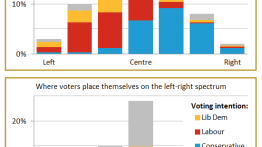
Here’s the latest in our Another Voice series of posts, which give prominence to viewpoints outside the normal Coffee House fold. This time it’s the IPPR’s Associate Director, Will Straw, with his five-point take on the fringe events of Tory conference, and the lessons that might be learned from them: 1. The Tories know that winning a working majority in 2015 is no easy task. The most popular fringe event according to Fringelist.com was ConservativeHome’s event on ‘How the Conservatives can win the next election.’ Reflecting his remarks from the panel, YouGov’s Stephan Shakespeare wrote yesterday that, “today’s electoral maths makes an overall a majority a mountain to climb”.  

What did Fleet Street make of Cameron’s speech?

Not a lot is the short answer. Many commentators argue that the speech failed to match the gravity of this moment in time; that it was safe; that it was not prime ministerial. Steve Richards believes that Cameron was timid, choosing to reassure rather than challenge. He writes: ‘Yesterday in his address David Cameron did Ed Miliband an unlikely favour. He made Miliband’s seem deeper and substantial. The Labour leader’s address last week was poorly structured and delivered, yet compared with Cameron’s it had an argument and was at least an attempt to address the scale of tumultuous change sweeping across Britain. In contrast Cameron’s speech was a giddying guided tour

Tory Party Conference, Inc.

The empty chairs for David Cameron’s speech said it all: the party conference is no longer a political event. This was my eleventh Tory conference, and, even in this short time, I’ve noticed a creeping corporate takeover.  The difference struck me yesterday, when I attended a packed fringe meeting in something called the ‘Freedom Zone’. It was set up to discuss banned topics: how to cut taxes, the case for a referendum on EU membership, etc. The crowd was younger, of a libertarian bent — all activists and enthusiasts of some kind, a refreshing change from the sanitised and often lifeless feel of the rest of the official conference. As

Cameron does enough

There were three big themes to David Cameron’s speech. The first was that decline is not inevitable, an attempt to tackle the mood of pessimism that is gripping the nation. The second was an attempt to reassert the Conservatives’ compassionate credentials, hence the emphasis on how the Liberal Democrats would have cut the NHS and the section explaining why conservatives should support gay marriage. The third was leadership, Cameron’s biggest advantage over the other party leaders. The attack on the idea of Britain’s decline being inevitable was powerful in places. But because Cameron has a non-ideological approach to growth it is hard for him to make a stirring argument about

Hague’s European dilemma

William Hague’s conference speech caps a revival in his political fortunes, and it also showed how far the government has come since the pre-election period, when Tory foreign policy was indistinct. After one year in office, the government’s roster of foreign policy achievements is noteworthy. The coalition has overseen institutional innovations in the form of the National Security Council and organisational improvements at the Foreign Office. Embassies are opening, not closing. Diplomats are again being taught traditional skills, not trying to follow the latest foreign policy fad. Cooperation between DfiD and the Foreign Office is also much better than it was under Labour, with Andrew Mitchell and William Hague conferring regularly

Cameron’s leadership pitch

Leadership, leadership, leadership. You couldn’t miss it. Leadership wasn’t just the clearest theme of David Cameron’s speech to the Tory conference just now, but also one of its most common words. By my count, it popped up around 30 times. “I’m proud to lead this party,” he said in the very first paragraph. “It is leadership we need,” he continued. The aim, I’m sure, was to paint an even stronger contrast between David Cameron the Prime Minister and Ed Miliband the Sub-Prime Ministerial. But Cameron wasn’t just talking about his own leadership. As he put it himself, “success will come: with the right ideas, the right approach, the right leadership. Leadership

Explaining Cameron’s debt u-turn

“Millionaire David Cameron wants you to pay off your credit card – are you going to obey the Prime Minister?” asked one local BBC radio station phone-in this morning. This is not what No. 10 had in mind when releasing selective quotes from his speech last night. “The only way out of a debt crisis is to deal with your debts. That means households – all of us – paying off the credit card and store card bills.” This line in his speech is now being rapidly rewritten – and for good reason. Because the Prime Minister was in danger of making a major mistake.   The premise of the

An order or a description?

The hours before David Cameron’s speech have been filled by a row about the pre-briefed line that: “The only way out of a debt crisis is to deal with your debts. That means households – all of us – paying off the credit card and store card bills.” This was taken by several papers as the Prime Minister instructing people to pay off their credit cards bill now, something that would have reduced the prospects for growth even further. So, the line has now been changed to show that Cameron is just describing what’s going on. It is all mildly embarrassing. But this little flurry can’t disguise the fact that

Liam Fox plays his hits

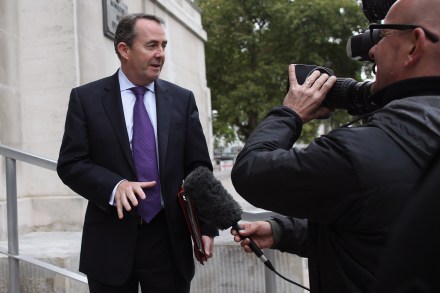
The party faithful (and lobbyists) have their favourites. The conference hall rose in applause when Liam Fox sat down, having delivered his speech. This might have been a tricky engagement for Fox, who is overseeing substantial cuts to the defence budget, which might, conceivably, have angered activists. He has also been under pressure from Jim Murphy, who is described by some in government as the opposition’s ablest shadow minister. Fox, however, prevailed by giving a true blue speech aimed squarely at the audience in the hall.  The gruelling strategic defence review was necessary, he said, because deficits threaten national security – a line he’s used before. But, thanks to his management, Britain would emerge

Cameron wants to offer the “right” leadership

As flat as flat champagne — that’s the verdict on this year’s Tory conference, which is ironic given that the two year ban on champagne was lifted this year. Bruce Anderson argues that the dour atmosphere is intentional. These are serious times for sombre politics, not the frivolity occasioned by a conference at a seaside resort. David Cameron’s first objective, Bruce says, is to reassure the country and present himself as a leader for a crisis. Cameron’s conference speech has been widely trailed by most news outlets this morning. Tim Montgomerie has a comprehensive overview of the speech. Cameron’s first challenge is to emote: these are “anxious times” for ordinary

Grieve tucks into May

A fringe debate on the Human Rights Act hosted by the Tory Reform Group might not have been a crowd puller. But yesterday’s feline foul-up and the presence of Attorney General Dominic Grieve, a firm advocate of human rights, ensured the event was a sell-out. If Grieve had been advised against deepening internal animosity on the ‘cat flap’ furore, he ignored the direction. The TRG’s Egremont blog quotes Grieve as saying: “We need to have a rational debate. We must be more productive than just going for the ‘meow’ factor.” Then he added: “The judicial interpretation and case workload of the European Court ought to be a concern for the UK and other

Lansley offers reassurance

After Gove, a minister whose agenda has gone less smoothly — and it showed. Andrew Lansley’s speech to Tory conference was part re-re-restatement of the case for reform, part massage for any residual tensions left over from the summer. Here’s a five-point summary of the things that stood out to me: i) An appeal to NHS workers. Lansley began not just by paying extended tribute to NHS staff, but by encouraging everyone else to do the same. “I want to thank them,” he said, “and I know we all want to thank them” — to which the audience duly responded with applause. Although this was designed to sweeten some of

Taking the ‘cat-flap’ seriously

              Today’s ‘cat-flap’ between Ken Clarke and Theresa May exposes one of the largest divides in the Conservative party today. May, along with most Tory MPs, wants to get rid of the human rights act, while Clarke and the attorney general Dominic Grieve want to keep it. May, to the surprise of her colleagues, used a pre-conference interview with the Sunday Telegraph to make clear her desire to get rid of the act. After this, there was always going to be a reaction from Clarke & Co. One ally of the Justice Secretary tells me that his comments today were spurred, in part, by an irritation