Conservative party

Gove: the Tories are the party of state schooling

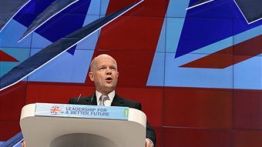
Apologies for my recent, extended absence, CoffeeHousers — Vietnam and my immune system just didn’t get on. But I’m back now, and firmly embedded in Manchester, where Michael Gove has just given his address to the Tory conference. Although, I must say, “address” doesn’t really cover it. This was more a political variety show, short on new policy (because Gove’s existing policy is going quite well enough, thank you very much), and big on spectacle and optimism. It started off with a video conversation between Gove and David Cameron, who was in a local school that is on the verge of becoming an academy. There was nothing surprising in what

May’s cat story is nonsense

If Theresa May took Ken Clarke up on his wager that no one has avoided deportation because they had a cat, as May claimed in her speech earlier, she should pay up. According to the Guardian’s Andrew Sparrow, a spokesman for the Judicial Office has explained: ‘This was a case in which the Home Office conceded that they had mistakenly failed to apply their own policy – applying at that time to that appellant – for dealing with unmarried partners of people settled in the UK. That was the basis for the decision to uphold the original tribunaldecision – the cat had nothing to do with the decision.’ This is

The Tory split over the ECHR

Ken Clarke is speaking at a Daily Telegraph fringe event and he was quick to play a few of his favourite European games in response to Theresa May’s assault on the Human Rights Act and the European Court of Human Rights. Nick Watt reports that Clarke claims May did not brief of her examples of the HRA being abused. And he cast doubt on their veracity: according to Lucy Manning, Clarke jovially challenged May to substantiate her claim that a criminal was not deported on human rights grounds because they happened to own a cat. This may seem like fun and games, but it reveals the tension over the HRA and the ECHR that exists

Good Boris

Boris Johnson must be one of the very few politicians in the world to make the audience laugh before they even start their speech. Just by walking on stage, he has the effect of a good comedian: the punters start to smile, in anticipation of some good one-liners. In today’s case, Boris got a standing ovation before he opened his mouth. Here is the man judged by Ladbrokes as the most likely next Conservative leader, but he had not come to stir. The Prime Minister – who lavished praise on the Mayor last night – was in the hall. It was all Big Society (BoJo division): affordable housing and a reprise of

What Fleet Street made of Osborne’s speech

The abiding image of this conference may be the sight of Steve Hilton apparently shepherding the turbulent Andrew Tyrie into a booth, from which Tyrie emerged singing George Osborne’s praises. “A huge step forward…you can some consistencies,” he said, which was an endorsement of sorts. What did everyone else make of it? As you can see, David Cameron looked morose at times, but the mood in the hall oscillated between sobriety and quiet optimism, matching Osborne’s blend of austerity and promise for the future. Fleet Street is similarly conflicted: no paper gives him an unqualified endorsement, but no paper entirely rubbishes him either. The Times concludes (£), as Tyrie did on Saturday,

The Tories await Boris

In just over an hour, Boris will make his first appearance in Manchester. The Tory hierarchy is acutely aware that for at least the next 18 hours or so this will be Boris’ show. There’s a certain nervousness about what might be in Boris’s speech. One MP close to the leadership just came up to me and asked, “You guys don’t have any idea what he’s going to say, do you?” Boris has, apparently, being telling people that he hasn’t written his speech yet, which is only increasing the anxiety that he might make some fruity comments on Europe or tax. One thing that’s certain is that the hall will be

What Osborne got right

After being mean about Osborne’s sub-prime corporate debt policy, I should say that he got a lot right in his speech earlier today. His delivery was the best I’ve seen: he looked relaxed, and sounded conversational. This suits him: he’s not a hell-and-brimstone kind of politician. He dealt with the dire subject matter in a confident way and was not in the least defensive. And he showed a glimpse of the sunlit uplands, so conspicuously absent from Vince Cable’s doom-laden speech a fortnight ago. That said, it seemed apparent from the rest of his speech that he is bracing himself – and us – for a downward surge on the economic

Osborne’s serenade

As James said, Osborne’s speech was a potent blend of economics and politics. One passage in particular stood out politically: when Osborne referred to those who booed when Ed Miliband mentioned Tony Blair during his speech. He said: ‘You know, there was a time when Labour seemed briefly to realise that to win elections it had to accommodate itself to the real world, stop being anti-business, make peace with middle Britain. Not now. It’s over. Once they cheered Tony Blair, now they boo him. I fought three elections against Tony Blair, and I know the damage he did to our country. But it wasn’t just him they were booing last

Explaining credit easing

Having had a few more discussions, I’m a bit clearer about the government’s plan to do credit easing. The full details of the scheme will be released on the 29th of November as part of the autumn statement. But I hear that the scheme is intended to be worth between the high billions and the low tens of billions and it will be aimed specifically at small and medium sized enterprises, although it could be extended to all companies and expanded up to somewhere in the region of £50bn if the credit markets were to seize up.  I also understand that major supply side measures are being saved up for

Osborne’s next trick: sub-prime companies?

About 15 years ago, Bill Clinton wanted to promote home ownership among the low-paid, but was annoyed that banks wouldn’t lend freely or cheaply to that group. So, the federal government intervened with Freddie Mac and Fannie Mae selling government-backed mortgages at knockdown rates. Nothing showed up on the national debt, because the loan would — in theory — be repaid. The seeds for the sub-prime crisis were sewn.   Today, George Osborne wants to promote recovery and is annoyed than banks won’t lend freely or cheaply enough to small businesses. So, the Treasury will intervene by lending money indirectly by backing a new bond market that lends cash to

Osborne’s big step

As George Osborne was addressing Tory conference, Standard and Poor reaffirmed Britain’s triple A rating. For the Osborne team, it sent out the perfect message — their deficit strategy is keeping the nation creditworthy. It was their piece of conference theatre for this year. The Chancellor’s address was a sombre affair. But, in some ways, it was his most impressive conference performance. It was a classic Osborne blend of politics and economics, but distinguished by a clear and precise analysis of why the economy was not recovering. Osborne’s big policy announcement was that the Treasury was now exploring credit easing. I’ll have more on this soon, but essentially the idea

Osborne, the caring chancellor

George Osborne is pursuing the Tesco strategy: every little helps. In his conference speech today, he will announce that he has found £805 million to freeze council tax next year, which will save taxpayers £72. Not a lot, you might think – and that’s Labour’s view – but the chancellor is adamant that he won’t “stand on the sidelines” while living standards contract. Substantial tax cuts have been ruled out by Osborne, but he is expected to make further announcements on benefits. Last week, it was rumoured that he would reverse changes to child benefit for a parent who earned around £42,000 per year. (There are also rumours that the income tax

Willetts tackles the three Ds

How the Conservatives should respond to “disorder, debt, and distrust” is the theme of David Willetts’ speech to the Conservative Policy Forum. Willetts, one of the most cerebral Conservative ministers, argues that the riots, the deficit and the anti-politics mood have come together to create a triple-challenge for the party. But Willetts’ speech is also the Tory response to Ed Miliband’s charge that they are breaking the promise of Britain: the idea that each generation does better than the next. Willetts, who has written a book on the subject, accepts that fairness between the generations is the biggest challenge in politics right now. He cites polling, which I understand to

Is the health budget falling or not?

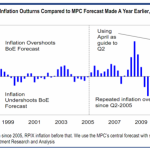
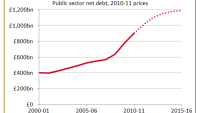
Before the election, the Conservatives promised they’d “protect” the NHS, which they defined as increasing its real-terms budget year-on-year. This is a rather dangerous promise because it makes ministers hostage to inflation. Now that inflation has surged, expectations have been revised upwards, and it looks like the NHS budget will suffer a real-terms cut. In its monthly update of City consensus forecasts, the Treasury has released new figures for inflation over the next five years.Apply the latest inflation figures to health spending in the last budget and it implies a £1bn shortfall . The graph below shows the change over five years: Back in March, the IFS said that the

Any questions for IDS?

At 6pm this evening, I’m interviewing Iain Duncan Smith at a Conservative Party conference fringe meeting. He is fighting a war on at least three fronts: the welfare-to-work programme, the creation of his Universal Credit (ie, rewriting the benefits system), and producing a government response to the riots and the conditions behind them. I may put questions to him from CoffeeHousers, so if you have any please leave them below. IDS is surprisingly candid for a Cabinet member, perhaps because he wants this to be his last job in government. He isn’t watching his words, worried that he’ll say something to damage his promotion chances. I’d say that his job

Shapps sharpens the Right to Buy

It’s a day for growth initiatives. In addition to those described earlier, George Osborne has announced that Whitehall’s annual underspend will be reinvested into capital spending projects. The emphasis on infrastructure echoes Danny Alexander’s statements during the Lib Dem conference, when the Treasury secretary disclosed that existing programmes would be brought forward and funded by recalibrating budgets. So there seems to be agreement between the two parties about bolstering the coalition’s growth strategy in a certain way, which may explain why the Tories are so determined to resist pressure to introduce politically awkward tax cuts. Grant Shapps has also been elaborating on the changes to the Right to Buy. He

Cameron’s tricky interview

In a surprisingly testy interview on the Andrew Marr show, David Cameron defended the government’s approach to Europe, the economy and planning. But before the interview really got going, Cameron had to reiterate his Sunday Times’ apology (£) to women for the patronising comments he has made in the Commons chamber. This is hardly an ideal start to conference for a party leader who is struggling to maintain female support. On the Eurozone, Cameron was blunt that its problems were a threat to “the British economy and the world economy”. He also risked a clash with Nicolas Sarkozy by demanding that “action needs to be taken in the coming weeks to