Coffee

Time for Americans to give tea a second chance

From our US edition

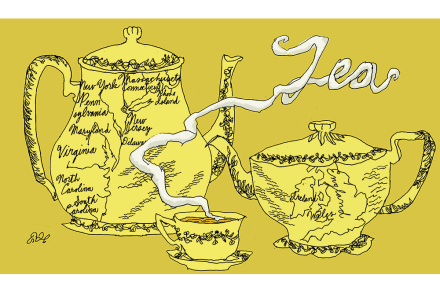
“Last night,” John Adams confided in his diary on December 17, 1773, just after the Boston Tea Party, “3 Cargoes of Bohea Tea were emptied into the Sea... This is the most magnificent Movement of all. There is a Dignity, a Majesty, a Sublimity, in this last Effort of the Patriots, that I greatly admire.” Some things – like hyperbole and random capitalization – never seem to go out of style in American politics. Tea has been less fortunate. Once the most beloved non-alcoholic beverage in the 13 colonies, it fell so low in America’s regard, as Emily Dickinson would say, we heard it hit the ground. Or the water, in the case of the Boston bunfight.
Adams

Giving up caffeine is a fool’s errand

Everyone is giving up something these days. Even before this week’s flood of new year’s resolutions, we’re in the age of subtraction as people shed vices like old skins. Cigarettes, alcohol – those villains have been booed off the stage by the newly health-conscious, whose accusing stare is now turning to a fresh culprit: caffeine. Like most sanitising trends, the anti-caffeine narrative is biggest across the pond. ‘Decaf desirability’ is ‘peaking’, the New York Times told us last month, as turmeric lattes, mushroom elixirs and chicory brews threaten to knock coffee off its perch.

Beware the £5 coffee

It wasn’t until I received a notification from the Monzo app that I realised I’d spent nearly £10 on two coffees. This wasn’t in the Wolseley or even within the M25, but in Two Magpies, a café in Holt, our local market town in Norfolk – for two regular lattes (admittedly with an extra shot, since it was Monday morning) for myself and a friend. Just last year, I was taken aback when my caffeine fix crossed the £4 threshold, with the barista casually mentioning that coffee prices were rising. But £4.70 feels like it’s firmly in the ‘taking the mickey’ territory. I haven’t been back since (I’m currently writing this in a different café) because I know I’d be unable to resist exclaiming ‘HOW MUCH?

The curse of distraction: Lesser Ruins, by Mark Haber, reviewed

Earlier this year, I visited the Museum of Jurassic Technology in Los Angeles. This cherished museum appears at first to be a collection of bizarre arcana: botanical specimens, miniature dioramas, tributes to forgotten polymaths. Closer inspection reveals it to be something altogether stranger, at the junction of fact and fiction. Witty and highly individual, it invites us to sit with the wonder, to contemplate what we have seen. Phones are strictly banned. Lesser Ruins, the consummate third novel by the Minneapolis-based Mark Haber, feels like a literary analogue – taking us as it does down rabbit holes, a twisting tour of an overloaded mind. Its unnamed narrator is a former community college professor (retired or fired – there are different versions).

Trying the best coffee in the world

From our US edition

It was nine on a Monday morning, and whereas my fellow commuters were heading to the office, or their classrooms or a lecture hall, I was on my way to Parcafé in the Dorchester Hotel, right next to London’s bougie shopping district, Mayfair. It’s a place to buy Ferraris and Bugattis and shop at the Row and Goyard and be passed by an endless convoy of black Rolls-Royce SUVs. Waiting for me at the hotel would be a man with a little golden cup, containing a freshly brewed portion of mankind’s favorite black nectar. And his is the best, uncut stuff on the market. The man is Amir Gehl, founder and CEO of Difference Coffee, which sources some of the best, rarest coffee beans in the world.

coffee

The complexities of our colonial legacy

It happened by accident. In 1829 the naturalist Nathaniel Bagshaw Ward was trying to hatch a moth pupa. He placed it in a sealed glass container, along with some soil and dried leaves, and set it aside. Sometime later he was surprised to find that a fern and some grass had taken root in the soil, despite having no water. As Sathnam Sanghera writes in Empireworld, the discovery ‘revolutionised the logistics of international plant transportation’. Suddenly there was a means of securely transporting seeds and seedlings across vast distances. Empireworld is a sequel to Sanghera’s wildly successful Empireland. Where the latter examined the legacies of empire in Britain, this book seeks to apply that template to the world.

How I became a morning person

From our US edition

For most of my life, I was a night owl. Up-and-at-‘em types would tease me for my sleeping-in habits. I’d go on the defensive by saying, yeah, you get up at the crack of dawn, but you’re also in bed by dusk like a nerd, whereas I burn the midnight oil like some mad genius tinkering away with the romantic moon and my fellow nocturnal beasts. I preferred, until relatively recently, to work late rather than get up early to complete tasks. In college, I avoided 8 a.m. classes like Joe Biden avoids news conferences. But deep down, I always longed to be one of those people who was bright-eyed and bushy-tailed first thing in the morning, accomplishing half their to-do list before I had hit the snooze button for the third time. For years, I thought it just wasn’t in the cards.

In defence of instant coffee

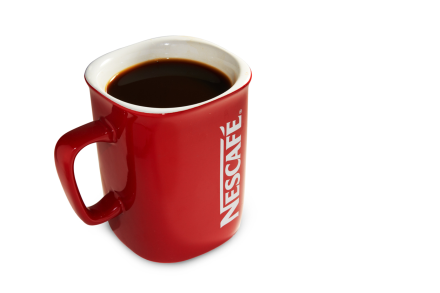
The past is a foreign country; they do things differently there. Ten or 20 years ago no one would have thought twice about enjoying Nescafé or its equivalent. There is soothing ritual in spooning, pouring, stirring and sipping the mud-brown concoction in a mug. But nowadays, for a generation nourished on slow-roasted Colombian cashew-milk cortados, instant coffee seems as primitive as campfire cookery. I recently stayed at Brownsover Hall, a grand Gothic mansion house near Rugby: a place where you can sit for a whole weekend in a Georgian wingback chair, gazing out at Warwickshire. In a wood-panelled bedroom, with ceilings loftier than millennial expectations, by the mini kettle and the branded writing paper, was the familiar tray of Nescafé sachets, PG Tips and milk thimbles.

How the coffee subscription ruined Pret

I have a deep-seated hatred of the hospitality QR code. It ripped through the industry as part of questionable social-distancing initiatives during the pandemic, taking the place of menus and human interaction – and has stubbornly refused to disappear, making my heart sink when I find one sellotaped to the table of a bar or restaurant. However, there’s one hospitality QR code that I found myself developing a fondness for – the one that comes with Pret a Manger’s coffee subscription. Launched in September 2020, the scheme is a financial godsend for coffee addicts.

Ted Cruz is right about ‘slacker baristas’ and their college debt

From our US edition

Senator Ted Cruz has come under fire for saying that most baristas are slackers who spend most of their days sucking bongs. Now, Cockburn wasn’t always Cockburn. Like today’s youngsters, he had to mooch around working two jobs at once to pay the rent (after his parents cut off his allowance). So, when Cockburn says what he’s about to say, he says it with authority: Ted Cruz is right. It may be a hard truth but Cockburn has been there, done it and got the Grateful Dead T-shirt to prove it. The Texas senator said: ​​ There is a real risk if you are that slacker barista who wasted seven years in college studying completely useless things, now has loans, and can’t get a job, Joe Biden just gave you twenty grand.

ted cruz student debt

Combatting the cucked coffee conglomerates

From our US edition

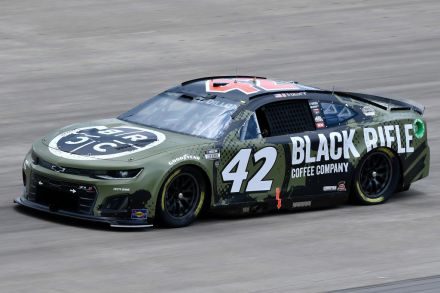
Cockburn is always looking for a good roast to accompany his morning swig of Bailey’s. Luckily, if you’re a card-toting member of the Grand Old Party, own at least one gun, and supported the Iraq War when it was in vogue, you have a plethora of options. On his search to find a coffee that can’t be cucked, Cockburn initially found Black Rifle Coffee Company, which might bring with it a connotation of Ben Shapiro or National Review to any attuned Republican ear. Veteran-owned with blends named “AK-47” and “Coffee, or Die,” the company has poised itself to become any patriot’s official blend, even recently becoming the official coffee of the Dallas Cowboys. Of course, this is not without controversy, on both left and right.

Abolishing slavery was no cause for smugness

When the 13 colonies of the United States declared independence in 1776, the first country to recognise the new nation was France. Other leading European powers, such as Britain and Spain, acknowledged its arrival at the Treaty of Paris, two years after a decisive victory by American forces. Yet when Haiti asserted independence in 1804, it was ostracised by Britain, France, Spain and the US. During its first fragile years as a fledgling state, that self-declared guru of liberty Thomas Jefferson even imposed a rigid blockade while president. Washington then took more than half a century to recognise its Caribbean neighbour. The reason for such contrasting attitudes towards the first and second independent nations in the western hemisphere was simple.

The white guilt in your coffee

From our US edition

How do you take your coffee? With cream? Sugar? A splash of white shame? “The unbearable whiteness of coffee” is the click- and race-baiting headline of a Fast Company article that’s making the internet rounds (my innocent online purchase of Chemex coffee filters must have prompted this suggested guilt trip). I really didn’t want my most sacred morning ritual — and bright spot of many afternoons, for that matter — to be added to the list of things I shouldn’t enjoy because it’s racist. So I poured myself a large mug of fortifying Joe — potentially my last — and gripping it tightly, read the dreaded article and did some digging.

coffee

In defense of decaf

From our US edition

We all have our daily rituals. We’re told they’re a necessity to live a healthier, happier, more productive life. Some pride themselves on an early start, a morning jog, or a half hour spent journaling in their wellness notebook. Not a morning person, I’d be nervous to jot down — and read back — my view of the world at 7 a.m., so I’ve never taken up the fad. But I reserve no judgment for those who do. Why then, is there such judgment about my routine, which every day involves fueling up on decaffeinated coffee? To be fair and objective, I’m guilty of nothing more than ‘fitting in’. Coffee ranks as one of the most popular drinks worldwide, with more than 400 billion cups consumed every year.

decaf

Civilized caffeination

From our US edition

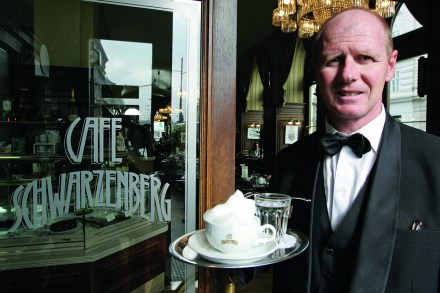
Palaces, art galleries, parks, composers’ houses, operas, concerts, Spanish Riding School horses, full-throated choirboys wearing sailor suits...yes, I go to Vienna for all these delights. But, deep down, probing my true desires and motives, I really go there for the coffeehouses. It’s just that to make the coffeehouse experience the most delicious it can be, you need to arrive cold, hungry, intellectually stimulated and with aching feet from visiting one of the above attractions. Then you’ll feel the warmth seeping into you as you sink down onto a coffeehouse banquette.

viennese coffeehouse

Dear Mary: Should I return my pod coffee maker on moral grounds?

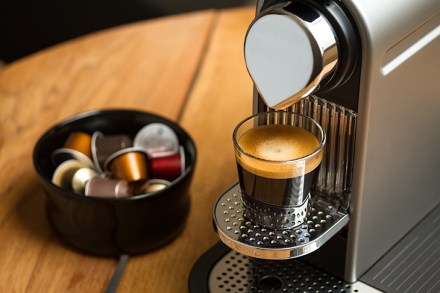
Q. I adore doing jigsaws and these days there’s an added bonus — by posting my progress on Instagram I can share the happy glow it gives me knowing that I’m reducing toxic screen-time habits. Recently I begged to borrow a magnificent 1,000-piece puzzle from a friend — a vast winter scene by Pieter Bruegel. Setting to, I succumbed to the meditative calm and satisfaction of puzzling. After two weeks of hard graft neglecting pretty much all domestic duties, the puzzle was finished, but with a piece missing! This maddening lost piece is an obscure blob of twiggy branch that nobody could love, but its absence mocks all my efforts. I cannot be sure it was I who lost it.