Cocaine

Madison Cawthorn is a congressional hero

From our US edition

Cockburn finds Madison Cawthorn — the first-term Republican congressboy from North Carolina, defeated in a GOP primary last night — an interesting study. His behavior reminds Cockburn of a Capitol Hill freshman fraternity pledge who just can’t seem to get the rules of the house down. Cockburn never seems to see Cawthorn’s name in the headlines for anything but scandalous reasons: his past is riddled with sexual misconduct allegations, bizarre vacations that involved dressing in lingerie and taking seductive photos with white wine, and dubious claims surrounding his “derailed” career at the Naval Academy (where he wasn’t accepted) and about the aftermath of an accident that led to his paralysis (he’s seeking $30 million in a lawsuit related to the incident).

What if Hunter Biden actually gets indicted?

From our US edition

More news is breaking daily on America’s favorite pipe artist. But if you looked at Hunter Biden’s inner circle, you wouldn’t see a group of people bracing for impact. In fact, you would see photos of Hunter Biden’s wife Melissa Cohen frolicking with friends on the beach in Rio de Janeiro and sipping out of coconuts. You would see the president in the fake White House set rolling up his sleeve for his second televised booster shot. But don’t let the Biden family’s schedule fool you: Hunter is in trouble — and they know it. The Washington Post published a piece this week titled, “Inside Hunter Biden’s multimillion-dollar deals with a Chinese energy company.” The company in question is CEFC China Energy conglomerate.

Sex, lies and Madison Cawthorn

From our US edition

Madison Cawthorn is paying the price for trying to seem cool on a podcast. The North Carolina congressman carried himself with the air of a high school kid with a “girlfriend” who “goes to a different school” as he spilled the beans on how similar Capitol Hill was to the depiction in House of Cards. Cawthorn described being invited to orgies by older members of Congress and seeing politicos taking cocaine. “I look at all these people, a lot of whom I’ve you know looked up to through my life… then all of a sudden you get invited to- ‘well hey we’re gonna have a sexual get-together at one of our homes, you should come!’… and you’re like ‘w-what did you just ask me to come to?

madison cawthorn

Let he who is without crack-induced nudes cast the first stone

From our US edition

President Joe Biden often likes to tout his involvement in passing the Violence Against Women Act. So, naturally, the president was on hand to speak about the issue this week at an event marking the bill’s reauthorization. With his trademark eloquence, Biden emphasized how the reauthorization took aim at revenge porn, which he described as “a new civil rights cause of action for those whose intimate images were shared on a public screen.” “I bet everybody knows somebody,” the president explained, “that in an intimate relationship, what happened was the guy takes a revealing picture of his naked friend, or whatever, in a compromising position and then blackmails.” True enough, Mr. Biden.

hunter biden nudes

William Hurt — a life in two acts

From our US edition

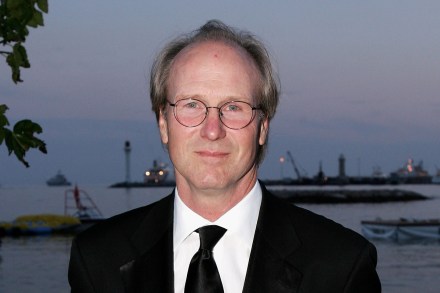
It is a depressing statement on the banality of the film industry that the death of actor William Hurt, at the age of seventy-one, was marked by at least one obituary stating, “Avengers star dies.” Hurt, who appeared in several Marvel films as the military character Thaddeus Ross in his latter-day career, did indeed appear in the mega-grossing Avengers films Infinity War and Endgame, and I very much hope that he received some tiny portion of the films’ enormous box office receipts in recognition of his appearance. But to describe Hurt’s life and work as defined by his Marvel roles reminded me of the great Alan Bennett line about his sexuality: “It’s like asking a man who has just crossed the Sahara whether he would prefer Perrier or Evian water.

william hurt

A war on drugs? I do hope so

I’m not going to lie, I let out a little chuckle — maybe even a murmur of approval — when I read that the government plans to target middle-class drug users. About time, I thought to myself. For too long the so-called ‘war on drugs’ has focused on the poverty-stricken poppy-growers in far-flung fields, or the desperate ‘mules’ who risk life and liberty to get drugs across borders, or the working-class kids in the UK who get caught up in drug-dealing because they feel they have few other prospects in life. And all the while the privileged people whose narcissistic needs motor this industry, whose selfish desire for a synthetic high is the driver of all this risk-taking and crime, get off scot-free.

There’s no such thing as ‘woke coke’

Have you heard about ‘Woke Coke’ – ‘Wokaine’, if you will? Apparently drug dealers are now targeting the WaWs (Woke And Wealthy) with gear at £200 a gram (when I quit six years ago, £70 was the going price) and a promise that your particular little bindel of joy is 'environmentally friendly' and 'ethically sourced’ from ‘well-paid farmers.’  Reading about it this week, I didn’t know whether to laugh, cry or call the police and report myself for historical crimes against humanity. I don’t regret much in my long, louche life. But if I could go back in time and undo one thing, I’d return to 1985 when I started taking cocaine and thereafter took it pretty much every day for thirty years.

White Christmas: the magic of the festive drugs binge

From our US edition

This article is in The Spectator’s December 2019 US edition. Subscribe here. An effective antidote to all this thoughtless zealotry, I find, is to go out for the evening with my friend Trevor. When despair hits total, I know it’s time to ring him up and suggest a small sherry: code for drinking and taking drugs until we’re totally out of our minds, then partying all night. Trevor is a big, strong, hard-working country boy for whom life is invariably a momentous affair. Though he’s a tolerant man, there is a point at which forbearance ceases to be a virtue, and he is an old-school puncher and the man you have to beat if you want the magnetic title of Hardest Man in Town. His catchphrase is ‘Who’s the Daddy?

drugs

Get me out of here

‘If your time ain’t come, not even a doctor can kill you’ — so goes the proverb that best echoes the dilemma of an ageing humankind as we glimpse the harrowing vista of decrepitude to come: a panorama that first takes in the custard-stained wingback chairs of a soul-extinguishing care home, then yaws off nauseatingly to a vision of the demented and the drooling as they hobble into that good night. How can you swerve incarceration and indignity when you just won’t die — and, more pertinently, when no one is allowed to kill you? How to be the auteur of your own death when ‘self-euthanasia’ proves so tricky you need the help of a loved one, thus implicating them in a criminal act?

Just say yes

Narcos is back on Netflix, set in Mexico this time, with a cool, world-weary, manly voiceover swearily lecturing us at the beginning that if we smoked sensemilla in the 1970s, then we were partly responsible for the bloody, endless drug wars that went on to kill more than half a million people. Oh really? Sensemilla (derived from the Spanish for ‘without seeds’) is the kind of product of human ingenuity and free markets we should be celebrating, not decrying. It’s more compact than bog-standard weed, making it easier for entrepreneurs to ship, thereby increasing their profit margins. It affords a sweeter-tasting hit and a more euphoric high, thereby giving greater pleasure to the consumer.

The Mutiny and the bounty

Sullying the glorious sunshine, sand and sea, Miami in the 1940s, when I first ventured there, was already overcrowded, vulgar and exorbitant. It got a lot worse. By the early 1980s, the period to which this sensational criminal history is devoted, it had become the capital of Cubans in exile and America’s most prosperous cocaine entrepot, where the annual murder rate was more than 300. Attempts to impose law and order were handicapped by corrupt police, a corrupt judiciary and corrupt juries.

A QC’s guide to cocaine

As a defence silk, I come across some surprisingly intelligent drug dealers. Many of them are highly entrepreneurial and driven, and I’m often left wondering what they might have achieved if only they’d chosen a different career. Sharp operators are drawn to the narcotics trade because vast profits can be made in very little time. But then the consequences of failure, especially at the heavyweight end of the market, are rather worse than a tumbling share price. And we all make mistakes. I was recently involved in a case where a criminal mastermind had been jailed for 15 years for heroin importation, but had kept on running his empire from behind bars using a prison phone.

Wars on drugs

‘Of all civilisation’s occupational categories, that of soldier may be the most conducive to regular drug use.’ The problem with this statement — the first words of this book — is the problem with the book as a whole: it may be correct, and there again it may not be. Even the captionless cover photograph is ambiguous: of an American soldier, in Vietnam perhaps, with a corncob pipe which may or may not contain a banned substance, though we are obviously meant to infer that it does. Then there is the inconclusiveness: ‘One may say that to a lesser or greater degree drugs shaped warfare.’ Yes, one may; but to a lesser or greater degree one may say that about almost everything.

Tainted love | 23 March 2016

In 1963, when the bloom was still on the rose, Bob Dylan described Woodstock as a place where ‘we stop the clouds, turn time back and inside out, make the sun turn on and off… the greatest place’. Six years later, he wrote in Chronicles: Volume One, ‘Woodstock had turned into a nightmare, a place of chaos.’ Barney Hoskyns, who lived there in the 1990s, marshals plenty of evidence to support both assessments. This Catskills hamlet has been at various times a blue-collar small town, a bohemian enclave, a tourist trap, a hotbed of creativity, a cauldron of hedonism, a madhouse and ‘a counter-cultural touchstone’. In its heyday it attracted such luminaries as Janis Joplin, Van Morrison, Todd Rundgren, George Harrison and The Band.

The gangs of north London

I covered another stabbing the other day, a particularly nasty one this time. An 18-year-old was repeatedly knifed in the stomach and beaten over the head with a baseball bat. Witnesses told me he’d been outside his mum’s tower-block flat in Islington, north London, when he was rushed by a group of about ten or 15 boys. He suffered serious head injuries and multiple stab wounds and was soon in hospital in a medically induced coma. By some miracle, he survived. Who would have committed such a brutal and pointless crime? A source told me police believed the attackers to be from two London gangs: the Hoxton N1 gang, whose turf is east of Kings Cross, and the Cally Boys, named for the Caledonian Road, which runs from Kings Cross north to Holloway.

Low life | 31 December 2015

For me, last year started with an appalling whitey outside a pub after swallowing a second ecstasy tablet because I thought the first wasn’t working. I was saved by a young woman yelling ‘Catch me!’ and taking a running jump into my arms — which forced me back to the physical realm — and by being violently sick. The ecstasy came in the form of small white circular unmarked pharmaceutical-grade tablets. The second was passed on to my tongue via the tongue of someone I had met for the first time two minutes before. After that, 2015 was one tablet after another — legal and illegal. I also injected.

Marvellous, murderous city

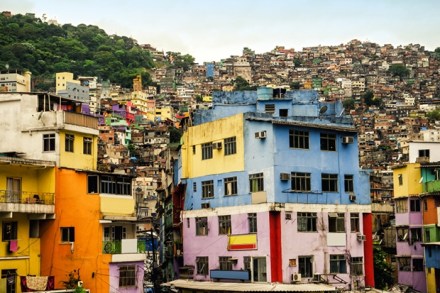
When Stefan Zweig first arrived in Rio de Janeiro in 1936, he was overwhelmed not only by the city’s magnificent landscape but also by its ordered architecture and city planning. This encounter he would later describe as being ‘one of the most powerful impressions of my whole life’. In his Brazil: Land of the Future, a book that was an exercise in wish-fulfilment masquerading as travelogue, Zweig believed the country to be the embodiment of ‘future civilisation and peace in our world’. Over 70 years later Brazil held the world’s worst record for homicidal violence: for every ten people killed, one was a Brazilian. Rio, the cidade maravilhosa (marvellous city), may have retained its beauty in spite of being hemmed in by favelas, but it was now damned.

Powder to the people

It’s Notting Hill Carnival this weekend. Two days of skanking, dutty dancing and daggering (the dance, rather than the weapon). No carnival experience would be complete without rum punch and jerk chicken, or for that matter crime, cannabis and cocaine. Drugs are part of the fun at Europe’s biggest street festival. There were 76 drug arrests at the festival last year, and 88 arrests made before the party even started as part of a dawn raid seizing machine-guns and crack. Not that partygoers are about to let a little thing like the law get in the way of their bank holiday. A survey earlier this summer from the European Monitoring Centre for Drugs claimed London is the city with the highest concentration of cocaine in sewage in Europe.

Lord Sewel, you’ve made me proud to be British

The Lord Sewel scandal makes me feel proud to be British. For here, thanks to some glorious John Wilkes-style dirt-digging by the Sun — in your face, Leveson! — we have a proper political scandal. This ain’t no yawn-fest about MPs claiming the cost of a Kit-Kat or accidentally favouriting a gay-porn tweet: sad little pseudo-scandals which in recent years have tainted the good name of ignominy. No, the fall of Sewel is a full-on, drugged-up, peer-and-prostitutes scandal, of the kind Britain used to be pretty good at before the square Blairites and cautious Cameroons took over. The disgracing of Sewel is a reminder of British politics at its saucy best. Sewel, I salute you.

The murderous gangs who run the world

Rosalio Reta was 13 years old when recruited by a Mexican drug cartel. He was given a loyalty test — shoot dead a man tied to a chair — then moved into a nice house in Texas. Soon he was earning $500 a week for stakeouts and odd jobs, but the big money came from slitting the throats of the gang’s enemies, which paid a $50,000 bonus. Four years later he was arrested after 20 murders; his only remorse was over accidentally sparking a massacre that left him fearing his bosses might exact revenge on him. Such bloodstained stories of obscene violence in pursuit of obscene wealth fill the pages of the Italian journalist Roberto Saviano’s investigation into the cocaine trade.