Church of england

I’m scared to admit to being a Tory in today’s C of E

From our UK edition

[audioplayer src="http://traffic.libsyn.com/spectator/TheViewFrom22_27_February_2014_v4.mp3" title="Ed West discusses political bias in the church" startat=640] Listen [/audioplayer]I am training for ordained ministry at a Church of England theological college. I am a trainee vicar, if you will. I am also a Conservative, which puts me in an extremely small minority and quite a tricky position. At my college, there are approximately 60 ordinands in full-time residential training. Of those 60, there are no more than three or four who would describe themselves as Conservative and the overwhelming majority would call themselves (proudly) socialist. There is also a sizable minority of Marxists.

Why is the Church of England so obsessed with sex?

From our UK edition

Four bishops and a retired civil servant shut away in a palace, talking about human sexuality — it sounds like the beginning of a bad joke. But the resulting Pilling Report is, in spite of 200 pages’ worth of double entendres, neither funny nor enlightening. It has been clear ever since the Lambeth conference in 1998, which contained the ponderous resolution that ‘we commit ourselves to listen to the experience of homosexual persons’, that the Anglican church’s position has been to agree not to agree on the issue. From the Jeffrey John affair to the debate over gay marriage, the church has handled the question like a whoopee cushion at a vicar’s tea party — with a mixture of bemusement and embarrassment.

Mugabe envy in Scotland

From our UK edition

Who owns Scotland? The people who most commonly ask this question believe that the land has been wrested from ordinary Scots by evil lairds and rich foreigners (by which they chiefly mean the English). Now the Scottish government is bringing out a report on how to correct this alleged injustice. It may recommend extending community ‘right to buy’ powers and allowing tenants to buy their holdings even if the owners do not want to sell.  This would have the unintended effect of ending all new tenancies. But the SNP’s misunderstanding of the situation is even more radical than that. It believes that big Scottish landowners are rich because they own the land. For a long time now, it has been the other way round. They own the land because they are rich.

Ex-Muslims are living the British dream – Britain should support them

From our UK edition

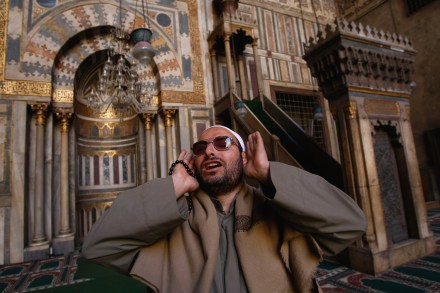
There was an excellent Radio 4 documentary on yesterday in which Sarfraz Manzoor interviewed a group of people you don’t hear much about – ex-Muslims. Like all good radio documentaries, it left me wanting to know more about the individuals involved, feeling more confused about the world, and with mixed feelings too. On the one hand I can understand that Dover Beach sadness of people falling away from religion, and why the parents of those interviewed would feel devastated by that loss. On the other hand, the ex-Muslims are right. They’re right to question the beliefs they were brought up with, and they’re right to see the inconsistencies and those aspects where Islam’s morality clashes with theirs, and to follow what they think to be right.

The death of Tory Anglicanism

From our UK edition

This week the General Synod edged one step closer towards permitting the ordination of female bishops. The final outcome is likely to be some kind of compromise to appease traditionalists similar to that in 1992 when the ordination of female priests was passed. But unlike that occasion, one crucial voice will not be heard nor probably venture an opinion — the Conservative party, which has distanced itself from ecclesiastical affairs over the past 20 years. This was not the case back in 1992 when a band of Conservative MPs joined Anglican traditionalists in opposing female ordination.

The CofE doomed? Only because it’s surrendered to phony soullessness

From our UK edition

The Church of England is doomed, Lord Carey has said, warning that Anglicanism is just ‘one generation away from extinction’. To be fair people have been saying this for a long time; in the mid-19th century the Church decided to make a survey of churchgoing, and were stunned to find out that only a quarter of people in England attended Anglican services and a similar number to non-Conformist services. Half the population wasn’t going at all. Now you’d be lucky to get that many at Christmas.

Will Prince George work his magic on the Church of England?

From our UK edition

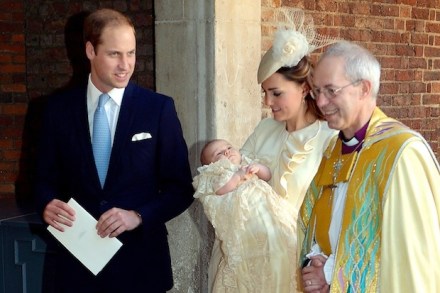
Well, Prince George has already done his bit for the Church of England. Simply by getting baptised he will bolster a sacrament that pretty well defines Christianity and is, like the state church which he may yet be head of (assuming disestablishment never happens), in sharp decline. In 1950, nearly 70 per cent of the population was baptised into the CofE, with most of the remainder christened into other denominations; in 2010 it was fewer than 20 per cent, and falling. Perhaps Kate Middleton can do for baptism what she does for Reiss dresses – bring it back into fashion.

Archbishop Welby poaches the Queen’s spinner

From our UK edition

As Mr Steerpike reported last week, the Archbishop of Canterbury has been seeking an apostle to spread the good news to the media. Today it has been announced that Alisa Anderson, the Queen’s press secretary, will join the staff at Lambeth Palace. As Royal watchers will know, Anderson was last seen pinning the announcement of the birth of Prince George of Cambridge to the golden easel outside Buckingham Palace. There’ll be no such glamour at Lambeth.

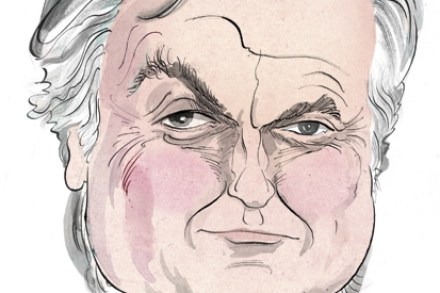
Richard Dawkins interview: ‘I have a certain love for the Anglican tradition’

From our UK edition

‘You owe me an apology,’ Richard Dawkins informs me. It is a bright Oxford morning and we are sitting in his home. His wife has just made me coffee and I have met their new puppies. I am here to discuss a new book of his, but he is smarting from a disobliging reference to him in a recent one of mine. That, and an earlier encounter I wrote about here, have clearly rankled. I try a very limited apology. But it does strike me that Dawkins is more easily bruised than one might have imagined. I wonder if it has anything to do with the deluge of criticism he attracts, provokes and possibly unwisely takes notice of on social media. ‘Do you feel beleaguered?’ I ask. ‘Do you?’ he fires straight back.

The Guardian’s latest crush: Justin Welby

From our UK edition

The Church of England has had some surprisingly good press recently. Who knows how these things happen, but the media seems to have decided to stop attacking its homophobia, and to start praising its social vision. The change at Lambeth Palace seems to have prompted this shift, which is a bit ironic, as Justin Welby is far more involved in the sexually illiberal side of Anglicanism than Rowan Williams was, but never mind. It has also been prompted by persistently hard economic times: the Church’s involvement in deprived communities gradually wins it more attention. Maybe it has insights that normal political bodies lack. Would you believe it?

Dear Justin Welby – here’s how you can really take on Wonga

From our UK edition

I’ve been in the pulpit again, this time to salute the centenary of the death of Charles Norris Gray, a formidable Victorian vicar of my Yorkshire town of Helmsley. Gray was a social activist with strong opinions on everything from sanitation to election candidates, and he did a great deal of good for his parish — so I’m not averse to the idea of churchmen intervening in worldly affairs, and I think Archbishop Justin Welby was right to highlight the parasitical nature of ‘payday lenders’ such as Wonga, even if he was subsequently embarrassed to discover that the Church of England was an indirect investor in it.

Justin Welby pleases both left and right with clever Wonga comments

From our UK edition

Justin Welby is a clever man. His comments about payday loan companies in Total Politics have managed to please both the left and right, which is no mean feat on such a controversial issue. How has he managed to do it? Well, the Archbishop has identified a social problem, of people accessing high-cost credit that they can't always afford to repay, and offered an intelligent solution, rather than that offered by politicians suffering from dosomethingitis, which is normally to ban stuff they don't like. Welby clearly doesn't like payday loan companies. They do charge high rates of APR, but only on short-term loans, which makes Wonga's 5,853 per cent APR look a lot worse than it is because the loan isn't taken out for the year.

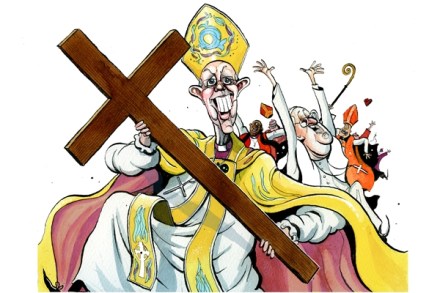
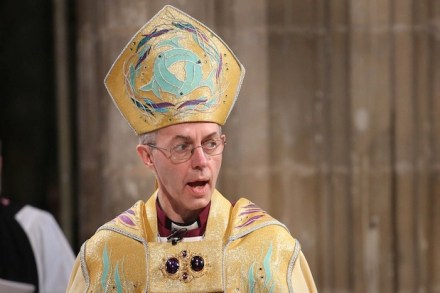
Justin Welby, a very political Archbishop

From our UK edition

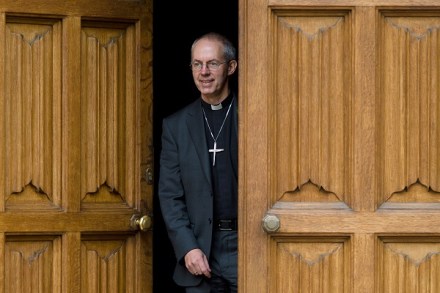
In this increasingly secular age, you would expect the Archbishop of Canterbury to be a figure of diminishing importance. But Justin Welby is fast becoming the most politically influential Archbishop since the war. Part of Welby’s influence stems from the fact that both the Conservatives and Labour think that he is, secretly, one of them. I remember within days of his appointment being approacedh by a Tory minister and then by one of those closest to Ed Miliband. They both wanted to explain how Welby was going to help move public debate in their direction. One never had this kind of conversation about Rowan Williams whose views were thought not to be of this world.

So, can we expect Channel 4 to broadcast a C of E call to prayer?

From our UK edition

It is very lucky for the BBC that Channel 4 exists. Whatever imbecilic, supposedly attention-grabbing trash the BBC commissions, there will always be its commercial rival around to commission something still more imbecilic, still more trashy. Such as — if you remember — ‘Wank Week’, a series exploring the manifest delights of masturbation. Having gained sufficient exposure with this proposal, the series was eventually — er — pulled. But you can imagine the witless commissioning editors sitting around telling each other what an edgy and brilliant idea it all was. And then there’s politics.

The new God squad: what Archbishop Welby and Pope Francis have in common

From our UK edition

It’s a few weeks after the election of Pope Francis, and a notoriously leaky church source is talking about the revolution to come. The new leader of the faithful is a sharp operator who finds himself surrounded by ‘a medieval court system of hopeless characters, each jealously guarding their own silos of activity. There’s lots of crap people in key positions.’ Meanwhile, away from the court, bureaucrats churn out windy memos. They may not know it yet, but the process of ‘clearing out the weeds’ will start soon — possibly as early as this August. That might seem over-ambitious, but we’re not talking about the sleepy Vatican.

Bishop of London Richard Chartres on bankers, Occupy and Justin Welby

From our UK edition

You may have gathered from last week’s column that I’ve been cruising the Med in search of fresh subject matter. It’s the sort of cruise that includes a programme of lectures, and the star turn on that front has been the Bishop of London, Dr Richard Chartres, enjoying a change of pulpit after his much-praised sermon at Lady Thatcher’s funeral. I had been struck by a passage in that address about the ‘prior dispositions’ required for a healthy market economy: ‘the habits of truth-telling, mutual -sympathy and the capacity to co-operate’. So as we steamed across the Ionian Sea I sent a note to the bishop’s cabin asking whether he’d care to elaborate, and he agreed to meet me in the library for tea (this really is a posh boat).

It’s time for the Church of England to drop the culture wars

From our UK edition

Almost three thousand years ago the Prophet Amos asked 'can two walk together except they be agreed?' How can the Church of England, pragmatic and volunteer-led but with complex legal and cultural structures, stay meshed with its culturally incompatible overseas churches? What is its future? Theo Hobson argues in this week's Spectator that the C of E needs to find a third way in order to survive, affirming gay partnerships whilst simultaneously rejecting equal marriage. Can this be done? If the deadlock Hobson describes arose from a frail incoherent compromise, Some Issues in Human Sexuality, how can more hand-wringing duplicity solve it? The world has moved radically on since 1991. Education, smartphones and social media are driving rapid ubiquitous change.

The Church of England needs a compromise on gay marriage. Here it is

From our UK edition

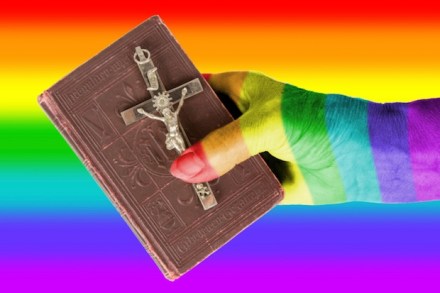
It is a wearyingly obvious observation, but the Church of England remains crippled by the gay crisis. It is locked in disastrous self-opposition, alienated from its largely liberal nature. Maybe the new Archbishop of Canterbury, Justin Welby, has a secret plan that will break the deadlock: there is no sign of it yet. The advent of gay marriage has made the situation look even more hopeless. It entrenches the church in its official conservatism, and it further radicalises the liberals. A few weeks ago the church issued a report clarifying its opposition to gay marriage, in which it ruled out the blessing of gay partnerships. This was not a hopeful move: it ought to be keeping these issues separate.

Move over, Dawkins. The atheist spring of the last decade is wilting.

From our UK edition

I couldn't get Richard Dawkins to reply to Theo Hobson's excellent article on 'the new new atheists'. Probably, he didn't see my message. Or maybe he thought it beneath him. Or maybe like God he just doesn't respond to all our entreaties. There's no doubt, though, that Theo's piece touched a nerve among the godless trolls of the web -- just look at the comments section. Theo must be on to something. The new atheist spring of the 2000s is wilting. Dawkins suddenly seems like a strange anachronism. In his place, a humbler and more honest atheism is emerging, led by brilliant minds like our very own Douglas Murray on one hand and Alain de Botton on the other.

Enthronisation

From our UK edition

They were worrying in Canterbury about a clash between the inauguration of the Pope and the enthronisation of the Archbishop of Canterbury. It was a near miss. You might think the word enthronisation sounds like something that George Bush had coined. Yet it has been in use longer than enthronement, which is not known until 1685. Two centuries earlier, Malory was writing of intronyscacyon in the Morte d’Arthur. In the succeeding centuries the word was applied to Archbishops of Canterbury, to the King, the Great Sophi of Persia, the Pope, the Ark of the Covenant and to Satan. Enthronisation is not just a word from distant centuries.