Church of england

Can Christians still have Holy Matrimony?

From our UK edition

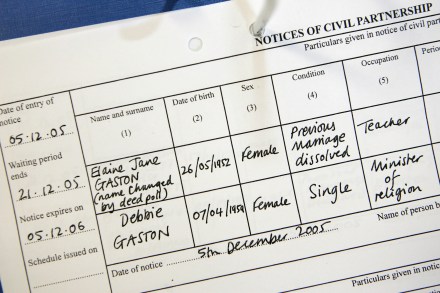
That's that then. Marriage will change, one way or another. Progress has won. Cue lots of right-on politicians talking about how proud they are to have ushered in such a historic reform. But what about the losing side? What should those Christians who believe that marriage must by definition be a union of man and woman do now? Accept and move on, I suppose. The best response is surely not to bleat on about a sinister 'Orwellian' state. But there's another way. Since the politicians have changed the meaning of a word for political gain, perhaps Christian leaders should play the same game. They could move the definitional posts again, ditch the word marriage and talk only about 'Holy Matrimony' instead? Sounds ludicrously old-fashioned, I know. But read me out.

Will the European court force churches to conduct gay weddings?

From our UK edition

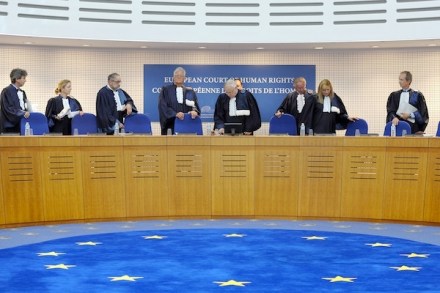
Would the European Court of Human Rights force churches to conduct same-sex marriages against their will? That’s the professed fear of some opponents of the Same Sex Marriage Bill being debated in the Commons today. The Church of England sent MPs a briefing paper saying 'We doubt the ability of the Government to make the legislation watertight against challenge in the European courts', and such fears have been invoked in today’s debate by Graham Brady and other Tory backbenchers. They present their opposition as a defence of religious freedom (even though maintaining the current law restricts the religious freedom of those churches who would like to perform same-sex marriages).

Church of England 2.0

From our UK edition

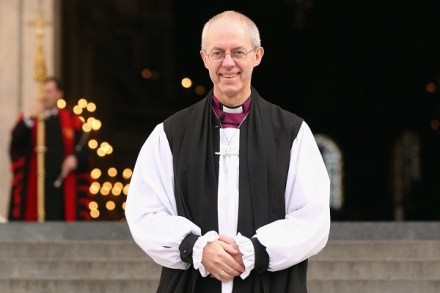
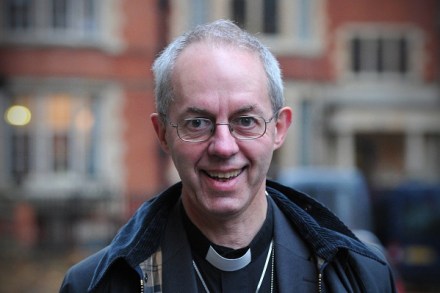
Welcome Rt Rev Justin Welby, who became the 105th Archbishop of Canterbury this morning at St Pauls. The Church of England’s first tweeting ABC has been a bit quiet online of late, but that hasn’t stopped us nosy parkers getting a glimpse into life behind the scenes of this most holy transition. If Welby’s twenty-something daughter Katherine is anything to go by the flaws in process have not gone unnoticed: ‘Off to St Paul’s today for the confirmation of election. Anywhere else in the world an ‘election’ that had only 1 candidate it was illegal to vote against would be called corruption.’ Well quite, but it’s not all self-flagellation.

Gay bishops and women bishops are not the same issue

From our UK edition

This being the Ephiphany, churchgoing Anglicans will be on the receiving end of any variety of sermons on the visit by the three kings to the infant Christ. There won't, by and large, then, be much attention given to the whole issue of gay bishops. No attention at all, probably. You'd never think it, though, judging from the broadcast and press reaction to the news. On the Radio 4 Today programme yesterday, the presenter said sternly to one conservative Anglican, Norman Russell, the Archdeacon of Oxford, that the fuss over the issue of gay bishops just goes to show why people are turned off by the church: it can only ever think about sex. The archdeacon replied mildly that this wasn't quite the case: the church did talk about other things. Russell could have made a stronger case.

Are Christians being persecuted in Britain?

From our UK edition

Douglas Murray makes a striking point on his Spectator blog about the violent persecution that many Christians face across the globe, while the Church of England fights over gay marriage and women bishops. Christians in this country do fear that they are being persecuted, too, with a case making the headlines at the weekend about a Baptist who had unsuccessfully sued her employers for forcing her to work Sundays. Actually, in Celestina Mba's case, it does sound rather unfair that she came under pressure to work on Sundays when she had asked at the start of her employment to be exempted from doing so on the grounds of her religious belief. The judge rejected her case, observing that Sunday as a holy day isn't a fundamental requirement of the Christian faith.

The man behind the Alpha Course

From our UK edition

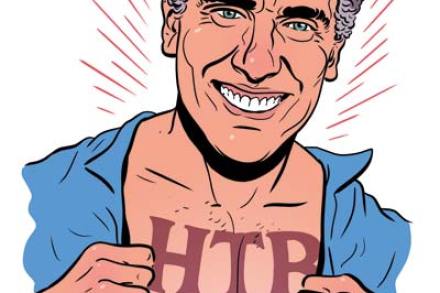
Christmas is one of the few times of year when those unaccustomed to attending church feel prompted to join their local congregation for a few carols. But what will they find when they walk through those church doors? In the Christmas issue of the Spectator, Damian Thompson profiles Nicky Gumbel, vicar of Holy Trinity Brompton. HTB pioneered the Alpha Course, which has now been taken by 20 million people across the world, both in the Anglican and Catholic churches. Thompson also visits HTB, writing: At the 11.30 service at HTB last Sunday, the Christian rock anthems were performed by professional musicians.

Justin Welby to face MPs and peers on women bishops row

From our UK edition

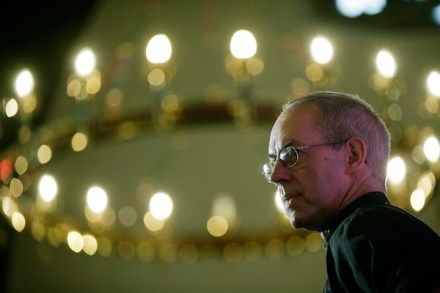
Justin Welby is certainly a bold chap: I understand the man set to take over from Rowan Williams as Archbishop of Canterbury is due to meet MPs and peers on Thursday to discuss their concerns about women bishops. I've picked up a flyer for the morning meeting in the House of Lords, where the current Bishop of Durham will 'discuss concerns of members regarding Women Bishops'. Chairing the meeting will be Sir Tony Baldry MP and the Bishop of Leicester, Tim Stevens, who is also the Convenor of the Bishops in the House of Lords. It's likely to be an extremely well-attended meeting, especially given some politicians have been pushing for the Church of England to be banned from making further appointments to the House of Lords until the issue of women bishops is resolved.

A storm of nonsense: gay marriage opponents lose their wits – Spectator Blogs

From our UK edition

My word, the latest kerfuffle over gay marriage runs the gamut from dumb to dumber. Here, for instance, is Cristina Odone: He may get away with bullying a great many – perhaps the majority – into accepting his proposals. But in doing so Cameron will create a less liberal and tolerant society. Those who have held fast to their principles, will have to accept what the majority wants. But will the majority respect what the minority believes in? Not in Cameron's Britain, they won't. The moment the vicar or priest refuses to celebrate a gay marriage in their church, the aggrieved couple will see them in court — in Strasbourg.

In defence of the CofE’s House of Laity

From our UK edition

Even friends of an Established church like myself – though I’m a Catholic – should think twice about the wisdom of the idea after the naked political interference in the affairs of the CofE in the Commons. The Speaker, who is non-religious/agnostic, was among the most overt in encouraging MPs to overturn the church’s decision not to approve women bishops. Perhaps, he suggested, they might like to refer the matter to the Equalities Minister (Maria Miller)? It was more or less to say that the equalities legislation should be brought to bear on the CofE when it comes to its way of appointing bishops. Ben Bradshaw too was all in favour of parliament getting involved. So was Chris Bryant, who is not only an ex-Anglican vicar, but by his own account an ex-Christian.

The Church of England is becoming a church in England

From our UK edition

This morning’s newspapers (and indeed the airwaves) are full of apocalyptic predictions about the future of the Church of England. The failure of the General Synod to ordain women bishops has surprised plenty of bishops, many of whom express their ‘deep sadness’ about the affair to the (£) Times’ Ruth Gledhill. Yet the threat of schism on this issue is not wholly surprising, not least because the Anglican Church has rarely taken happily to reform. From the storms over Matthew Parker’s 39 Articles to this latest controversy, the C of E’s evolution has often been fractious. However, as a relatively faithful parishioner of the CofE, this affair does surprise me in one respect.

The Church of England rejects women bishops

From our UK edition

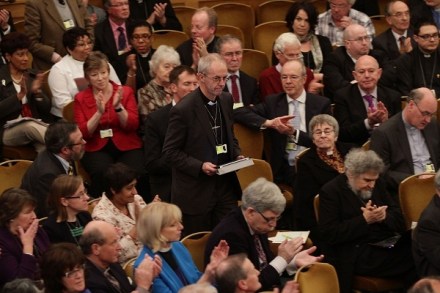
Gulp. The General Synod of the Church of England has, against almost all expectations, rejected the ordination of women bishops. This seems to represent an early defeat for the incoming Archbishop of Canterbury Justin Welby, who earlier had called on his fellow Anglicans to ‘finish the job’ and accept reform. Secularists and liberals will be baffled – just how fuddy-duddy are those members of the Synod who voted it down? Somehow there still are enough conservative evangelicals and Anglo-Caths in the Synod who are uncomfortable with the measure as it was presented. The chief controversy, it seems, was over provisions for parishes who did not want a woman bishop in charge.

Why Old Etonian Justin Welby is good news for the CofE

From our UK edition

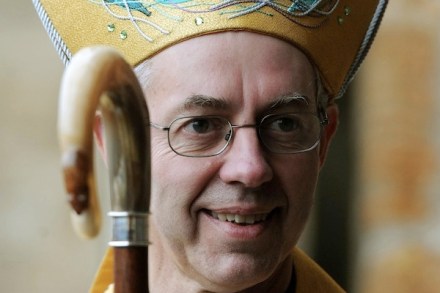
So, another Old Etonian at the apex of the British establishment: Justin Welby, the Bishop of Durham, will be the next Archbishop of Canterbury. It’s sweet, in a way. All we need now is an OE named as Bank of England Governor, and David Cameron’s alma mater will have the complete power set. But it would be wrong to be too chippy about Welby’s elevation. Representatives at Number 10 actually pushed for John Sentamu, the charismatic conservative African, who had the blessing of, among others, Rod Liddle. But they got Welby instead. And why not? He seems a worthy enough choice, regardless of his 'lack of experience' as a bishop – he's a former oil executive who saw the light.

On the road to disestablishment

From our UK edition

There's an inevitability about the Times's big splash (£) this morning: Gay Marriage Plan Could Divorce Church From State. The Church of England's historic role as 'religious registrar' for the State would have to be severed, we are told, if government plans to legalise gay marriage go ahead. That would not, apparently, mean 'total dis-establishment ... but it would be a significant step in that direction.' The CofE, for all its liberalism, says it will not support a legal attempt to redefine 'the objective distinctiveness of men and women.'   So that — if this report is to be believed — is that.

Gay marriage, the CofE and the Tories

From our UK edition

There was, as Freddy has said, something inevitable about the Church of England’s response to the imminent prospect of gay marriage. A convinced Anglican, who also has intimate knowledge of constitutional law and decoding legislation, recently told me in no uncertain terms that the government’s plan could force the church to schismatic ends because, for it, the division between religious and civil marriage is not clear. Marriage may be a sacrament before God, but it is most certainly a legal institution, defined and licensed by the State. This places the established church and its clerics in an exposed position should parliament chose to redefine marriage under English law. (See points 21 and 24 in the annex to today’s CofE document for further details.

Another reason to part ways with Strasbourg

From our UK edition

Even for people on the same side of an argument, opinion is often wildly divided. Among those of us who believe government should support civil marriage equality, this morning’s papers (£), and specifically Church of England fears that the religious will be ‘forced’ to carry out same-sex weddings, re-opens a fundamental division of opinion.   The coalition’s proposals rightly only relate to civil marriage equality (that the state should make civil marriage between same-sex couples equal to civil marriage between opposite-sex couples).

The decline of the spirit

From our UK edition

In celebration of the feast of Easter, we've dug out this profound leader from March 1975, which looks at the ever-evolving relationship of church and state.  The Church, the State and the decline of the spirit, The Spectator, 29 March 1975 Spring is a time of rebirth; yet it is also the time of the death of Christ. It is the time when "Jesus knew that his hour would come that he should depart out of this world unto the Father, having loved his own which were in the world, he loved them unto the end" (John 13.i). In the Spring and Easter of 1975 there is much evidence of the death and of the departure of the spirit of Christ, but precious little evidence of rebirth or revival, whether in religious affairs or in the affairs of the state.

From the archives: The C of E’s lack of purpose

From our UK edition

As Easter Sunday approaches, we cast back to April 2009 when Rod Liddle presented an Easter question to leaders of the Church — what happened to muscular Christianity? Here is the article in full for CoffeeHousers:  The C of E has forgotten its purpose. Why, exactly, does it exist?, Rod Liddle, 11 April 2009What did you give up for Lent? I gave up chives again. Forty-five days of deprivation. According to the ecclesiastical calendar I am allowed my first chive on Saturday — but do you know what? I’m going to say no. My willpower has become a marvel to myself; I’m saying no to chives all the way through to May. I might have one then, and then again, I might not. The power of my faith enables me to crush utterly any bodily craving for chives.

From the archives: Rowan Williams on capitalism and idolatry

From our UK edition

To mark today’s news that Rowan Williams will be stepping down as Archbishop of Canterbury, here’s a piece he wrote for The Spectator during the financial crash of 2008: Rowan Williams, Face it: Marx was partly right about capitalism, 24 September 2008 Readers of Anthony Trollope will remember how thoughtless and greedy young men in the Victorian professions can be lured into ruin by accepting ‘accommodation bills’ from their shifty acquaintances. They make themselves liable for the debts of others; and only too late do they discover that they are trapped in a web of financial mechanics that forces them to pay hugely inflated sums for obligations or services they have had nothing to do with.

Where Rowan went wrong

From our UK edition

Rowan Williams will step down at the end of 2012, having been Primate of All England for a decade. It is already clear that his term of office has been disastrous. Church people have affection for him, respect even. He is not blamed for the disaster, since he is only doing a job he was asked to do — not one he sought. He was a bishop of the Church in Wales almost by accident, because of his academic fame, not because he had ever wanted to be a career bishop. Nobody has accused him of ambition, though there is perhaps a little vanity there — about his poetry and his interest in the remoter depths of philosophy and theology.

Sentamu’s the right man for the job

From our UK edition

A few weeks ago, in a cover piece for the magazine, Rod Liddle backed John Sentamu as the next Archbishop of Canterbury. Given that Rowan Williams announced his resignation today, here's that article again: Who shall be the next Archbishop of Canterbury, do you suppose? They are jockeying for position at the moment, suffused with godliness and the distinct suspicion that old beardie has had more than enough and may wish to shuffle off to a warm university sinecure some time soon. The more cynical among you might not give a monkey’s and, indeed, suggest that jockeying for position to inherit Rowan’s mantle is akin to jockeying within the Romanov family to inherit Nicholas II’s mantle in about 1915.