Church of england

Female bishops are very, very old news

From our UK edition

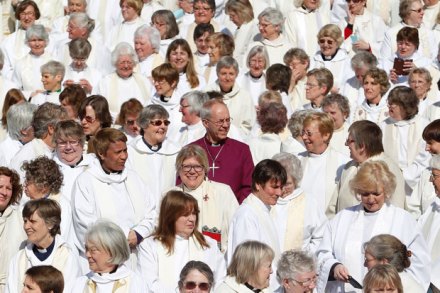
Female bishops The Reverend Libby Lane was ordained as Bishop of Stockport, the Church of England’s first female bishop. — By the time the first 32 female C of E vicars were ordained in 1994, the Episcopal Diocese of Massachusetts had had a female bishop, Barbara Harris, for five years. — Yet the first Anglican woman priest was ordained half a century earlier. Florence Li Tim-Oi had been deacon at Macao Protestant Chapel in the early 1940s. When the war prevented a priest travelling from Japanese-occupied territory to administer communion, Li Tim-Oi was ordained by the Bishop of Victoria on 25 January 1944. Cash or card?

How can the Church keep earning its right to intervene in politics?

From our UK edition

Given the political parties are already well underway with their General Election campaigns, the Church of England couldn’t have waited much later to dispense its advice on how to campaign and what to campaign about. In this week’s Spectator, the Archbishop of York gets on with handing out some of that advice, telling me that politicians are behaving like men arguing at a urinal over who is ‘the biggest of the men’ and explaining why he’s edited what appears to be a pretty lefty collection of essays called On Rock or Sand? Firm Foundations for Britain’s Future. You can read the full interview here.

Archbishop John Sentamu on why politicians are like men arguing at a urinal

From our UK edition

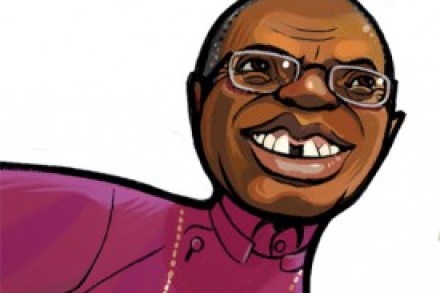
‘I shoot further than you, I am the biggest of the men!’ says John Sentamu, Archbishop of York. He is talking about the way politicians conduct themselves in the immigration debate. ‘We have got to be more grown up about it and not be like people who are screaming at each other across banks of a river,’ he says. ‘They mustn’t do what some people call male diplomacy which is always around the urinal… that kind of argument, it doesn’t work!’ Sentamu prefers a still small voice of calm from politicians, even if his own voice is booming and indomitable. His is never more than a few words away from a chuckle or a joke. This week sees the publication of a collection of essays called On Rock or Sand?

Meet Libby Lane – the first interview with the first woman bishop

From our UK edition

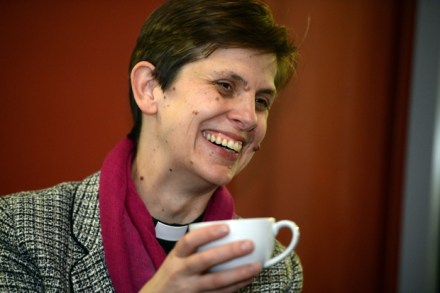
Why is Libby Lane the first woman bishop appointed by the Church of England? She was one of the first to be ordained as a vicar 20 years ago when the Church approved women priests, and today she was unveiled as the Bishop of Stockport. But she was not one of the favourites, and so Bishop Libby was as much of a surprise as her appointment, which the Church kept under wraps until late last night. When we meet in the Crewe YMCA, she has just been touring the building surrounded by a small cloud of cameras and journalists and is preparing to say goodbye to her congregation at a party this evening. They only found out this morning that she would be leaving them to become a bishop.

Spectator letters: Why we should subsidise weddings

From our UK edition

Let’s subsidise weddings Sir: Fraser Nelson (‘Marrying money’, 15 November) points out that marriages tend to last longer than cohabitations and that this is a good thing. But there is only one obvious difference between being married and merely cohabitating. If you are married you’ve been through a marriage ceremony and if you’re not you haven’t. The marriage ceremony brings the couple together to make vows to each other before God (optionally), the representatives of the state and their gathered families and friends. But crucially at these ceremonies the wedding guests also formally commit to supporting the couple in their marriage. This is a very beautiful thing in itself but its practical consequences are highly beneficial.

Remembrance Sunday is marvellous; for God-free war commemoration, go to France

From our UK edition

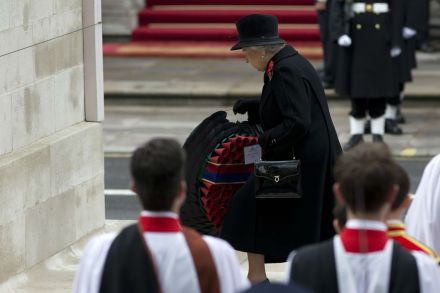
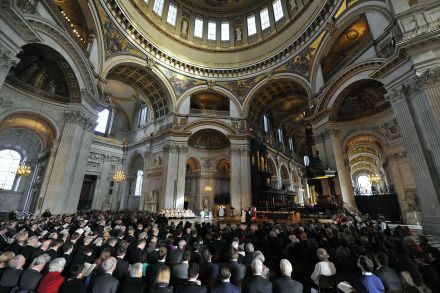
The most remarkable thing about the ceremony at the Cenotaph on Remembrance Sunday is that it just gets more popular. A ceremony that a generation ago might have been confidently predicted to appeal to a smaller and smaller bit of the population has somehow attracted the kind of benign publicity you get for the Children in Need awards. And the enormous crowds at the Tower to see the moatfull of ceramic poppies – one for each British life lost – has taken everyone by surprise. It’s got a good deal to do with the centenary of the First World War, of course, but that itself suggests that in a fractured Britain, people attach real emotional significance to wars from a lost world whose very language – such as sacrifice – is alien to our own.

Muddled souls – Britain is a non-religious, Christian-ish country

From our UK edition

[audioplayer src="http://traffic.libsyn.com/spectator/TheViewFrom22_30_Oct_2014_v4.mp3" title="Ruby Wax and Andy Puddicombe join Mary Wakefield to discuss the quasi-religion of 'mindfulness'."] Listen [/audioplayer] A new survey of British religious attitudes is out. It reveals a surprising degree of hostility to religion, and an unsurprising degree of muddle. David Cameron's claim that Britain is a Christian country looks refuted, for more than 60 per cent of respondents said they are ‘not religious at all’. Presumably this must mean that less than 40 per cent call themselves Christian? Er, no – 56 per cent say they are Christian. It seems that Britain has a strong contingent of nonreligious Christians, like secular Jews.

Anglicanism keeps muddling on — thank God

From our UK edition

A new survey of Anglican clergy has been published. Its findings are reassuringly unsurprising. For example, almost one-third of the clergy identify as evangelical; exactly one-third as Catholic; and just over one-third as something in the middle. In a different question, a quarter identify as conservative. Just over half want to keep the established Church in its current form; the rest want some sort of reform. Most call for the Anglican Communion to be more accepting of diversity, rather than seek stricter uniformity. Same in relation to the national Church. Sensible middle-way muddling-through remains the dominant approach: half the clergy think that Christians are discriminated against in some way by our secular society; half oppose same-sex marriage.

Podcast: Campaign errors, Scotland turns its back and Anglican wars over women bishops

From our UK edition

Scotland goes to the polls today, but whichever way the vote goes, it’s clear who lost the campaign: ‘No’ was outsmarted at every stage of the referendum battle. But how was this allowed to happen? In this week’s podcast, James Forsyth discusses what went wrong with Hugo Rifkind and Alex Massie. If Scotland does become independent, does the rest of Britain owe them anything? And if they stay, should we be forever grateful? In his column this week, Matthew Parris suggests the Spectator’s cover story last week – in which we asked our readers to write to Scots to ask them to stay – was unnecessary. He hopes that there will not be a special ‘Oh thank you, Scotland!

Conservative Anglicans’ emergency plan to escape women bishops

From our UK edition

Anglicans aren’t the sort of church-goers who set much store by miracles, signs and wonders. Yet their own church is one of the greatest miracles of our society: it has managed to hang together, in spite of raging differences, for centuries. Since 14 July, that miracle has been under threat. For most, it was a great leap forward when the General Synod finally approved the ordination of women bishops. A delighted Archbishop of Canterbury was ‘grateful to God and to answered prayers’. David Cameron called it a ‘great day for the church and for equality’. But one section of the church didn’t feel it was a great day. Members of the conservative evangelical movement, represented by a pressure group called Reform, had resisted this change for years.

Islamic extremism and the hypocrisy of the Church of England

From our UK edition

The Church of England has written to David Cameron accusing him of lacking ‘a coherent or comprehensive approach to Islamic extremism as it is developing across the globe’. The letter, signed by the the Bishop of Leeds, Nick Baines, and approved by the Archbishop of Canterbury, Justin Welby, also reportedly accuses the PM of turning his back on Christians slaughtered or made homeless in northern Iraq – and wonders why Cameron has chosen to concentrate on the plight of the Yazidis instead. These criticisms are spot on. But I’m surprised that the C of E has had the brass neck to make them. For decades, the Anglican and Catholic Churches have ignored the growth of the domestic Islamic extremism that has seen British Muslims travel to Syria and Iraq to fight for Isis.

Never mind women bishops — why is the C of E now pretending the Devil doesn’t exist?

From our UK edition

Once again, a feeble desire to be democratic and appeal to potential church-goers has led the C of E into muddy waters. No, I'm not talking about women bishops, but the Church of England's much more significant — and damaging – decision, rubber stamped last Sunday, to remove the Devil from the liturgy of Baptism. Instead of being asked to reject ‘the devil and all rebellion against God’, parents at a Christening will now blandly be asked to ‘turn away from sin’. The change of language means the liturgy is now so removed from the original Book of Common Prayer as to be unrecognisable, but members of the Synod were told that a pilot scheme of the new version in selected churches had ‘proved extremely popular’.

Cameron will breathe a sigh of relief if the Church of England vote for women bishops

From our UK edition

Number 10 has a lot on its mind with the looming Cabinet reshuffle, but I suspect that there'll be a sigh of relief there if the General Synod of the Church of England votes in favour of allowing women bishops. For if proposals for women bishops are defeated again, the problem could well end up in parliament's court. There are those in the Church of England who believe that if this measure fails again then parliament should simply legislate to allow them. Given the status of the Church of England, parliament has the power to do that and there are some influential MPs who privately favour this course. But the last thing that Cameron needs is a divisive debate about the appropriate use of parliamentary power over the Church of England in which he would be expected to take stand.

Women bishops: the game’s up for Anglo-Catholics

From our UK edition

From the moment the General Synod voted for women priests in 1992, it was inevitable that it would also vote for women bishops. Conservative evangelicals and Anglo-Catholics engineered a delay of 21 years, but I doubt they’ll be shocked by today’s decision. Some traditionalists have even been arguing that, although they were still opposed to the measure on principle, another ‘no’ vote would be a disaster for the Church of England. That strikes me as hopelessly muddled thinking, but remember that these are the people who brought you the Alice-in-Wonderland notion of ‘flying bishops’. How will Pope Francis react?

Spectator letters: How schools fail boys, Jonathan Croall answers Keith Baxter, and why atheists should love the C of E

From our UK edition

Why girls do better Sir: Isabel Hardman notes that girls now outperform boys at every level in education (‘The descent of man’, 3 May), implying that this is a symptom of a wider cultural malaise. In fact, boys lost their edge in 16+ exams in 1970, long before their advantages in other areas began to disappear. ‘Child-centred’ reforms were already well advanced when the infamous Plowden report was published in 1967, and informal practices such as ‘discovery learning’ and ‘whole language’ gave girls a decided edge. This was conclusively demonstrated in trials conducted between 1997 and 2005 by the Scottish Office.

Christianity is not a prop for politics

From our UK edition

First the godly, then the godless, then the godly again. The public debate about whether Britain is indeed a Christian country, which the Prime Minister kicked off with his article in the Church Times saying that Britain should be evangelical about its Christianity, took legs when fifty-odd self-important atheists took issue with his remarks in a letter in the Telegraph and now the debate has a new spin after a group of academic philosophers wrote to the same paper (lucky letters editor) to contradict the atheists. “In important ways Britain remains a Christian country, as the Prime Minister has rightly claimed”, they wrote.

Doing God works well for Cameron

From our UK edition

David Cameron's decision to hug-a-Christian seems to have worked pretty well, judging by the political response he's provoked. For starters, his comments about Britain being 'evangelical' about its status as a Christian country managed to enrage the sort of people who also might annoy the churchgoing conservatives he needs to win back after the row over gay marriage. Today, he - and the secularists - got a response from the Archbishop of Canterbury who wrote on his blog: 'It's all quite baffling and at the same time quite encouraging. Christian faith is much more vulnerable to comfortable indifference than to hatred and opposition. It's also a variation on the normal "Sword and Grail discovered" stuff that seems to be a feature of Easter week news.

Spectator letters: Peter Atherton answers EDF, and Battersea Dogs Home answers Rod Liddle

From our UK edition

Political best buys Sir: Fraser Nelson’s excellent article ‘Cameron’s Northern Alliance’ (1 March) made me wonder whether we, as voters, at the next election could benefit from a simple and independent chart (perhaps a Which?-style guide) comparing the policies offered by the parties, and the outcomes of the varying policies adopted across Europe. We all carry out research before purchasing insurance or booking a holiday by checking guides, so why not have something similar when choosing a government? It must be better than voters making a decision based on the superficial grounds of the party leaders’ secondary education or resemblance to a cartoon character.

Podcast: Cameron’s Northern Alliance, Christianity and the left, and the end of two-party politics

From our UK edition

Is David Cameron's new gameplan to look to the northern states for allies? Fraser Nelson is joined on the podcast by Stephen Booth of Open Europe, to discuss the influence that people such as the Dutch PM Mark Rutte – who has a clear and impressive reform plan – and Angela Merkel are having on our PM. Could Cameron really be serious about making Britain an honorary member of Scandinavia? And could this strategy really be enough to pull him through the next election? Ed West and Andrew Brown of The Guardian also discuss the church's left-wing bias. Ed has written frequently about this issue in the Catholic church. But is this, in fact, an ecumenical matter? And if so, why is this?