Church of england

A kind man stands down

From our UK edition

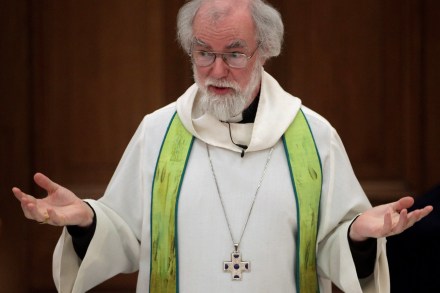
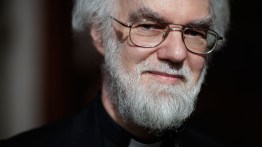
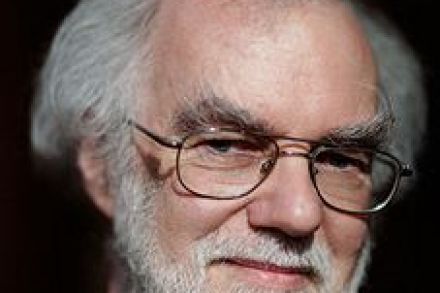
So goodbye, Rowan. The Archbishop of Canterbury has announced that he will stand down at the end of the year (leaving Britain bereft of bearded authority figures). Inevitably, people will say he failed. The Anglican Communion is at war with itself over gays and women bishops and the place of religion in a secular multi-cultural society, and he has been unable to broker any kind of peace.   But it is important to acknowledge that — even if, for all his intelligence, he often struggled to express himself clearly — Dr Williams is widely respected as a good and graceful man. I interviewed him a few years ago, and he was kind and lacking in self-importance.

Why Baroness Warsi has it wrong

From our UK edition

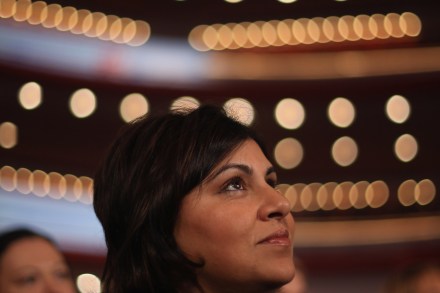
For someone who has profited so well from her religion, it is particularly striking that Baroness Warsi should claim today that our societies are suffering because of ‘a militant secularisation’ which she claims is ‘taking hold.’ And worse, she says, that ‘one of the most worrying aspects about this militant secularisation is that at its core and in its instincts it is deeply intolerant. It demonstrates similar traits to totalitarian regimes.’ Not merely ‘militant’ and ‘worrying’, but ‘similar traits’ to those of ‘totalitarian regimes.’ Before addressing the numerous ways in which Warsi is wrong, I should note the one point on which I think she is right.

Sentamu for Canterbury!

From our UK edition

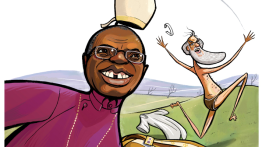
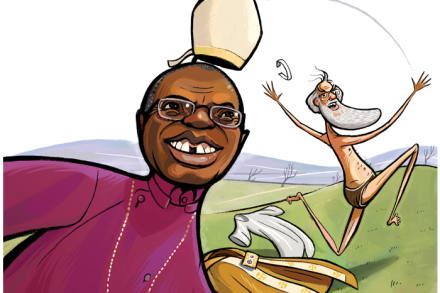
John Sentamu, the Archbishop of York, is our cover boy this week. It's the Church of England Synod next week, word is that Rowan Williams will be standing down soon, and Rod Liddle is backing Sentamu as his successor. When planning the headline, I thought about calling him the 'British Obama'. We didn't use this, as it's not a compliment — but if Britain is to have a figure who epitomises our country's inherent tolerance and open-mindedness I'd pick Sentamu above anyone else in public life. If he was made Archbishop, I really don't think there would be an uproar about the fact that he's black, or even that he came here as an Ugandan asylum seeker and still speaks with an accent.

Some numbers to encourage both halves of the coalition

From our UK edition

Yesterday's YouGov poll for the Sunday Times had a few interesting nuggets buried beneath the top line (Lab 40, Con 39, as it happens). Here are some of the most topical findings: 1) Clegg’s tax proposals are very popular. 83 per cent support the Lib Dems’ policy of increasing the personal allowance to £10,000. This might explain the 12-point jump in Nick Clegg’s net approval rating since last week. And there’s strong support for the ‘mansion tax’ that Vince Cable’s been pushing since 2009. 66 per cent back ‘a new tax upon people with houses worth more than £2 million’ — something Clegg called for again last week — and 50 per cent support taxing those with houses worth over £1 million.

Health & Safety: What Would Jesus Do? Weep, Obviously.

From our UK edition

I hold no particular brief for the people "occupying" the London Stock Exchange but whatever one may think of their aims it's evident that in closing the cathedral this week the Dean of St Paul's Cathedral and his colleagues have behaved like total ninnies. Then again, this is the Church of England so a certain measure of hand-wringing may be part of the job description at St Paul's. Who knows? What we do know, thanks in large part to this splendid, exhaustive, post by David Allen Green is that the so-called "health and safety" concerns are so feeble they could almost be a parody of CoE hopelessness. Among the "possible" threats to "life and limb": Smoking/drinking within the tented areas. Slips, trips and falls exacerbated at night with cover of darkness.

Softly, softly

From our UK edition

As I argued this morning, the Rowan Williams furore will be sustained if the government over-reacts. So far, so softly from Downing Street: ministers and prominent MPs have been across the airwaves this morning and no one has taken the so-called nuclear option. As you can see below, the responses have been mild. Paul Goodman observes that this is because the PM ‘doesn’t get too worked up’ about this sort of media conflagration. Here’s a brief selection of what Cameron’s lieutenants have said to counter Dr. Williams’ incandescence: Matthew Hancock: “It’s just slightly odd that he’s made these arguments which, in some cases, are simply incorrect, when it comes to especially welfare and also on education.

The turbulent priest

From our UK edition

“Nowadays politicians want to talk about moral issues, and bishops want to talk politics,” said Sir Humphrey. This week’s New Statesman has been guest edited by the Archbishop of Canterbury. In his lead editorial, Dr Rowan Williams has launched a brutally eloquent assault on the coalition for embarking on a programme of radical reform for which, he claims, there is no mandate. With particular reference to the health and education reforms, Williams says: “With remarkable speed, we are being committed to radical, long-term policies for which no one voted. At the very least, there is an understandable anxiety about what democracy means in such a context.

The Archbishop’s attack

From our UK edition

The Archbishop of Canterbury’s intervention in the welfare debate isn’t going to change anyone views of the politics of the Church of England’s hierarchy. But what struck me was how even Archbishop is now using fair as shorthand for moral and right. IDS’ proposals do strike me as fair. They both offer long-term claimants a way to return to the routines and disciplines of a job while also creating an appropriate level of pressure to find work. One fascinating thing to watch is how often the Archbishop will speak out explicitly against government policies. Are we heading for a re-run of the 80s and all the controversies caused by Faith in the City, the CofE’s attack on the economic and social policies of the Thatcher government?

On the Pope’s visit

From our UK edition

The Pope, as I'm sure you know, has touched down in Britain. Here, for CoffeeHousers, is the editorial on his visit from this week's new-look issue of the magazine: Benedict brings hope The arrival of Pope Benedict XVI in Britain has provoked protests that, in the intesity of their anger, far exceed those that greet the state visits of blood-drenched dictators. That is because the Pope is seen to represent — in ascending order of secular distaste — religion, Christianity, the Roman Catholic Church and the conservative wing of Catholicism. Fair enough: Benedict does represent all of these things. He opposes atheism, regarding it as a desperately sad alienation of man from his creator.

Parsons’ displeasure

From our UK edition

Despite its prosaic title, this is a humdinging page-turner of a book, revealing in livid detail the scandal of how the Church of England jettisoned onto the market what the author describes as ‘perhaps the most admirable, desirable and ascetic body of domestic buildings ever built’. Despite its prosaic title, this is a humdinging page-turner of a book, revealing in livid detail the scandal of how the Church of England jettisoned onto the market what the author describes as ‘perhaps the most admirable, desirable and ascetic body of domestic buildings ever built’.

There are moral absolutes: aspects of Sharia are barbaric

From our UK edition

Credit where credit’s due, Peter Tatchell wrote an article for the Guardian describing Sharia law as being “especially oppressive”. He says: ‘Its interpretations stipulate the execution of Muslims who commit adultery, renounce their faith (apostates) or have same-sex relationships. Sharia methods of execution, such as stoning, are particularly brutal and cruel – witness the stoning to death this week in Somalia of a 20-year-old woman divorcee who was accused of adultery. This is the fourth stoning of an adulterer in Somalia in the last year. Somalia is an extreme example of the Sharia oppression that exists in large parts of the Muslim world. As ever, Muslim women are often the main victims.