Christmas

Why I’m keeping my Christmas decorations up until February

It feels like the 57th day of January. Last week the coldest temperature of the winter so far (-12.5°C) was recorded about 20 miles west of my house. And according to every newspaper and social media feed I have scanned since new year, I should be purging my body of toxins by eating ‘plant-based meals’, abstaining from alcohol or otherwise giving up any semblance of comfort and joy. But there is another way. This may be ‘the worst time of the year… the very dead of winter’, as T.S. Eliot described the season in ‘Journey of the Magi’, but we are still in Christmastide – right up until 2 February, or Candlemas.  

Britain’s lack of trains on Boxing Day is shameful

Among all the perfidies of public transport in Britain (a nation that can build a £40 billion railway based on the premise that the outskirts of Acton counts as a ‘central London’ terminus), perhaps the most ludicrous of all is this. On 26 December, a day when millions of us need to move about, no trains run. HS2 makes me angry. But I’ve spent every festive period of my adult life feeling positively dyspeptic about the meek acceptance with which we tolerate the almost complete lack of trains departing or arriving at any UK railway stations on Boxing Day. We are an absolute, solitary outlier in this regard. Even in

Tea with a twist: the army’s curious Christmas drink

On Christmas morning, as you make your first tea or begin mixing your eggnog, spare a thought for our armed forces. Since the 1890s, they have been starting Christmas Day with a drink that sounds more like a bizarre hangover cure than a festive pick-me-up.  Known as ‘Gunfire’, the drink is made of one part rum to three parts black tea. By tradition, the beverage is taken hot and is served by senior officers to junior soldiers, making it one of the few occasions in which the ordinarily inflexible roles of the military are reversed.  Although no one is quite sure how Gunfire got its name, the most compelling theory, according to

I’m a Jew who loves Christmas

On more than one occasion, I have found myself being lectured by non-Jews (always men) about why I am incorrect in my Jewishness. Judaism is a religion and I can’t be Jewish if I am an atheist, some say. The ones that accept the atheism then feel compelled to categorise me as a ‘cultural’ Jew whose identity is defined by rituals and customs passed down over the centuries. And then there’s the stern mystification about the relatively minor role that Hanukkah plays in the spiritual calendar for Jews. It is hard for some to realise that while it involves lights and wintry nights, Hanukkah is not remotely the equivalent of Christmas.

The quiet joy of spending Christmas alone

The first thing I should tell you about my relationship with Christmas is that I’m not saturated in essence of humbug. My approach to a big family Christmas is the same as my relationship with Mexican food: if it’s put in front of me I’ll enjoy it, but I probably wouldn’t ever purposely seek it out for myself. With no family to speak of within 200 miles and with a fiancée who usually has to work on Christmas Day at her job as an NHS intensive care unit nurse, I’ve spent quite a few recent Christmas Days on my own in London. On the first year in particular, I admit

Spare us from the snarky Christmas bauble

I have been scouring the internet for a Christmas bauble for my mother-in-law. I have fond memories of the blown glass baubles of my childhood – the little wooden cabin in the trees, covered in powdery snow; the half papaya, its orange cocoon concealing bright purple seeds inside. Last year I bought myself a glass bauble of Big Ben which, though perhaps not traditional, is still charming. We have a red post box too, which occasionally disappears and turns up in my son’s Lego set.  This year, though, I ventured to Etsy for a bauble and was shocked by what I found. The first one that caught my eye was

Dessert wine isn’t just for pudding

At the end of the 1970s, when I had my first taste of wine, the choice was limited. It was either cloyingly sweet German Liebfraumilch, or something from the Don Cortez or Hirondelle types, both of which were sour and brash. That, younger readers, was how bad things were, and why many of us during that time stuck to lager and lime. When Le Piat D’Or came on the market, it was, frankly, a relief. But things have changed, including my palate. Sweet or semi-sweet wines can be delicious, and bear no resemblance to the cheap German variety of my youth. Many moons ago, invited to my first posh dinner

A snob’s guide to last-minute Christmas gifts

The algorithm got me in the end. It began with recipe content, and once I was hooked on food influencer videos, I began to be pummelled with adverts for attractive pots and pans, then clothes, and from there an ever-widening vista of objets and objects by turns pretty or useful and occasionally both. The result, apart from frittering away a certain amount of money on non-essential cardigans and kitchen gadgets, has been the development of a ruthless taste and approach to e-commerce. I want to have, and want to give, nice things, and increasingly I know where to get them. I am also hopelessly disorganised, a snob and far from awash in cash. If you’re

‘Have Yourself a Merry Little Christmas’ is far from merry

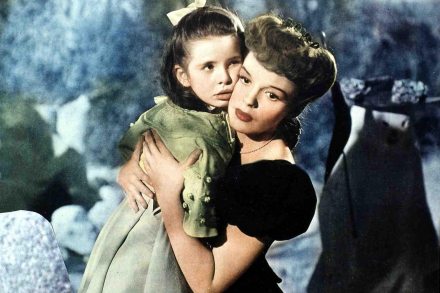
Here is a great festive pub quiz question for you. Which film was the song ‘Have Yourself a Merry Little Christmas’ written for? It’s likely, particularly if you’re below a certain age, that your first reaction will be surprise that it was written for a film in the first place. That’s a reflection not so much of the failure of the film in question – Meet Me in St Louis, which was the second highest-grossing film of 1944 – but of the enduring popularity of the song itself. In 2023, it was the 11th most played holiday song, according to the American Society of Composers, Authors and Publishers. But just

How to cater for the dreaded Ozempic Christmas guest

A close relation of mine is taking Ozempic. I shan’t name them or give anything else away other than to say this: they are set to ruin our Christmas lunch. They know it, and we know it. Welcome to British Yuletide 2025 – a country where more than 1.5 million people are estimated to be using GLP-1 agonists such as Ozempic, Mounjaro and Wegovy, with the vast majority (90 per cent) obtaining the drugs privately. NHS analysis of Ozempic hotspots reveals Leicester, Thurrock in Essex and the Wirral to be where users congregate. Clearly, they haven’t done an analysis of private users in Oxfordshire where I live.  This being so, we are locked in a curiously modern etiquette conundrum. Should we serve them up the full plate of bird, spuds, bread sauce, pigs in blankets and sprouts?

Why religious societies succeed – with Rory Sutherland

35 min listen

Advertising guru – and the Spectator’s Wiki Man columnist – Rory Sutherland joins Damian Thompson for this episode of Holy Smoke. In a wide ranging discussion, from Sigmund Freud and Max Weber to Quakers and Mormons, they discuss how some religious communities seem to be predisposed to success by virtue of their beliefs. How do spiritual choices affect consumer choices? Between Android and Apple, which is more Protestant and which is more Catholic? And what can modern Churches learn from Capitalism? Produced by Patrick Gibbons.

The agony of the village Christmas drinks party

Sometime in mid-October, my husband and I begin our annual deliberation: should we host a village Christmas drinks party? The conversation is almost invariably instigated by my charming husband who, mindful of all the invitations we have shamefully yet to reciprocate, feels that we ‘ought to do it this year, at least’. Almost invariably, I am the voice of dissent.  The arguments I give against are motivated by two competing – but not entirely dissimilar – emotions: vanity and concern. Vanity because I worry that my house is neither big enough nor grand enough for the sort of event I have in mind (think something along the lines of a reception at St James’s Palace, complete with hot and cold running staff and Old Masters jammed on to every wall). Concern, in this

Christmas carols don’t need modernising

Like Ebenezer Scrooge, we are all visited by the Ghost of Christmas Past. At this time of year, people and events that have gone before feel closer at hand – both the personal and the historical. One of the main ways we experience this is through our tradition of Christmas carols. A recent YouGov survey showed that 14 per cent of Britons usually attend a carol service. Not as high as one would hope, but attendance rates are rising: in 2023, Church of England Christmas services alone saw a 20 per cent leap in attendance. I sense 2025 is already continuing the trend. Yet many churches will be pointlessly squandering

From The Queen to Bonnie Blue: The Spectator’s Christmas Edition 2025 

40 min listen

The Spectator’s bumper Christmas issue is a feast for all, with offerings from Nigel Farage, Matthew McConaughey and Andrew Strauss to Dominic Sandbrook, David Deutsch and Bonnie Blue – and even from Her Majesty The Queen. To take us through the Christmas Edition, host Lara Prendergast is joined by deputy political editor James Heale, associate editor Damian Thompson and writer of the Spectator’s new morning newsletter, Morning Press, Angus Colwell.  They discuss: the state of British politics as we leave 2025 behind, and who will have a worse year ahead between Kemi and Keir; what physicist David Deutsch’s enthusiasm for humanity can teach us all in the age of AI; why the Sherlock Holmes

The radical message of Christianity

A meeting planned in secret. A message deemed subversive. The authorities both antagonised and confused. The gatherings of the early Church in the time of the Roman Empire? Or Tommy Robinson’s proposed carol concert at an as yet undisclosed London location, proclaimed as the event to put ‘Christ back into Christmas’? To draw even the most strained comparison between the two would seem to offend most mainstream sensibilities. Established churches across the country have reacted with horror and disdain at the former football hooligan and recent prison inmate claiming to be Christianity’s champion this Christmas. Recall the example of Jesus, whose love was not rationed and whose message was for

LA lacks London’s Christmas spirit

‘Never again!’ I sigh every 6 January, as I pack away the abundance of Christmas decorations and baubles lovingly collected over the decades. ‘It’s too much!’ I moan to Percy. ‘Let’s go to a hot island next year and get away from it all…’ But I never do, because I just love Christmas. Every year in early November I eagerly unpack multiple boxes tenderly packed two years earlier, and the reason is because we like to spend Christmas in London one year and in LA the next, as we love both cities. I have quite a lot of extended family in each, so we know that celebrating in either one

How was Commercial Christmas born?

31 min listen

Historian and writer Charles Coulombe joins Damian Thompson to talk about how Christmas has changed over the past two centuries, the differences between Catholic and Anglican Christmas – and how a modern, commercial Christmas developed over time. Plus, he takes us through the origins of Christmas traditions from Christmas trees to Advent and whether we should say ‘Happy’ or ‘Merry’ Christmas.

The joy of a miserable literary Christmas

A Christmas Carol is pretty well unavoidable around now, with Little Women trailing somewhat behind. There’s no shortage of alternative literary Christmases among the classics, however, often less sweetly heartwarming and more invigoratingly grumpy. Nigel Molesworth, it will be remembered, foiled all attempts to inflict A Christmas Carol on him. ‘It is just that there is something about the Xmas Carol which makes paters and grown-ups read with grate XPRESION, and this is very embarassing [sic] for all.’ For the Molesworths among us, there are plenty of alternatives to be had. Sometimes these are depictions of Christmas where no Christmas should be occurring. Arnold Bennett’s sublime The Old Wives’ Tale

Put Christ back into Christmas cards

It’s that time of year when the cards landing on the doormat compete for the title of most fatuous. Will it be a reindeer spouting an obscenity, or a painterly robin perched on a frosted gatepost in snowy landscapes? Might it be a sanitised cartoon of a coach and four outside a snow-encrusted inn, bright yellow lights glowing from within, a kind of Pickwickian fantasy of Victorian yuletide? Or will it be a trio of children around a scarfed snowman, or a Christmas tree, perhaps? Most likely it will be a sclerotic Father Christmas, or a bright Santa (that’s with a silent ‘t’) as he’s now increasingly known, dominating the

What links Jeffrey Dahmer to the Spice Girls?

The path that links the Spice Girls to Jeffrey Dahmer – necrophile mass murderer of at least 17 men – is a circuitous and unusual one. It involves the establishment of Mothercare and Harold Wilson’s Chancellor of the Duchy of Lancaster and the New York underground of the early 1980s. The thread that joins the ends is a 76-year-old Ohioan called Chris Butler. Butler was part of that art underground in 1981. He was – and is – a musician. Back home in Akron he’d started several bands – the wonderful art rock group 15-60-75 (aka the Numbers Band), and Tin Huey – and he’d brought the newest of them,