Christianity

Vance is right — Britain really has ‘thoughts-and-prayers’ policing

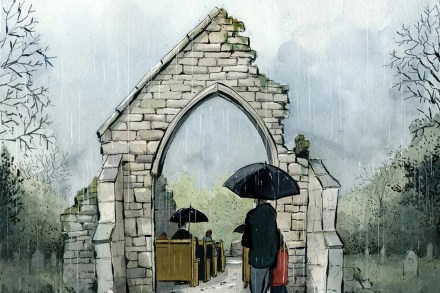
"Free speech, I fear, is in retreat," said Vice President J.D. Vance to an audience of world leaders at a security conference in Munich on Friday, with a rhetorical punch comparable to Reagan's "Mr. Gorbachev, tear down this wall!" Vance pointed to various censorial "hate speech" policies spewed out from Brussels and across Europe, and to the troubling arrest of a Christian in Sweden who used his freedom of expression to burn a Qur’an. Building to a crescendo, Vance then highlighted the "most concerning" case of Adam Smith-Connor — the British army veteran and father of two who was convicted in November 2024 for praying silently, for a few minutes, on a public space across the road from an abortion facility.

j.d. vance

Why militant atheists don’t understand religion: a conversation with Alister McGrath

From our UK edition

36 min listen

In his new book Why We Believe: Finding Meaning in Uncertain Times, Prof Alister McGrath rejects the notion that belief is a relic of the past and takes aim at the ‘new atheists’ who attack religion without even knowing what it is. Prof McGrath, emeritus Andreas Idreos Professor of Science and Religion at Oxford University, has had a unique journey to religion. A former Marxist atheist with a doctorate in molecular biology, he’s now a world-renowned theologian and Anglican priest.  In this lively discussion with Damian Thompson he talks about the boundary between science and religion, something poorly understood by aggressive atheists such as Richard Dawkins and the late Christopher Hitchens.

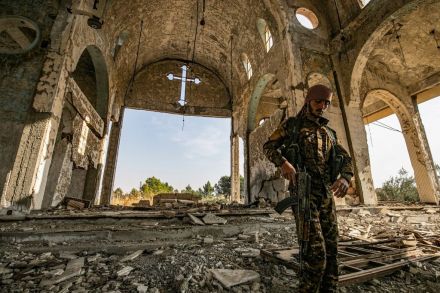
Are Syrian Christians who speak the language of Jesus about to disappear after 2,000 years?

From our UK edition

26 min listen

There has been a Christian community in Syria since the first century AD. But it is shrinking fast and faces terrifying new threats as the country’s government, following the overthrow of President Assad, forges alliances with hardline Muslims including foreign jihadists – Uighurs from China, Uzbeks from Central Asia, Chechens from Russia, Afghans and Pakistanis. Mgr Michael Nazir-Ali, the former Anglican Bishop of Rochester who is now a Catholic priest of the Ordinariate, has written a heartbreaking piece for The Spectator about the Christians of Maaloula in southwest Syria. It’s one of the last remaining communities to speak Syriac, a dialect of Aramaic, the language of Jesus Christ.

Will science lead us back to God?

After generations of treating the universe as mere matter to be bent to our will, it seemed inevitable that the future of humanity would be to merge with machines. Billionaires and tech utopians now predict a near future in which the human mind itself might be “downloaded” or transferred into a digital realm, allowing us to overcome death itself by slipping the bonds of our physical existence altogether. Modern-day prophets like Yuval Noah Harari proclaim that we have embarked on a second industrial revolution, though the product this time will not be machines or vehicles or powerful new weapons but human beings themselves. There’s a certain logic to this way of thinking.

science
Peterson

Wrestling with Jordan Peterson

Jordan Peterson is one of those curious figures who has, thanks to the mysterious operations of the internet, been thrust into the limelight, willingly or not. While he has become a locus of hatred for certain left-wingers, thanks to his implacable attitude toward “woke” phenomena, in reality his supposedly controversial advice amounts to little more than that young people should work hard and take responsibility for their actions. Even the bolshiest socialist couldn’t really disagree. His 12 Rules for Life is a bestseller on both sides of the Atlantic, and he has a large and adoring fanbase.

For all its fame, the Great Siege of Malta made no difference to the course of history

From our UK edition

Strategically located in the narrows of the Mediterranean between Sicily and Tripoli, with a fine natural harbour, Malta has attracted the attention of successive conquerors for two millennia: Phoenician, Carthaginian, Roman, Byzantine, Arab, Norman, Aragonese, French and finally British. In 1565, the island was occupied by a power that was already beginning to look anachronistic: the Knights of the Hospital of Saint John of Jerusalem. The Hospitallers were an aristocratic order of monk-knights, founded at the end of the 11th century to shelter Christian pilgrims and defend the Holy Land during the brief period when it was part of the crusader kingdoms of the Levant.

This other Eden: Adam and Eve in Paradise, by Eça de Queirós, reviewed

From our UK edition

When José Saramago denounced the Bible as a ‘catalogue of cruelties’ at the launch of his novel Cain in 2009, the response from the Catholic church in Portugal was fast and frosty. The country’s conference of bishops labelled his comments ‘offensive’, adding: ‘Insults do no one any good, particularly from a Nobel prizewinner.’ Saramago might have been taking his cue from the man he considered to be Portugal’s greatest novelist. While serving as a diplomat in Britain, Cuba and France, Eça de Queirós (1845-1900) savaged clerical hypocrisy and national backwardness in what are now considered canonical realist doorstoppers. And a century before Saramago, he caused a similar ruckus with Adam and Eve in Paradise.

We are all people of faith, whether we realise it or not

From our UK edition

A.J. Ayer and other thinkers linked to the Vienna Circle famously contradicted themselves. A claim such as ‘all truths are scientific truths’ cannot itself be verified scientifically. So whether the assertion is true or false, it follows that there is at least one fact which isn’t a physical fact. Thus metaphysics buries its own undertakers. Yet Ayer’s ideas survive today in mutated form and influence other subjects besides philosophy. Though partly infected by relativism, the humanities have witnessed a growing impulse to redescribe everything in material and supposedly objective terms. The move is reductive. It involves restricting us to a world of causes rather than reasons, sounds rather than music.

James MacMillan, Sebastian Morello, Amy Wilentz, Sam Leith and Lloyd Evans

From our UK edition

32 min listen

This week: composer James MacMillan reads his diary on the beautiful music of football (01:11); Sebastian Morello tells us about the deep connection between hunting and Christianity (07:17); Amy Wilentz explains how Vodou fuels Haiti’s gang culture (16:14); The Spectator’s literary editor Sam Leith reviews The Virago Book of Friendship (22:38); and – from the arts pages – The Spectator’s theatre critic Lloyd Evans writes about a new play on the last days of Liz Truss and also about Bette and Joan, which includes 'brutal' and 'brilliant' portraits of Bette Davis and Joan Crawford (26:37). Presented by Oscar Edmondson. Produced by Patrick Gibbons and Oscar Edmondson.

The West’s right turn, Michael Gove interviews Jordan Peterson & the ADHD trap

From our UK edition

45 min listen

This week: the fight for the future of the right From Milei in Argentina to Trump in the US, Meloni in Italy to the rise of the AfD in Germany, the world appears to be turning to the right, say James Kanagasooriam and Patrick Flynn. One country, however, seems to be the exception to this rule: our own. Britain under Keir Starmer appears to be putting on a revival of the old classic Socialism in One Country. However, beyond Westminster, the data show that Britain is not moving to the left in line with its government. While the Conservatives and Reform are locked in a near-constant struggle for supremacy, polling shows that the public are moving to the right.

The Christian case for hunting

From our UK edition

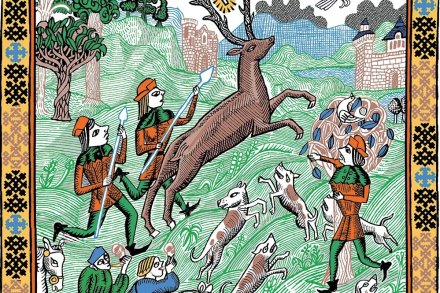
When I was a teenager, my closest friend, Henry, would vanish into the Shropshire Hills over the hunting season’s weekends. When he returned, it was with a wind-beaten face, wearing the traditional beagler’s white breeks and green socks, with a leather hunting whip slung over his shoulder. I knew nothing of this world, until one late autumnal Saturday he invited me to join him. As I watched the beagle pack race across the landscape, I realised I had stepped into a magical event, a hunting scene from a medieval tapestry brought to life. I was hooked. To this day, many sporting Christians throughout Europe honour St Hubert with songs and prayers after a hunt Beagling was my entry into field sports, but soon the door might be closed to others.

‘I’m a new kind of Christian’: Jordan Peterson on faith, family and the future of the right

From our UK edition

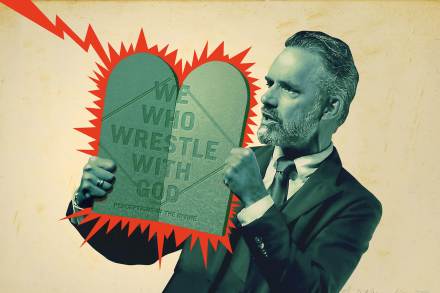
Professor Jordan Peterson is a Canadian psychologist, author and commentator whose latest book, We Who Wrestle with God, is about the psychological significance of Bible stories. He speaks to The Spectator’s editor Michael Gove about supernatural relationships, the folly of net zero and what’s next for Europe. ‘A lot of the atheist argument misses the mark because the God that’s being disbelieved is never defined’ MICHAEL GOVE: In your book, you work intimately with Bible stories to bring out their meaning, their relevance and their importance. Why should anyone read the Bible? JORDAN PETERSON: The simple answer is because you have to have your story straight or you go off course badly.

Letters: Where to find the best negroni

From our UK edition

Free thinking Sir: Your leading article (‘Article of faith’, 14 December) appears to have forgotten the connection between rationalism and natural rights. Liberals indeed think in utilitarian, Rousseauian and what they consider ‘rationalistic’ terms. But what about the logic of natural rights that come from John Rawls or Robert Nozick? The Declaration of Independence, the political culmination of Enlightenment-era thought on reason and rights, was in large part the product of irreligious minds. This document has been the model for a free society for centuries. And what about Milton Friedman’s argument for a free society?

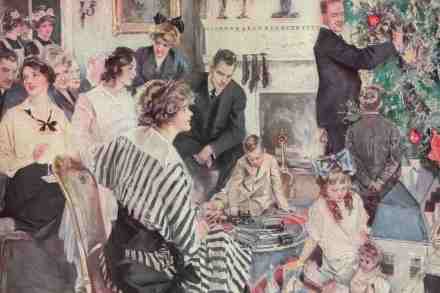
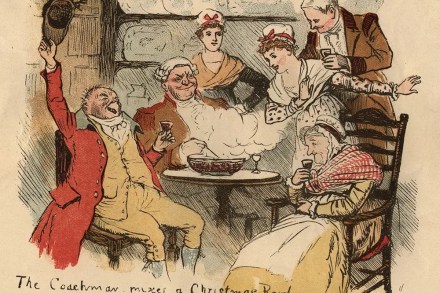
The case for ‘long Christmas’

From our UK edition

There comes a time right after the new year when the retail sector decides it’s done with fairy lights and sparkles. Out goes the party food, the bao buns with Santa hats, the mixed platters of prosciutto and cheese, the gift sets of flavoured olive oil and the festive cheeseboards. On the discount rails there are scarlet jumpers with diamante and slinky party frocks, looking less and less inviting by the day. Back comes the sleek minimalism of the retail sector in its most pared down aspect as it flogs low-carb, low-calorie ready meals and fitness gear in time for the great 'new year, new you' personal transformation.

Why was C.S. Lewis such a killjoy at Christmas? A discussion with Alister McGrath

From our UK edition

27 min listen

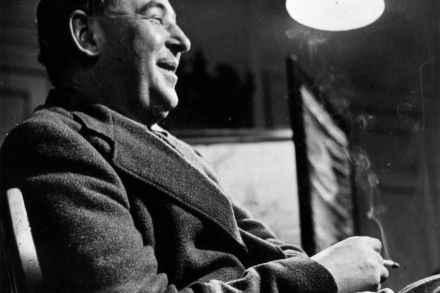
Which 20th-century Scrooge had the following to say about the celebration of Christmas?  ‘It gives on the whole much more pain than pleasure… Anyone can force you to give him a present by sending you a quite unprovoked present of his own. It's almost blackmail… Can it really be my duty to buy and receive masses of junk every winter just to help the shopkeepers?’ Step forward C.S. Lewis, beloved Christian apologist and children’s author, whose splenetic denunciation of ‘the whole dreary business’ of Christmas and mean-spirited comments about carol singers are hard to reconcile with his reputation for benevolence. To make sense of the author’s views, Damian Thompson is joined by the renowned theologian and C.S.

Christmas II: Andrews Watts, Marcus Walker, Ali Kefford, Roger Lewis, Ayaan Hirsh Ali and Christopher Howse

From our UK edition

48 min listen

On this week’s Christmas Out Loud - part two: Andrew Watts goes to santa school (1:11); Marcus Walker reads his priest’s notebook (7:20); Ali Kefford spends Christmas on patrol with submariners (12:34); Roger Lewis says good riddance to 2024, voiced by the actor Robert Bathurst (20:57); Ayaan Hirsh Ali argues that there is a Christian revival under way (32:41); and Christopher Howse reveals the weirdness behind Christmas carols (38:34).  Produced and presented by Patrick Gibbons.

Is the end of Christendom nigh? with A.N. Wilson

From our UK edition

25 min listen

Thousands of Brits will be attending Christmas and carol services throughout December. Yet festive attendance masks the reality that church congregations just aren’t holding up. The most optimistic of estimates suggest that regular church attendance has almost halved in the UK since 2009. This is just one of the factors that has led the historian and writer A.N. Wilson, in the Christmas edition of The Spectator this week, to declare that the end of Christendom is nigh. On this episode of Holy Smoke, A.N. Wilson joins Damian Thompson to discuss his thesis. Like Platonism, is Christianity doomed to become extinct in practice? When was the last time England was truly, and fervently, religious?

The strange, beautiful Christmas I spent alone

From our UK edition

My parents gave up on Christmas altogether once I left home for university. They had never been people for celebrations and we were a household like Belfast in the religious sense – my father, the Catholic, went to midnight mass; my mother, Anglican, to the parish church at 8 a.m. I alternated, year by year, for the sake of fairness. It was a strained time. As an adult, living in my own place the moment I could afford rent, I never returned home for Christmas Day, but went to various generous friends – the sort of normal friends who had proper festivities, puddings lit with brandy and paper crowns, the works – and I learned how things ought to be done. Once I was married with children, so they were.

Carols are much weirder than we think

From our UK edition

Why, my sharp-minded colleague Tom Utley once asked after a Telegraph Christmas Carol service, should anyone think God would abhor the Virgin’s womb? He was talking about the line in ‘O come, all ye faithful’ that goes: ‘Lo, he abhors not the Virgin’s womb.’ Wasn’t it a bit weird? At last I found the answer in a book, Redeemer in the Womb, by the theologian John Saward, which brilliantly explores the unusual subject of what writers in the early Church thought about the months spent by Jesus in the Virgin Mary’s womb. A pagan presumption in the ancient world was that women’s insides were nasty and shameful.

The Church of the Holy Sepulchre contains terrible art – but is filled with magic

From our UK edition

For a press tour of the Church of the Holy Sepulchre in Jerusalem – the Church of the Resurrection, the Mother of churches, site of the last four stations of the Cross – you must apply to the Patriarch. This being Jerusalem, there are three: the Latin, the Armenian and the Greek Orthodox. The process of accreditation is like a scene from an Olivia Manning novel. If you receive an acknowledgment of your email from the Greek Patriarchate – the Latin and the Armenian were otherwise engaged – you turn into Greek Patriarchate Street and present yourself at the Patriarchate palace. It is pale limestone, silent, a home to spoilt cats.