Christianity

Could Danny Kruger save the Conservatives?

From our UK edition

I’ve seen signs of life in the Conservative party – unlikely I know, but true. I had thought it a dead thing, dripping its life-blood slowly into Reform. But ten days ago I saw on YouTube a speech that a Tory MP gave in the House of Commons and… I don’t know. I felt hope. The MP was Danny Kruger, member for East Wiltshire, and as it happens he’s a friend of mine. I’ll say straight away then that this is absolutely not an attempt to promote him as next leader, though the post-Kemi era does seem to be approaching fast. For one thing, Kruger is a middle-aged white Etonian, cursed by association with the last two Etonian PMs. For another, from what I’ve seen of it, high office acts like high altitude on humans. The rarified air gets to them in the end.

What it means to be English

From our UK edition

How can you ever put your finger on the comfort, the joy, the absurdity, of being English? Not, perhaps, through some attempt at definition: but in a hundred moments linked by that invisible thread, Englishness. Such a moment occurred for me last Friday. The place was Kidderminster in Worcestershire, the occasion the re-opening of the heritage Severn Valley Railway to Bridgnorth in Shropshire, at the lovely station from which the line, formerly Great Western Railway (GWR) and closed by British Rail in the 1960s, runs. If scripture doesn’t specifically mention steam engines, they are implicit in the psalmist’s rapture Let’s not be sentimental about Kidderminster.

How progressivism killed American Protestantism

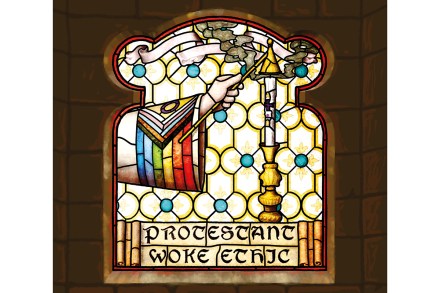
Mainline Protestantism, once a primary cultural and political pillar of American life, is in freefall. Traditional Protestant denominations – Episcopalians, Methodists, Presbyterians, Lutherans and others – now account for less than 11 percent of the population, down 40 percent since 2007, according to the Pew Religious Landscape Study. The Evangelical Lutheran Church in America (ELCA), the main Lutheran body in the United States, had more than five million members when it was formed in 1988. That number now stands at fewer than three million. By 2050, the ELCA projects that membership will have dropped to a mere 67,000. At that point, American Lutheranism will virtually cease to exist as a denomination – soon to be joined, no doubt, by other stalwarts of the Reformation.

Protestantism

Recovering the Sacred: listen to our unique Spectator event celebrating the rediscovery of tradition by young Christians

From our UK edition

75 min listen

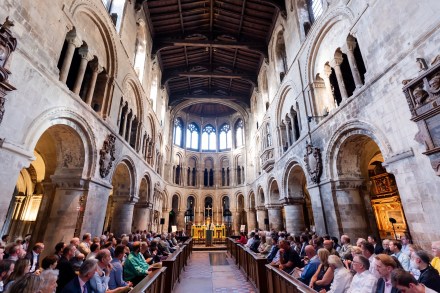
Last week The Spectator held a live event entitled ‘Recovering the Sacred’ in the glorious surroundings of St Bartholomew the Great, the oldest parish church in the City of London. The speakers included two London parish priests – one Anglican, one Catholic – who have contributed much to the growing interest among young people in traditional liturgy and Christian theology, a development that the hierarchy of their respective churches certainly didn’t foresee. They were the Rev Marcus Walker, Rector of St Bart’s, whose Prayer Book Evensongs and Eucharists attract large numbers of young professionals to his ancient church; and Fr Julian Large, the Provost of the Brompton Oratory, where an increasingly youthful congregation flocks to Latin Masses.

It’s time for Pope Leo XIV to make some tough decisions

From our UK edition

13 min listen

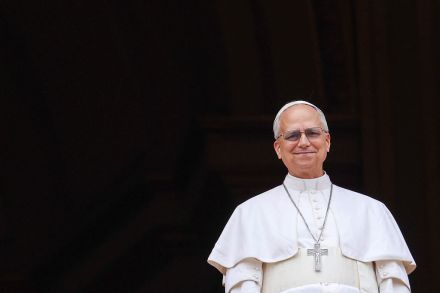
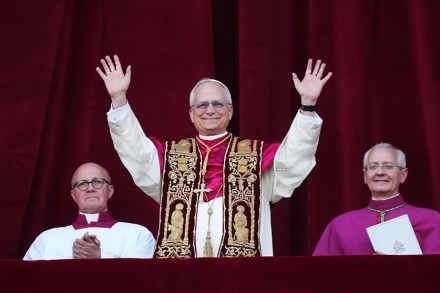
Nearly everyone loves Robert Prevost, the unassuming baseball fan from Chicago who unexpectedly became Pope Leo XIV this year. But as he prepares to spend his summer in Castel Gandolfo he has some difficult decisions to make. Is he prepared to clear up all the doctrinal confusion created by his predecessor Pope Francis? And will he allow liberal bishop to continue to persecute Catholics who prefer the ancient Latin form of Mass?  Damian Thompson gives us his thoughts in advance of Recovering the Sacred, a Spectator event at St Bartholomew-the-Great in the City of London on July 8 featuring debate and sacred music illustrating the recovery of tradition by a new generation of Christians. For tickets and more information, go to spectator.co.uk/church.

Donald’s divine inspiration

President Trump appeared in the long hallway Saturday night, flanked by his Three Sons – J.D., Pete and Little Marco – to let us know he’d done the big violence in Iran. It was a somber moment, a war moment, though, as Trump said on Truth Social after he’d ordered the dropping of the Mother of All Bombs deep into the heart of old Persia, “NOW IS THE TIME FOR PEACE.”   Terry Southern, the screenwriter of Dr. Strangelove, couldn’t have dreamed up a line so darkly ironic, but Trump gifts us with daily comic diamonds, intentional and unintentional. Saturday’s crown jewel came at the conclusion of his statement, the time usually reserved for “God Bless America.

donald trump divine

Why are young Christians returning to tradition?

From our UK edition

41 min listen

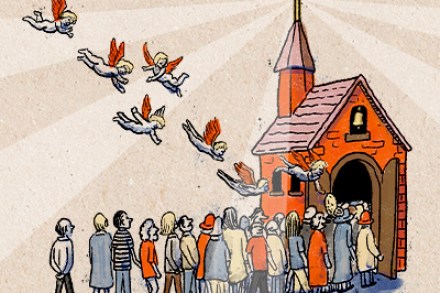
Today’s Holy Smoke is a curtain-raiser for ‘Recovering the Sacred’, a Spectator event at St Bartholow-the-Great in the City of London in which a panel of experts will explore the rediscovery of traditional worship and theology by young Anglicans and Catholics. The event will be held on Tuesday 8th July; for more details, and to book tickets, go to: spectator.co.uk/church In today’s episode Damian Thompson talks to Anglican James Vitali and Catholic Georgia Clarke, two Generation Z professionals bursting with enthusiasm for their faith. It’s an exhilarating discussion; don’t miss it.  Produced by Patrick Gibbons.

Can Pope Leo end the liturgy wars?

From our UK edition

Last weekend, under windswept banners depicting the Sacred Heart of Jesus and the Virgin Mary, nearly 20,000 young pilgrims marched through fields and forests between the cathedrals of Paris and Chartres. All of them carried rosaries and chanted in Latin, sometimes breathlessly: it’s a punishing 60-mile trek through mud and rocks. Each ‘chapter’ of the column was accompanied by priests. Like the lay pilgrims – drawn from 30 countries but dominated by French teenagers in scouting uniform – they wore backpacks and trainers, but also full-length cassocks or habits. They were traditionalists and so were the young people: despite their informality, they were utterly committed to intricate Latin worship.

Vampires, werewolves and Sami sorcerers

From our UK edition

I have to be honest: I’ve never been much concerned with what happened in the Grand Duchy of Lithuania in 1387. I suspect that may even be true for many Lithuanians. In Silence of the Gods, Francis Young pinpoints this year – of the conversion of the duchy to Christianity – as the official triumph of Christianity in Europe over paganism and idolatry. But he then goes on to examine the debris – and the survivors of paganism and their traditions in the northern regions of Europe. The first difficulty is defining and identifying paganism. The book is published by Cambridge University Press, so there is an unmistakably academic, seminar-ready, conference-hardened edge to the text.

Nigel wants YOU, secularism vs spirituality & how novel is experimental fiction?

From our UK edition

52 min listen

How Reform plans to win Just a year ago, Nigel Farage ended his self-imposed exile from politics and returned to lead Reform. Since then, Reform have won more MPs than the Green Party, two new mayoralties, a parliamentary by-election, and numerous councils. Now the party leads in every poll and, as our deputy political editor James Heale reveals in our cover article, is already planning for government. The party’s chair, tech entrepreneur Zia Yusuf, describes the movement as a ‘start-up’; and like a start-up, Reform is scaling up at speed. Among the 676 councillors elected last month, a number are considered more than ready to stand as MPs.

Church teaching on homosexuality can be revised

From our UK edition

Studies of Christianity’s problems and prospects often entail a distinction between the singer and the song. At an institutional level, the world’s largest faith is in deep trouble throughout much of western Europe – and increasingly in North America, too. Widely rehearsed elsewhere, the reasons for this steep decline include the spread of individualism along with an allied flouting of deference, mistrust of agencies said to lie beyond the tangible, and self-inflicted wounds such as the abuse crisis. Yet many who mourn the spread of secularisation remind us that for all its flaws, the Church has a good story to tell overall. How so? Two answers stand out. First, Christian outreach still forms the largest single source of social capital on Earth.

Is God an Englishman?

From our UK edition

32 min listen

Bijan Omrani joins Damian Thompson to talk about his new book God is an Englishman: Christianity and the Creation of England. They discuss the spiritual and cultural debt the country owes to Christianity. The central question of Bijan’s book is ‘does it matter that Christianity is dying in England?’. The faith has historically played a disproportionate role in many areas of English life that we take for granted now – for example, by shaping both charity and the welfare state. Yet this is influence is often ignored as congregations shrink and the UK slides into secularism. But are there unexpected grounds for hope?

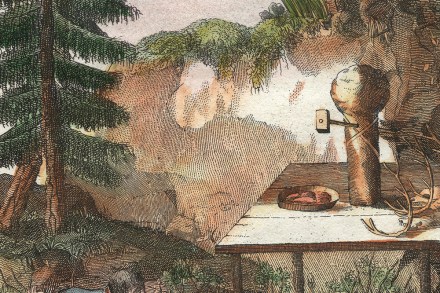
Why shamanism shouldn’t be dismissed as superstitious savagery

From our UK edition

In 2014, in the course of his inquiry into shamanism, the anthropologist Manvir Singh spent time with the Mentawai people on the Indonesian island of Siberut. He estimated that among the 265 residents he managed to interview, 24 were male shamans, or sikerei. These ‘specialists’, as he puts it, were uniquely empowered to commune with spirits and provide a range of services which included healing, divination and raining down afflictions on enemies. Over the course of two extended visits, living on a diet of fried grubs, boiled pangolin and pigs’ testicles, Singh witnessed ceremonies characterised by ‘turmeric coated sikerei decked out in leaves and beads... the dissonant clanging of bells and the hellish squeals of sacrificed pigs’.

Does Pope Leo XIV represent continuity or change?

From our UK edition

20 min listen

From Rome Fr Benedict Kiely and Damian Thompson react to the election of Cardinal Robert Prevost as the successor to Pope Francis. The first American Pope, Prevost is also a citizen of Peru, having spent years working as first a parish pastor and teacher, and later as a bishop. The 267th Bishop of Rome is also the first native English-speaking pope for almost 900 years.  The election of Prevost, now Pope Leo XIV, is seen as a surprise but is being heralded by both liberal and conservative factions of the Catholic Church. Does he represent continuity or change with his predecessor?

What can we expect from the papal conclave?

From our UK edition

54 min listen

Earlier this year Dr Kurt Martens, Professor of Canon Law at the Catholic University of America, joined Damian Thompson on Holy Smoke to unpack what happens during a papal conclave. There was heightened interest in the process due to the film Conclave, which swept the awards season, but also because Pope Francis was hospitalised at the time.  Despite showing some signs of recovery – including being able to meet world leaders such as King Charles III and J.D. Vance – Pope Francis died on Easter Monday. Here we reissue the episode with Dr Martens, looking at what happens when a pope dies, with a new introduction from Damian.

The extraordinary scale of the crisis facing the next pope

From our UK edition

At 9.47 a.m. on Easter Monday we heard the words ‘con profondo dolore’ from a cardinal standing in the chapel of the Casa Santa Marta. Two hours earlier, Pope Francis ‘è tornato alla casa del Padre’ – ‘had returned to the house of the Father’. Most people won’t have noticed a curious detail: the cardinal was speaking Italian with a pronounced Irish brogue. The incoming pope will face challenges that dwarf those that confronted any in living memory Cardinal Kevin Farrell, the papal ‘Camerlengo’, was born in a Dublin suburb. Or, as a tabloid put it: ‘Interim Pope is a bloke called Kevin from Dublin.’ That’s an exaggeration, but the Camerlengo does occupy centre stage when the See of Peter falls vacant. He confirms that the Pope is dead.

Pope Francis had his priorities right

From our UK edition

After Pope Francis emerged from the Gemelli hospital in Rome last month, a reflection attributed to him a few years ago returned to circulation. It was on ‘hospital’. Some of it was the usual, about how it’s where like meets unlike (‘In intensive care you see a Jew taking care of a racist’ etc). Some seems like standard homely Francis: ‘This life will pass quickly, so do not waste it fighting with people… Do not worry too much about keeping the house spotless.’ And it ended: ‘Love more, forgive more, embrace more… And leave the rest in the hands of the Creator.’ That was the disconcerting thing about Francis. Everything eventually boiled down to the love of God. It’s why even sound criticism of him somehow misses the mark.

Lamorna Ash: why are Gen Z turning to Christianity?

From our UK edition

40 min listen

My guest on this week’s Book Club podcast is Lamorna Ash, author of Don’t Forget We’re Here Forever: A New Generation’s Search for Religion. She describes to me how a magazine piece about some young friends who made a dramatic conversion to Christianity turned into an investigation into the rise in faith among a generation that many assumed would be the most secular yet — and into a personal journey towards religious belief.

Pope Francis dies – what will his legacy be?

From our UK edition

29 min listen

Pope Francis, the head of the Roman Catholic Church, has died. The Argentinian, the first Latin American – and the first Jesuit – to lead the Church, has been the head of the Holy See for 12 years, succeeding Pope Benedict XVI who resigned in 2013. Francis presided over the funeral of his predecessor, who died in 2022 – a first in modern history. But Francis’s leadership has been historic for many other reasons. In fact, says Damian Thompson, his reign has been ‘one of the most memorable, if controversial – not just in recent years but in recent centuries’. Liberals lauded his position on a number of social issues, while Conservatives saw the papacy as over-reaching and out of touch with every-day Catholics. But is it really that simple?

How should Christians embrace ‘faithful dissent’ today?

From our UK edition

This is an excerpt from the latest episode of the Holy Smoke podcast with Damian Thompson, which you can find at the bottom of this page: The Easter issue of the Spectator includes two provocative articles exploring aspects of Christianity. Nigel Biggar, Regius professor emeritus of moral theology at Oxford University, now a Conservative peer, celebrates the heroic ‘faithful dissent’ of Christian heroes such as Thomas More and Helmuth von Moltke, who lost their lives rather than defend injustice.  Meanwhile Spectator columnist Mary Wakefield interviews Roman Williams, former Archbishop of Canterbury. She’s inspired by his holiness but depressed by his use of ‘C of E bureaucratese’ to uphold liberal orthodoxy on subjects such as gender ideology.