Christianity

The many Jesus-like figures of the ancient world

From our UK edition

What people tend to forget about Jesus Christ is that he killed children. As a five-year-old, Jesus was toddling through a village when a small boy ran past, knocking his shoulder. Taking it like any five-year-old would, Jesus shouted after him ‘you shall not go further on your way’, at which point the boy fell down dead. Later, when the boy’s parents admonished Joseph and Mary for failing to raise their son properly, Jesus blinded them. Something to bear in mind next time you ask yourself: ‘What would Jesus do?’ Jesus smites teachers, sells a ‘twin’ into slavery, and has someone crucified in his stead If this story is unfamiliar, that is because it doesn’t appear in any of the Bible’s traditional Gospels.

The media’s ignorant attempt to cover Christians

When you work in the media as a practicing Catholic, there are few things more hilarious than watching fellow journalists repeatedly fail miserably to get even basic components of your faith correct. I will never forget seeing NBC News’s Chuck Todd tweet this about Good Friday in 2018:  I’m a bit hokey when it comes to “Good Friday.” I don’t mean disrespect to the religious aspect of the day, but I love the idea of reminding folks that any day can become “good,” all it takes is a little selflessness on our own part. Works EVERY time. Oof. Surely holding the elevator door for someone in your high-rise apartment building comes nowhere near Christ’s sacrificial death on the cross for all of humanity and its sins.

The English were never an overtly religious lot

From our UK edition

Generalisations about national characteristics are open to question. Nevertheless, the overwhelming impression one gets from reading the major works of English literature, or from studying the famous English men and women of politics, the military or the academic world, is that the English have not been an especially religious lot. Or, if you think that a strange judgment of a nation that produced the finest Gothic cathedrals in Europe and the hymns of Charles Wesley, then you could rephrase it and say that they have not generally worn their religious feelings on their sleeve. Jane Austen’s hilarious novels do not quite prepare us for her letters in which she confesses her sympathy for evangelicalism.

‘Maybe I have the healing I need’: speaking to Father Paul Wierichs

It used to be you had to get in close to hear Father Paul Wierichs speak. For two years the former FBI chaplain couldn’t talk above a whisper. Now he is a little louder, but very hoarse; though he still struggles to swallow you can at least hear his voice. Bell’s Palsy keeps him from moving the left side of his face, and he has a difficult time seeing out of that eye. His scalp is bandaged where the doctors removed a growth. There’s cancer in his prostate, too. He’s still held onto a good amount of hair for his age and his troubles — but he expects to lose it to surgeries by the end of the month. “I wore my collar on 9/11,” Father Paul recalled on a frozen January morning in Queens. “I had to throw them out, because they were covered in dust.

Wierichs
Dalí

The divine Dalí and his ‘Christ’

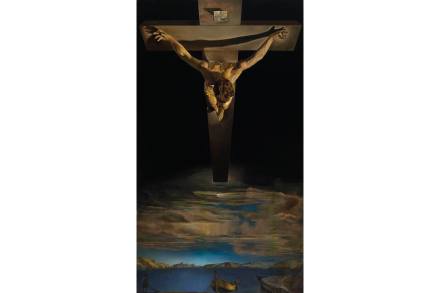
I arrived in the city of Figueres early one January morning to visit one of the most popular, and bizarre, art museums in the world, the Teatre-Museu Gala Salvador Dalí. It houses a dreamlike picture that, for the first time since it left over seventy years ago, has made a temporary return journey to Spain. Originally simply titled “The Christ,” the 1951 canvas depicting the giant figure of a man on a cross, shown at an overhead angle hovering over a moody seascape, was painted by the most famous son of Figueres, Salvador Dalí. Through April 30, it forms the centerpiece of a show exploring its creation, history, local connections and symbolism.

Lil Nas X is getting boring

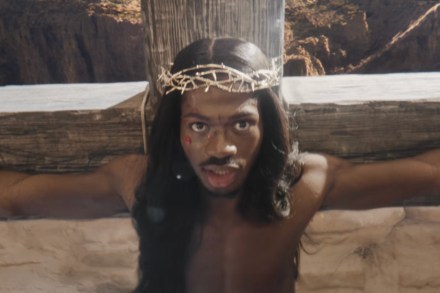
After a long break, Lil Nas X announced he would be releasing a new single. As usual, the song would get hyped, the publicity would be multifaceted and designed to cause controversy — and it would climax with a hit music video that would turn the song platinum. It worked before, with the devil lap dance video for "Call Me By Your Name," and for "Industry Baby" and its prison video (tied to Nike’s legal action against his collaborative Mschf shoes). Why shouldn’t it now? His new single is titled "J Christ" — and the music video has over a million views on YouTube in under twenty-four hours. And yet, it feels empty. The music video is exactly what you’d think it would be, showing Lil Nas X dressing up as various Christian figures, from Moses to Jesus.

lil nas x

What Jesus taught us

From our UK edition

This is the 47th year in a row that I have written a column for The Spectator’s Christmas issue. It began when I was a young 40-year-old, and is at present being written by an 87-year-old vet. The years have passed in an eye-blink. Recently I asked myself why do bad things happen to good people? (Well, not very good people, but well-intentioned.) This question has occupied thinkers throughout the ages. People who do not believe in a good God should logically have no problem with the existence of evil. In my case, I very much believe in God and it has served me well during a very long and very happy life. Recently, however, something bad happened to me in a Swiss village court of law, which led me to suspend writing my regular column. Then something extraordinary took place.

Pop star desecrates church for music video

Allow me to introduce you to Sabrina Carpenter, a former Disney actress (red flag #1) and current rising pop star. Carpenter has had two songs on the Billboard Hot 100 this year and opened for Taylor Swift on her history-making Eras Tour. Carpenter’s latest single, “Feather,” has nearly 90 million streams on Spotify. She released the track’s accompanying music video, which already has 2.3 million views on YouTube, on Halloween. Carpenter is petite, blue-eyed and blonde-haired, and her performance outfits leave little to the imagination. Her artist persona is somewhat dependent on the profane; live performances of Carpenter’s song “Nonsense” went viral among Gen Z fans for her ad-libbed, often R-rated outro lyrics.

America’s professor: the afterlife of C.S. Lewis

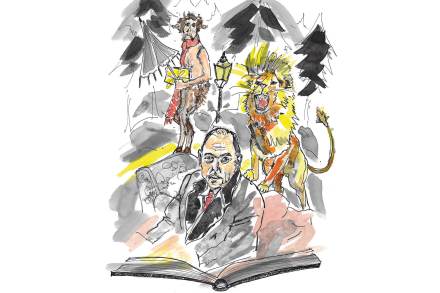
In the summer of 1955, an unusual meeting took place. Billy Graham visited the writer and academic C.S. Lewis in Lewis’s rooms at Magdalene College, Cambridge. It was unusual because leading British academics typically avoided Southern Baptist revivalists. But rather than encountering a fussy, prim don, Graham found a kind, intelligent scholar who was very happy to spend the afternoon with him. Later, Graham admitted he was intimidated by Lewis, but the English professor quickly dispelled any anxiety, probably by offering Graham a cup of tea. Graham’s impact on American religious culture, for good or ill, is unquestioned, but it is difficult to imagine what that same culture would look like without the works of C.S. Lewis.

lewis

Everyone is a victim these days – even me

From our UK edition

Lord Moore and I go back a ways, more than 40-odd years. I clearly remember the first time we met in editor Alexander Chancellor’s office at The Spectator. I was called in and Alexander introduced me to a fresh-looking 25-year-old Charles who had just been named foreign editor. ‘He went to our old school,’ joked Alexander, knowing full well I was not an Old Etonian. ‘I don’t remember you there,’ said I. ‘I think I was there a bit after you,’ answered Charles. Many years later, and after Charles had kept me on despite my four-month graduate studies at Pentonville, I attended a party at his and Caroline’s house. I remember it as if it were yesterday. My Alexandra, who treasures children almost obsessively, noticed twin potties and pulled me aside, pointing them out.

The perils of being pope

From our UK edition

Rome in the 1st century AD pulsated with religion. The knowledge that they lived in a sacred city, protected by the gods, permeated the daily lives of its citizens. They would see oxen being led down cobbled streets to be sacrificed on marble altars or offerings of incense and wine being made when the gods or the emperor demanded. There were constant religious festivals. At the Lupercalia, childless women were beaten with goatskin thongs that promised fertility; at the Saturnalia, Romans shed their togas, drank heavily and gambled. Even non-citizens and slaves were obliged to take part in these religious ceremonies.

Bags of charm and a gripping plot: Netflix’s The Chosen One reviewed

From our UK edition

Some years ago, Mark Millar (the creator of Kick-Ass, Kingsman, etc.) hit on yet another brilliant conceit for one of his comic-book stories: a three-part series based on the premise that Bible-believing Christians are right, that the Antichrist walks among us and that only the second coming will save us – eventually – from the horrors depicted in Revelation. Since the late 1960s, screenwriters have tended to give the devil all the best tunes ‘I have nothing but happy memories of growing up as a Catholic, and I wanted to do a book about faith that was both intelligent and respectful,’ said Millar. ‘If we can do a thoughtful take on Batman surely we can do the same with Jesus?

The ‘historic’ national dishes which turn out to be artful PR exercises

From our UK edition

In 1889, Raffaele Esposito, the owner of a pizzeria on the edge of Naples’s Spanish Quarter, delivered three pizzas to Queen Margherita, including one of his own invention with tomatoes, mozzarella and basil, their colours taken together resembling the Tricolore. The Italian queen loved the pizza, and Esposito duly named it after her. In that restaurant today hangs a document from the royal household, dated 1889, declaring the pizzas made by Esposito to be found excellent by the queen. And so was born the Pizza Margherita, a dish now synonymous with Naples. The queen’s seal of approval in the wake of Italian unification, which had proved difficult for Naples, came to represent the embracing by the governing royal family of an impoverished city by way of their cheapest street food.

From persecuted to persecutors: the story of early Christianity

From our UK edition

Dante travels through the circles of Hell, guided by Virgil. At the summit of the mountain of Purgatory, Virgil abandons him, leaving him with Beatrice, the woman Dante loved. With Beatrice’s smile, Dante is transported to Paradise, experiencing astral bliss as he soars through the cosmos. But Beatrice must leave him at the approach to the Eternal Fountain: for him to glimpse her smile further would be to incinerate him with its divinity. The relationship between humanity and divinity lies at the heart of this new history of the Middle Ages. Mark Gregory Pegg’s vignettes of martyrs, theologians, scholastics and secular figures illustrate the development of Christianity in the West after the collapse of the Roman empire, and the making of Latin Christendom.

Has the Vatican abandoned beauty?

From our UK edition

The Cathedral Church of the Holy and Undivided Trinity in the Cambridge-shire market town of Ely is one of the supreme achievements of European Gothic architecture. Its octagonal tower lifts the eye to a sumptuously restored wooden lantern from which Christ looks down in majesty. Who on Earth thinks faith can be awakened by seeing a crucifix floating in urine? On the last Friday in June, his gaze fell on a congregation worshipping him at Evensong. Two hours later, as the Times reported, the cathedral was filled with ‘a very different crowd: 800 people [wearing headphones] attending a 1990s-themed silent disco. They wore diamanté strappy heels and leather trousers, carried glow sticks, drank chardonnay, yelled the words to Robbie Williams hits and twerked in the nave to Beyoncé.

Why the Chester Mystery Plays are more popular than ever

From our UK edition

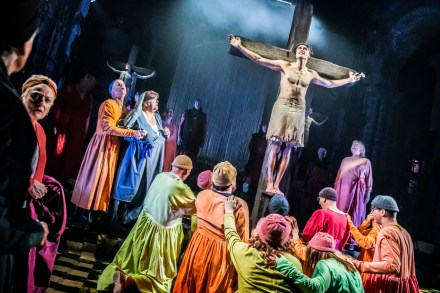
Hang around for long enough at Chester Cross, and theatre is pretty much guaranteed. It’s a Saturday morning in May: a human statue holds his pose, a remote-control buggy zips about advertising the spring sale at MenKind and three connoisseurs of discount cider are making their views known from the bench outside St Peter’s Church. All normal for Chester, and when the Town Crier strides up, crowds gather on the first-floor Rows like the audience at a Tudor playhouse. Oyez! The people of the city seek permission to stage the latest cycle of the city’s medieval Mystery Plays and tradition dictates that the Banns be read in public some six weeks before the first performance. You might wonder what tradition has to say about what comes next.

Rock ’n’ roll Dolly Parton’s political wake-up call

You know something dire is happening in the world if Dolly Parton’s feathers are ruffled. Dolly, an American sweetheart known for her blonde, bouffant hair, downhome, sweet and simple honesty (and a couple other big things), has released some songs from her upcoming rock album, Rockstar. And golly Dolly, are they ever feisty. The fact that Dolly is releasing a rock ’n’ roll album at all points to a serious cultural reckoning. Dolly, now seventy-seven years old, is more known for such innocent hits as “Love Is like a Butterfly” and “Coat of Many Colors” than for having a black-leather edge associated with sex and drugs. Yet such are the times we live in.    At the ACM Awards a couple weeks ago, Dolly debuted “World on Fire” from Rockstar.

dolly parton

The Anglican priests charged with exorcising evil spirits

From our UK edition

Last month, a trailer for the new Exorcist film – the scariest trailer ever, apparently – was released. The Exorcist: Believer isn’t out until Friday 13 October – just in time for Halloween – but Hollywood movies about demons are legion. This one follows The Pope’s Exorcist (released on Good Friday), in which Russell Crowe is a maverick exorcist who doesn’t play by the book, but gets results – despite the pen-pushers at (Vatican) City Hall. The Reverend Canon Dr Jason Bray, the Bishop of St Asaph’s ‘deliverance minister’, will not be watching either film.

Why millennial men are turning to the Book of Common Prayer

From our UK edition

The Book of Common Prayer is enjoying a revival in the Church of England, despite the best efforts of some modernists to mothball it. Over the past two years, more and more churchgoers have asked me about a return to Thomas Cranmer’s exquisite language, essentially unaltered since 1662, for church services and private devotions. Other vicars tell me they have had a similar increase in interest.   It helps that the Book of Common Prayer has had a fair bit of attention recently. The late Queen Elizabeth’s insistence on the use of Prayer Book texts in her funeral rites meant that in September more people witnessed the beauty of this liturgical treasure than watched Neil Armstrong’s first steps on the Moon.

The myth of atheist America

From our UK edition

The American comedian Bill Maher is an intelligent man with a good sense of humour. When he's right, he tends to be very right. However, when he's wrong, he tends to be so wrong it leaves a person scratching their head in disbelief. He has a tendency to sometimes misrepresent the facts. This is true when it comes to weed. For the uninitiated, Maher loves weed. I mean, he really loves weed. He is forever talking about it (see here, here and here), arguing, repeatedly and unapologetically, that it's a largely harmless drug. As I have shown elsewhere, it’s not. It robs many people of motivation and happiness. Nothing good comes from smoking weed on a regular basis.  Maher has a reputation for being a truth teller, a voice of reason.