Rupert Shortt

Rupert Shortt is a Fellow Commoner of St Edmund’s College, Cambridge, and author of The Eclipse of Christianity and Why It Matters

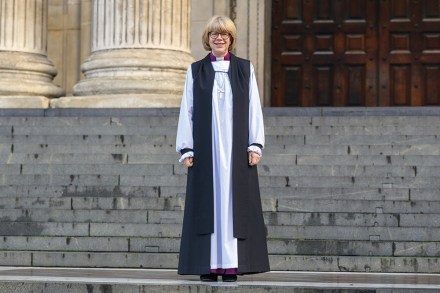
What hope is there for the Church of England today?

From our UK edition

A familiar defence of Anglicanism holds that flowers of principle bloomed in the mucky soil of compromise. Yes, this idea runs, the Church of England that evolved from Henry VIII’s marital strife was indeed a theological hotchpotch; but there is nevertheless much to be said for a tolerant strand of Christianity forming a middle way between Roman Catholic and hardline Protestant alternatives.   The perceived breadth of Anglicanism has long remained its selling point. Like the proverbial Australian farm, it is (or was) a Church with few fences but many wells. Elasticity over matters of secondary importance used to apply at a structural level.
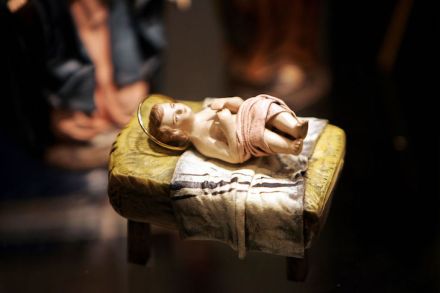
The revolutionary meaning of Christmas

From our UK edition

As stale as it is flawed, the Guardian columnist Polly Toynbee’s view of Christmas nonetheless encapsulates secularist scepticism in revealing ways. Published three years ago, her broadside is a variation on complaints voiced every December in allied quarters for many decades. ‘Much as I dislike most Christian belief, the iconography of star, stable, manger, kings and shepherds to greet a new baby is a universal emblem of humanity . . . But the rest of it, I find loathsome. Why wear the symbol of a barbaric torture? Martyrdom is a repugnant virtue, so too the imposition of perpetual guilt.

Nigel wants YOU, secularism vs spirituality & how novel is experimental fiction?

From our UK edition

52 min listen

How Reform plans to win Just a year ago, Nigel Farage ended his self-imposed exile from politics and returned to lead Reform. Since then, Reform have won more MPs than the Green Party, two new mayoralties, a parliamentary by-election, and numerous councils. Now the party leads in every poll and, as our deputy political editor James Heale reveals in our cover article, is already planning for government. The party’s chair, tech entrepreneur Zia Yusuf, describes the movement as a ‘start-up’; and like a start-up, Reform is scaling up at speed. Among the 676 councillors elected last month, a number are considered more than ready to stand as MPs.

Church teaching on homosexuality can be revised

From our UK edition

Studies of Christianity’s problems and prospects often entail a distinction between the singer and the song. At an institutional level, the world’s largest faith is in deep trouble throughout much of western Europe – and increasingly in North America, too. Widely rehearsed elsewhere, the reasons for this steep decline include the spread of individualism along with an allied flouting of deference, mistrust of agencies said to lie beyond the tangible, and self-inflicted wounds such as the abuse crisis. Yet many who mourn the spread of secularisation remind us that for all its flaws, the Church has a good story to tell overall. How so? Two answers stand out. First, Christian outreach still forms the largest single source of social capital on Earth.

Why we should believe that Jesus rose from the dead

From our UK edition

Christian interpretations of Easter can sound notoriously subjective to sceptics. Consider the following claims made by a distinguished preacher I heard recently. ‘To encounter Jesus is to encounter the source of all life and love – namely God himself.’ ‘In the Incarnation, [Christ] becomes one of us in order to restore life to a dead world.’ And ‘Jesus entered into mortal danger to save us from endless death, to impart for us his eternal, divine life at the cost of his human life.’ Similar sentiments are, of course, very familiar to churchgoers. But what inspires the faithful often leaves others cold. How did the crucifixion and what followed it change a world still as plainly soured by division and tragedy now as two millennia ago?

We are all people of faith, whether we realise it or not

From our UK edition

A.J. Ayer and other thinkers linked to the Vienna Circle famously contradicted themselves. A claim such as ‘all truths are scientific truths’ cannot itself be verified scientifically. So whether the assertion is true or false, it follows that there is at least one fact which isn’t a physical fact. Thus metaphysics buries its own undertakers. Yet Ayer’s ideas survive today in mutated form and influence other subjects besides philosophy. Though partly infected by relativism, the humanities have witnessed a growing impulse to redescribe everything in material and supposedly objective terms. The move is reductive. It involves restricting us to a world of causes rather than reasons, sounds rather than music.

Is it time for Jordan Peterson to declare his spiritual allegiance?

From our UK edition

Alan Isler’s novel Clerical Errors (2001) features a troubled priest who mocks the faith he has largely abandoned. ‘How can any rational creature not see in the story of Christ the pattern of countless pagan myths, the universal romance of the sacrificial god, his apotheosis and his rebirth?’ Jordan Peterson’s new book stands this argument on its head. That core Old Testament and gospel narratives are echoed in other cultures, past or present, is hailed as a mark of biblical universality. What applies to the resurrection also covers themes including sibling rivalry (Cain and Abel), pride and overreach (Noah’s Flood), deliverance from slavery (the Exodus) and the Fall itself. These archetypes abide in our collective unconscious for good reason.

Why don’t more people care about Christian persecution?

From our UK edition

While Judaism is proportionately the most persecuted global faith, Christianity is by far the most oppressed numerically. One in seven Christians worldwide – around 300 million people – are under threat, including one in five in Africa. Yet we hear all too little about this rising tide of 'Christianophobia'. Christians are still widely assumed to be disproportionately white, western or privileged – and thus somehow less vulnerable to oppression Christians are even at risk in the West. Over 850 churches and Christian cemeteries were attacked across France in 2021. A Catholic priest, Father Olivier Maire, died tragically in the same year. He was fatally bludgeoned by Emmanuel Abayisenga, on bail awaiting trial for an arson attack on Nantes cathedral.

What does Christian atheism mean?

From our UK edition

Two opposed camps can only have a fruitful debate if they agree on what it is they disagree about. A militant atheist such as Richard Dawkins is right to call out scientific ignorance in some religious settings. But at a deeper level his argument fails, because the deity he rejects is a blown-up thing, not the Creator conceived in classical tradition. Similar considerations apply to Slavoj Žižek’s Christian Atheism. When the claim that religion is no more than pious fantasy forms your starting point as well as your conclusion, then reason becomes the first casualty. This approach is as circular as beginning a book on socialism by asserting that all left-wing thought and endeavour are flawed by definition.

Do evil and suffering discredit Christian belief?

From our UK edition

It is the question of questions for most believers, let alone countless others either drawn to religion or repelled by it. Our planet is steeped in suffering and cruelty. If we are lucky or wealthy enough to have avoided first-hand experience of these scourges, they are nevertheless on plain view at one or two removes from our doorsteps. Yet various major creeds – especially Judaism, Christianity and Islam – teach that the world owes its existence to a creator who is all-loving as well as all-powerful. Standing in a line of thinkers reaching back to Epicurus, David Hume famously sums up the challenge with disarming bluntness: Is God willing to prevent evil, but not able? Then he is not omnipotent. Is he able, but not willing? Then he is malevolent. Is he both able and willing?

Spain’s MeToo problem goes far beyond the Rubiales scandal

From our UK edition

The Luis Rubiales scandal is being presented in Britain as ‘The kiss that started Spain’s MeToo movement’. But, in reality, the overseas coverage of the Spanish Football Federation's president's kiss – and his refusal to resign – tells us more about the UK and our own ignorance than it reveals about the country we visit in vast numbers but still struggle to understand. It’s not just that anyone with the slightest knowledge of Spain will know that it has been having multiple MeToo moments for many years – especially after the searing manada (mob) case of 2016–19, when five men were sentenced for the gang-rape of a women in Pamplona.

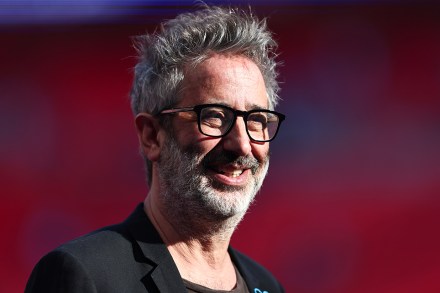
David Baddiel rejects religion – but describes himself as a ‘reluctant unbeliever’

From our UK edition

The cover design of this tract-length book associates it with David Baddiel’s excellent Jews Don’t Count (2021), which exposed a prejudice infecting both ends of the political spectrum. The God Desire resembles its precursor in other ways. Wit and dry humour abound. But as a verdict on the human appetite for the divine, it is disappointing. The question of whether life has ultimate meaning and purpose can plainly claim to trump all others. Atheism may be a viable world view, but it is hardly unproblematic. The same goes for theism.

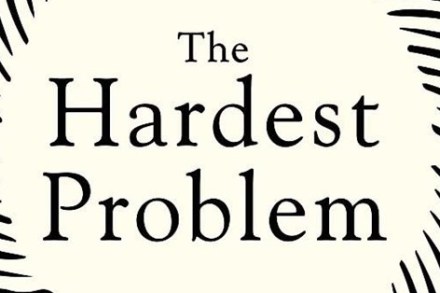
Rupert Shortt: The Hardest Problem

From our UK edition

52 min listen

My guest on this week's Book Club podcast is Rupert Shortt, whose stimulating new book The Hardest Problem addresses one of the oldest difficulties in theology: "the problem of evil". Is this something the religious and the secular can even talk meaningfully about? What's the great challenge Dostoevsky throws up? And what did Augustine get right that Richard Dawkins gets wrong?

Joseph Ratzinger’s coat of many colours

From our UK edition

A common but flawed assumption about Joseph Ratzinger is that he is simply an ardent conservative. That’s the figure we see in Netflix’s The Two Popes. Anthony Hopkins’s performance may be a visual feast, but the script leaves no cliché unaired. Better informed observers note that the Vatican’s former doctrinal guardian is a poacher turned gamekeeper who once supported major reform of the Catholic Church but then performed a somersault, partly because of worry about threats including Marxism and moral relativism. Among the truest verdicts is that he has always been torn between different versions of himself.

Richard Dawkins and the ignorance of ‘New Atheism’

From our UK edition

I recently met an old friend at a party. She works for a Christian NGO. Later that evening we were introduced to a man with a background in software engineering. Having learnt about my friend’s job and then discovered that she goes to church, he asked her how old she thought the universe is. Her jaw dropped a bit. But she was composed enough to reply with a counter-question. ‘Did you know that it was a Catholic priest [the cosmologist Georges LeMaître] who proposed the Big Bang theory in the first place?’ Now it was the engineer’s turn to look shocked. Some may dismiss this exchange as a flash in the pan. To others it will reflect a phoney war evident across Western culture and beyond. The frustration felt by this second group is well founded.