Christianity

The plight of the Midwest Protestant church

One icy day in January, the 130-year-old First Methodist Church in Princeton, Indiana, burned to the ground after years of slow decline. Through the years the church’s beautiful crescent sanctuary had seen christenings, confirmations, weddings, funerals, the full circle of small-town religious life. Downstairs hosted the Pinewood Derby and the yearly pancake and sausage breakfast. Boy Scouts learned first-aid there; seniors practiced CPR. That was all long ago. The destruction left by the fire was so complete authorities in the small Southwest Indiana county seat couldn’t find a proximal cause. But ultimately, it was gradual social and generational change that left the building underused, expensive to maintain, impractical and finally vulnerable.

church faith

Easter special: in praise of faithful dissent, a conversation with Nigel Biggar and Mary Wakefield

From our UK edition

24 min listen

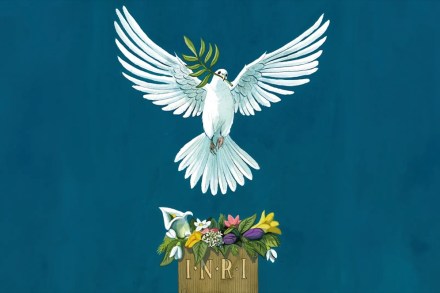
The Easter issue of the Spectator includes two provocative articles exploring aspects of Christianity.  Nigel Biggar, Regius professor emeritus of moral theology at Oxford University, now a Conservative peer, celebrates the heroic ‘faithful dissent’ of Christian heroes such as Thomas More and Helmuth von Moltke, who lost their lives rather than defend injustice.  Meanwhile Spectator columnist Mary Wakefield interviews Roman Williams, former Archbishop of Canterbury. She’s inspired by his holiness but depressed by his use of ‘C of E bureaucratese’ to uphold liberal orthodoxy on subjects such as gender ideology. But, she says they can share an uncomfortable space together within faith.

Is it time for Christians to unite over Easter?

From our UK edition

So, you thought the date of Easter, which rambles irritatingly round the spring calendar, was settled by the Synod of Whitby, no? That gathering in 664 AD, which established that Northumbria would celebrate Easter in the Roman calendar, used to be one of the events that Every Schoolboy Knows, though probably not now. There were two rival ways of computing Easter, the Celtic and the Roman, and the problem was that King Oswald belonged to the Irish/Iona tradition, and his wife, Eanflaed, kept the Roman calendar. One bit of the court would be in Lent and fasting, vegan-style, and abstaining from sex and fighting, while the other was celebrating Easter, gorging on Paschal lamb and presumably up for conjugal relations and brawling.

How I found Christianity

From our UK edition

I wasn’t brought up in the faith. My maternal grandfather was a Methodist lay-preacher, but when my mother left County Durham for marriage in south-west Scotland, she left the religion of her childhood behind. My Scottish father’s experience of church gave him an odd penchant for the electric organ, but that was about it. So when, at the age of 12, I screwed up my courage and came out as a Christian, Dad put his hand on my shoulder – for the only time – and said: ‘It’s OK, son; it’s just a phase.’ Now, as my Christian phase approaches its seventh decade, I find myself looking back and wondering what had happened to me. What caused me to risk that first venture of exposed dissidence? There were mediating institutions and people, of course.

Why is the British Museum hiding its great Orthodox icons?

From our UK edition

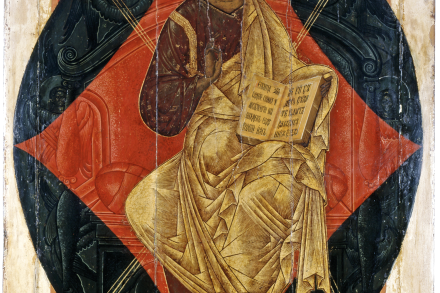
The long neglected art of Byzantium and early Christianity is returning to the world’s museums. Last November, the Louvre confirmed plans for a 3,000 square metre department dedicated to the Byzantine legacy and more than 20,000 works from Ethiopia to Russia that are currently scattered across the museum’s cabinets. Having been initially shelved a decade ago, this monumental undertaking is scheduled to open in 2027, signifying a pivotal moment for the Christian arts of the Eastern Roman Empire to become a serious curatorial subject in European museums once again. (A precursor to the new department established in 1954 lasted but 15 years.) Byzantine art has been the subject of serious study in universities only since the 1940s.

Letters: The case for ‘raves in the nave’

From our UK edition

Reality check Sir: While I share Mr Gove’s diagnosis of lodestar-less Starmerism (‘Cruel Labour’, 5 April), I cannot share the accompanying pearl-clutching. For decades, politicians and voters have engaged in a mutually reinforcing entitlement spiral that took it as given that the civil service and welfare bill could expand ad infinitum, that working for a living was optional, and that our geopolitical enemies didn’t really mean what they said. This fantastical worldview was predicated on an equally fantastical delusion that cheap energy, low inflation and low interest rates were locked in rather than temporary historical blips. You can ignore reality, but you can’t ignore the consequences of ignoring reality.

Was Simeon of Jerusalem the first Christian in recorded history?

From our UK edition

28 min listen

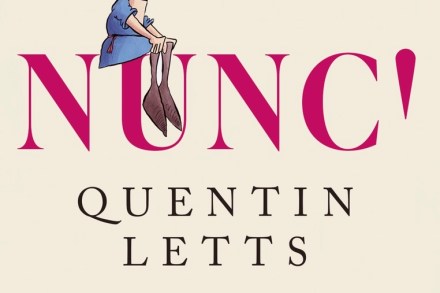
In Luke's Gospel, an ancient inhabitant of Jerusalem named Simeon meets Mary and Joseph when they bring Jesus to be presented at the Temple on the 40th day after his birth. He has been promised that he will not die until he has seen Christ, and as he takes the baby into his arms he utters the words, 'Lord, now let your servant depart in peace, according to your word; for my eyes have seen your salvation which you have prepared in the presence of all peoples, a light for revelation to the Gentiles, and for glory to your people Israel.'  This prayer, known down the centuries by its opening Latin words Nunc dimittis, explains the title of Quentin Letts's novel Nunc!, a delightfully quirky retelling of the story of Simeon and his friends.

America

Why is America so unhappy?

According to the annual World Happiness Report (WHR), America has dropped to 24th in the rankings, down from 11th in 2011. The study found that Americans are not just disgruntled, we’re not very nice to one another, either. “The impact of caring and sharing on people’s happiness” was the theme of this year’s report, and researchers concluded that following “the golden rule” of doing unto others as you would have them do unto you brings contentment. “Like ‘mercy’ in Shakespeare’s Merchant of Venice,” the WHR authors write in their executive summary, “caring is ‘twice-blessed’ – it blesses those who give and those who receive.

The C of E’s tragic misuse of its sacred spaces

From our UK edition

I am a priest in the high church tradition of the Church of England. The technical term is Anglo-Catholicism, but I come from a very different Christian background. My heritage is non-conformist evangelical – I was baptised in a swimming pool in the summer of my first year of university. St James’s in Piccadilly hosts events featuring ‘icons’ from RuPaul’s Drag Race UK It’s a long story as to how I’ve ended up wearing a chasuble and celebrating ‘Mass’, but a big part of it has been to do with church architecture. After several years in the charismatic evangelical scene, I became fascinated with the beauty of medieval churches, particularly cathedrals. I began to think of the large white-cuboid former bingo hall owned by our church as soulless and empty.

Save Syria’s Christians

From our UK edition

David Lammy, the Foreign Secretary, and Marco Rubio, US Secretary of State, had rather tellingly different responses to the latest wave of violence in Syria. Lammy deplored the ‘horrific violence’ but failed to address where that violence was coming from. Rubio, by contrast, stated clearly that ‘radical Islamist terrorists’ were targeting minorities in Syria, including Alawites, Christians and Druze. Rubio is right. While precise numbers are difficult to ascertain, it appears that, according to a source verified by the Hungarian government’s State Secretariat for the Aid of Persecuted Christians – the only one in the world – up to 3,000 people may have been killed, the majority of them innocent Alawite civilians. A number of Christians have also been killed.

Christianity, culture wars and J.D. Vance: a conversation with James Orr

From our UK edition

62 min listen

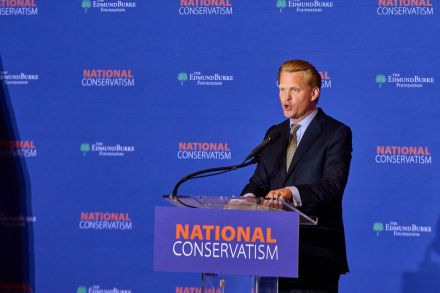
James Orr was living the life of a young, high-flying lawyer when, after a few drinks at a New Year's Eve party, he asked for signs that God existed. The signs came; among other things, he narrowly avoided a fatal skiing accident. Now he is a passionate Christian and a conservative culture warrior who helped defeat an attempt to impose the tyranny of critical race theory on Cambridge University, where he is an associate professor of the philosophy of religion. He's also an intellectual mentor to the vice president of the United States; Politico describes him as 'J.D. Vance's English philosopher king'. Dr Orr says Vance is 'extremely articulate, but he takes no prisoners'.

The true birthplace of the Renaissance

From our UK edition

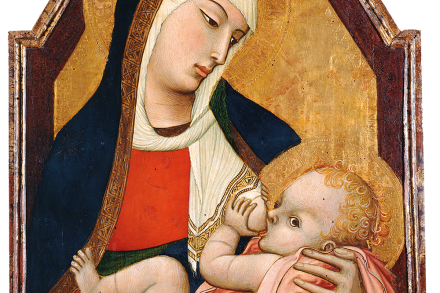
The baby reaches out to touch his mother’s scarf: he studies her face intently, and she focuses entirely on him. There is connection; there is familiarity; there is love. It could be one of the pictures on my phone from last weekend of my daughter with her six-month-old. In fact, it dates from Tuscany c.1290, and the mother and child are the Virgin Mary and Christ. It’s a small painting, tempera on wood; it’s the opener of the National Gallery’s new blockbuster, Siena: The Rise of Painting 1300-1350; and it’s there to make the show’s fundamental point, which is that its creator, the Sienese Duccio, introduced many of the painterly innovations that paved the way for the Renaissance. With this ‘Virgin and Child’, emotion takes centre stage.

A trap for the right

From our UK edition

On Thursday 16 August 1739, the young John Wesley met and for an hour argued with the middle-aged Bishop of Bristol, Joseph Butler. It was an ill-tempered encounter. Wesley believed that God communicated directly with individuals, invested his promises and purposes in them personally, and charged them with missions to reveal and explain the divine will. Butler, famous for his rationalism, reacted with cold indignation. ‘Sir,’ he told Wesley, ‘the pretending to extraordinary revelations and gifts of the Holy Ghost is a horrid thing, a very horrid thing.’ The Bishop spoke for England. We do not ‘do’ God – not even the 49 per cent of us who actually believe in God.

Are you Ramadan-ready?

From our UK edition

‘Are you Ramadan-ready?’ That was the poster in Sainsbury’s advertising its delicious range of fast-breaking foods (rice was one). And the striking thing about it was… the ‘you’. That ‘you’ means the normal customer, the default Sainsbury’s shopper. Same with the email I got from the swanky Belgravia hair salon I used to visit: Here, we understand that Ramadan is a time of reflection, renewal and spiritual focus – and we also know how important it is to take a moment for yourself amid the busy days of fasting and prayer. That’s why we are delighted to announce that our salon will be open late during Ramadan, offering evening appointments so you can indulge in a little luxurious self-care after Iftar [the fast-breaking meal after sundown].

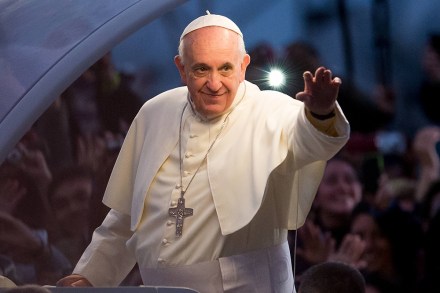
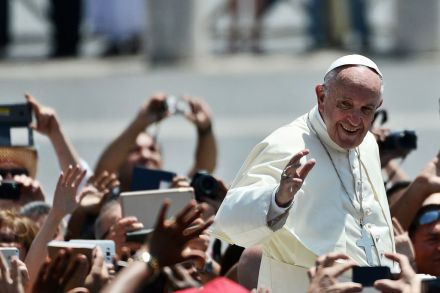
Conclave – what really happens when a pope dies?

From our UK edition

54 min listen

The film Conclave has picked up a host of awards across all the major ceremonies so far, including at the Screen Actors Guild, the Golden Globes, and winning Best Picture at the BAFTAs. Adapted from the novel by Robert Harris, it also has eight nominations at the upcoming 2025 Academy Awards. Full of intrigue, the film has viewers wondering how true to life the process depicted on the big screen is. And, with Pope Francis hospitalised, amidst the award season, this has only heightened interest in Papal conclaves and the election process.  Dr Kurt Martens, Professor of Canon Law at the Catholic University of America, joins Damian Thompson to unpack the process. What really happens when a pope dies? Produced by Patrick Gibbons.

Why is there no campaign to free novelist Boualem Sansal?

From our UK edition

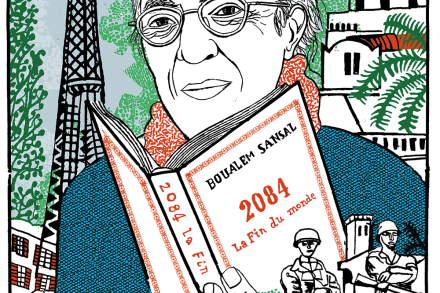
Paris What possible crime has the award-winning novelist Boualem Sansal committed that merits being locked away for three months now by the Algerian police? Listen to the Algerian government – and its cheerleaders on social media – and theanswer appears to be that he is at best a stooge for the French far right, at worst an outright traitor. Friends of the man paint another picture: a gently spoken free-thinker with the courage to speak his mind. Sansal, who is 80 and suffers from cancer, was arrested at Algiers airport on 16 November as he got off a plane from Paris. He has been in an Algiers prison ever since, with visits to hospital for treatment. His Parisian lawyer, François Zimeray, has still not been given a visa, so the charges are unclear.

Vance is right — Britain really has ‘thoughts-and-prayers’ policing

"Free speech, I fear, is in retreat," said Vice President J.D. Vance to an audience of world leaders at a security conference in Munich on Friday, with a rhetorical punch comparable to Reagan's "Mr. Gorbachev, tear down this wall!" Vance pointed to various censorial "hate speech" policies spewed out from Brussels and across Europe, and to the troubling arrest of a Christian in Sweden who used his freedom of expression to burn a Qur’an. Building to a crescendo, Vance then highlighted the "most concerning" case of Adam Smith-Connor — the British army veteran and father of two who was convicted in November 2024 for praying silently, for a few minutes, on a public space across the road from an abortion facility.

j.d. vance

Why militant atheists don’t understand religion: a conversation with Alister McGrath

From our UK edition

36 min listen

In his new book Why We Believe: Finding Meaning in Uncertain Times, Prof Alister McGrath rejects the notion that belief is a relic of the past and takes aim at the ‘new atheists’ who attack religion without even knowing what it is. Prof McGrath, emeritus Andreas Idreos Professor of Science and Religion at Oxford University, has had a unique journey to religion. A former Marxist atheist with a doctorate in molecular biology, he’s now a world-renowned theologian and Anglican priest.  In this lively discussion with Damian Thompson he talks about the boundary between science and religion, something poorly understood by aggressive atheists such as Richard Dawkins and the late Christopher Hitchens.

Are Syrian Christians who speak the language of Jesus about to disappear after 2,000 years?

From our UK edition

26 min listen

There has been a Christian community in Syria since the first century AD. But it is shrinking fast and faces terrifying new threats as the country’s government, following the overthrow of President Assad, forges alliances with hardline Muslims including foreign jihadists – Uighurs from China, Uzbeks from Central Asia, Chechens from Russia, Afghans and Pakistanis. Mgr Michael Nazir-Ali, the former Anglican Bishop of Rochester who is now a Catholic priest of the Ordinariate, has written a heartbreaking piece for The Spectator about the Christians of Maaloula in southwest Syria. It’s one of the last remaining communities to speak Syriac, a dialect of Aramaic, the language of Jesus Christ.

Will science lead us back to God?

After generations of treating the universe as mere matter to be bent to our will, it seemed inevitable that the future of humanity would be to merge with machines. Billionaires and tech utopians now predict a near future in which the human mind itself might be “downloaded” or transferred into a digital realm, allowing us to overcome death itself by slipping the bonds of our physical existence altogether. Modern-day prophets like Yuval Noah Harari proclaim that we have embarked on a second industrial revolution, though the product this time will not be machines or vehicles or powerful new weapons but human beings themselves. There’s a certain logic to this way of thinking.

science