Christianity

Dostovesky and Putin’s useful idiots

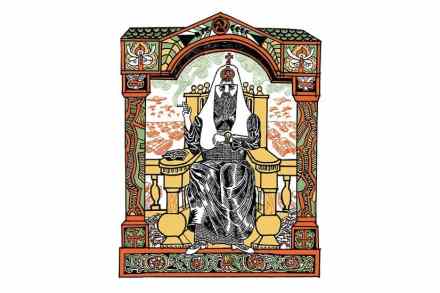
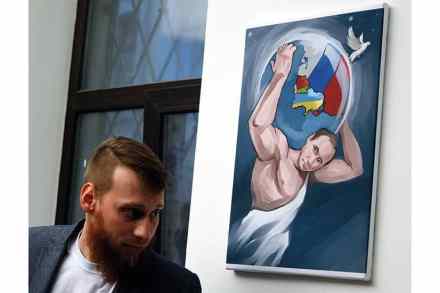
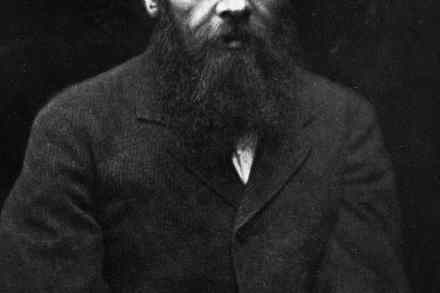
When I was 17 I heard the name Dostovesky, and was enthralled. Just the name felt so glamorously intellectual, so deep. I began to read some of his novels, and my hunch was vindicated. A bit later I delved into his ideas, and my admiration became more nuanced. I partly admired his defiance of the rational humanist arrogance of the West, but I was also wary of his reactionary mystical nationalism, his faith in the anti-liberal Russian soul.  It seems that a lot of religiously minded intellectuals struggle to get past stage one. They are so taken with the flinty glamour of this writer that their critical faculties atrophy. They allow their aesthetic admiration to influence their religious politics.

What’s behind the push for abortion in Latin America?

From our US edition

As the pro-life movement in the United States looks with optimism to the very possible overturning of Roe v. Wade by the US Supreme Court later this year, the tide seems to be flowing in a different direction down south. First came Argentina, where the Senate passed a highly contested bill in early 2021 legalizing abortion in the first fourteen weeks of pregnancy. The vote was preceded by months of protests, debate, and even a series of personal pleas from the world’s most famous Argentinean, Pope Francis. In September, Mexico’s Supreme Court struck down abortion bans in two states, effectively paving the way for decriminalization nationwide. Most recently, Colombia effectively legalized abortion in the first twenty-four weeks of pregnancy.

abortion

How conservatives concede the culture

From our US edition

Conservatives suffer from a short attention span, and it largely explains their defeats in the culture war. They fight every battle as if it’s the only one they will ever have to fight. And so, win or lose, they are unprepared for what happens next. If they lose, they forget how all-important the last battle was, learning no lessons from defeat, nor about what’s vital and what isn’t. Twenty-five years ago, conservatives were adamantly opposed to putting women in combat or admitting them to institutions like the Virginia Military Institute and the Citadel. In recent years, conservative Republicans have celebrated the aspirations to office of female fighter pilots like Arizona’s Martha McSally and female graduates from Virginia Military Institute and the Citadel.

conservatives
trans jesus

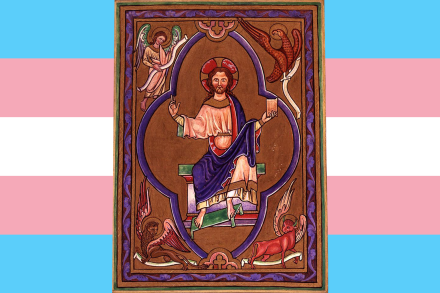
Say hello to Trans Jesus

From our US edition

It’s been said that the Christian right is more “right” than Christian. And there’s probably some truth to that. But, seriously, have you seen the Christian left? Back in 2020, we had the saga of White Jesus. An ex-pastor named Shaun King urged Black Lives Matter activists to destroy images that made Jesus look European rather than Palestinian. The trouble is that ancient Jews actually did look Mediterranean, because…well, they were. The big blue thing to the west of Palestine? That’s the Med. Mr. King was probably thinking of the Arab Muslims who now live in Palestine. But they only showed up around the year 640, when the Rashidun Caliphate invaded the Levant and killed most of the Jews and Christians around Jerusalem. Awkward. Anyway, White Jesus is out.

Playing until her fingers bled: the dedication of the pianist Maria Yudina

The 20th century was an amazing time for Russian pianists, and the worse things got, politically and militarily, the more great pianists thrived, despite the extreme danger and discomfort in which they lived and in which some of them died. If we think immediately of Richter, the greatest of them all, and Gilels, there are at least 20 more that we could add without exaggeration. One of the most important was without question Maria Yudina, born in 1899, who astonishingly survived until 1970. She was not just a sovereign artist but an eccentric of the kind and degree that only Russia seems able and willing to supply.

Bring back communion wine

The Church of England has always been clever at producing theology to suit itself. If we don’t start protesting, we may never get communion wine back again. Too many risk-averse clergy have discovered how efficient, hygienic and cheap it is just to give us a wafer each. They explain it away by reminding us that ‘Christ is sacramentally and equally present in both the bread and the wine, so if you receive only one, nothing is lacking’. ‘But it’s so unfair,’ I want to hiss at the presiding priest when I see him or her having a sip of wine ‘on behalf of the congregation’. ‘It’s one rule for you, another for us.

Letters: Our broken civil service

Beyond the party Sir: Rod Liddle is spot-on in arguing that the attitudes revealed by ‘partygate’ extend to senior civil servants (‘The truth about that No. 10 party’, 15 January). He gets the extent wrong by tarring all public-sector workers with the same brush, which would include all NHS workers, and is not true. What is true is that the attitude has indeed spread in the civil service well beyond the public school and Oxbridge-educated elite. I spent a couple of years seconded to a department of state, trying to make progress on implementing reforms that had been approved by parliament. I failed. I was eventually blackballed for speaking truth to power — that is, reporting directly to a minister, as my contract said I should.

If Hamilton is cringe, then America is done for

From our US edition

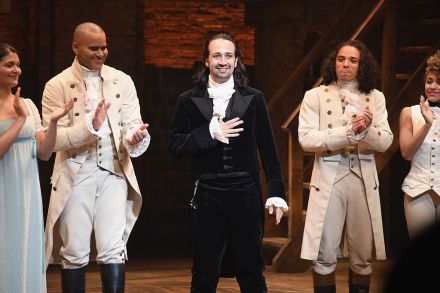
I’ve been reliably informed that Hamilton is now cringe. Constance Grady of Vox explains, drawing on a scene from the recent reboot of Gossip Girl: “You know, I saw Hamilton… before it went on Broadway,” brags one of the teens, hoping to impress his cool new girlfriend Zoya. “You into that play?” Zoya, the wokest of the group and the one with the most sophisticated literary taste, sighs deeply and rolls her eyes. “No doubt it’s a work of art,” she allows. “But …” Zoya doesn’t finish her sentence.

Will the human rights industries finally stand up for Christians?

A Christian-owned bakery harried through the courts for refusing to produce a cake endorsing same-sex marriage and a nurse driven out of her job for wearing a small cross. The two are apparently unconnected but have found themselves in the same news cycle this week. The ‘gay cake case’, as it’s invariably billed, has been trundling along since 2014, when gay rights activist Gareth Lee commissioned Belfast-based Ashers Baking Company to produce a cake featuring the slogan ‘Support Gay Marriage’, the logo of the organisation QueerSpace, and Bert and Ernie, two Sesame Street characters ‘shipped’ as gay by some fans of the children’s TV series.

Divided we stand: Anglicans need to agree to disagree

Two years ago the Church of England decided to delay any public discussion of its deepest division, over homosexuality, until 2022. So this might be the year in which an already troubled institution has a dramatic public meltdown. Or it might be the year in which the Church of England sorts itself out a bit. Yes, really. Stranger miracles have happened. There are grounds for hope, and not just on the gay issue. The Church has a core strength that it could draw on, and a core identity that could stand it in good stead, though one it is weirdly shy to assert. First let’s admit that things haven’t been going so well, even while the gay issue has been kicked into the long grass.

Letters: Afghan interpreters deserve better from Britain

Welcome changes Sir: Lloyd Evans’s sympathetic piece on the fate of Afghans once they arrive in the UK made for sobering reading (‘New arrivals’, 18 December). In the Sulha Alliance we are endeavouring to support those Afghans and their families who served with and alongside British forces in Afghanistan. That is not the totality of Afghan migrants, but of the former interpreters and their families it can be truly said ‘they are here because we were there’ — and we owe them. I will not go over the whole sorry saga of the UK’s mistreatment of this group, but we really need a step change in how they are looked after.

What’s driving America’s sex recession?

From our US edition

Young people are having less sex, and not just because they’re getting married later. According to the General Social Survey, the percentage of never-married Americans between the ages of 18 and 35 who did not have sex in the past year rose from around 16 percent in 2000 to over 22 percent in 2021. Why is this happening? There are plenty of theories. In a 2018 piece for The Atlantic, editor Kate Julian came up with five: 1) porn and masturbation, 2) the elevation of other priorities over forming committed relationships, 3) the toxic dynamics hard-coded into dating apps, 4) advances in feminism that empower women to say no to sex they don’t want to have, and 5) an increase in anxiety disorders.

exhortation

The exhortative tradition in America

From our US edition

G.K. Chesterton observed after his return to England from a lecture tour in the United States that America is a nation with the soul of a church. That is hardly surprising, the northernmost of the original thirteen colonies having been established by a fervently religious sect. All religions are exhortative by nature, none more so than the sectarian ones which have a solid history of being noisier in this respect than the established churches, partly, I suppose, because one encourages the burning of witches in louder tones than one solicits a bigger collection plate for the relief of the victims of territorial rebellion in Ethiopia. It is true that the first generation of Puritans in Massachusetts were a more dignified lot than many of their successors.

A brief history of the death of God

A few weeks after Friedrich Nietzsche bragged to an admirer that he had completed a ruthless attack on our Lord, he collapsed, had convulsions, shouted like a madman and never recovered his faculties again. It was early 1889. He was 44 years old, his books had just begun to be noticed, and he lived for a decade longer, empty-eyed, silent and entirely unaware of the fame that was about to engulf him. Was his tragic end divine punishment for his sacrilege? My devout Catholic wife begs to differ. Our Lord is not vengeful, she insists. That’s the only thing wrong with him, I reply.

Is Christianity about to end in the place it began?

Janine di Giovanni’s book begins in a Paris apartment during the first lockdown. She’s at a friend’s home, which she leaves for the odd shopping trip wearing a homemade mask and rubber kitchen gloves. Covid has made her anxious and she worries that we may lose things about our way of life forever. They need to be written down so we don’t forget. As she thinks about how her faith has comforted her during the pandemic she decides to tell the story of Christians in the Middle East who have experienced troubles of a different kind. She feels that Christianity is vanishing there, and if we don’t make a record of it, it will be lost.

Is woke Notre-Dame the future of Christianity?

From our US edition

In 2019, I wrote a piece for the American Conservative reflecting on the Notre-Dame fire and on the meaning of that cathedral in a secular age. At the time, I considered donating my paycheck from that article to the rebuilding effort. I’m glad I didn’t. I certainly wasn’t the only one moved to devote some of my hard-earned money to saving one of the jewels of Christendom. Over €800 million poured in from around the world. €165 million was quickly spent restoring the edifice’s structural integrity. But over €600 million remained, and soon the architects descended. After an initial flurry of mostly outlandish proposals that aimed to modernize the building’s exterior, the French government caved to popular outrage and ditched the design contest.

notre-dame

The forgotten poetry of John Martin Finlay

From our US edition

Dense Poems and Socratic Light: The Poetry of John Martin Finlay, edited by David Middleton, Wiseblood Books, 2020 To say that the poet John Martin Finlay has been forgotten is not quite right. He was never “remembered” — read by a significant number of people — in the first place. But his best work is as good as the best work of many of the poets of his time, and Wiseblood Books is hoping to set things right with a two-volume collection of his poetry and prose. Born in southern Alabama on a peanut and dairy farm in 1941, Finlay went to university in Alabama and Louisiana, where he graduated with a Ph.D. from Louisiana State University in 1980 and converted to Catholicism that same year.

Were the Ottoman Turks as European as they thought themselves?

This is the best of times to be writing history, since so much of what has been taken for granted, especially in the West, is being revised. Assumptions about the past that we accepted as fact, and events we once looked upon with pride, are now being questioned. A dark cloud hovers over the Benin Bronzes, Elgin Marbles and Rosetta Stone in the British Museum and looks likely to burst. The same applies to figures who were considered heroes and placed on pedestals. If the statue of Winston Churchill in Parliament Square had not been covered recently, it might have followed the fate of Edward Colston’s.

Profound and original and unashamedly religious: Midnight Mass reviewed

I was turned on to Midnight Mass by Ricky Gervais who raved about it in one of his social media chats: ‘I absolutely loved it, and it got better and better. It’s like all the themes like love and death, regret, second chances, but it’s about good and evil in a biblical sense.’ Yes. Midnight Mass is very unusual in that (so far, at least; I’m only two and a bit episodes in) it seems to take Christianity at its own estimation. God is real, miracles do happen, even (or especially) the most miserable sinners can find redemption through repentance. Watching it is quite unsettling because you keep expecting the rug to be pulled from under your feet and, say, the hero priest Father Paul Hill (Hamish Linklater) suddenly to be revealed as a secret agent of Satan.

Why I left the Church of England: an interview with Michael Nazir-Ali

By now, almost everyone who’s remotely interested will know that Michael Nazir-Ali, former Bishop of Rochester, a man once tipped to become Archbishop of Canterbury, has converted to Catholicism. Dr Nazir-Ali is the second senior Anglican cleric to jump ship this year, which makes church gossip sound pleasingly Shakespearean: ‘Ebbsfleet has fallen… what and Rochester too?’ But it’s also sad. It’s as if the Church of England is exploding in slow motion, all its constituent pieces — bishops, buildings, parishioners — drifting off for want of a centre to hold them. When I went to meet Dr Nazir-Ali this week, I expected to find him full of vim.