China

Nixing BRICS: how to counter the China-led alliance

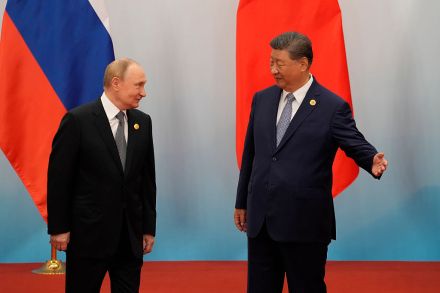
Americans are used to exercising influence through international entities such as NATO, the World Trade Organization or the World Bank. Each of these groups was set up with American leadership or at its instigation; all have been used to advance Washington’s vision of global liberal-democratic capitalism. No comparable international organization or collection of nations has been influential since the Soviet Union’s collapse. That may be changing. The so-called BRICS alliance (its founding countries were Brazil, Russia, India, China and South Africa) recently added new members Iran, Ethiopia, Egypt and the United Arab Emirates.

BRICS

Who’s really behind the Biden administration’s foreign policy?

If you’re one of the many people worried that US foreign policy is in the hands of a visibly declining eighty-one year-old president, Alexander Ward’s account of the Biden administration’s first two years in office may — or may not — make you feel better, for he leaves readers with little doubt as to who is actually the executive branch’s most influential decision-maker: forty-seven year-old national security advisor Jake Sullivan. Ward might deny any such authorial intent, but time and again he shows his hand, as when he invokes “Sullivan’s first two years at the helm alongside Biden.

biden ward

Congress is a very silly place

The news that China Select Committee Chairman Mike Gallagher won’t run for reelection in his safe Wisconsin district may have surprised Washington, but it’s a decision that has been apparent for some time. The thirty-nine-year-old Marine veteran, touted by China hawks and Republican leadership as a rising star, is naturally frustrated by an utterly broken institution in the House. But it also serves as a warning shot to Republicans about what could come next. If you’re in the position of being a chairman — Gallagher is the youngest of them — even an utterly dysfunctional chamber can still allow you to do some meaningful work in the committee. But if Democrats retake the House in 2024, being in the minority is a completely different animal.

mike gallagher congress

How actually to compete with China

Fifteen years ago, the federal government poured $535 million into a California-based solar module innovator, Solyndra. That’s a lot of money. In today’s money, it would be enough to cover the payrolls of the Red Sox and Dodgers combined. In 2009? It was enough for Solyndra to go bust in fewer than two years — making the company one of America’s biggest public funding debacles. Solyndra’s failure remains both a political talking point and area of introspection — especially as the US increasingly wakes up to the stakes of today’s industrial competition with China.

solyndra

How will the 2024 election impact US-China relations?

There was a time when the relationship between the United States and China had a bright future. While bilateral relations have never been particularly rosy since the two countries formally established diplomatic ties on January 1, 1979, US and Chinese leaders have long worked on the assumption that they had much to gain by deepening their cooperation and, if possible, expanding it to new heights. This was a widespread sentiment in Washington, reflected in speeches given by presidents from both parties. “I know there are those in China and the United States who question whether closer relations between our countries is a good thing,” President Bill Clinton told students at Beijing University in June 1998.

Gallagher china ccp confucius institutes china

Is China using Mexico as a back door to trade with the US?

The governor of the Mexican northern state of Durango Esteban Villegas announced last Monday the first “grand investment of the year.” The investment is of close to $400 million — and the investor is China. This project is one of many. So it appears shortsighted to celebrate Mexico surpassing China to become the US’s top trading partner as an absolute “decoupling” success. While Mexico and the US are economically integrating, so are Mexico and China. Politicians in Washington, most notably members of the Select Committee on the Chinese Communist Party, are now warning that Beijing is attempting to use Mexico as a “back door” to the American market as direct trade between the great competitors sharply declines.

mexico

The rise and fall of US Steel

US Steel, which came in with a bang in 1901, is going out with a whimper. It has agreed to sell itself to Japan’s Nippon Steel for $14.1 billion, $55 per share in an all-cash deal. While steel is still an indispensable commodity (world production has doubled in the last twenty years, to 1.951 billion tons, about half produced in China), it has long ceased to be the iconic measure of industrial power that it was in the late nineteenth century. Steel — iron with a carefully calibrated amount of carbon added — has been known since ancient times. But it could be made only in small batches, and thus was so expensive to produce that it was almost a semi-precious metal, its use reserved for razors, sword blades and surgical instruments.

Venezuela is essential for China’s ambitions

Venezuela has become a headache for Washington. Just after the Biden administration engineered a rapprochement strategy, Nicolás Maduro did more than just double down on not following through his promises of democratization: he is now pushing to annex neighboring Guyana. These developments, though, should have been anticipated, as Venezuela becomes a crucial part of China’s geopolitical strategy. "Ready for what will be a historic visit to strengthen ties of cooperation and the construction of a new global geopolitics. Good news will rain for the Venezuelan people," said Maduro after landing in the Chinese city of Shenzhen back in September.

Maduro china venezuela

China will miss Henry Kissinger

A hero to some and a villain to others, the late Henry Kissinger impacted American foreign policy thinking in the last six decades more than anyone else. Of the former secretary of state and Nobel Peace Prize winner's contributions, one of the most significant was the strengthening of Sino-American relations. His détente policy was once celebrated by Nixonites when the Soviets were seen as the US’s main competitor. More recently, though, as anti-China sentiment has risen in America, Kissinger’s desire to soften relationships with the Asian giant has gained him some detractors on the right — and he already had more than enough on the left. Arguably his death will be mourned more in China than America.

Kissinger

China cons US on green energy agenda

Right before President Biden and Chinese president Xi Jinping met in San Francisco this week, the US State Department and the Chinese Ministry of Ecology and Environment each released a statement on “enhancing cooperation to address climate change.”  “[T]he United States and China reaffirm their commitment to work jointly and together with other countries to address the climate crisis,” the Sunnylands Statement says. Addressing “energy transition,” the statement declares that both countries support pursuing efforts to triple renewable energy capacity globally by 2030 and accelerate renewable energy deployment as a substitute for fossil fuels.

Facing the facts of the West

The century began with a global celebration — the West’s belief in liberal democratic capitalism had battled foes for centuries and emerged victorious. All that remained was for the rest of the globe to melt into the West’s soft and loving embrace. Two decades in, things look much less rosy. China’s rapid rise has not spurred democratization, as many suggested it might; instead it has nourished a massive ideological and political competitor that may supplant the West not only economically but as an arbiter of global culture and behavior. Western decline is not yet inevitable, but Western values will survive and spread only if leaders recognize two clear facts. The first is that the spread of Western values has in large part been due to the dominance of Western power.

west
xi

Biden and Xi will resolve nothing in San Francisco

A year ago today, President Biden and Chinese President Xi Jinping shook hands with each other on the sidelines of the G-20 Summit in Bali, Indonesia, in an attempt to reset the world’s most important bilateral relationship. The two men, who knew each other during their previous encounters at the vice presidential level, hoped to exploit their familiarity with one another to bring US-China relations onto a more productive plane. And for a moment, the Bali talkathon seemed to have that effect.

Is California the new China?

Recently, Gavin Newsom, the greasy-haired governor who may or may not run for president, made a trip to Beijing to meet with Xi Jinping. It went swimmingly, according to various reports.  When it comes to US-China relations, “divorce is not an option,” Newsom, who divorced from Kimberly Guilfoyle in 2005, told CNN on November 8. America’s answer to Justin Trudeau argued that the US and China must “reconcile our strategic red lines.” The idea of being cozy with China, a country that actively uses cyber espionage to undermine the US economy, may strike many as odd, even dangerous — but not Governor Newsom. In fact, according to reports, he is so inspired by his trip to China, that he now wants to bring a CCP-like “social credit system” to the Golden State.

california governor gavin newsom

What exactly is the new space race all about?

The recent spate of articles about attempts by different countries to land vehicles on the Moon make it clear that a new space race is on. Just last month, Russia launched its first mission there in forty-seven years. And although the automated Luna-25 spacecraft spun out of control and crashed at the last minute, India’s heavily-instrumented Chandrayaan-3 landed successfully just four days later. NASA itself aims to return humans to the lunar surface in 2025 with its Artemis program. Remarkably, more than eighty countries, including Israel and the United Arab Emirates, have thus far established some kind of presence in space.

space

Democrats bring a CCP-tied witness to education hearing

A hearing about the Chinese Communist Party’s funding of American K-12 education took a surprising turn when the Democrats’ witness — and several members of the House Education and Workforce Committee — took pains to conflate opposing foreign investments in public schools with Asian-American hatred. Gisela Perez Kusakawa, the executive director of the Asian American Scholar Forum (AASF), kicked off her remarks by linking concern over the Chinese Communist Party’s investments in public schools to America’s incarceration of Japanese-Americans during World War Two. Warning the Asian-American youth could end up as “collateral damage,” Kusakawa repeatedly conflated opposing the CCP with anti-Asian-American racism.

ccp Chinese President Xi Jinping delivers a speech during a ceremony at Tsinghua University ceremony (KENZABURO FUKUHARA/AFP via Getty Images)

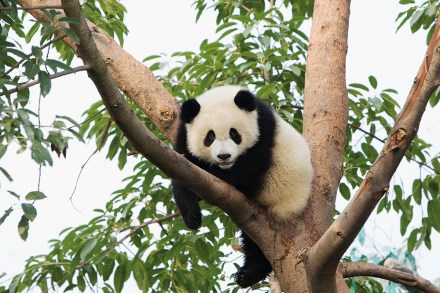
Why is America is giving up our panda to China?

America is surrendering its native-born panda to the Chinese Communists, and the Chinese Communist Party — and a premier taxpayer-funded museum and a top defense contractor are helping to foot the bill for the goodbye party. Xiao Qi Ji, an American-born panda whose name means “little miracle,” will be shipped back to China later this month — and the Smithsonian’s National Zoo is having an entire panda-fest to celebrate this humiliation. “We are going big because they are going home,” the National Zoo boasted in its announcement of a nine-day celebration filled with screenings of Kung Fu Panda, yoga sessions and panda-themed items. “Tasty celebratory treats will be provided courtesy of the Embassy of the People’s Republic of China.

panda

World events are not going America’s way

Contrary to the conventional wisdom, the world situation is grim for America. And it could actually get far worse. Why, then, are many of our national leaders acting as if things are going well? We need not doubling down but fundamental change. That starts with understanding that we are in serious trouble. The war in Ukraine, which is manifestly the Biden administration’s priority, is sadly likely to be protracted. While the Ukrainian counteroffensive is still ongoing, the best analysis indicates that the war has become a struggle of attrition. Russia is substantially mobilizing its economy and society for a long-haul war effort — and its armed forces appear to have at least partially adapted from their earlier failures.

world

Fear and complacency in Taiwan

On a recent trip to Taiwan as a guest of its Ministry of Foreign Affairs, I knew that war with an increasingly belligerent China is a daily possibility. Chinese ships are in constant circulation in the Taiwan Strait. Chinese aircraft unceasingly fly near the island, getting close to Taiwanese air space. Beijing’s increasingly threatening language about forced “unification” seems to bring a catastrophic attack closer. Genuine fear fluttered in the wake of Nancy Pelosi’s visit in August last year when China launched three days of drills that paid no regard to what they called the “imaginary” median line, which divides Chinese from Taiwanese territory.

Taiwan
taiwan

Why Taiwan’s defense is in the American national interest

Just 38 percent of Americans “support deploying US troops to defend Taiwan from a military attack by China” according to a Reuters/Ipsos released this week, with 42 percent opposing and 20 percent unsure. Vivek Ramaswamy, among the top contenders for the 2024 GOP nomination, also recently said that the US should only defend Taiwan until “we have semiconductor independence.” Add to this the Biden administration’s unwillingness to spend what is needed to build up the Taiwanese military and its failure to adequately support Ukraine — and anyone who values a safe, free, prosperous and stable world should be concerned. Because defending Taiwan from a revanchist, imperialist and brutal Chinese Communist Party is at the heart of America’s national interest.

The changing story on Biden family business dealings

Devon Archer, a former friend and business partner to Hunter Biden, testified Monday as part of the House Oversight Committee's investigation into the Biden family business dealings and alleged foreign corruption. Archer made several key claims, including that Hunter was brought on to the board of Ukranian energy company Burisma because of his familial connections and that Hunter put then-Vice President Joe Biden on the phone his business associates at least twenty times to demonstrate his access to US government power. Archer's testimony complicates the insistence from President Joe Biden, the White House and their friends in the media that President Biden was oblivious to his son's business dealings taking place abroad in places like Ukraine and China.

U.S. President Joe Biden and his son Hunter Biden attend the annual Easter Egg Roll on the South Lawn of the White House (Photo by Drew Angerer/Getty Images)