China

Trump is wrong that the US should negotiate peace in Ukraine

From our US edition

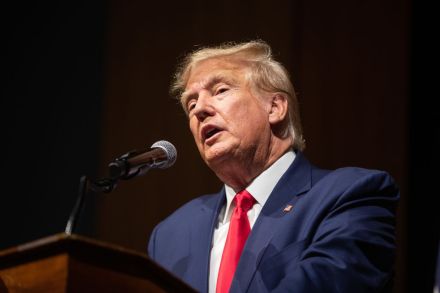
The GOP’s foreign policy doves and soft isolationists have grown stronger, with 40 percent of “Republican and Republican-leaning independents” saying the US is giving too much aid to Ukraine. Former president Donald Trump has now taken up the mantle of this movement, firmly anchoring himself to the anti-Ukraine aid faction of the party. Trump recently gave an interview to radio host Hugh Hewitt in which he made one thing clear: he’s no fan of aiding Ukraine. Asked about sending F-16s, Trump said, “I think the United States should negotiate peace between these two countries, and I don’t think they should be sending very much.” When Hewitt asked if the former president would cut aid to Kyiv, Trump responded, “we’ve got to make peace.
Former defense secretary: yes, Trump would have shot down the Chinese spy balloon

From our US edition

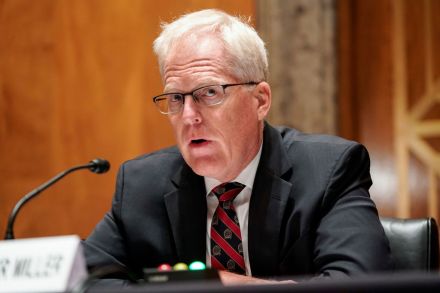
Former acting secretary of defense Christopher Miller challenged several of the major claims being made about the Chinese spy ballon that recently entered US airspace during a podcast interview Monday with The Spectator World.  Miller joined The District podcast to discuss the Chinese spy balloon and his new book, Soldier Secretary: Warnings from the Battlefield and the Pentagon about America's Most Dangerous Enemies. The Biden administration shot down the balloon off the South Carolina coast on Saturday after it had been floating across the United States for nearly a week. Following its destruction, administration officials claimed that other Chinese spy balloons had entered the US "at least three times" during the Trump administration.

National Counterterrorism Center Director Christopher Miller testifies at a Senate Homeland Security and Governmental Affairs Committee hearing (Photo by Joshua Roberts-Pool/Getty Images)

Have Xinjiang’s camps been closed?

42 min listen

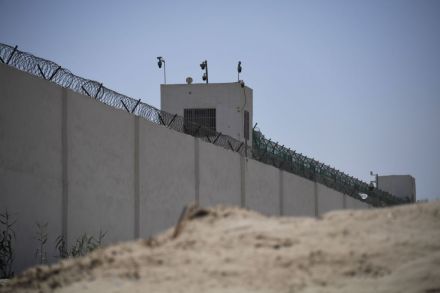
A few months ago, an intriguing article in the Washington Post shed light on the latest situation Xinjiang, the western region of China where the Uighur minority live. The two journalists, Eva Dou and Cate Cadell, saw on their travels around the region last summer that many of the infamous re-education camps had been shut down, or turned into quarantine centres. A new phase of Beijing’s campaign in Xinjiang seems to have started. So what’s really going on there now, and what does this mean for the lives of the Uyghur people? I’m joined by Professor James Millward from Georgetown University, author of Eurasian crossroads: a history of Xinjiang, to find out.

AP stealth edits its Chinese spy balloon report

From our US edition

The Associated Press (AP) appeared to stealth edit a major report on the Chinese spy balloon, which was the origin of the claim that two such balloons also entered US airspace during the Trump administration. The AP first published the article on Saturday. The balloon was then shot down after floating for several days over the US. Deep into the report, the AP cited one unnamed Biden administration official who claimed that two similar incidents "happened twice during the Trump administration but [were] never made public." [caption id="attachment_45048" align="aligncenter" width="1024"] The Associated Press's first iteration of the Chinese spy balloon story (Screenshot: Internet Archive)[/caption] However, the AP article looked different on Sunday.

spy balloon

The balloon is a Chinese middle finger to the US

From our US edition

Military fighter jets have just shot down the Chinese Communist Party's gigantic spy balloon that had been hovering about 60,000 feet over the United States. The balloon was "taken care of," to quote President Biden, over the Atlantic Ocean, off the coast of South Carolina. Prior to the maneuver, the balloon drifted, unharmed, over our sensitive military sites and fellow citizens. It lingered there, doing what Chinese President Xi Jinping pleased, while rightfully indignant members of Congress representing those violated states took to press releases and cable TV to demand the federal government secure our sovereign airspace. All of this was no doubt churned back through the CCP's propaganda outlets, smearing America as divided, weak, and foolish.

Shoot down the balloon!

From our US edition

Like many of you, Cockburn has been following the developing story involving the Chinese spy balloon currently hovering over Montana. For those unaware, sometime over the last few days a spy balloon has floated over the Aleutian Islands in Alaska, across Canadian airspace and entered into Montana, where it's been for several days. It traveled at an altitude of around 50,000ft and is currently not far from the 341st Missile Wing at Malmstrom Air Force Base, which houses a portion of America's intercontinental ballistic missiles, among many other key military assets.

spy balloon

Democracy in Peru is under attack

From our US edition

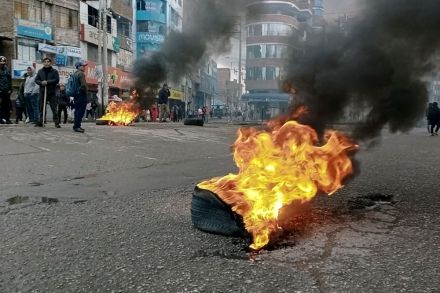
For over a month, Peru has been in a state of near-constant unrest. In December, as the legislature threatened to impeach President Pedro Castillo for, among other things, allegations of corruption, Castillo tried to dissolve the legislature and “govern through decrees.” By all measures, this was an attempted coup, and it resulted in his impeachment (by a vote of 101-6), arrest, and condemnation from left and right. In his place, Vice President Dina Boluarte was sworn in as president, having denounced her former boss’s attack on the country’s democracy. This was a success in a country that has seen six new presidents in the past seven calendar years. The Congress has repeatedly been at odds with the president, and scandals have rocked administration after administration.

Morris Chang: the microchip mogul caught between Biden and Xi

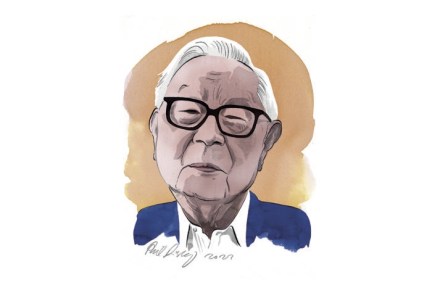
At the centre of the world’s tech sector sits a Taiwanese chip tycoon most people have never heard of. Morris Chang is the founder of the Taiwan Semiconductor Manufacturing Company, the world’s biggest chipmaker. He became rich and powerful by making chips the rest of the world can’t live without. And as the world’s semiconductor industry is being reshaped by Chinese and US efforts to control the future of chip technology, Chang finds himself courted by the world’s most powerful governments but also under pressure amid an escalating geopolitical clash. The tale of Morris Chang is not only a story of visionary entrepreneurialism and technical brilliance Though TSMC is far from a household name, almost everyone uses its chips each day.

The Baltic nations show the world how to defend freedom

From our US edition

It is not inevitable that the Baltic States of Estonia, Latvia, and Lithuania would be among freedom’s most potent defenders. Nestled between the Russian mainland and Moscow’s exclave of Kaliningrad, their only direct connection to their NATO allies is through the vulnerable Suwalki Gap. For its part, NATO only has small rotational forces stationed in the three countries. At first glance, one would expect these tiny nations (Lithuania is the largest at 2.8 million people) to prefer flying under the radar. Instead they have become some of the most vocal and powerful defenders of the Western way of life. Tiny though they may be, the Baltic countries have managed to stand up to the two greatest enemies of freedom at work today, Russia and China.

Has time finally run out for TikTok?

From our US edition

To see the catastrophic effect TikTok has on the brains of our young, you don’t have to look very far. Earlier this year a young family member ended up in the emergency room with a cup vacuum-stuck to her lips. After a few tugs and half a jar of Vaseline, it turned out that the bright idea stemmed from the #KylieJennerChallenge on TikTok. A few thick lips aside, there is something sinister going on with the Chinese-run platform. With every iteration of social media, the corresponding brood of teens has become lonelier, more miserable and even more anxious. This process has reached its purest form in TikTok. The difference is that this time it might have been by design.

TikTok
Gallagher china ccp confucius institutes china

Mike Gallagher’s China challenge

From our US edition

Twenty-five years ago, bipartisan American consensus about China was built on hope, spin and money. Despite the trauma of Tiananmen Square and caution about China’s true economic intentions, many believed in the potential of capitalist principles to move the Chinese Communist Party into a more open, less aggressive posture. Henry Kissinger wrote books about it; pundits and think-tank scholars gave speeches about it; Republicans and Democrats alike parroted the line well into the twenty-first century. Tom Friedman even dreamed ambitiously of what the United States could accomplish if only it were willing to be “China for a day.” What followed? As Harold Macmillan put it, “Events, dear boy, events.

Covid’s legacy: how will China remember the pandemic?

48 min listen

Three years ago, as people across China welcomed the Year of the Rat, a new virus was taking hold in Wuhan. In London, the conversation at my family’s New Year dinner was dominated by the latest updates, how many masks and hand sanitisers we’d ordered.  Mercifully, Covid didn’t come up at all as we welcomed the Year of the Rabbit this weekend, though my family in China are still recovering from their recent infections. The zero Covid phase of the pandemic is well and truly over. So what better time to reflect on the rollercoaster of the last three years? In exchange for controlling the virus, China’s borders were shut for most of that time, while the economy has tanked and a general of children had their schooling disrupted.

Will Biden ever follow the science on Covid?

From our US edition

Cockburn, like every other American, finally thought we’d seen Covid's last hurrah. But right on cue, in the dreaded month of January, the Wu-flu is resurgent. Public-health experts have begun sounding the alarm about a new Omicron variant dubbed XBB that is rapidly spreading across the Northeastern United States. It's not yet clear if XBB is any more lethal than other variants, but its mutations can make any prior vaccine useless. Growing evidence also suggests that repeated vaccinations may make people more susceptible to XBB and could be fueling the virus’s rapid evolution. “It might not be a coincidence that XBB surged this fall in Singapore, which has among the highest vaccination and booster rates in the world," writes the Wall Street Journal.

astrazeneca covid

Why China’s budding relationship with the Saudis spells trouble

From our US edition

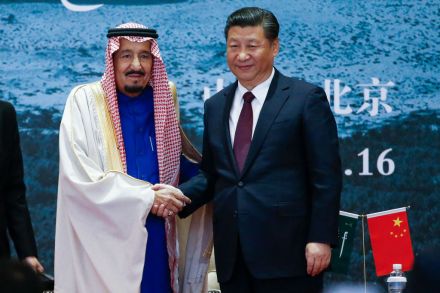
Joe Biden’s chickens are coming home to roost as Chinese President Xi Jinping visits Saudi Arabia. The trip itself has not been especially revolutionary. But it is another indication of America’s declining prowess in the region. Xi was given a welcome befitting an ambitious leader (and notably different from how Biden was greeted in July). Beijing and Riyadh signed numerous economic agreements worth about $29 billion in total, including with Huawei, which will only further the Chinese technology giant’s control over global telecommunications infrastructure. Xi also advanced his desire to make the yuan a competitor to the dollar in the global economy, pushing for the use of the yuan in the oil trade with Saudi Arabia.

All I want for Christmas is a TikTok ban

From our US edition

What do Santa Claus and the Chinese Communist Party have in common? They both see you when you’re sleeping, and they both know when you’re awake — especially if you have communist spyware like TikTok installed on your phone. Whether you’re a teenage girl or a government employee with a top secret clearance, TikTok wants to brainwash you and steal your secrets — maybe even both! While spending all your time on any social media platform can’t be good for your health, TikTok in America is specifically programmed to hook its users, with documented mental health problems plaguing teenage girls. A recently viral “blackout challenge” on the platform literally resulted in kids dying while they strangled each other — or themselves.

tiktok

A very good place to start if you want to understand China: Mark Kitto’s Chinese Boxing reviewed

In so far as it acknowledged them at all, the Chinese Communist Party has blamed 'infiltration and sabotage activities by hostile forces' for the recent anti-lockdown protests. It's an accusation laden with historical baggage. Modern China's history with foreign states, especially the Europeans, hasn't generally been a happy one. For many Chinese, the collective memory is still raw. The most mutually traumatic episode in this history is probably the Boxer Rebellion, when thousands of foreign delegates were besieged in Beijing by Chinese rebels for 55 days. The siege eventually ended with an allied rescued mission which sacked the city, the soldiers raping and killing the Beijingers who were left. This episode is the subject of a new one-man play by a veteran China hand.

Biden must do more to disrupt the fentanyl supply

From our US edition

As 2022 comes to a close, the United States finds itself confronting myriad threats. But there is perhaps no more immediate threat to Americans’ safety and security than illicit drugs. The numbers are staggering. Illicit drugs have killed more than 1 million Americans since the turn of the century, with over 108,000 dying in last 12 months alone. One drug in particular, fentanyl, is now the leading cause of accidental death for adults between the ages of 18 and 45 — more than car accidents, violent crime, and suicide. And the flood of fentanyl into the US shows no signs of abating. In view of this rising ride, the Biden administration has embraced a range of new policies focused on harm reduction and treatment, two historically overlooked areas of American drug control efforts.

Japan’s defense revolution

From our US edition

You don’t need to be an Asia specialist to recognize that China is undergoing a significant military modernization campaign. China’s leader, Xi Jinping, and the Chinese Communist Party are seeking to transform the People’s Liberation Army (PLA) into a world-class military by 2049, and complete the development of the military platforms, capabilities, enablers, and amphibious weapons systems necessary for a potential Taiwan contingency by 2027. Beijing’s defense budget rose by 139 percent between 2010 and 2020.

It’s time for Pope Francis to speak out against China

From our US edition

There is a lot to dig into amid Pope Francis’s recent interview with America magazine, but the most interesting tidbits might be his commentary on foreign affairs. Whereas the traditional head of state represents the interests of a nation, the Holy Father’s most important duty is the shepherding of the Catholic faithful. His message thus carries much weight, not because of the raw power at his disposal, but because it is backed by the moral authority of the Catholic Church. The pope has been in some hot water recently over both the war in Ukraine and the Vatican’s relations with China. Though he has long condemned the violence in Ukraine, he has not been as clear in condemning Russia and Putin specifically.

The coming turbulent times in the oil market

From our US edition

When the Wall Street Journal reported on November 21 that OPEC, the oil cartel dominated by Saudi Arabia, was planning to increase production by 500,000 barrels per day in December, the crude market immediately reacted. Oil prices plunged by 6 percent, bringing the Brent benchmark close to $80 a barrel. Saudi energy minister Prince Abdulaziz bin Salman, the older brother of king-in-waiting Mohammed bin Salman, immediately went to work disputing the report. No decisions at OPEC had been made, he said, and it was possible the cartel could even proceed with further production cuts if needed to maintain balance in the market (for the Saudis, "balance" is usually defined as padding the kingdom’s balance sheet). Abdulaziz’s intervention helped make up most of those earlier losses.

oil