China

Italy gave China PPE to help with coronavirus — then China made them buy it back

China has tried to restore its image after lying to the world about the seriousness of its coronavirus outbreak, but its attempts at humanitarianism have turned out to be as slippery as its wet markets. After COVID-19 made its way to Italy, decimating the country's significant elderly population, China told the world it would donate Personal Protective Equipment (PPE) to help Italy stop its spread. Reports later indicated that China had actually sold, not donated, the PPE to Italy. A senior Trump administration official tells The Spectator that it is much worse than that: China forced Italy to buy back the PPE supply that it gave to China during the initial coronavirus outbreak.

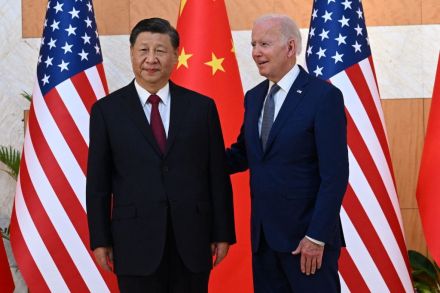
Chinese President Xi Jinping

The best message the State Department could send Beijing and the WHO

A troubling pattern has emerged at the World Health Organization. In the wake of this global pandemic, it appears China has been misdirecting and misleading the rest of us about confirmed cases in their own country, with the help of their close financial partner, the WHO.As the WHO and parts of the American media laud China’s response to the pandemic, with NBC News even hailing them as a global leader as the US falls behind, several countries reported massive problems with faulty equipment and supplies.Shortly after China expelled American journalists from its borders, they stopped reporting new cases of COVID-19 altogether, despite Wuhan once again closing down its movie theaters.

taiwan

Peter Navarro blasts ‘Swamp Creature’ opponents of ‘Buy American’ order

White House trade adviser Peter Navarro is hitting back at a group of Big Pharma lobbyists, medical organizations, and free trade groups for opposing President Trump's proposed 'Buy American' executive order reshoring the medical supply chain. Navarro, the assistant to the president for trade and manufacturing, told The Spectator that Big Pharma's opposition to the executive order, which would require government agencies to purchase pharmaceutical products made in the US, because it wants to 'preserve its offshore oligopoly'. 'All the EO would do is ensure that government agencies, including the VA, HHS, and DoD, Buy American,' Navarro said.

Peter Navarro

Big Pharma and free market orgs unite against Trump’s ‘Buy American’ order

The Association for Accessible Medicines (AAM), a trade association for major pharmaceutical manufacturers such as 3M, is drafting a letter to send to President Trump opposing his proposed ‘Buy American’ executive order reshoring medical supply chains. The letter currently has over 40 signatories, including PhRMA, a Big Pharma lobbying organization, dozens of medical nonprofits, and free market-oriented organizations, indicating the president will face immense pressure across the political spectrum for trying to reduce US medical dependence on China. AAM claims that signing the 'Buy American' executive order during the coronavirus crisis will harm efforts to provide doctors and hospitals with the equipment and medicines they need to stop the spread of COVID-19.

Trump coronavirus task force big pharma

Beijing’s attempts to elude blame for the Wuhan virus will backfire

Facing harsh criticism for allowing the novel coronavirus to spread, Beijing has settled on an international communications strategy: smearing the United States by claiming the virus originated with American soldiers visiting China. This strategy, based on obvious lies, will not work out well.Nobody outside China’s state broadcasters and some information-starved viewers could possibly believe it. For good reason: it’s bunk, and vile bunk at that. An infected unicorn is more likely to have started the virus in Wuhan than the US military. Yet that is the story the Chinese Communist party (CCP) is trying to peddle.

wuhan

Time to ban wet markets

There’s a recurring flashback from my childhood that never fails to induce a blood-curdling shiver down my spine. My mother’s request for company on her monthly shopping trips to the wet market was always a Hobson’s choice, one I deeply resented because the experience was awful. Deep in the bowels of Singapore’s Chinatown complex was a large open-air market that stood in stark contrast to the surrounding glitzy skyscrapers and immaculate streets. The place was a veritable not-so-little shop of horrors and till today, those horrors remain firmly etched in my memory.A distinctly fetid stench greets you long before entering the market; soon it becomes apparent why they’re referred to as ‘wet’.

wet markets singapore

The coronavirus is springing the Thucydides trap

The first casualty of informational war is truth. The first American casualty of COVID-19 was the myth that the United States can ‘manage’ the rise of China as a world power through mutual interest. That mutual interest was only ever economic. Naturally, most of our politicians, business leaders and commentators explained it as strategic too: as technocracy calls GDP the index of human happiness, so it identifies strategic interests with economic ones. The coronavirus crisis has, however, exposed an essential strategic antagonism between the United States and China.'‘What made war inevitable was the growth of Athenian power and the fear which this caused in Sparta,’ Thucydides wrote in History of the Peloponnesian War.

thucydides

We’re all Chinese now

I didn’t know this was what they meant by ‘cancel culture’. Sports events, theatre shows, plane flights, weddings, funerals: everyone is in a mad rush to cancel everything. Governments are ordering citizens to remain indoors, with Spanish police even deploying drones to catch miscreants. I don’t know whether it is the best way of tackling coronavirus — the UK government, which has gone to greater lengths than others to explain the scientific modeling behind its decision-making, has come to the conclusion that banning things and forcing the entire population into lockdown will have minimal effect and may even be counter-productive, at least at this stage. But it is going to cause a global recession, if not depression.

chinese

How do pandemics change the way we think?

It starts with seemingly insignificant numbers alongside little red blips on the world map. In a matter of days, the numbers soar and the red circles balloon to engulf an entire region. This pattern has repeated itself several times across the globe — notably in South Korea, Iran and Italy — as the number of confirmed cases of COVID-19 has surged since the virus first emerged in Wuhan back in December. Despite the Chinese economy coming to a grinding halt amid an unprecedented city-wide lockdown, the inevitable happened. The virus could not be contained within mainland China’s borders, and neither could its accompanying fear.Coronavirus has spread perniciously, causing 4,716 deaths worldwide and radically transforming life as we know it.

pandemics
huawei

Coronavirus is a metaphor for Britain’s vulnerability over Huawei

Monday night’s House of Commons rebellion over Huawei was on a surprisingly serious scale for a new government with a big mandate. The problem for the UK government is not just the actual danger of our security being breached by Huawei, real though that is. It is also strategic. The government is not treating the subject this way, but sees it as merely a matter for the Department for Digital, Culture, Media and Sport. This is a bad mistake. We have achieved Brexit. We are making our own way in the world. Our closest allies in terms of trust, language, cultural links, democratic values and shared interests are our four partner nations in the ‘Five Eyes’ deep intelligence partnership — the United States, Canada, Australia and New Zealand.

In coronavirus quarantine

This article is in The Spectator’s March 2020 US edition. Subscribe here. I’ve been quarantined, like millions of others in China. It was bound to happen sooner or later. I traveled all the way from Beijing to the third-tier city of Jining in Shandong province, where anyone arriving from another region must be detained for 14 days. There’s no kind way to deliver the news, so a Chinese colleague broke it to me over WeChat in a gentle but firm tone. It felt like being fired or dumped. It could be worse. I’m free to leave my building, but not the walled housing compound surrounding it.

coronavirus

Why does the Chinese Communist party want my credit history?

I was one of them.One of the 147 million Americans who had their information compromised in the epic 2017 Equifax data breach. It was one of the largest hacks in history, leaking the names, social security numbers, addresses, and credit history of over a third of the country.At first, we were led to believe it was the result of sloppy cybersecurity and greedy hackers who wanted credit card data.But now, according to last week’s indictment from the Justice Department, we know it was the handiwork of four members of China’s military.To think it was a few renegade black hat hackers with expensive tastes was upsetting enough, but now to learn it was the long arm of the Chinese Communist party? This is serious.What do the Chinese communists want with my credit history?

equifax

Is China hiding how bad the coronavirus is?

The Chinese government would have the world believe that the coronavirus is under control and the risks of it spreading to the rest of us is minimal. But foreign governments and intelligence agencies believe that China has been lying about the extent of the epidemic and continues to deny the truth about the numbers of dead and infected.Judging by leaked videos on social media that purpotedly show the dead lying untended in the street, bodies wrapped in sheets lying on benches and crematoriums working 24/7 with bodies unceremoniously stuffed into ovens with no burial rites, millions of Chinese people appear to agree with the foreign assessments.

coronavirus

Xi’s dictatorship is a tragedy, not a farce

A successful dictator has to have ruthlessness, control, influence and competence. So how does China’s leader, Xi Jinping, rate as a dictator? Xi has been in power since 2012 and thus has enough of a track record to judge.On ruthlessness, he ranks highly. The concentration camps he has created for China’s Muslim minority in Xinjiang and the suppression of the movement in Hong Kong — in violation of the 1984 agreement with the UK — are the most tangible examples. The November 2019 leak of the 'Xinjiang Papers', more than 400 pages of internal Chinese documents, to The New York Times provided an unprecedented documentation of the origins and implementation of crackdown against Muslims of Xinjiang.

xi

There’s a long way to go before Trump can declare victory in his trade war

There is no shortage of quotes by Donald Trump that his opponents have tried to use against him — few of which have so far damaged him politically, still less embarrass the man himself. But there is one which really does have the potential to cause him harm in this year’s presidential election: his claim, in March 2018, that ‘trade wars are good, and easy to win’. That isn’t looking quite so clever now, two years later when the trade war that Trump started with China is still far from won. The deal signed today by Trump and Chinese vice premier Liu He brings a respite in hostilities, but there is a long way to go before the US can be claimed to have won, or even to have restored trade to what it was prior to 2018.

trade war
tiktok

Why do we keep ignoring TikTok’s security problems?

I was a young tech journalist in the years when Facebook and Twitter were growing fast. In retrospect, one of the biggest oversights made by the tech press (myself very much included) was that for the most part, we’d cover one product launch after another with little attention to the security or privacy implications. When a data breach or privacy scandal came along, we’d cover that, and all too often then let the story drop. But now a decade-plus later, our lack of media attention to security in social media seems glaring.Part of this was structural.

China and Russia win from America’s wars

I woke up late on Friday, so missed the livestreamed assassination of Franz Ferdinand and the rolling barrage of tweet-commentary about the super-judicial martyrdom of Hassan Thingy and the start of World War Three. It was all over by lunchtime, bar the shooting, because there could only be one winner. Or was that two?The first winner, as always when it comes to American foreign policy, is Xi’s China. Anything that ties the United States into the open-ended shambles of the Middle East distracts the energies of the United States, and the eyes of America’s allies and clients, from China’s surreptitious campaigns to replace the United States as global patron. In war as in online shopping, China emerges as hegemon not despite American efforts, but because of them.

china

The Chinese trade deal is a Christmas gift to Xi

If Donald Trump wanted to deliver a seasonal gift to his ‘good friend’ Xi Jinping, the ‘Phase One’ trade deal reached this weekend fits the bill pretty well.  From the viewpoint of the Beijing leadership, it vindicates the Chinese refusal to budge during the long months of trade negotiations despite the threat of escalating duties. What has resulted is less the kind of overall trade agreement originally aimed at by the Trump administration and feared by China as interference in its economy —  and more of a purchase agreement accompanied by reduced tariffs.

xi

Trump’s Chinese tariffs are simply a scare tactic

Ever since Donald Trump began his trade war with China there have been two possibilities: firstly, that he intends tariffs to form a permanent feature of the landscape in relations between the US and China: a protectionist device designed to protect American jobs indefinitely; or secondly, that he sees his tariffs as a shock tactic devised to draw China into talks which it would otherwise be loathe to join, and with the ultimate aim of freeing up trade. The latest development, halving a set of tariffs which had been in place since September and canceling another set which had been due to come into place this week, points heavily to the latter.

chinese tariffs

America should kidnap pandas to end the trade war

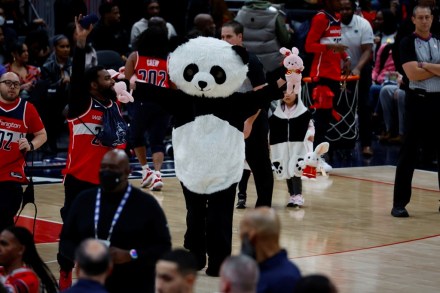
It’s near the witching hour as the wolves begin to howl, the Tasmanian devil spins itself into a frenzy, and the red-eyed tree frog blinks into glass. The zoo is oddly quiet as US commandos (trained in zoology) scale the walls and deploy a well-placed and tiny explosive gum inside the lock to pop open the enclosure. The sleepy giant simply rolls over with dreams of bamboo and blasé dancing in its head. A bearded captain pulls out a black sack and pulls it over the animal’s head as they tranquilize the heavy sleeper — the panda rendition is complete. That’s right, I am proposing kidnapping the American domiciled pandas to expedite an end to the US-China trade war.

pandas