Catholicism

Downside’s downfall: the dissolution of a monastery

The monks of Downside Abbey in Somerset elected a new abbot last Thursday, according to sixth-century rules laid down by St Benedict. The next day, they sent an email notification saying they had voted ‘to make a new start and to seek a new place to live’. It was a shock to those who know the place. The monks will leave behind a beautiful abbey church built in the Gothic Revival style — its 166ft tower visible for miles around — a monastery and cloisters, the largest monastic library in Britain and a grand-looking public school with more than 300 pupils. It’s as if a piece of English Catholicism, like a decaying chunk of church masonry, has fallen away. But it has been a long time coming.

How the Catholic church betrayed the dying

Of all the sad and surreal things to happen in the past few months, the Catholic church’s decision to abandon the dying was, for me, the worst. The Church of England abandoned its churches, forbidding first congregants then priests from setting foot in them, making it clear that in fact it actively dislikes church buildings. But the Catholic church in England betrayed the people who needed it most: the men and women who found themselves in the awful eye of the storm, dying of Covid-19 without family and, as it turned out, without even the possibility of a priest.

Why are musicologists so indifferent to their subjects’ love lives?

People often say that the battle for male gay rights has been won, at least in the West, and that may be true. But the drag of the past is still great, and I can think of only two major works between classical and recent times that celebrate same-sex love openly: Shakespeare’s sonnets and Oscar Wilde’s The Picture of Dorian Gray. Light began to break through after the Great War, but largely for fellow insiders. Auden and Isherwood were timid in what they published in their prime. Proust did gay, but stuck to sordid. Only Gide spoke out positively in Corydon, but the journals are almost mute on his sex life. It took Genet, Burroughs and Warhol to place a bomb under the whole culture-wide taboo and proclaim the news: that males could be magically sexy to other males.

Getting coronavirus does not bring clarity

I had thought that actually getting the coronavirus would bring clarity — that there would be some satisfaction in meeting the enemy, feeling its spectral hands around my lungs. No such luck. Uncertainty is the hallmark of Covid-19. Even its origins are murky: wet markets or the Wuhan Centre for Disease Control? Who knows, and who would ever believe the Chinese government anyway? When you’ve got it, the sense of medieval unknowing only deepens. Is this definitely it? Will it get worse? Will it come back? My version of the virus began with a nasty headache and a grubby feeling of unease, after which I threw up on the bathroom floor. ‘That’s disgusting, Mum,’ said my four-year-old son, handing me a towel with a look of patronising distaste.

Why I changed my mind about Catholicism

I grew up in a traditional English family, surrounded by cousins, chivvied by aunts, presided over by my grandmother, who insisted on Sunday church. We weren’t religious but Anglicanism (of a 19th-century sort) was in the air. We read the Revd Charles Kingsley’s Water Babies, C.S. Lewis’s Narnia books and if I thought about Jesus it was in an English setting. I imagined him barefoot walking through fields, rescuing the lambs that had fallen into cattle grids. Our family viewed Catholicism with suspicion. For us it was voodoo: foreign and crowded with unnecessary intercessors.

Lead astray

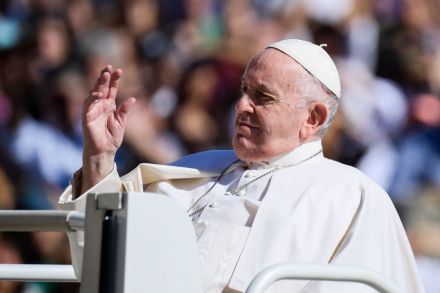
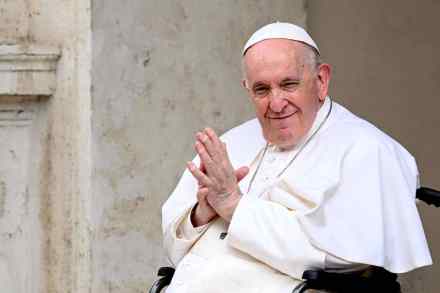
Is the pope a Catholic? You have to wonder. In the old days, a pope’s remit was modest: infallible, but only in the vanishingly rare cases when he pronounced on matters of faith and morals concerning the whole church. But even at their most bombastic and badly behaved, earlier popes would have hesitated to do what nice Pope Francis has done, which is to approve changes in the liturgy which amount to rewriting the Lord’s Prayer. That bit that says ‘Lead us not into temptation, but deliver us from evil’ is, for Pope Francis, a bad translation. ‘It speaks of a God who induces temptation,’ he told Italian TV.  ‘I am the one who falls. It’s not him pushing me into temptation to then see how I fall. No. A father does not do this.

Pope Francis is wrong to rewrite the Lord’s Prayer

Is the Pope a Catholic? You have to wonder. In the old days, a pope’s remit was modest: infallible, but only in the vanishingly rare cases when he pronounced on matters of faith and morals concerning the whole Church. But even at their most bombastic and badly behaved, earlier popes would have hesitated to do what nice Pope Francis has done, which is to approve changes in the liturgy which amount to rewriting the Lord’s Prayer. That bit that says ‘Lead us not into temptation, but deliver us from evil’ is, for Pope Francis, a bad translation. ‘It speaks of a God who induces temptation,’ he told Italian TV. ‘I am the one who falls. It’s not him pushing me into temptation to then see how I have fallen.

The Spectator Podcast: Easter special

Earlier this week the world watched in horror as the Notre Dame went up in flames. Although the roof and its spire were lost, the main body of the cathedral survived. So did most of its holy artefacts, and the gleaming, golden cross above the altar – which graces this week’s magazine cover. The outpouring of grief and sympathy around the world – from Christians and atheists alike – showed how beloved the Notre Dame is as a historical and architectural icon. However, Damian Thompson, Spectator Associate Editor and host of the Holy Smoke Podcast, says we must not forget that the Notre Dame is primarily a  Catholic place of worship.

Catholicism isn’t a pick ‘n’ mix – politicians like Andrew Cuomo must stop seeing it as such

I’m fairly certain the Pope’s a Catholic but Andrew Cuomo is anyone’s guess. Barely had the Holy Father revised Church teaching to declare capital punishment ‘inadmissible’ than the New York Governor tweeted this: https://twitter.com/NYGovCuomo/status/1025026592479879170 The scion of the Cuomo dynasty — the Kennedys remade for radio — is battling Sex and the City star turned progressive heroine Cynthia Nixon for the Democrat nomination ahead of November’s gubernatorial election. Some tacking left never hurt anyone in a New York Democrat primary but, beyond that, this is pure gesture. The state appeals court struck down New York’s death penalty statute in 2004 and the execution chamber was shuttered in 2008.

Is Piers Morgan the only Catholic offended by the Met Gala?

It will come as no surprise that something in the news has Piers Morgan deeply troubled. For the past two days, Morgan has been incandescent over the Met Gala and its dress code. In a column for MailOnline he claims that, as a Catholic, he has become a victim of cultural appropriation due to fancy dress outfits worn to a party by celebrities. The Gala, a fixture of the New York social season at the Metropolitan Museum of Art, is well known for the theme it sets, and this year it was ‘Heavenly Bodies’ - inspired by the Roman Catholic Church. The Gala was held to launch an exhibition of the same name. Dozens of items of religious clothing have been allowed out of the Vatican Archives to be seen by the public for the first time.

Catholics can cope with ‘cultural appropriation’

The Met Gala is among the most iconic nights of the fashion calendar. Every year, A-list celebrities flock to New York City to attend the annual fundraiser for the Metropolitan Museum of Art’s Costume Institute. There’s always a theme. This year it was, 'Heavenly Bodies: Fashion and the Catholic Imagination.' Getting into the spirit of things, Rihanna took to the red carpet with a jewel-encrusted papal hat and robe, showing off lots of boob and leg. Olivia Munn wore a gold and sparkly 'chainmail dress' – inspired by the crusades, naturally. Actress Lena Waithe (don’t worry, I hadn’t heard of her either) showed up in a rainbow pride cape; a statement which, I'm sure, is considered quite radical in certain circles.

Catholic fashion is in vogue – but spare us the rosary beads!

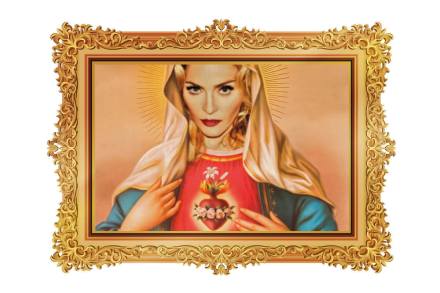
Which was your favourite outfit then, for the Met Gala on the theme of Heavenly Bodies – Catholicism and Fashion – the images of which are everywhere right now? Madonna was true to form with a heavy black mantilla, channelling a Sicilian widow, and Anna Wintour’s dress was, apparently, Cardinal Chanel – though if I may be pedantic, a Cardinal’s colour is scarlet, not white (that’s for the Pope). But Elon Musk, the Tesla man, was pretty good with a kind of reverse clerical suit…white, with a black dogcollar. Frankly, an awful lot of people missed the point of the thing, the theme being Sunday best, loosely interpreted as going to church crossed with fancy dress, crossed with the highest clerical camp.

The Little Matchstick that ignited civil war

Spanish restaurants in Germany are relatively rare, but not nearly as rare as biographies of General Franco. So when the Spanish-born waiter in Bonn’s Casa Pepe approached my table, it struck me as an opportune moment to solicit his opinion about the former dictator. ‘No sé mucho,’ he shrugged. ‘I don’t know a whole lot.’ Just imagine it: an unexceptional army cadet becomes a general in his mid- thirties, leads the Nationalists to victory in a bloody civil war, wields absolute power for close to three decades, and then, barely a generation later, his memory is reduced to an indifferent shrug. The contrast with Germany’s treatment of its totalitarian past could not be greater. Students are compelled to study every angle of the Third Reich.

Gerry and the peacemakers

When I recently asked a sardonic Northern Irish friend what historical figures Gerry Adams resembled, the tasteless reply came back: ‘A mixture of Jimmy Savile and Oswald Mosley.’ There are elements of both archetypes in this new unauthorised portrait, but it stops short of going the full distance. Perhaps we should not be surprised. The Savile reference is to the grisly theme of child abuse in Adams’s family, leading to his brother’s conviction for offences against his own daughter, and the revelation that Adams père had also sexually abused his children. Though no such accusation attaches to the Sinn Fein leader, these episodes have affected him politically as well as personally.

A Muslim’s insights into Christianity

I’m not a critic, I’m an enthusiast. And when you are an enthusiast you need to try your best to keep it in check when writing reviews, just in case your prodigious levels of excitement and, well, enthusiasm, threaten to overwhelm readers and only succeed in putting them off. Because people generally need a bit of room — to create some distance, establish a tiny bit of breathing space — in order to make their own considered decisions about the liable goodness or badness of a thing. But shucks to all of that.

Can leading politicians get away with opposing abortion and gay marriage?

What can politicians with socially conservative beliefs expect from public life? Is there now a faith glass ceiling under which lurks would-be party leaders whose views on abortion and homosexuality are just too unpalatable for voters? If there is one, Jacob Rees-Mogg might have a good chance of telling us where it is located. The alleged contender for the Tory leadership told Good Morning Britain today that abortion was ‘morally indefensible’ in any circumstances and that he opposed same-sex marriage because ‘marriage is a sacrament and the decision of what is a sacrament lies with the Church not with Parliament’. William Hill has already cut the North East Somerset MP’s odds from 5/1 to 7/1.

Cardinal Cormac Murphy-O’Connor found that Catholics have to be outsiders in Britain

Among yesterday's tributes to Cardinal Cormac Murphy-O'Connor, one stood out. It came not from a churchman, but from one of Britain's most divisive politicians. Tony Blair described the late cardinal as a ‘wonderful advertisement’ for Christianity. Now, you might expect a well-known Catholic to say something like that. Some reports did, after all, present Murphy-O'Connor as the man who ‘converted’ the New Labour leader. But while it's true that the cardinal received Blair into the Catholic Church months after the latter resigned as prime minister, their relationship was complicated. Together they helped to decide the place of Catholics in Britain today – and not in an entirely happy way.

Is the Church of England dying in the countryside?

English country churches: everyone loves them, no one wants to actually pray in them. 'People have a massive sentimental attachment to the buildings, but they don't actually come to services,' says my guest on this week's Holy Smoke podcast, the Rev Ravi Holy. He's a country vicar in Wye, Kent, where he regularly attracts 150 worshippers in his main church – but, in the smaller churches he looks after, he's sometime confronted by just six people. Do listen to our incredibly frank conversation. Ravi is an ex-Pentecostalist, a liberal Catholic 'post-evangelical' who believes in the Resurrection but isn't too bothered if some of his flock don't. He's even conducted a funeral for an atheist with no reference to God in the service. (I put him on the spot about this.

By Patten or design?

My old friend Richard Ingrams was said always to write The Spectator’s television reviews sitting in the next-door room to the TV set. I’m more assiduous: I have actually read this book under review. And Chris Patten’s latest memoir is a very enjoyable read — the account of a life of considerable privilege. Born into a middle-class family in suburban London, Patten won an exhibition to Balliol before — after a brief dalliance with US politics — he became a Conservative apparatchik and, in due course, an MP.

Towering tree of God

In his biography of Gaudí, published in 2001, Gijs van Hensbergen opined that ‘we should never try to finish the Sagrada Família, otherwise we undo the web of power that is elaborately woven into this mysterious religious spell’. But he now appears to take the view that it should, and will, be finished by 2026, the centenary of Gaudí’s death (though the sculpted decoration will take considerably longer to complete). If indeed this extraordinary building is ‘topped out’ in nine years’ time, it will have taken 144 years to build, which is a good deal less than many medieval cathedrals (Toledo’s took more than 250 years).