Bruce springsteen

Can you put on a ‘nonpartisan’ concert in Trump’s Washington?

From our US edition

Cockburn steeled himself Wednesday after a press release from the Trump administration’s “Freedom 250” plopped into his inbox. The missive promised a line-up of “Star-Studded Entertainment” for the Great American State Fair, set to take place on the National Mall for three weeks over the nation’s semiquincentennial. Nine “music icons” would perform for free, including the Commodores, Flo Rida and a smattering of one-hit wonders. Two days later and the schedule is in tatters: eight of the nine acts have withdrawn following fan backlash, with critics branding the event “DC’s very own Fyre Fest.” Only Flo Rida remains.

concert washington

Anyone irritated by Springsteen’s speeches hasn’t been paying attention

No one who went to see Bruce Springsteen’s Broadway residency a few years back came away disappointed because they knew what they were getting: a tightly scripted show, in which there was more speech than music. The country star Eric Church – who made his name with a single called ‘Springsteen’ – appeared to have been taking notes, for that was the model for his ‘residency’ at the Albert Hall. All that he lacked was the tight script – and Springsteen’s charm and charisma. It was, the MC told us, Church’s first time in the UK in eight years, but the place was horribly undersold, the top tier almost empty and spaces all around the stalls.

U2’s childlike response to world affairs

Whither the protest song in 2026? In January 1970, John Lennon wrote and recorded ‘Instant Karma!’ in a single day and had it in the shops a little over a week later – no mean feat given the mechanics of physical record production at the time. Nowadays, when the practicalities of releasing music are infinitely more streamlined, it has never been easier for artists to react to current events within moments of them occurring. And with the febrile news churn packing a year’s worth of drama into each week, there is certainly no shortage of material.

Springsteen’s Born to Run turns 50

From our US edition

Bruce Springsteen chuckled when I asked him about the making of Born to Run. “I was just a kid in my 20s trying to keep a record deal together – there was nothing more to it than that,” he told me. One way to see the Springsteen of the summer 1975, just before Born to Run released, is to imagine a wispy-bearded, 25-year-old man hanging around a beachfront New Jersey bar, telling you about his life. He relates slightly improbable tales of having attended a local Catholic high school, where one of the supervising nuns expressed her misgivings about his scholastic performance by stuffing him upside down in a garbage can in the classroom.

The art of the anti-love song

Tracey Thorn released an album in 2010 titled Love and Its Opposite. When it comes to songwriting, it’s the ‘opposite’ that tends to throw up the more compelling discourse. The anti-love song has been a staple in popular music since Elvis’s baby left him and he wandered off to ‘Heartbreak Hotel’. Presley is a useful weathervane: if asked to pick between the two, no sentient listener would choose the soppy slobbering of ‘(Let Me Be Your) Teddy Bear’ over the snarl and bite of ‘Hound Dog’. Pop is sunshine on the surface, but at heart it’s closer to Orwell’s Two Minutes Hate. As Tina Turner once pondered, quite loudly: ‘What’s Love Got To Do With It?’ The annual rigmarole of Valentine’s Day brings this truth into particularly sharp focus.

With reference to

From our US edition

"You spend your life waiting for a moment that just don't come," sang Bruce Springsteen many moments ago. But sometimes it comes and catches you off guard. Perhaps once a decade you are gifted a sentence begging completion or a question inviting the perfect answer, and if you don’t spit out the mot juste you spend the rest of the day cursing on the staircase, pained by a bad case of l’esprit de l’escalier. (And that about exhausts my C-minus college French.) You never know when or wherefrom these pitches are coming. I doubt that even Oscar Wilde could hit much above .500 in this league. I’m probably closer to Cornel Wilde, but I have driven a few into the gaps. Let me explain. Last spring I was toting a garden-shop tray that my wife was filling with plants.

reference

The fascinating mechanics of striking a deal

If you wish to know how to become a master negotiator, a formidable body of books will now offer to train you in that art, but I’m not entirely sure it can be taught. The greatest natural asset, I suppose, is the ability to enjoy the game: the performative mulling, tough-talking, buttering-up, pitching of curve balls and – when absolutely necessary – flamboyant execution of a real or bluff exit. Yet even for those of us who are clumsy and reluctant hagglers, the mechanics of striking a deal can be fascinating. This is the stuff of the Dealcraft podcast, hosted by Jim Sebenius, a professor of the Harvard Business School, and himself a high-flying negotiator.

Curb Your Enthusiasm’s finale was a mission statement for the show

From our US edition

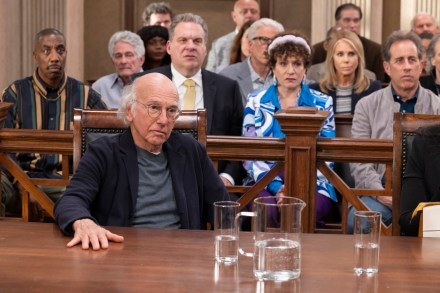
And so, after twelve seasons and twenty-four years, Larry David’s Curb Your Enthusiasm has finally come to an end. Opinion online has been divided as to the effectiveness of the ending, in which, spoilers, Larry is placed on trial in Atlanta for inadvertently breaking the Electoral Integrity Act by offering a voter a bottle of water in the line; a rare act of kindness he suffers for. It was an intentionally low-key ending that can nonetheless allow for callbacks to early episodes and brief returning cameos from the guest stars who have somehow been maligned, offended or otherwise dismayed by Larry’s antisocial antics in the previous quarter-century.

curb your enthusiasm

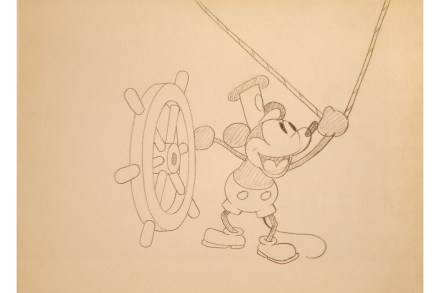
Copyright chaos grows deeper by the minute

The law doth punish man or woman That steals the goose from off the common But lets the greater felon loose Who steals the common from the goose The authors of a fascinating new look at the patchwork chaos called copyright begin their book with this epigraph from an ancient English protest song against fencing, and thereby privatising, common land. David Bellos, a comparative literature professor at Princeton University and winner of the first International Booker Prize in 2005 for his translations of Ismail Kadare, and Alexandre Montagu, a lawyer specialising in intellectual property and new media law, have written a timely history of a ‘relatively simple idea – that authors have rights in the works they create’.

Age is catching up with our much-beloved musicians

From our US edition

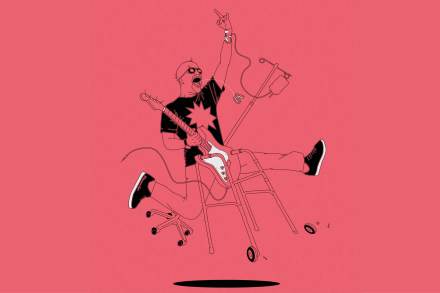
On the Who’s 1965 single “My Generation,” the band’s twenty-one-year-old lead singer Roger Daltrey half-sang, half-sneered, “Hope I die before I get old.” The song, written by the then-twenty-year-old Peter Townshend, has remained a classic for nearly sixty years, boasting both a fantastic tune and unforgettable lyrics. Yet even as the Who continue to tour the world — often in the company of that invaluable accessory for any self-regarding rock band, a full orchestra — it is now with self-aware amusement that the seventy-nine-year-old Daltrey and seventy-eight-year-old Townshend perform it.

musicians

RFK goes it alone in Philadelphia

From our US edition

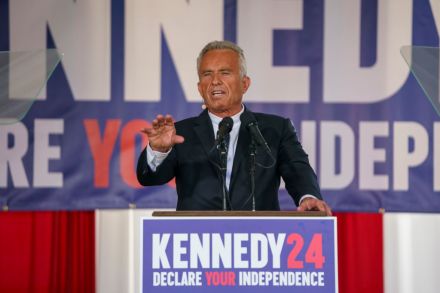
Had you blindfolded me yesterday morning, led me to the front lawn of the National Constitution Center in Philadelphia, removed my blinder and asked me to guess where we were, I would have said, “A James Taylor benefit concert for NPR.” In the crowd on this sunny fall day was a heavy contingent of the boomer delegation, of various stripes and checks. There were even some traditional tweed, and, with blazers out in full force, on both men and women, paired mostly with denim — though late-season red chinos and season-rushing corduroys were on display, too — and invariably some statement eyewear, leather dress shoes, and baseball caps keeping flowy silver hair tamed and sun-spotted skin safe. It was plain from their collective style that this group was at least self-aware.

rfk

Intoxicating: Bruce Springsteen, at BST Hyde Park, reviewed

Seven years ago, I asked Bruce Springsteen what he meant when he talked of the covenant between himself and his audience. It was a long, thoughtful and thorough answer, and when I transcribed it, I realised he would have won Just a Minute, so clear was his reply. Part of what he said was this: ‘I have built up the skills to be able to provide, under the right conditions, a certain transcendent evening, hopefully an evening you’ll remember when you go home. Not that you’ll just remember it was a good concert, but you’ll remember the possibilities the evening laid out in front of you, as far as where you could take your life, or how you’re thinking about your friends, or your wife, or your girlfriend, or your best pal, or your job, your work, what you want to do with your life.

Barack Obama will make you cringe: Renegades: Born in the USA reviewed

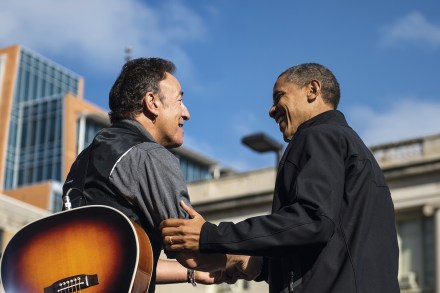
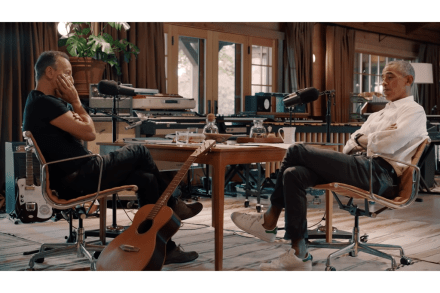
Barack Obama wants the world to know how much he loves singing. In his new podcast, which takes the form of a series of conversations with Bruce Springsteen, he’s rarely without a tune on his lips. ‘Further on up the road…/ you been laughing, pretty baby…’ A shower-singer, a bedroom warbler, an Air Force One air guitarist with an okay voice, the former president is proof that you really can be embarrassing without feeling an ounce of embarrassment. Oh, to have seen his daughters’ faces when he broke into ‘Let’s Stay Together’ in front of Al Green. The sound team at the fundraiser in Harlem urged him to do it, he tells Springsteen, but no one’s buying it.

The Springsteen-Obama podcast is rambling and sloppily edited

From our US edition

I was not born in the USA. But I am, technically, American — or at least, one half of me is. My mother hails from Ohio, where some of my family still live today. As a kid, I’d jet into the States on my American passport and back out again on my British one. This strange part-tourist part-citizen relationship ended up making me doubly nostalgic for the mirage of America. So for all my English cynicism, when I heard about Renegades, the new podcast by Barack Obama and Bruce Springsteen, I actually thought it sounded quite appealing. I’m a sucker for what you might call Obamaganda or Springspeak — that kind of folksy, wistful, idealistic American rhetoric, the vocabulary of which consists largely of better angels, bridges, and melting pots.

bruce springsteen barack obama

The triumph of bedroom pop

I must have been about 16 when I got my first Portastudio. The compact home recording unit had first been introduced by Japanese electronics firm Teac in 1979, offering unprecedented multitrack dubbing to the bed-bound amateur musician. For a little less than $1,000, you could record four separate tracks of instrumentation — as much as the Beatles had when making Sgt. Pepper — on an ordinary cassette tape. By the time I got my teenage hands on a four-track machine of my own, that price had come down by an order of magnitude. It was a chunky little unit in pigeon blue with just two microphone sockets and a small handful of mixing dials for volume control and stereo panning.

Barack Obama’s music taste remains painfully mainstream

From our US edition

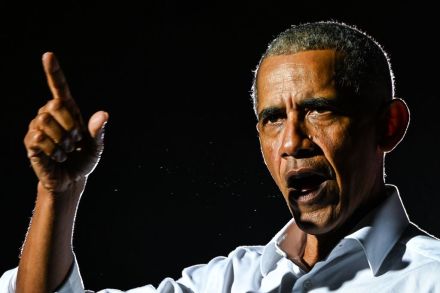
Like Moses descending from the heights of Mount Sinai, former president and current prophet Barack Obama has today delivered his latest tome to the masses. A Promised Land, his fourth book, is a 'riveting, deeply personal account of history in the making — from the president who inspired us to believe in the power of democracy'. Or so his publisher says. Cockburn, old-fashioned fellow that he is, has believed in the power of democracy for longer than 12 years. To mark the book's publication, Obama has summoned one of the spirits of his bygone era: he's tweeted out a playlist. 'Music has always played an important role in my life — and that was especially true during my presidency,' he writes.

barack obama

Meet Dion, one of the last living links to the earliest days of rock ’n’ roll

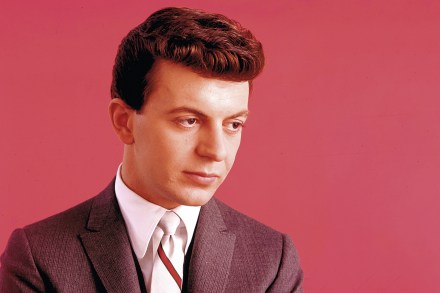
Only two of the Beatles’ pop contemporaries are depicted on the cover of Sgt. Pepper’s Lonely Hearts Club Band. One is Bob Dylan. The other is Dion DiMucci. In a pleasing third-act twist, Dylan contributes the liner notes to Dion’s new album Blues With Friends — an act of deference that the recipient is still processing. ‘I asked him, I didn’t know if he had the time, but he sent me back those paragraphs and said that I knew how to write a song.’ He whistles. ‘That’s from a Nobel Prize winner. I thought, I’ll take it, I’ll take it!’ So he should. Dion — like Kylie, a single moniker suffices — is one of the last living links to the early days of street-corner rock ’n’ roll.

Steven Van Zandt: Teachers make great audiences, probably because they never get out

From our US edition

I’m at the airport in Salt Lake City, waiting for the snow to stop so we can get up to Vancouver. I’ve been on the road with the Disciples of Soul since a month before Thanksgiving. This tour, the Soulfire Teachers Solidarity Tour, has been going on and off for a year and a half now, and it ends on December 16. The road is a lifestyle I’ve gotten used to. I miss my wife, I miss my dog. But we don’t go out so long, three or four weeks at the most before going back home. It’s not like the old days, the we’d go out for a year, and stay out. It’s much more civilized now. The tour promotes my music-based school curriculum, TeachRock.org.

steven van zandt