Britain

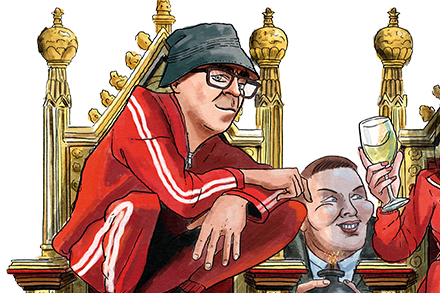
Why America’s democracy needs the British monarchy

Perfect spring sunshine beamed down on King Charles III and Queen Camilla as they slowly made their way down the sloping lawn of the British Embassy in Washington this week. None of the hundreds of eager Americans gathered at the Embassy’s garden party had ever seen a British king in the nation’s capital. The last visit was in 1939, by King George VI, when a similar garden party took place in the shadow of the gathering storm in Europe.  Perhaps the King can perform a service even beyond that of repairing transatlantic ties Yet if the assembled politicians, media celebrities, business leaders and occasional historian nibbling on finger sandwiches and

The King’s speech: disagreement should not become divorce

The King’s address to Congress was a rare and authoritative statement of national and international interest, delivered from a position no elected politician can claim. Before a joint session marking the 250th anniversary of American independence, the monarch spoke of an alliance forged in disagreement – yet repeatedly renewed by deeper common ground. He recalled the shared democratic, legal and social traditions that have pulled Britain and the United States back together after even the sharpest ruptures. He spoke of defense and intelligence ties measured not in years but in decades, invoked the Royal Navy service of his own past, and named the live tests now facing both nations: Ukraine,

King Charles

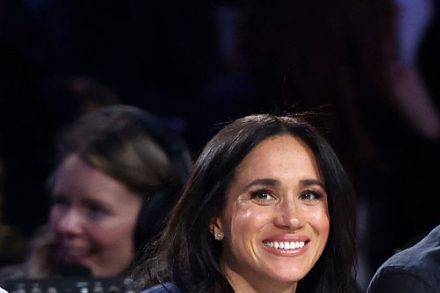
What Harry and Meghan don’t get about royal visits

King Charles III’s state visit to Washington this week is the monarchy executing its core diplomatic function with precision and dignity. In Donald Trump’s Washington, an invitation to an event with the British monarch remains the most sought-after in the city. By stark contrast, the King’s son and daughter-in-law careen around the globe representing no one but themselves. They dress up as royals in a sustained exercise in self-promotion and profiteering that repels observers and belittles the very institution that gave them their platform. One upholds the Crown’s purpose, while the other commodifies it. The Sussexes’ grift cheapens the Crown’s reputation and insults the public’s intelligence The King and Queen

Why America still longs for monarchy

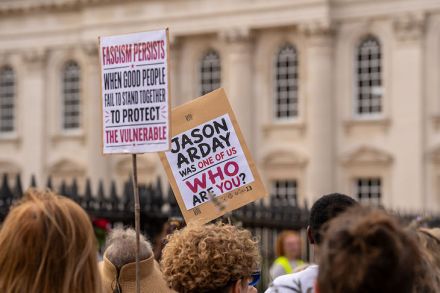
Even when he’s not visiting the United States, King Charles III might occasionally daydream about what his reign would be like today if things had worked out differently 250 years ago. The King is not, of course, the head of government anywhere nowadays, and were Charles the king of America, he wouldn’t necessarily wield any more power here than he does in modern Britain. Yet there’s reason to think he possibly could – for the truth is, Americans love monarchy at least as much as they fear it, and they love the royal family, too. Ironically for the “No Kings” protesters who despise Donald Trump, the only reason we have

Iran’s strike exposes the danger of the Chagos handover

In a sharp escalation, Iran attempted to strike the joint UK-US base Diego Garcia with two intermediate-range ballistic missiles. Both failed: one broke apart in flight and the other was targeted by an SM-3 interceptor from an American warship. The base was left untouched. The significance, however, lies less in the failure than in the fact that the attempt was made at all, which has expanded the scope of the existing conflict zone beyond all expectations. Diego Garcia forms part of the Chagos Archipelago – sovereign British territory – and is one of the most critical platforms for American power projection anywhere on earth. It functions as an unsinkable aircraft

British politics is turning French

An editorial in Friday’s Le Figaro (France’s equivalent to the New York Times) is headlined “Mélenchon or the moral suicide of the left.” The same statement could be applied to Britain’s Green party. Their open pandering to the Muslim vote in Thursday’s Gorton & Denton by-election was arguably a new low in British politics. It wasn’t just Israel and so-called Islamophobes who were targeted (in Urdu) in their campaign leaflets and videos, so was India. Le Figaro’s scathing critique of the left-wing populist leader Jean-Luc Melenchon was written as a reaction to his visit to Lyon on Thursday evening. A fortnight earlier 23-year-old Quentin Deranque had been kicked to death

I burnt a Quran. Now I may have to flee Britain

My name is Hamit Coskun and last year I was convicted in a British court of religiously aggravated public order offense. My “crime”? Burning a copy of the Quran outside the Turkish consulate in London. Moments later, I was attacked in full view of the street by a man. I was hospitalized. Then I was arrested and convicted in Westminster Magistrates Court. I managed to get that conviction overturned, with the help of the Free Speech Union and the National Secular Society, but now the Crown Prosecution Service is appealing my acquittal, with the case being heard tomorrow in the High Court. Now I am in discussions with the White House

Jimmy Lai cannot be left to die in jail

The decision to sentence Jimmy Lai to 20 years in jail in Hong Kong is no surprise, but it is no less shocking or heartbreaking. For his family, especially his courageous wife Teresa, son Sebastien and daughter Claire, who have advocated so tirelessly for their father over the past five years, one can only imagine the pain and grief they feel. Sebastien and Claire have walked the corridors of power in Washington, DC, London, Ottawa, Brussels, Paris and beyond, and sat in television studios for hour after hour, seemingly to no avail. For Hong Kong, this is yet another dark day, yet another nail in the coffin of the city’s

lai

The Epstein files have triggered a crisis in Britain

It is not just in Washington that the Epstein files continue to dominate. In Westminster, the political reverberations of the Department of Justice’s investigation are threatening to bring down the British government. At the center of the drama is Peter Mandelson: a former Tony Blair aide who served, until recently, as Our Man in DC. Keir Starmer, the Labour Prime Minister, named him British ambassador to America last year, reasoning that the oleaginous uber-networker could be the nation’s “Trump-whisperer.” But the DoJ’s initial email dump in September exposed the closeness of his relationship with Epstein, with whom he shared a love of power and money. It was revealed that Mandelson

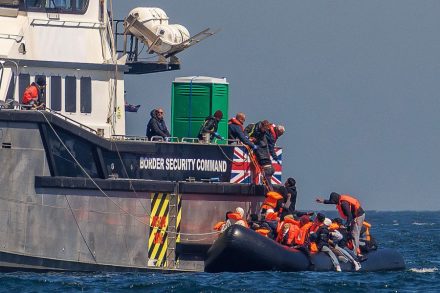
Brits are being kept in the dark about asylum crime

As long as Britain’s official orthodoxy remains that diversity is its “strength,” will the authorities ever be straight with the public about the realities of migration-linked crime? This week, a Pakistani national, Sheraz Malik, was found guilty of two counts of raping an 18-year-old girl in Nottinghamshire. The woman had been drinking at a park in Sutton-in-Ashfield when she was attacked by Malik. She had already been taken to an isolated area and raped by another man he was with, who has yet to be identified. Malik followed proceedings at Birmingham Crown Court via a Pashto interpreter. These crimes are sickening enough in themselves. But the secrecy raises a further troubling

asylum

Britain’s X crackdown is no joke

The internet suddenly went down in Iran last night, as courageous Iranians continued to rise up against the Ayatollah. The UK government was apparently inspired. Not by the rebels, whose plight the Prime Minister has remained remarkably quiet about – but by the mullahs’ digital crackdown. Call me a conspiracy loon, but I dare say Labour’s ire for X isn’t simply about the site’s supposedly insufficient safeguarding policies Britain’s Labour party has issued its most serious threat yet to social-media giant X – whose owner, Elon Musk, has become this rudderless government’s go-to bogeyman. The platform could be banned in Britain, Downing Street sources let it be known, if it

What Trump should learn from the British empire

One remarkable thing about Donald Trump’s adventure in Venezuela is just how old-fashioned it is. It is a world away from George W. Bush’s neoconservative efforts at nation-building in Iraq and Afghanistan. There is little attempt to justify the arrest of Nicolás Maduro in terms of the human rights of Venezuelan citizens. Little attention appears to have been paid as to how the country will now be governed. Nor have we heard much more about the drugs crimes of Maduro, other than the admission that he perhaps isn’t, after all, quite the lynchpin of an international criminal racket (for all his other offenses against his own people). With the seizure

Trump