Brexit

Will Theresa May's Brexit deal end up in the dustbin?

Because Theresa May’s Brexit deal has been so long in the coming – almost two and a half years – and has been so comprehensively trailed and leaked, yesterday’s formal ratification of the terms of our departure from the EU and the shape of our possible future relationship with the EU feels like the mother of all anti-climaxes. But cynicism and lethargy are to be resisted: that ratification really matters. Because because – at last we have THE DEAL. Until yesterday, everything about Brexit was presumption, speculation, rumour and hypothesis. Finally we know what Brexit means to a Prime Minister who had no other job but to find out what

Jacob Rees-Mogg: Changing strategy means changing leader

‘Away with the cant of “measures not men”! — the idle supposition that it is the harness and not the horses that draw the chariot along. No, Sir, if the comparison must be made, if the distinction must be taken, men are everything, measures comparatively nothing.’ George Canning said this in 1801 and recent events remind us that he was right. In the end the only way to change the policy is to change the person, as the individual determines the direction and is rarely willing to try a different route. As I have known this quotation for decades, it was naïve of me to expect the Prime Minister to

No10: a response to Martin Howe QC

In this week’s Spectator, Martin Howe QC gives the legal verdict on Theresa May’s Brexit deal, and finds: ‘This is not a bad deal. It is an atrocious deal.’ His analysis was so widely circulated amongst MPs that No. 10 has written a response to it. For more on Theresa May’s bad deal, here’s Mr Steerpike’s list of the top 40 horrors lurking in it. Claim Once the Protocol is in force, the UK cannot leave it except by ‘joint’ decision of the UK and the EU. This gives the EU a right of veto over the UK’s exit. In agreeing to this clause, the government has caved in over

Can the UK cancel Brexit? We’re about to find out

While it might have garnered less attention than the political drama around the withdrawal agreement, next week’s European Court of Justice decision on whether the UK can unilaterally revoke Article 50 – that is, cancel Brexit – could have serious ramifications. A bit of background on the case: in November 2017, a group of Scottish MPs, MEPs and MSPs – working with the anti-Brexit barrister Jolyon Maugham QC – asked the Scottish Advocate General to clarify whether the UK government had the right to revoke Article 50 if it wanted to. Ignoring the objections of the government – which insisted that, since Brexit was going ahead, there was no need

Is the backstop vulnerable to challenge under human rights law?

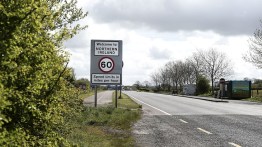
The most contentious part of Theresa May’s Brexit deal are the Northern Ireland specific provisions of the backstop. These would see various EU rules and regulations apply in Northern Ireland even after the UK has left the EU. If they came into force, they would create—in some areas—a kind of regulatory border in the Irish Sea. But, as I say in The Sun this morning, these provisions might be illegal under European Human Rights law. A case in 1999 brought against the UK government, the Matthews case, at the European Court of Human Rights established that people have a right to vote in elections to the parliaments that set their

Will May's Brexit deal stop us making jokes about Juncker?

Article 129 (3) of the withdrawal agreement provides that ‘the United Kingdom shall refrain, during the transition period, from any action or initiative which is likely to be prejudicial to the Union’s interests, in particular in the framework of any international organisation, agency, conference or forum of which the United Kingdom is a party in its own right.’ What does that mean? That we are not free at the UN Security Council to oppose any item of EU foreign policy? That we cannot cut our rate of VAT? That we must not make jokes about Jean-Claude Juncker? Needless to say, there is no reciprocal obligation on the EU to do

Supporters of a second referendum should be careful what they wish for

The campaign for a second referendum continues to grow. On the Conservative side, nearly a dozen Tory MPs now support a ‘People’s Vote’ and if Theresa May’s deal gets voted down, this number is likely to rise further. Among Labour MPs, support is even greater; if it wasn’t for Jeremy Corbyn and John McDonnell, it seems safe to say that a second vote would almost certainly be Labour party policy by now, with the SNP and the Lib Dems also on board with the idea. But a question remains: have those calling for a second vote really thought about the possible consequences? It is clear that many of those campaigning for another referendum

Diane Abbott's warning to second referendum supporters

Diane Abbott has a stark warning for those clamouring for a second referendum: be careful what you wish for. The Labour MP’s warning won’t go down well with those from the ‘People’s Vote’ campaign, who desperately need the support of the Labour party if their wish is to come true. On Nick Robinson’s podcast, Abbott was asked what would happen if another vote took place. Here’s what she said: ‘My view is that if we had a second referendum tomorrow, Leave would win again. And not only would Leave win again, but Leave voters would say: what didn’t you understand about Leave the first time?’ Mr S thinks Abbott is

Watch: Theresa May dodges Brexit deal question

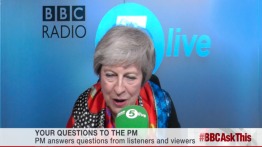
Theresa May is back on the radio flogging her Brexit deal to a sceptical public. Unsurprisingly, few of those who phoned in to BBC 5 Live seemed impressed by what the Prime Minister had to offer. One listener asked the PM to tell him, without any ‘political waffle’, whether her deal is better than staying in the EU. But May’s bid to do just that didn’t exactly work out to plan. At the end of May’s minute-long answer, the host Emma Barnett asked for the caller’s verdict: EB: ‘Michael, did the PM answer your question?’ Caller: ‘No’ Emma Barnett ended the interview by asking May how she and Philip would

Dominic Raab is just saying what a lot of Leave MPs are thinking

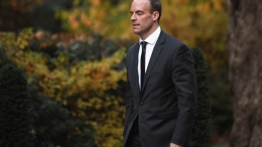
After resigning as Brexit Secretary over Theresa May’s proposed deal, Dominic Raab has restyled himself as one of the more loyal of the Brexiteer rebels. He used an appearance on the Andrew Marr show over the weekend to say that although he would note vote for the deal as it currently stands, he still backed Theresa May as Prime Minister and would vote for her in any confidence vote. This morning he is upped the ante, however, with an interview on the Today programme. Discussing both the withdrawal agreement and the future framework (which was set out on Thursday), Raab was frank in his assessment. The Tory Brexiteer said he

Letters | 22 November 2018

There is no ‘good’ Brexit Sir: David Harper claims to know ‘what the population of the UK voted for’ in the EU referendum (Letters, 17 November), yet no definitive Brexit plan was ever offered by the Leavers. That is one reason why the government, having prematurely triggered Article 50 and recklessly established its ‘red lines’, has been floundering in an attempt at damage limitation. Harper’s disparagement of the single market ignores the fact that any gains from new trade agreements with non-EU countries would be greatly outweighed by the costs of leaving it and would require exports to these countries to grow at a rate that is unfeasible. He refers

Barometer | 22 November 2018

Black Friday When and where did the term ‘Black Friday’ originate? — It was used to describe a collapse in financial markets on 24 September 1869, prompted by the revelation of a Wall Street conspiracy to drive up the gold price. But in modern usage it was coined by police in 1950s Philadelphia, who had all leave cancelled following Thanksgiving after an influx of shoppers and American football fans into the city centre. — In 1961 retailers in the city saw the potential to boost business by adopting the term. Another explanation is that they saw it as the day by which they would have taken sufficient revenue to ensure

The Spectator's Notes | 22 November 2018

It will be interesting to see whether the about-face of the Daily Mail on Brexit makes the slightest difference to anything. Paul Dacre was admirably consistent when he was editor and the paper did well. But on the whole, the history of the Mail is that it is happy dramatically changing sides on major issues. Under David English, for instance, it suddenly switched to Europe and Heseltine away from his earlier Thatcher-worship, and few seemed to notice. Thus, after attacking the High Court judges as enemies of the people in 2016, under Dacre, it can move effortlessly to attacking the Brexiteers as ‘preening peacocks’ etc, under Geordie Greig. So long

Portrait of the Week - 22 November 2018

Home Five pizza-eating cabinet ministers — Andrea Leadsom, Penny Mordaunt, Liam Fox, Michael Gove and Chris Grayling — put it about that Theresa May, the Prime Minister, could be persuaded to amend the draft withdrawal agreement with the EU before she signs it at a summit this Sunday. But Mrs May said that she had a deal and was determined to ‘deliver’ it. Having warned that if her Brexit withdrawal agreement was rejected Britain could end up either with no deal or no Brexit, Mrs May went off to Brussels, leaving the new Brexit Secretary, Stephen Barclay, behind. Jacob Rees-Mogg had declared that he had sent a letter to Sir

Will May's Brexit deal survive a vote in the Commons?

First things first. There has been a widespread misunderstanding of why Angela Merkel made it known yesterday that if the Brexit deal – Withdrawal Agreement and Political Declaration – wasn’t done and dusted by today, she would not be bothering to turn up in Brussels to formally ratify it on Sunday. Her conspicuous intervention was not aimed at putting pressure on Theresa May to be more emollient in the last leg of negotiations. The German Chancellor was in fact asking the likes of the Spanish premier Pedro Sanchez to stop misbehaving and causing unnecessary bother (Sanchez has been playing to a domestic audience by saying he would block any agreement

May tries to sell her Brexit plan to the Commons - with limited success

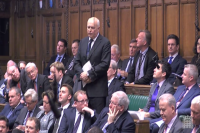
Tory MPs offered a warmer reception to Theresa May’s statement in the Commons this afternoon than they managed during yesterday’s Prime Minister’s Questions. The Prime Minister herself seemed very confident as she explained today’s political declaration to MPs. That’s about as far as you can go when looking for signs of success in this afternoon’s Commons Brexit drama. For instance, straight after the statement, we received confirmation from Iain Duncan Smith that he and other Brexiteers do still find the Brexit deal unacceptable and will kill it in the Commons. May had only minutes before praised Duncan Smith and Owen Paterson in her statement for ideas that they’d offered for

Watch: Iain Duncan Smith slams May's Brexit plan

Theresa May is in the Commons attempting to convince MPs to back her Brexit plan. But it isn’t going well. Iain Duncan Smith was particularly critical of the PM’s backstop blueprint, telling May that while he appreciated her efforts it wasn’t good enough. Here’s what he said: ‘For all of the effort and work, the reality is that this is not the withdrawal agreement, and the withdrawal agreement will make it very clear that, should we struggle with a negotiation for a free trade arrangement and not complete that process, we will fall into the Northern Ireland backstop as it exists at the moment. And that will mean we are

Brexit negotiators need to focus on our fishermen

I listen in despair to Brexiteers’ dismissals of pleas from business for a settlement that allows them to plan beyond March next year. On last Friday’s Any Questions?, Jürgen Maier — who runs the £5 billion manufacturing business that is German-owned Siemens UK, and who may be the most respected industrialist in the north of England — spoke persuasively (in the accent of his Leeds schooldays) about the ‘dramatic’ fall-off of business investment and potentially ‘catastrophic’ impact of a no-deal outcome. The response of Tory MP John Redwood was so condescending, essentially ‘well done for coming here and building a business but stop scaremongering’, that I wanted to pour a boiling kettle

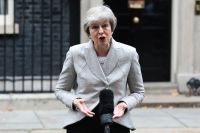
Theresa May's Downing Street Brexit statement: full text

Throughout these difficult and complex negotiations with the European Union I have had one goal in mind: to honour the vote of the British people and deliver a good Brexit deal. Last week we achieved a decisive breakthrough when we agreed with the European Commission the terms for our smooth and orderly exit from the EU. Alongside that withdrawal agreement we published an outline political declaration setting out the framework for our future relationship. Last night in Brussels, I had a good, detailed discussion with President Juncker in which I set out what was needed in that political declaration to deliver for the United Kingdom. We tasked our negotiating teams to continue