Brexit

Why a leaky Commons and a Brexit crisis are symptoms of the same problem

From our UK edition

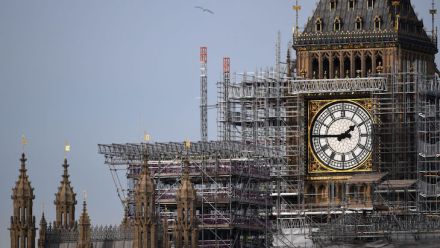
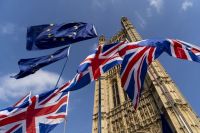
Oh look, there's water coming through the roof of the House of Commons! What a gift to those starved of metaphors for the mess that has been made of Brexit. The problem is that the water coming through the roof, which the House authorities are insisting is not a sewage leak (in a blow to fans of particularly crap metaphors), is far more than some kind of coincidental symbol of what's going on. It's actually just a different manifestation of the same problem afflicting British politics as the one that's led us into the Brexit crisis. The House of Commons Chamber is the bit of Parliament that the public notice the most, and it's doing pretty well compared to the rest of the estate.

Jeremy Corbyn has ditched his principles over Brexit

From our UK edition

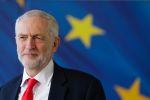
Remember when people would say things like, ‘Jeremy Corbyn might talk a lot of nonsense but at least he has principles’? We now know what rot that was. Corbyn is, in my view, the most unprincipled politician in the UK right now, and by some margin. Exhibit A: this man who was a devoted Eurosceptic his entire life has now effectively been employed by the establishment to keep us tied to the EU. This man who raged against the Brussels machine for years is now tasked with softening Brexit to such a degree that Britain will remain tied to the Brussels machine. For a taste of power, for a taste of influence, Corbyn has sold out everything he once believed in. It is a depressing and depraved spectacle.

Philip Hammond has ignited Tory tensions over Brexit

From our UK edition

The magnitude of the gulf between the cabinet and perhaps a majority of Tory MPs over how to deliver Brexit was on display like an oozing wound on my show last night. The Chancellor was his normal phlegmatic, unsugaring self when revealing the government is reconciled to a long Brexit delay till at least the end of the year - and that the best the prime minister can hope for from the emergency EU council on Wednesday is that the EU’s 27 leaders would allow her a break clause, so that if a Brexit deal is fully approved on all sides earlier, the UK could leave the EU at that earlier juncture. But even so, he conceded there is now no escape from preparing to participate in European parliamentary elections, at considerable financial and emotional cost to the UK.

The losing game

From our UK edition

Iraq, the financial crisis, the expenses scandal — all of these undermined trust in politicians. They created an impression of a governing class that was devious, inept and venal. But the damage they did to public faith in politics is nothing compared with the damage that will be done by a failure to deliver Brexit. Brexit is the result not just of a referendum but of two general elections. The Tories would not have won a majority in 2015 without their pledge to hold a referendum on Britain’s EU membership. In 2017, Labour wouldn’t have been able to deny the Tories a majority if they had not been committed to respecting the result of that referendum. Yet Brexit is now in danger of being cancelled altogether.

We’re in danger of missing out on the next industrial revolution

From our UK edition

Business investment in the UK declined in all four quarters of 2018 to complete a year-on-year dive of 2.4 per cent, according to the ONS. These are the worst capital spending figures since the 2008 crisis, and you’ll guess where the Bank of England places the blame: weaker global growth hasn’t helped but the ‘UK-specific factor’ is ‘a growing portion of [companies] putting new capital investment on hold until there is greater clarity around Brexit’. Amid reports that factories are focused on stockpiling components ‘at the fastest rate on record’, no one expects investment for the first half of 2019 to look stronger.

Pitching at the centre will do the Tories no good

From our UK edition

Gosh, it’s depressing watching the natural party of government committing slow-motion suicide. It’s depressing even if you’re not, as I am, an instinctive and more or less lifelong Conservative. What it means is that Britain is on the verge of losing its most effective, tried-and-tested prophylactic against the misery of socialism. Sure, there are lots of other parties competing to perform this function: Ukip; the Brexit party; the SDP; For Britain. But will any of them be able to do enough to avert the dread possibility of a regime led by Jeremy Corbyn? Let me first explain why I know that the Conservatives are doomed.

Splitting headache | 4 April 2019

From our UK edition

Back when the UK was assumed to be leaving the European Union on 29 March, the Aurora Orchestra was invited to Brussels to participate in Klarafestival: specifically, an evening of words and music ‘celebrating cultural links between Europe and the UK’. And because arts organisations in general (and orchestras in particular) change direction with the agility of a supertanker in pack ice, it went ahead regardless. The cellist Nicolas Altstaedt played John Tavener’s The Protecting Veil with exquisite purity of tone. Ian Bostridge sang Britten’s Les illuminations: brisk, earthy, vividly theatrical. The Aurora Orchestra’s strings, playing standing up, flashed and bristled back at him. Musicians like to talk about the power of their art to unite and heal.

Bonne chance, Ireland

From our UK edition

Seventy years ago this month, a prime minister led a divided nation towards the exit from what was then one of the world’s most important organisations. On that occasion, Ireland was the country wanting to leave and there was no backstop to hold things up. Despite the pleas of the other member states, the Irish walked out of the Commonwealth. I was reminded of that moment this week as the budding bromance between the Irish Prime Minister Leo Varadkar and France’s President Emmanuel Macron unfolded. Relations have never been better, Mr Varadkar cooed to nods from M. Macron. As well he might. For Varadkar has just returned his nation to the Commonwealth fold — by signing up to the French Commonwealth.

If Thomas Friedman bristles at Brexit, you know everything will be OK

If you want to know why American foreign policy has repeatedly failed to achieve its goals since the end of the Cold War, consider the wisdom of Thomas L. Friedman. His column at the New York Times is a weathervane of expense-account groupthink as it charges in the wrong direction.When American jobs were outsourced in the Nineties, Friedman cheered for globalization. When the George W. Bush administration pushed for invading Iraq, Friedman promoted the mad and dangerous idea that post-Saddam Iraq would become a liberal democracy. And you just knew that Obama’s Middle East policies were going to be a disaster when the Times boasted that the bumbling ringmaster had ‘sounded out’ Friedman as his chief clown.

thomas friedman

Brexit minister quits over May’s soft Brexit plan

From our UK edition

Theresa May's decision to seek votes across the House and start Brexit talks with Jeremy Corbyn in a bid to pass her deal has sent ripples through the Conservative party today. Junior minister Nigel Adams this morning resigned over his discomfort with the new plan and now Brexit minister Chris Heaton-Harris has followed suit. In his resignation letter, Heaton-Harris says he has worked hard to put no-deal preparations in place for the event that the UK leaves without a deal. He goes on to say that given that it is now clear the Prime Minister has no intention to leave without a deal, his job is irrelevant: https://twitter.com/chhcalling/status/1113456229232381953 The decision by Heaton-Harris to leave government is a blow to No. 10.

Theresa May and Jeremy Corbyn both want to frustrate Brexit

From our UK edition

There is a logic in Theresa May’s late move to Labour. It is the same logic by which both parties, at the last general election, put forward very similar policies about Brexit. They need to stay together (while feigning disagreement for party reasons) to frustrate what people voted for. Just as they both said in 2017 that they wanted to leave the customs union, now both are working to stay in it. It is the same logic by which Mr Speaker Bercow has arranged for Sir Oliver Letwin to become prime minister on roughly alternate days. None of the main players really wants Brexit, but none can really say so.

Theresa May’s Brexit compromise won’t work

From our UK edition

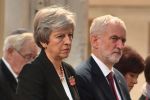
So, finally, we have a spirit of compromise. Jeremy Corbyn and Theresa May are going to sit down together and hammer out a deal on which both their respective parties can agree. Well, maybe not. There has been plenty of analysis over the past few hours predicting how it could all unwind – with further ministerial resignations and so on. But there is something more fundamentally wrong with what Theresa May has proposed. While searching for compromise might be a reasonable way to proceed on most political issues it simply doesn’t work in the case of Brexit.

What MPs decide about Brexit is becoming irrelevant

From our UK edition

Maybe we will go for a Norway-Double Plus. Or A Canada-Minus. Or Common Market 2.0, or a WTO-Light, an EEA-Doubled, or an Enhanced EFTA or even a Singapore Sling or a White Russian. Okay, scratch those last two. I seem to have mixed up a list of options for leaving the European Union with a cocktail menu. But that pair aside – and who knows, maybe late on a Thursday night MPs will vote them through instead – they are all ways that we might eventually leave. Amid all the arguments over our departure, however, one point is easily overlooked. For the economy, after we sailed through the original deadline for getting out, it doesn’t make a lot of difference anymore. Leaving the EU was always going to do some damage to business, even if the impact was exaggerated.

Theresa May admits she will have to soften Brexit

From our UK edition

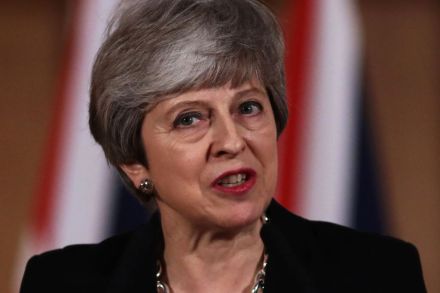
Theresa May’s statement in Downing Street was very different in tone to what she said a fortnight ago. She praised the best efforts of MPs and tried to strike a more conciliatory pose. May said she would request another Article 50 extension but she wanted it to be short so the UK would not have to participate in the European Elections. She invited Jeremy Corbyn in for talks, with the aim of either agreeing a common position on the future relationship or agreeing on a series of propositions to put to MPs with the government being bound by the result. In adopting this approach, May is essentially admitting that she can’t get the votes from her own governing bloc to pass her deal and so will have to soften Brexit. This will cause unhappiness in her own party.

Full text: Theresa May calls on Jeremy Corbyn to break Brexit deadlock

From our UK edition

I have just come from chairing seven hours of Cabinet meetings focused on finding a route out of the current impasse – one that will deliver the Brexit the British people voted for, and allow us to move on and begin bringing our divided country back together.  I know there are some who are so fed up with delay and endless arguments that they would like to leave with No Deal next week. I have always been clear that we could make a success of No Deal in the long-term. But leaving with a deal is the best solution. So we will need a further extension of Article 50 – one that is as short as possible and which ends when we pass a deal. And we need to be clear what such an extension is for – to ensure we leave in a timely and orderly way.

Three reasons why Theresa May’s Brexit decision is so crucial

From our UK edition

Today’s cabinet meeting could be the most important of Theresa May’s term in office – and possibly of the last 50 odd years. Because the time to prevaricate on Brexit is almost exhausted – with an emergency EU summit having been convened for Wednesday next week to decide if the UK will leave without a negotiated settlement or whether Brexit day will be delayed again, but this time by many months. The PM and her ministers have to choose, and probably now, if Parliament is to have any say on it and if EU leaders are to be briefed adequately ahead of the council.

Britain must follow Germany’s example to help end Yemen’s civil war

From our UK edition

There is no civil war in the world today whose effects are so detrimental to civilians as the conflict engulfing Yemen. The war, pitting a Houthi rebellion in control of the Yemeni capital against the nominal Yemeni government in the south, just crossed its four-year anniversary last week. The United Nations is trying its best to end the fighting, with little to show for it other than a ceasefire in the Yemeni port city of Hodeida which may or (more likely) may not get peace talks off the ground. Unlike the United Kingdom, which has exported £5.7 billion of arms to the Saudi-led military coalition bombing Yemen to smithereens, Germany has largely been a passive spectator to the conflict.

Why Common Market 2.0 is the Brexit we need

From our UK edition

In recent weeks, there has been a lot of inaccurate media coverage of Common Market 2.0, which proposes that the UK should remain a member of the European Economic Area (EEA) after Brexit. The fundamental purpose of the EEA Agreement is to extend the benefits of the single market to countries that are outside the European Union but members of the European Free Trade Association (Efta). EEA membership for non-EU states involves accepting the rules of the single market – including the four freedoms – but excludes other EU policies that many in the UK dislike, such as economic and monetary union, political union, the common agricultural policy, the common fisheries policy, and other common policies.