Brexit

Where it all went wrong

From our UK edition

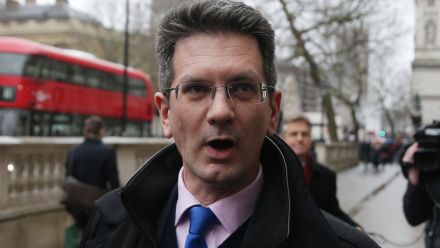
Management books often repeat the dictum: ‘If there’s one thing worse than making mistakes, it’s not learning from them.’ So let’s apply that smug little idea to Brexit. Before I start, a couple of housekeeping points. I voted Remain, but believe we must leave the EU and honour the referendum result. Second, as a former Brexit minister, writing this is a form of therapy for me. Failure no. 1 — from which many other failures flow — was a lack of honesty. Brexit is the biggest challenge we’ve faced since 1939. It’s complex, existential and will take years. It demands a sense of national endeavour, of ‘let us go forward together’.

Theresa May’s departure won’t help the Brexiteers’ cause

From our UK edition

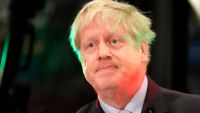
Faced with the prospect of a softer Brexit, or no Brexit at all, Jacob Rees-Mogg is considering holding his nose and voting for Theresa May's deal. Boris Johnson also appears to be considering doing the same. This shift among Tory backbenchers towards signing up to the deal seems to be contingent on May setting a date for her departure. The idea here is that with May gone, a new Prime Minister will make a big difference once the Withdrawal Agreement has passed the House of Commons. May's successor, the thinking goes, will take a much tougher stance in the next round of negotiations with the EU. In doing so, they will be able to steer Britain on course towards a ‘real Brexit’. But take it from me: this idea is an illusion.

Why John Bercow seems to delight in irritating Tory MPs

From our UK edition

Once again, the Commons has concluded its day with rather chaotic scenes involving Tory MPs having a scrap with John Bercow. The Speaker managed to refrain from insulting anyone's abilities as a whip, but he nevertheless irritated those who want a third meaningful vote by insisting throughout a series of points of order that he was not contradicting himself when he said he would not allow Theresa May to bring her deal back to the Commons while also allowing for another day of indicative votes. Some Conservative Brexiteers were angry that any more indicative votes are due to take place when the Commons has offered no one view tonight. But many more were annoyed about the implications for the Prime Minister's deal, quoting Erskine May and the Speaker's own words back at him.

105 MPs vote against changing Brexit date in bad omen for May

From our UK edition

If Theresa May wants an indication of how well things are going for a third meaningful vote, she could do worse than to look at the result of a vote on a statutory instrument in the Commons tonight. MPs have just approved the official piece of legislation that acknowledges Britain is no longer leaving the European Union on 29 March - but with a substantial rebellion. There were 105 MPs who voted against this change of date, with impassioned speeches from Tory Brexiteers in the Commons arguing against the move, even though it had already been approved in international law. Their line was that Britain should just leave now, and that the Remain majority in Parliament has shaped Brexit in a way the Leave campaign could never have envisaged.

The DUP delivers a big blow to Theresa May’s Brexit deal hopes

From our UK edition

The DUP have just delivered a big blow to Number 10’s strategy for winning meaningful vote 3. They have announced that they won’t vote for it because the changes they wanted to the backstop have not been delivered. Without the DUP, it is very hard – if not impossible – to see how Theresa May can win any meaningful vote. So, where do the government go from here? Well, I suspect there’ll be a mad dash in the next 24 hours to see what further reassurances can be provided to the DUP on the Union. I wonder if there might be legislation to ensure the Northern Ireland First Minister’s role on the joint committee, for instance. But there is a fundamental difference between the DUP and the Tory Brexit rebels.

Boris backs May’s deal – who is next?

From our UK edition

Theresa May’s pledge to go before the second stage of the Brexit negotiation if her deal passes, is already reaping some rewards. Boris Johnson has told a meeting of the ERG that he is now backing the deal. His argument is that what is going on in Parliament means there is a real chance of losing Brexit and that a change of personnel will lead to a change of policy in stage two. This addresses his concern that Theresa May would interpret the withdrawal agreement passing as a license to go and negotiate a Chequers-style agreement. Boris Johnson isn’t the only big beast shifting tonight. Iain Duncan Smith, who played a crucial role in persuading May to make this offer, has also said he will now back it. Charlie Elphicke, the secretary of the ERG, has also swung in.

Theresa May: I’ll quit when Brexit is delivered

From our UK edition

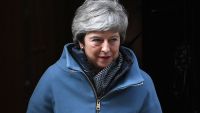
Theresa May has said she will step down once Brexit has happened. Speaking to Tory MPs, the Prime Minister said she would not remain in post for the next phase of negotiations with the European Union. May told a meeting of the 1922 committee this evening: 'I am prepared to leave this job earlier than I intended in order to secure a smooth and orderly Brexit'. But the PM stopped short of naming a date for her departure. May had previously said that she would not lead the party into the next general election. The latest announcement on her future is an attempt to win over rebel Tory MPs into backing her Brexit deal. Here is what May told MPs: “This has been a testing time for our country and our party. We’re nearly there.

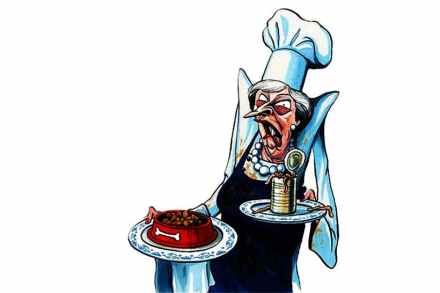
Have we seen the last of the Maybot?

From our UK edition

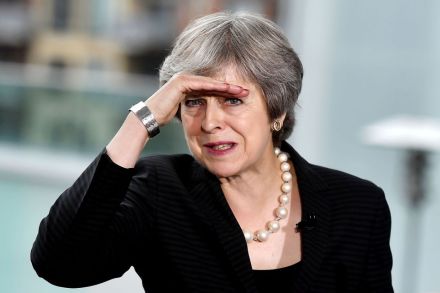
An astonishing PMQs. Theresa May no longer looks like a sheeted ghost. She’s quit the sick-bay and acquired a veneer of normality. Chipper, brisk, in command. Cheerful even. Jeremy Corbyn gave a lacklustre performance typified by the artless syntax of his opening phrase: ‘Her chaotic and incompetent government has driven our country into chaos.’ He probed her on the indicative votes but she shrugged him aside. Using a favourite ploy she poured scorn on his forensic skills. ‘He shouldn’t just read out the question he thought of earlier,’ she hectored. ‘Listen to the answer.’ She picked at Labour’s confused positions on the Customs Union and the second referendum.

If May promises to go, will it be enough to win over Tory rebels?

From our UK edition

Theresa May goes to see the 1922 Committee of Tory MPs at 5pm this evening. Speculation is rife that she will use the meeting to announce a timetable for her departure, though there’s no official line from Number 10 on this. I understand that Tory switchers are being told that Theresa May will go if the withdrawal agreement bill gets Royal assent, which would have to be by May 22nd. This would, obviously, require meaningful vote 3 to pass – though, as Katy says, John Bercow is not keen on the vote happening at all. If May does set out a timetable, then I suspect a good number of Tory Brexit rebels will move into the government column. Even without it, there are already some coming over.

A second referendum is a big risk but it’s the only solution

From our UK edition

You would need a heart of stone not to laugh at the predicament in which Jacob Rees-Mogg and his fellow travellers in the European Research Group now find themselves. Happily I am not so encumbered. Having spent months decrying the withdrawal agreement negotiated with the European Union the Moggists now find themselves forced to think about backing it for fear nanny may otherwise bring something worse to the table.  Well, other than anyone capable of observing the facts of Brexit life, who could have predicted this? Who could have recognised that, from the perspective of the Brexiteers themselves, half a loaf is better than no bread at all?

The shame of Jacob Rees-Mogg | 27 March 2019

From our UK edition

Until this morning Jacob Rees-Mogg had had a remarkable Brexit. From being an obscure backbencher he had risen, without any formal position, to being just about the most powerful figure in the Conservative party after the Prime Minister. He controlled a party within a party, influencing the votes of seventy or so MPs. He became the most lucid of all MPs on Brexit, speaking with a logic and clarity which disarmed his opponents. He introduced a term to the debate – vassalage – which identified perfectly the weakness of Theresa May’s deal, and emphasised how the EU had successfully driven the Prime Minister into a corner. But this morning, all that has gone.

This is MPs’ chance to reinvigorate democracy. Will they take it?

From our UK edition

MPs are rather bewildered today. It's not just that some of them are trying to understand the intricacies of the Labour Party whipping operation, with frontbenchers saying one thing in broadcast interviews, and the whips saying quite another in private conversations. It's also that parliamentarians are having to decide what it is they actually want from Brexit. This is a significant shift for all of them, whether they were elected two decades ago or in the most recent general election: MPs' job is to decide whether or not to let legislation written by the government of the day pass unamended. Now, rather than simply rejecting a bill, or making changes to its detail rather than the overarching principle, they are having to choose from a long list of options.

The ERG are Remain’s useful idiots

From our UK edition

Watching SW1 these days reminds me of that scene in Citizen Kane when Boss Jim Gettys confronts Orson Welles (Kane): Gettys: ‘You’re making a bigger fool of yourself than I thought you would Mr Kane…With anybody else I’d say what’s going to happen to you would be a lesson to you, only you’re gonna need more than one lesson — and you’re gonna get more than one lesson.’ Kane: ‘… I’m gonna send you to Sing Sing Gettys, Siiinngg Siiiiinnnnngggggg…’ These guys didn’t learn from the 2004 referendum (on a North East regional assembly) before 2016.

A snap election simply cannot happen – and yet it might | 26 March 2019

From our UK edition

Here are the reasons why there must be and cannot be a general election. First, the drivers of a general election: 1) Tomorrow, MPs will start the process of identifying, via so-called indicative votes, a route through the Brexit mess that a majority of them can back. 2) This process is likely to continue next Monday, when a range of Brexit or no-Brexit options should be whittled down to one. 3) There will then be a vote, maybe the following day, compelling the prime minister to negotiate with Brussels whatever MPs have decided. It is too early to say what option MPs will coalesce around. And maybe they are too fractious and divided to coalesce around any practical solution.

Ministers left no clearer about May’s intentions at crunch Cabinet

From our UK edition

After today’s Cabinet, ministers are no clearer about what Theresa May’s intentions are. ‘Reading tea leaves would be easier’, remarks one Secretary of State. This problem is demonstrated by the different messages those present took from the meeting. One Cabinet source said that May’s closing words about governing in the national interest ‘felt a bit like a farewell speech’. While another minister says that May ‘gave no impression of being off’. Part of the problem was that because May had to dash off for a phone call with Arlene Foster, the leader of the DUP, the meeting hadn’t drawn to its natural conclusion when it was brought to an end.

Are we heading for a softer Brexit?

From our UK edition

With Oliver Letwin’s amendment passing, MPs will seize control of the order paper on Wednesday afternoon to hold indicative votes. These votes will come before any third vote on May’s deal. The not-so-secret hope of many in government is that they might help the withdrawal agreement get over the line. Theory one is that they’ll show that the majority in the Commons is for a softer Brexit, and so push some reluctant ERGers into the government column. Some ministers also hope that the DUP will not be keen to go for an early election at this moment; and will be more inclined to compromise if they think that the government will go back to the country rather than accept a customs union.

Tory uproar as Bercow insults backbencher Greg Hands

From our UK edition

The Commons has just erupted into a bizarre row over an insult thrown across the Chamber. Normally, in these situations, the Speaker ends up scolding the MP who deployed the insult, but in this case it was John Bercow himself who provoked the uproar in the first place. Demanding that Tory MP Greg Hands come to order, the Speaker told the Chamber that Hands hadn't been a very good whip when he had held the role, which immediately led to angry roars from the Tory benches, followed by repeated shouts of 'withdraw!' Initially, Bercow stuck to his guns as Conservatives complained in points of order that he had only recently asked them to consider their language when addressing one another, and that he had praised Oliver Letwin during the debate which had preceded this argument.

Full list: the 30 Tory MPs who backed Letwin’s Brexit amendment

From our UK edition

MPs have decisively backed Oliver Letwin's amendment, handing them control of the parliamentary timetable on Wednesday in order to hold a series of indicative votes on Brexit. The cross-party amendment was voted through by 329 votes to 302. Three Tory ministers – Steve Brine, Richard Harrington and Alistair Burt – resigned in order to back the amendment. A total of thirty Tory MPs rebelled against the Government on tonight's motion. The decision by MPs to back Letwin's plan is a further major blow to the authority of the Prime Minister. Earlier, Brexit secretary Steve Barclay said the amendment is 'unprecedented in its nature'. But Theresa May has insisted that the Government will not be bound by any indicative votes on Brexit that do take place on Wednesday.