Brexit

Brexit talks go down to the wire

From our UK edition

After the past few years, it is hard to take Brexit deadlines seriously; they have a tendency to always slide to the right. But Sunday night/Monday morning really is the final deadline, as I say in the Times this morning. There are two reasons for this. First, the Internal Market Bill and the Finance Bill are in the Commons on Monday and Tuesday respectively. Both of these bills override parts of the withdrawal agreement, and in particular the Northern Ireland protocol. The EU would fiercely object, complaining the UK was breaking its obligations under international law and pointing to how the government had itself admitted it was a 'specific and limited' breach. It would argue it couldn’t negotiate with a partner that behaved like this.

How Poland is reinventing Euroscepticism after Brexit

From our UK edition

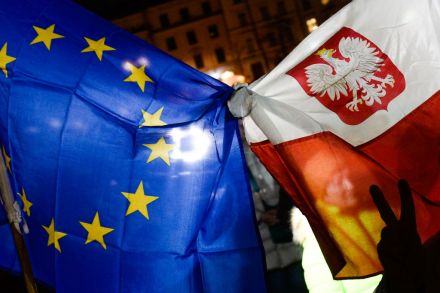
With Britain leaving the EU, Brussels is adopting a new assertiveness – but Poland and Hungary are fighting back. The two countries are plotting a strategy of vetoing the EU's latest budget because of a mechanism attached to it allowing the bloc to withhold money if a country falls short of its standards. Poland and Hungary fear that this measure could leave them vulnerable if Brussels doesn't like their domestic legislation. But this drama is about more than just money – it also shows the direction Euroscepticism is heading in after Brexit. Without Britain's influence, Euroscepticism is now beginning to take on a new form – more cultural, and less economic.

Will we end up with a Paphlagonian Brexit deal?

From our UK edition

Freed from the bonds of the European Union, Britain is now in a position to sign whatever trade deal it chooses with the EU — or none at all. But such are the entrenched positions among many Remainers and Leavers, it is guaranteed that whatever deal is struck will be greeted with outrage on one side or another. One wonders if the Paphlagonians felt the same about a treaty they signed with Rome in 3 BC. Paphlagonia was a territory located on the central southern coast of the Black Sea. At the time, it had recently been annexed to Rome, but it presumably saw advantage in signing an oath of unconditional loyalty to the emperor Augustus as a god: an oath designed in the expectation of his god-like protection of their community for ever. The terms of the oath are exceptional.

The texture of our country is changing before our eyes

From our UK edition

On Saturday night we sat around the kitchen table, my family and I, and had a takeaway from the Turkish restaurant on our high street. We opened box after box: chunky tzatziki; calamari in crisp batter; salty ovals of sucuk; flatbread studded with black and yellow sesame seeds; hot homemade falafels, crunchy outside and yielding within, smeared with cool hummus. And, which I’d been missing since lockdown began, lamb ribs: skin salty and crisp from the grill, the meat underneath sweet and chewy, tarring their bed of rice. God it was bliss. But it made me feel melancholy, too. Meze & Shish only opened in the past couple of years — a well-appointed, tableclothy sort of local restaurant, well priced and serving first-rate grub.

Did Brexit lead to the UK’s vaccine success?

From our UK edition

Today the United Kingdom became the first country in the West to clinically authorise a vaccine protecting against Covid-19, after the medicines regulator, the MHRA, said the Pfizer/BioNTech vaccine was safe to use. The announcement puts Britain ahead of Europe when it comes to rolling out the vaccine, as the EU’s own regulator, the European Medicines Agency (EMA), has not yet approved the vaccine. While Britain will begin administering Pfizer’s vaccine next week, countries like Belgium have announced that they will start their vaccination campaigns in January, subject to EMA approval. When it comes to vaccines, a few weeks of delay can make a big difference, given the economic and health costs of the pandemic.

Labour’s abstentions show Keir Starmer at his worst

From our UK edition

A vote will be held in the House of Commons today, which will decide the freedoms Britons will have from this week, possibly until spring. Yet the official opposition is planning to abstain. There have also been rumours that if Boris Johnson does somehow get a Brexit deal with the EU this week, Labour will abstain on that vote as well. Two of the biggest Commons votes of our era – one built around the greatest health crisis of our times and what that means for individual freedoms in this country, the other about our future trade relationship with our immediate neighbours – and Labour appear to have decided not to decide on either. This demonstrates the worst of Keir Starmer’s leadership. Starmer has done a lot for Labour since taking charge.

Is no deal better than a bad deal? We’re about to find out

From our UK edition

Has a Brexit deal already been done? You'd be forgiven for thinking so if, like me, you listened to talk radio over the weekend. Much of the discussion on Brexit now focuses on whether or not Labour will vote for or against, or even abstain on the 'deal'. What deal? In reality there is, of course, yet to be a trade agreement between the UK and the European Union and it actually looks fairly unlikely at this stage. The clock is ticking, but still the assumption remains that either side will fold before the year is out. I'm not convinced. At the end of last week, an offer was made by the European Union on fishing. EU countries would accept a cut of 15 per cent to 18 per cent in their share of the catch in British waters.

Is a no-deal Brexit underpriced?

From our UK edition

As the Brexit talks enter what is expected to be the last full week of substantive negotiations, opposition leaders are blasting the government for the lack of progress while No. 10 has issued a warning that no deal is 'arguably underpriced'. So, is this more fighting talk for the purpose of the negotiations or is no deal now a likely prospect? Given that Boris Johnson agreed a deal at the last minute in the first stage of Brexit talks on the withdrawal agreement, the working assumption among many Tory MPs for some time has been that the same will occur this time around.

Sunday shows round-up: Brexit talks ‘in last week or so’, says Raab

From our UK edition

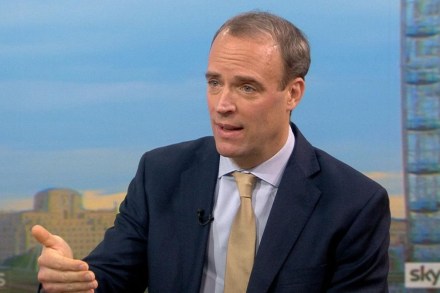
Dominic Raab - 'We want to come out' and 'stay out' of lockdown This week, the government will put its tiered system of coronavirus restrictions to a vote in the Commons. A sizeable rebellion is anticipated from the government's own MPs, who have raised concerns about the effect on the economy, as well as personal liberty and mental health. The Foreign Secretary Dominic Raab sought to ease some of their fears: https://twitter.com/RidgeOnSunday/status/1332967040903208962?ref_src=twsrc%5Etfw DR: We want to come out of national lockdown and stay out of it. There is hope... We are starting with a more restrictive approach than previously... but that allows us to ease up when we are confident that the virus is going down... There [will also be] a review every two weeks.

Nicola Sturgeon’s pandemic politics

From our UK edition

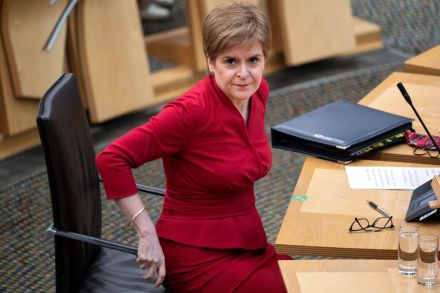
Nicola Sturgeon had some choice words to say about Brexit last month. Speaking at one of Scotland’s daily coronavirus briefings, the First Minister said she was ‘deeply frustrated and depressed’ about the prospect of no deal in the new year, and suggested that to talk about Brexit in the middle of a pandemic was not only dangerous, but deeply irresponsible. The country doesn’t need ‘another big thing to be dealing with’ when the focus should be on coronavirus, the First Minister lamented. So you can imagine Mr Steerpike’s surprise when Sturgeon appeared to embark on her own political pet project yesterday.

Carole Cadwalladr should now return her Orwell Prize

From our UK edition

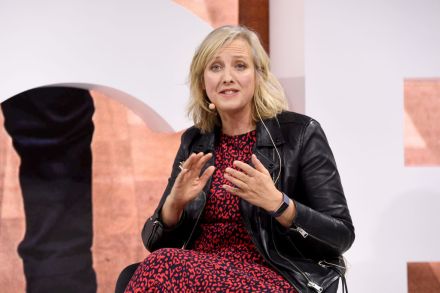
A small but significant event has just occurred. This morning the legal case between Arron Banks and the journalist Carole Cadwalladr was due to start. The case came about because of Cadwalladr’s claim that Arron Banks – who was a founder of the Leave.EU campaign (the non-official Leave campaign) – was offered money by the Russians. Cadwalladr has been going around for years making these and other unfounded accusations in every forum and on every platform she can manage. It is not as though her campaign has been obscure. The Observer newspaper has supported her, and as her entirely unsubstantiated claims grew, she was shamefully awarded the Orwell Prize for journalism.

Left behind: how Labour betrayed its base

From our UK edition

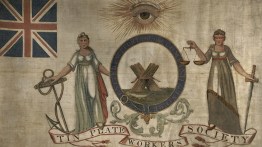
I love the labour movement. I love its history, its traditions, its brass bands and banners. I love its rousing songs, anthems and festivals. I love its slogans and rallying cries, inspired, as they are, by an abiding faith in the collective spirit and the seductive vision of the New Jerusalem. For all that tribalism is given a bad name these days — sometimes with good reason — I feel tribal about my attachment to the labour movement. And I offer no apology for that. As it was for millions of others who grew up in working-class communities, tribalism in the cause of labour was for me less a matter of choice and more one of imperative.

Letters: Solidarity is the best thing for Scotland

From our UK edition

SNP sophistry Sir: Andrew Wilson (‘Scot free’, 21 November) poses the question: ‘What if the case for independence was a highly sophisticated position?’ If only. For the SNP position is one of sophistry rather than sophistication. Wilson states that Scottish voters want Scotland to return to Europe. He also states that an independent Scotland would retain sterling, but does not mention the two policies are incompatible. It would be impossible for an independent Scotland to join the EU using sterling.

China has a friend in Jesus

From our UK edition

Last week, I wrote about ‘Frost & Lewis’ (David and Oliver), leaders of our country’s team at the Brexit negotiations, guarantors of our Brexit intentions. It is they who have throughout maintained the essential position — that we are becoming an independent state and therefore will not trade sovereignty for market access. It is them, therefore, whom the EU wishes to neutralise. Hopes have risen in Brussels after the Downing Street ‘Carrie coup’ against Dominic Cummings. Frost & Lewis now lack a close friend at the court of King Boris except, possibly, the King himself. So it may be a good thing that Covid isolation forced them to return to London at the end of last week. They are negotiating from their base, close to their leader.

Why Boris should go for no deal

From our UK edition

Boris Johnson has negotiated his way into a corner. With the naïve view that the EU would eventually buckle and accede to the UK’s desires, we are now just over five weeks away from the end of the transition period. The choices in front of Boris are to either cave in to the EU’s demands in order to sign a weak, thin, bad deal – or walk away without a deal. I think he should do the latter. Of course, there are obvious advantages for the Prime Minister in signing a deal (even a bad one) with the EU at this stage. It would cause slightly less disruption than no deal. And it would leave the two negotiating sides with some goodwill left. A deal would also put Labour in a tight spot.

Are our churches safe from Justin Welby?

From our UK edition

‘Frost & Lewis’. It sounds like a programme amalgamating two of the most famous TV detectives. The former diplomat, Lord (David) Frost, is our chief Brexit negotiator and Oliver Lewis, an expert on the Irish aspects, is his right-hand man. Until recently, they were simply considered the two best men for the job. Since the departure of Dominic Cummings, they have acquired a political role too. Close colleagues of Cummings who did not walk out with him, they stayed to Get Brexit Done, so they act as reassurance to anxious Brexiteers that the government will not throw in the sponge. Their staying also implies a threat. Dom has said he doesn’t want anyone else to leave No. 10 — yet. Tristram Hunt, director of the V&A, is a former Labour MP.

Scotland can’t afford to remain part of the Union

From our UK edition

Tony Blair’s biggest achievement was delivering a referendum that unified Scotland behind devolution and gave all parties a stake in its success. Boris Johnson is wrong to say it was ‘a disaster’, but in being wrong is helping precipitate the logical next step: independence. The opinion polls that show a growing majority for Scottish independence will mystify those who believe the lazy, metropolitan idea that independence is an emotional fantasy — all Braveheart, Bannockburn and bagpipes. How, they ask, could a band of Caledonian romantics ever convince the canny Scots to opt for such a thing? But what if the case for independence was a highly sophisticated position advocated by one of the most popular political leaders in the world?

The march of the fascist mushrooms

From our UK edition

It has been too long coming. While conscientious and decent liberals have tried to explain why, to their horror, millions of people in Europe and the USA have embraced populist causes in recent years, none has really got near the nub of the issue, dug down to the very core. For example, I have long been of the opinion that the Brexit vote, along with the 2016 election of Donald Trump and the continued popularity of right-wing governments in Poland and Hungary, are almost entirely the consequences of the malign influence of fungi. I have attempted to advance this argument in political debates but am never taken seriously. Now at last I have some support.

History shows why voters often back ‘no deal’

From our UK edition

As the UK approaches the end of the Brexit transition period, ministers have made it clear that businesses and Britain must ready themselves for ‘no deal’. But will Britain be ready? Almost every day, there are new concerns from the road haulage industry, not just about Kent and access permits for lorry drivers, but about the system’s operability and the viability of any back-up plans. The government does have an ‘oven ready’ response to the no deal naysayers – which Michael Gove used with evident relish against Theresa May in October – and can say that: ‘No deal is better than a bad deal’. Ultimately, however, the judgement about no deal will be made, as in the referendum itself, by the electorate.

Sunday shows round-up: Brexit deal could fall down over fishing

From our UK edition

Simon Coveney - Internal Market Bill could mean no trade deal Ireland's Foreign Minister Simon Coveney returned to Sophy Ridge's show this week to make clear his objections to the government's Internal Market Bill. The bill, which famously threatened to break the EU Withdrawal Agreement in 'a specific and limited way', has recently been watered down by the House of Lords. However, it is expected that the government will reinsert the offending clauses, which would keep Northern Ireland's market aligned with Britain in the event of no trade deal. Coveney warned that this move could derail the prospective trade deal altogether: https://twitter.com/RidgeOnSunday/status/1327899546903588864?