Brexit

Has Downing Street calculated the real cost of quarantine?

From our UK edition

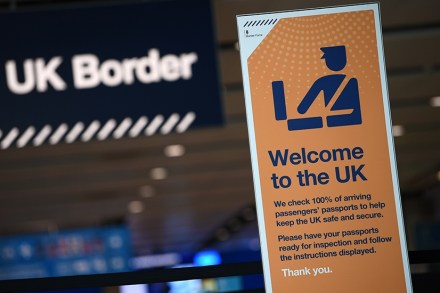
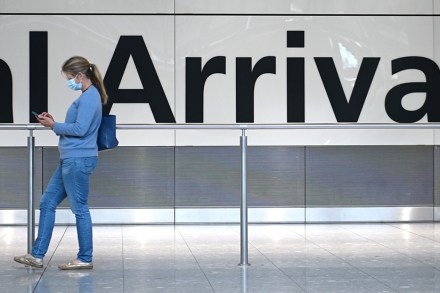
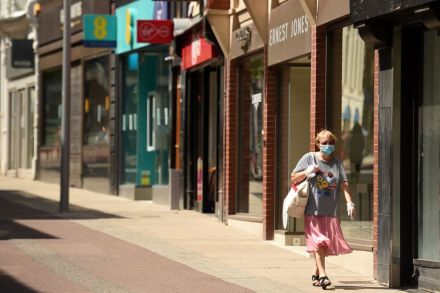
Doing the math, as the Americans say, became this column’s theme after I abandoned another planned trip to France. Seven days in the Dordogne (where last week’s Covid infection rate was just 2.9 cases per 100,000) would have cost me 14 days lockup on return, so I spent the weekend doing arithmetic instead. As I tried to calculate the real cost of what I have called ‘kneejerk quarantine rules driven by focus-group fear’, my notebook began to resemble a rogue Ofqual algorithm — but here’s the simplified version. Let’s start with the 600,000 Britons reportedly caught by the quarantine returning from Spain last month and the 150,000-plus in France who missed last Saturday’s 4 a.m. deadline.

Keir Starmer’s potential Brexit playbook

From our UK edition

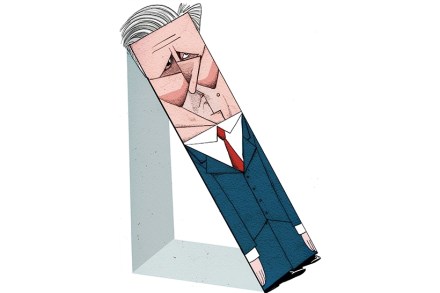
Throughout the last four years, you could be forgiven for thinking that everyone in Britain has been extremely passionate about Brexit one way or another. The truth is, most people are sick to death of the whole debate. This was the reason ‘Get Brexit Done’ was such an effective slogan; most voters wanted the topic laid to rest. It is this general apathy that I believe is informing Keir Starmer’s approach to Brexit as Labour leader, combined with the knowledge that while most people are sick of Brexit, we are about to enter a whole new phase of it that can’t be ignored. Passionate Remainers complain that Starmer hasn’t been anti-Brexit enough since he became leader – where was the plea to extend the transition period?

Portrait of the week: Local lockdowns, busy beaches and an explosion in Beirut

From our UK edition

Home Some 2.7 million people in Greater Manchester and parts of Lancashire and West Yorkshire, where many Muslims live, were put under tighter restrictions on the eve of Eid al-Adha. Wedding receptions, gambling in casinos and eyebrow-threading continued to be banned when the government decided to ‘squeeze the brake pedal’ to control coronavirus, in the words of Boris Johnson, the Prime Minister. Aberdeen was put back into lockdown. People would have to wear masks in church from 8 August. The sudden actions came after new cases rose from a probable 2,800 to 4,200 a day, according to a survey by the Office for National Statistics, based on 116,026 swab tests collected over six weeks, which found 59 people with Covid-19.

Keir Starmer is right to stay quiet on Brexit

From our UK edition

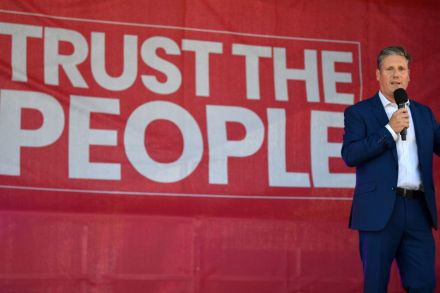
Ever since Keir Starmer became Labour leader, there have been calls for him to publicly embrace Brexit to win back seats in the ‘Red Wall’. Starmer has stayed quiet on Europe since his victory, to the consternation of many Remainers who wanted him to push the importance of extending the transition period, before that opportunity passed. This silence has been wise on Starmer’s part – and he should continue to stay silent on the European question for the time being. The calls for Starmer to announce that he’s converted to Brexit misunderstand several things, including: the nature of the electoral coalition Starmer needs to build, why Red Wall seats fell in December, and how Brexit plays out from here.

New fault lines are appearing in the EU

From our UK edition

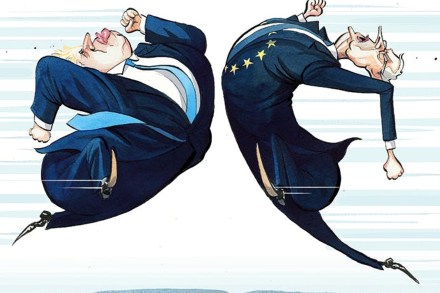
Anyone who imagined that the departure of Britain would make for more harmonious EU summits in future will have been disabused of this belief by the four days of meetings to establish an EU coronavirus recovery fund, which came within an hour of being the longest on record. Agreement was reached on a €750 billion package — just over half of which will be made up of grants and the rest loans — but not before the French President, Emmanuel Macron, had reportedly thumped the table and accused a group of countries of putting the entire European project at risk through their refusal to sign for an even higher sum. Even now, the deal might still run into trouble: the European parliament is already voicing objections.

Coronavirus has exposed the EU’s greatest flaw

From our UK edition

Politics begins and ends with sovereignty: the duty and right to make the legitimate final decision. We have seen this clearly during the pandemic. In every country, people have come to depend on their governments, whose authority rests on acknowledged sovereignty. This is as true, or even truer, in democracies: while monarchs and aristocrats could dispute sovereignty – and, where it suited them, divide up the cake amongst themselves – in a democracy there can only be one ultimate sovereign: the people. No sovereignty, no democracy. For years we have been told the illusion, if not a fraud, that sovereignty can be ‘pooled’. Who takes the final decision when sovereignty is ‘pooled’? If we cannot answer that question, then it shows the fallacy.

This ‘revolution’ isn’t what it looks like

From our UK edition

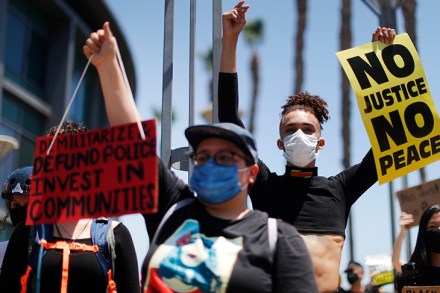
America is not in the middle of a revolution — it is a reactionary putsch. About four years ago, the sort of people who had acquired position and influence as a result of globalisation were turfed out of power for the first time in decades. They watched in horror as voters across the world chose Brexit, Donald Trump and other populist and conservative-nationalist options. This deposition explains the storm of unrest battering American cities from coast to coast and making waves in Europe as well. The storm’s ferocity — the looting, the mobs, the mass lawlessness, the zealous iconoclasm, the deranged slogans like #DefundPolice — terrifies ordinary Americans.

Nigel Farage: Trump is taking us back to more traditional alliances

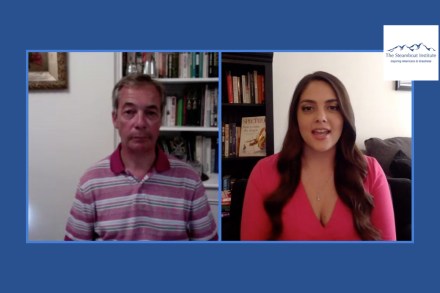
Our Washington editor Amber Athey interviewed Nigel Farage, founder of the UK Brexit party, for a Steamboat Institute livestream. We've published the transcript below.Amber Athey: Welcome everyone to the Steamboat Institute's live broadcast. I'm Amber Athey, the Washington editor for Spectator USA. And I am joined by Nigel Farage, the leader of the UK Brexit party, who will also be a keynote speaker at the Steamboat Institute's annual Freedom Conference this year from August 28 to 29. Nigel, thank you so much for joining us again.Nigel Farage: Thank you. No problem at all.AA: So I want to go ahead and get started by giving you a chance to respond to a little bit of a controversy. People are very upset with you for attending Trump's rally in Tulsa, Oklahoma.

farage

Is a Brexit deal within reach?

From our UK edition

Trade talks between the UK and the EU are in a better place than they have been at any point since they started back in March. Now, in one way this is not impressive — the diplomatic equivalent of being the tallest mountain in Holland. For the first three months of these negotiation both sides were bullish, restating their maximalist positions, and coronavirus forced the negotiations online, making diplomacy and quiet compromise trickier. But now an intensive series of talks have been agreed, some of which will be face to face. Both sides appear to be in earnest about trying to break the deadlock. The British side is, privately, far more optimistic than it has been at any previous point in the negotiation.

‘Global Britain’ should learn from New Zealand’s mistakes

From our UK edition

One of the greatest prizes from Brexit is the opportunity to make the Global Britain aspiration a reality. Included is a leadership role at the World Trade Organisation (WTO) where the UK, the fifth biggest economy in the world, could help drive much-needed progress to facilitate global trade. Leadership, however, requires respect to back it up. In trade terms, that means walking the talk of trade liberalisation at home. Once free of the EU, the UK knows that its thriving farming sector will therefore require access to global markets. But the trade agreements to deliver that access must be consistent with WTO rules. Recent talk of the UK adopting a tiered tariff system, based on perceptions of animal welfare and health standards, would be a direct breach of those rules.

An 11-year-old’s birthday party was hijacked by Brexit

From our UK edition

Saturday night we ate outside next to the floodlit rock face. Four adult guests came puffing up the path and one child, George, celebrating his 11th birthday. A string of low-wattage coloured bulbs hung above our heads. Chicken curry. Dahl. Pink wine. Yellow champagne. Little brass oil lamps on the table. John Mayall & the Bluesbreakers — trite lyrics, sublime guitar — for the birthday playlist. A cream-filled birthday cake in the fridge awaited the right moment. Dominic Cummings was all the rage that day and every one of our adult guests was an ardent Remainer.

Inside the final act of the Brexit drama

From our UK edition

The fourth round of official Brexit negotiations resumed on Tuesday, screen-to-screen. They will determine whether the stalemate can be broken and a trade deal sealed by the end of the transition date of 31 December. By mid-June, a high-level 'stock-take' between Boris Johnson and Commission President Ursula von der Leyen will assess whether sufficient progress has been made to continue negotiations.  Such is not the case thus far, according to recent public utterances from Michel Barnier and David Frost, who has claimed 'very little progress'. Just like in Endgame, Samuel Beckett’s tragicomedy, a sense of hopelessness pervades the final scene of the drama. In the play – as with Brexit – the characters await deliverance while nothing, in fact, happens.

The lethal combination of Brexit and Covid

From our UK edition

The combination of Covid-19 and Brexit is a double whammy. The first was a haymaker that hit Britain from nowhere. The follow up will come when Britain, quite deliberately and with malice aforethought, winds up its fist and punches itself in the face. The economic impact of the virus will be accentuated by the UK leaving the EU without a deal or with a meagre free-trade agreement, warns a grim report, sponsored by the Best for Britain think tank. Business leaders do not generally get much sympathy. Watch any thriller made in the last two decades and as soon as the corporate executive appears on screen you can guess with a fair degree of certainty that the hero will unmask him as the villain in the final reel. They deserve our sympathy now.

The German courts have just made Brexit talks easier

From our UK edition

The old division of leaver and remainer will not serve the best interests of the country as we go forward. That truth might be emotionally hard to accept, but it will remain true. We need now to adapt to the real challenges the future holds. One of the most pressing is our future relationship with the EU – and that is being negotiated again on Monday. I have written on how we should support the EU given the recent judgment of the German Constitutional Court on the question of the European Central Bank bond scheme. The case is complicated and while I enjoy a good legal fight over complex financial products, I appreciate many do not. But, as is often the case in law, the reason it is important has nothing to do with its subject matter.

What happened to Brexit meaning the end of Nissan’s Sunderland plant?

From our UK edition

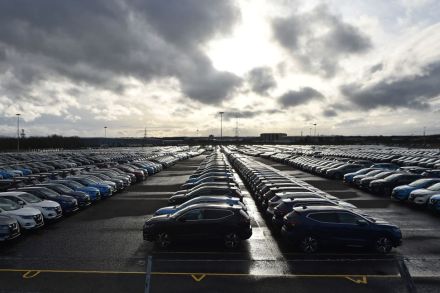
It would have to close down its factories. Thousands of job would be lost. Suppliers would be abandoned, and the local economy would be shattered for a generation. It was sometimes a little hard to work out why a few hardcore Remainers cared quite so much about Nissan. Its range of mid-market, family SUVs were not the kind of cars they would usually be seen dead in. But somehow the company became emblematic of the whole bitter debate about how the British economy would suffer if we left the European Union. If we weren’t in the Single Market, we were told again and again, the business was doomed. So today’s news from the company is, to put it mildly, slightly surprising.

Britain’s strange aversion to seafood

From our UK edition

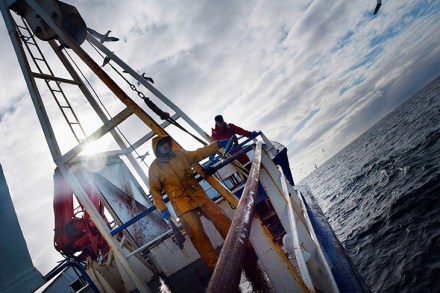
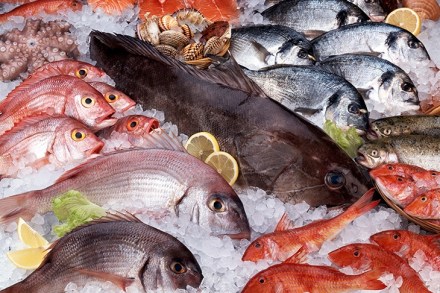
Last week’s Brexit negotiations, conducted by video conference, failed to come to an agreement on fisheries. Michel Barnier, the EU negotiator (and former French fisheries minister), insisted that continued European access to British territorial waters was a prerequisite of any deal, and David Frost, his British counterpart, replied that this was ‘incompatible with our status as an independent coastal state’. If there is going to be no deal as a result of fishing, as seems increasingly probable, we are going to have a lot more fish to eat, but we’re also going to have to eat a lot more fish. For an island surrounded by fish, Britain has never really been keen on seafood.

The chasm between the UK and EU’s Brexit positions

From our UK edition

David Frost briefed the Cabinet yesterday on the state of the Brexit negotiations and he has now issued a very downbeat statement. Boris Johnson’s chief Brexit negotiator says that the third round of negotiations ‘made very little progress’. The problem is that (as always in these talks) the UK and the EU have very different interpretations of what is reasonable. The UK thinks that because it ‘just’ wants a free trade agreement it shouldn’t be expected to follow EU rules in a host of areas and should be offered a deal similar to what Canada, South Korea or Japan have. The UK has even accepted that this deal might see some tariffs imposed.

The radical history of The Spectator

From our UK edition

A newspaper – it would be more than 100 years before it became a magazine – calling itself a spectator of events, while consistently standing up for individual freedom, was bound to fall out with its readership from time to time. In the early years, under the editorship of its Scottish founder, Robert Rintoul, The Spectator’s support for the Tolpuddle Martyrs, for the Chartists and for the abolition of slavery in the colonies did not cause too many raised eyebrows. Thanks to Rintoul’s enlightened imperialism, a fund was established to settle labourers and young married couples in Australia and New Zealand.

Brexit, if used properly, can speed Britain’s post-Corona recovery

From our UK edition

Will the recovery be shaped like a V or a U, some other letter or perhaps the Nike swoosh? This is a much-discussed question among economists right now — but it is not the most important question. We’re familiar with the idea of an up-and-down financial crisis where things return to their starting point: we had roller-coasters in the mid-1980s. Even after the global financial crash of 2008-09, financiers still kept their place as masters of the universe. Global supply chains were repaired and the old power structures remained in position. This time might be very different. Old fixes are being applied to a new crisis. Central banks, for example, have less scope to cut interest rates than they did ten years ago.

The UK will not request an extension to the Brexit transition period

From our UK edition

David Frost, the Prime Minister’s chief Brexit negotiator, has held discussions with the First Secretary of State Dominic Raab and other senior ministers in the last few days. As I say in tomorrow’s Spectator, the conclusion of these discussions has been that the UK will not request an extension to the transition period. Interestingly, I understand that no one in these discussions backed asking for an extension. The thinking is that a delay would not solve the fundamental policy problems and that a deal is either possible or not. Another factor, I understand, is that the government worries about the cost of any extension.