Brexit

Brexiteers, you were warned about Ireland

From our UK edition

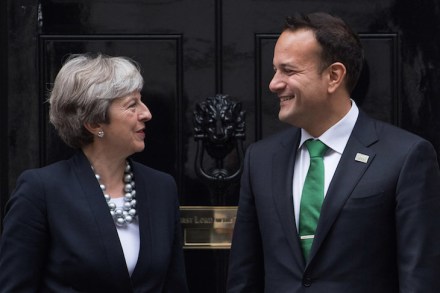
If you wished to get to an easy Brexit, well, this isn’t the starting point you’d choose. Once again, the Irish question complicates life for Theresa May’s government. Today’s EU proposals suggesting that, in the absence of a satisfactory deal of the kind proposed back in December, Northern Ireland should, essentially, remain within the EU customs union are both evidently unacceptable to the UK government and a reminder that this is still a negotiated process. What is put on the table today is not necessarily what will be on the table when it is over.  It is difficult to see how any UK government could agree to a 'solution' which, in many essentials, shifts the UK’s external frontier to somewhere in the middle of the Irish Sea.

What are Jeremy Corbyn and Michel Barnier up to?

From our UK edition

The Commons Select Committee on Culture, Media and Sport recently investigated claims of Russian interference in the UK electoral process. The committee might soon be forced to go one further and investigate EU interference in our political system.  How remarkable that today’s ‘legally-binding’ document from Michel Barnier, which tries to keep Northern Ireland in a customs union with the EU comes just 48 hours after Jeremy Corbyn made a speech changing Labour’s policy in order to commit the UK as a whole to remain within the customs union. I am not party to any conversations Jeremy Corbyn might have had with Michel Barnier or his team, but the Labour leader couldn’t have done better to create the impression of collusion between the two.

Are the Brexit talks bordering on collapse?

From our UK edition

The question of the Irish border has almost collapsed the Brexit talks once, remember Mrs May’s first abortive December trip to Brussels, and it is threatening to do so again. A leaked copy of the EU’s proposed legal text of the phase one agreement that was finally reached in December says that if other options cannot be made to work Northern Ireland would be considered part of the customs territory of the EU. Given the UK’s plan is to leave the customs union, this would—in effect—create an internal economic border within the UK. It is doubtful whether this would be acceptable to any UK government, but it is particularly unacceptable to a British Prime Minister who relies on the support of the Democratic Unionist Party. So, what happens now?

Michael Gove takes a swipe at Barnier

From our UK edition

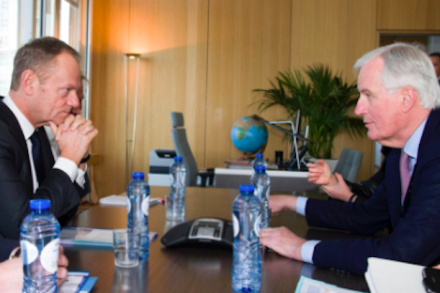
Here we go. Although Theresa May and her government are meant to be on a Brussels charm offensive ahead of next month's crunch EU council meeting, Michael Gove couldn't resist a dig at the other side today. The Defra minister – who has recast himself as an eco-warrior in recent months – took issue with a meeting between Donald Tusk and Michel Barnier on Brexit. The problem? The pair used plastic bottles – a strict no-no in May's green Cabinet. https://twitter.com/michaelgove/status/968453874758582272 It seems the reasons to diverge grow every day...

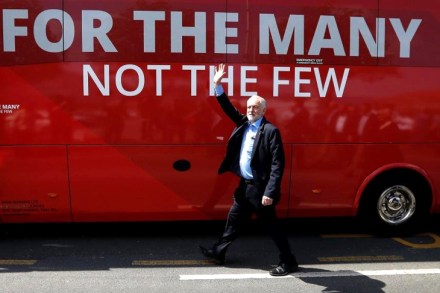
Labour is no longer ‘for the many’

From our UK edition

Jeremy Corbyn’s speech today in which he confirmed that a Labour government would keep Britain in a Customs Union with the EU was about so much more than trade. It was about the future of the Labour party itself. It sent a clear message about what, and more importantly who, Labour is for these days. It confirmed that Labour has finally made its choice between which of its two, quite conflictual support bases it will represent in public life: the better-off ones, the middle-class ones, the Southern ones. This is what Labour’s cosying up to the idea of a Customs Union — which is a betrayal of Brexit, whatever Labourites say to the contrary — really tells us.

Tory Remainers dial down the rhetoric

From our UK edition

Can Jeremy Corbyn's big Brexit speech be classed as a success? It really depends on who you think it was aimed at. Unsurprisingly the softening of Labour's Brexit stance has been welcomed by the party's Remain-backing membership. On top of that, the Labour leader managed to please big business – for a change. Corbyn's announcement that Labour would back the UK staying in 'a' customs union with the EU post-Brexit has been praised by the Institute of Directiors while the CBI say the policy would 'put jobs and living standards first'. However, sceptics argue that the target audience for the speech was actually the Conservative party.

Full text: Jeremy Corbyn’s Brexit speech | 26 February 2018

From our UK edition

It’s great to be speaking here in Coventry, which has long been at the core of Britain’s industrial heartland and is now set to be our next city of culture. Next month, the government will embark on the second and most crucial phase of negotiations to leave the European Union to set the terms of Britain’s relationship with the EU for the long-term. We are now 20 months on from the referendum that voted to leave and a year on from the triggering of Article 50. But the country is still in the dark about what this divided Conservative government actually wants out of Brexit. They can’t agree amongst themselves about what their priorities are or what future they want for Britain after Brexit. They’ve got no shortage of soundbites and slogans of course.

Barry Gardiner’s words come back to haunt him

From our UK edition

Oh dear. Today Jeremy Corbyn is expected to back 'a' customs union when Britain leaves the EU. To begin Labour's Brexit blitz, Barry Gardiner was sent onto the airwaves to wax lyrical about Labour's new pitch. https://twitter.com/BBCr4today/status/968045054370697217?ref_src=twsrc%5Etfw The problem is that of all of Labour's shadow cabinet – other than Jeremy Corbyn and John McDonnell – it's Gardiner who has been the most critical of the customs union.

How many Conservative MPs would risk Prime Minister Corbyn over Brexit?

From our UK edition

Although Theresa May's Cabinet has finally managed to reach a loose agreement on what they would like to achieve from the upcoming negotiations, the Prime Minister's troubles look set to continue for the foreseeable. With Jeremy Corbyn expected to confirm that his party backs the UK staying in 'a' customs union post-Brexit, there's growing concern in Whitehall that May's government could collapse this year. The most imminent threat comes from the Remain side of her party. The Sunday Times reports that Julian Smith, the chief whip, told May there is a 'very real threat' that Labour could unite with 15 to 20 Tory rebels to defeat the government on their decision to rule out membership of a customs union.

Jeremy Corbyn’s criticism of the customs union

From our UK edition

The Labour shadow cabinet have been out in full force on the airwaves this morning dropping heavy hints that Jeremy Corbyn will use a speech tomorrow to announce that his party backs the UK remaining in 'a' customs union  post-Brexit – which would mean the UK would be unable to strike its own free trade deals. Speaking on the Andrew Marr show, the shadow Brexit secretary said Labour's front bench was 'unanimous' in its backing for striking a new deal with the EU after Brexit that would see the UK leave the customs union but then negotiate a treaty that will 'do the work of the customs union'. Only Corbyn hasn't always been so keen on 'the work of the customs union'.

Does Seumas Milne hold Brexit’s fate in his hands?

From our UK edition

Could Britain remain in the Customs Union after Brexit? That is the question of the moment, the issue that currently troubles a lot of people in politics and government. It raises another question: who will decide whether we do indeed remain in the Customs Union? Here’s an interesting answer being given, in whispers, around Westminster and Whitehall: Seumas Milne. The theory goes like this: the Tories are split on the CU, so Labour’s position on it will be decisive. If Jeremy Corbyn brings Labour in behind the pro-CU Tories (and the SNP) then there is a comfortable majority for staying in, no matter what either Theresa May, or the DUP might have to say about it. Hence there is a huge interest in Labour’s position, in Brussels and Whitehall and elsewhere.

High life | 22 February 2018

From our UK edition

Gstaad It was nostalgia time at Prince Victor Emmanuel’s birthday party here, with many old friends reminiscing about our youthful shenanigans in times gone by. Victor, the pretender to the Italian throne, and I go back a long way — more than 60 years. In a very roundabout manner, so do our families. His namesake and grandfather King Victor Emmanuel III facilitated Benito Mussolini’s rise to power, although he was the one who dismissed him in July 1943 and declared Italy no longer a combatant. My mother’s youngest brother wrote a fan letter to Il Duce, aged 12. Benito invited the boy to visit Italy as his guest, and sure enough my uncle went and stayed with him in Villa Torlonia for a fortnight.

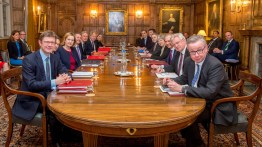
Brexit inner Cabinet agree a common position, and it favours divergence

From our UK edition

‘Divergence has won the day’, a source told me after the inner Cabinet’s Brexit away day at Chequers. I am informed that Theresa May’s view expressed at the meeting is closer to the Boris Johnson position than the Philip Hammond one. However, I am also told that there were ‘no winners’; unsurprisingly, no one is getting everything that they wanted. In the words of one insider, ‘everyone gave some ground’. But I understand there is now a position that May can present to the Cabinet next week. This is based around the UK’s opening position being that it wants mutual recognition on goods standards. However, the UK will declare that it intends to maintain standards, and that there’ll be no race to deregulate.

What the papers say: A Brexit transition deadline is essential

From our UK edition

Theresa May and her Cabinet are meeting at Chequers today to try and finally thrash out an agreement on what kind of Brexit the Tories want. Six hundred days have now passed since the referendum vote, and ministerial discussions on Brexit have so far failed to deliver any ‘white smoke’ moments, says the Daily Telegraph. The problem for the Government until now, says the paper, is that the clear aims Theresa May set out in her Lancaster House speech were ‘bisected’ by a general election which undermined her statement of intent. We were promised a ‘tough negotiation’; but in the wake of the Tories’ lost majority, Brexit talks have, instead, ‘turned into something resembling a capitulation’.

Will Remainers ever learn to forgive?

When I mentioned on social media recently that I’d lost friends because of Brexit, I was quite surprised by the vehemence of the response. Lots of fellow Leavers had stories to tell about friends who now cut them dead or former clients who would no longer work with them. Many said they prefer to keep secret how they voted in the referendum for fear of the repercussions. This intolerance is especially bad if you’re a student. One undergraduate described to me how his politics professor had opened a lecture with a slide reading ‘Brexit is shit’ — apparently ‘to the cheers and adulation of the entire lecture theatre’.

The European Research Group’s Brexit letter, in full

From our UK edition

Dear Prime Minister, We are writing to thank you for your reassuring comments about Britain's approach to the upcoming trade negotiations with the EU27, and to underline our support for both your Brexit leadership, and for the vision of your speech at Lancaster House a year ago. We share your view that free trade lowers prices, creates jobs and economic growth, and that leaving the European Union will create opportunities for freer trade with many more countries around the world. We also agree with you that we can only grasp those opportunities if we can negotiate trade deals with as many other countries as possible, which we will be legally barred from doing if we remain inside the EU Customs Union and Single Market.

David Davis’s latest Brexit red line could cause trouble

From our UK edition

I am confused by what David Davis’s new principles to ensure fair competition between Brexit Britain and the EU are supposed to achieve – especially the part on consumer protection. The Dexeu secretary said: 'The UK will continue to be a leading advocate of open investment flows after we leave the EU. But it cannot be that an EU company could merge with a UK company and significantly reduce consumer choice'. Does this mean that he and the Government now regret the sale of our airports, trains, airlines, telecom companies, energy suppliers and so on to huge businesses from Spain, Germany, France and the rest of the EU?

Jamie Oliver should have stuck to recipes – he’s just no good at restaurants

From our UK edition

I am not surprised that Jamie Oliver is closing twelve of his twenty-seven branches of Jamie’s Italian, and his flagship restaurant on Piccadilly, Barbecoa, which I reviewed last year, and damned, because the food was bad and the atmosphere non existent. (Well, it was almost empty; you cannot create joy in a void). I knew Oliver was in trouble before that when I ate – reluctantly, but not everyone is a food critic – at Jamie’s Italian in Victoria in late 2016. It was, like Barbecoa, queasily large, the food was bad, and, again, it was almost empty. The punters may have been buying Oliver’s cookery books but they weren’t dining at his restaurants. Or if they did, they only went once, and there is no lower praise.

What the papers say: Theresa May has her priorities wrong

From our UK edition

Theresa May’s launch of a review into university funding shows she has her priorities all wrong, says the Sun. It is true that the funding system for higher education ‘is broken’. 'But it is nowhere near a priority for Britain, Theresa May or the Tories,’ according to the paper. Yes, ‘some fees should be slashed’. And yes, ‘many courses are pointless’. But the Prime Minister is merely ‘tinkering’ in a bid to match Corbyn’s ‘economically insane’ promise of free tuition. She should stop doing so now, says the Sun, which calls her promised shake-up ‘a distraction from what really matters to millennials’: the ‘dire shortage’ of homes.

Sorry, Brendan O’Neill, but we won’t be no-platformed on Brexit

From our UK edition

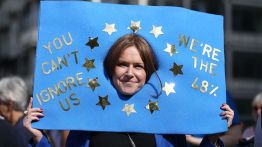
If you read Brendan O’Neill’s Coffee House article on Our Future, Our Choice! OFOC! – the campaign group of which I am co-president – you are left with the impression that we are a bunch of young fascists seeking a teenocracy. Brendan seems to believe that Britain’s youth see themselves as Nietzsche’s young warriors, and want to push out the ‘old men’. The ‘cult of youth’ wants to round up the walking-stick brigade, the village church congregations, the ageing Brexiteer army and send them where they belong: ‘peaceful’ correction camps. This is ludicrous. I wholeheartedly believe in ‘one person, one vote’. It goes without saying that we at OFOC! do not want to ‘dehumanise the old’.