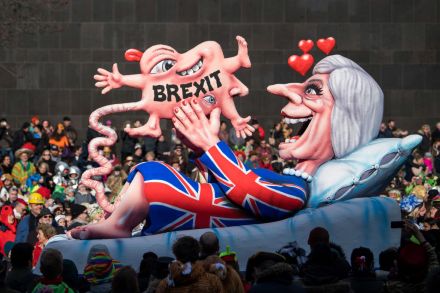
Brexit

In praise of the ‘brainy’ Brexit Brits

From our UK edition

Democratic debate functions best when it is accepted that there are people of good will and good arguments on both sides. In the Brexit debate, this sense has too often been missing. There’s plenty of blame for this to go round. To put it crudely, too many on the Leave side have been too quick to question the motives of those arguing the Remain case. While too many of those who backed the status quo have refused to accept that there are any credible arguments for leaving the EU.   So the launch by two Cambridge academics, Robert Tombs and Graham Gudgin, of Briefings for Brexit is a welcome development.

Sunday shows round-up: Guy Verhofstadt – A trade deal will not be agreed before Brexit

From our UK edition

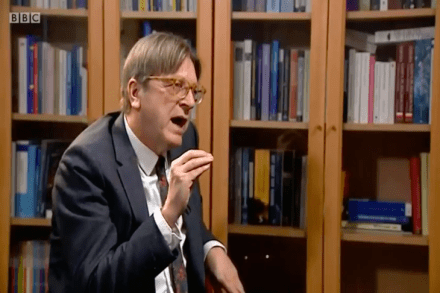
Guy Verhofstadt, the European Parliament's chief representative in the Brexit negotiations, sat down with Andrew Marr to discuss at length the UK's future relationship with the EU. Verhofstadt told Marr that a trade deal between the United Kingdom and the European Union will not be finalised before the 29th of March 2019. Instead, Verhofstadt hinted that this would take place during the two year transition arrangement, putting him at odds with the UK government's policy that everything would be agreed 'at the same time': https://www.youtube.com/watch?v=w0nfsRgxfD8 AM: Is it at all possible that by the time we formally leave in March next year, there will be a free trade agreement?

There’s a Brexit deal to be done on security

From our UK edition

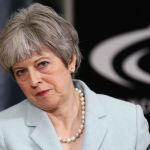
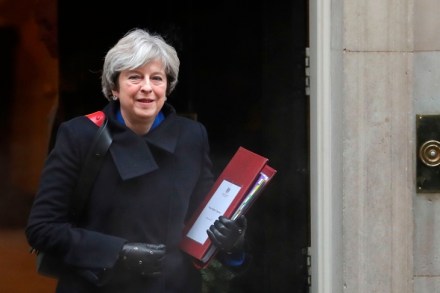
Theresa May was pushing at an open door in her Munich speech when she warned against ‘rigid institutional restrictions’ harming security cooperation after Brexit, I say in The Sun today. Member states are reluctant to follow the Commission’s tough line on this as they know how valuable the UK’s contribution in this field is. I understand that when the Commission told the 27 that the UK would have to be treated like other third countries on security after Brexit, several member states pushed back. They argued that it must be possible to find sensible compromises. Security is where it is most clearly in the interests of EU member states to find an accommodation with the UK in these negotiations.

Brexit Britain could do with some cricket diplomacy

From our UK edition

Peter Oborne, The Spectator’s associate editor, is something of a legend in Pakistan — as least among the defence establishment types we met there. That’s because every year he takes a cricket team on a tour of the country. Last September, in Miranshah, they played a ‘Peace Cup’ match against an XI consisting of current or retired Pakistani internationals in front of a crowd of about 15,000. The Pakistan army turned the occasion into a PR stunt, since Pakistanis love cricket and the military elite wants young people to take up sport rather than global jihad. I don’t want to detract from Peter’s efforts. Surely, though, our government should do one better and send the England cricket team over?

Letters | 15 February 2018

From our UK edition

Suffragette setbacks Sir: Jane Ridley (‘Women on the warpath’, Books, 10 February) claims that Millicent Fawcett and her suffragists had ‘got nowhere’ by the time the militant suffragettes came on the scene in 1903. In fact Fawcett’s law-abiding movement, with a membership of some 50,000 (far more than the quarrelling Pankhursts ever managed), had won round the majority of MPs by 1897. Between that date and final victory 20 years later, there were always more MPs in favour of women’s suffrage than against it, though the gap shrank during the years of the suffragette campaign. Its violence has to be high on the list of factors that delayed victory.

What the papers say: Boris has been rumbled

From our UK edition

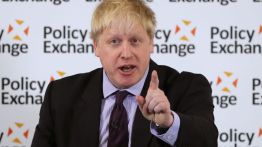
Boris Johnson painted Brexit as a source of ‘hope not fear’ in his speech yesterday. The Foreign Secretary said that Britain’s departure from the EU was not a ‘great V-sign from the cliffs of Dover’. ‘That’s how you do it!,’ says the Sun in its editorial in which it urges other members of the Cabinet to follow Boris’s lead. His barnstorming speech ‘laid out the exciting case for a truly global Britain’ and was the same ‘vision’ which persuaded 17.4million Brits to back Brexit in the first place. ‘Too often’ other Ministers ‘treat our exit like a problem to be managed rather than an opportunity to be seized’.

Europeans are Britain’s new minority

From our UK edition

If you ran the marketing department of a progressive organisation, which wanted to advertise its inclusiveness, how would you do it? My guess is that you would run down the checklist of identity politics and first make sure your advertising had a perfect gender balance. Showing men and women equally would not be enough, however. There would need to be racial balance: black and brown faces among the white. You would want to tick confessional boxes and feature a Muslim and a Sikh. Perhaps you would want to show a transgender man or woman, just to be on the safe side. At the end of it all, you would sit back and think, ‘there I have covered every base, no one can object now’. The advert is aired and you are a hit by a complaint you never expected.

Could the SFO put an end to Barclays as we know it?

From our UK edition

The Serious Fraud Office has upped the stakes in the case of the controversial $3 billion Qatari financing that saved Barclays from a taxpayer bailout in 2008, by extending the charge of ‘unlawful financial assistance’ to the operating company, Barclays Bank plc, as well as the parent, Barclays plc. Four senior former Barclays employees, including the then chief executive John Varley, are already due to stand trial early next year on the same and other fraud-related charges. The significance of the SFO’s move is that Barclays Bank plc stands in danger of losing its licences to run banking businesses, including branch networks, in the UK and elsewhere if convicted of a serious criminal offence.

A tale of two Brexits

From our UK edition

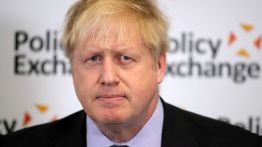
At one point during Boris Johnson’s speech today he asked the audience: ‘We all want to make Britain less insular, don’t we?’ Silence. Media-training experts use an initialism to try to get journalists and other talking-heads to come across well on television – BLT. Does the audience believe you? Do they like you? Do they trust you? The Foreign Secretary has never had a problem with the middle one, perhaps the most important of the three, but during the EU referendum there was certainly an issue with belief, since some of the more nationalistic rhetoric of the campaign clearly sat ill at ease with this ‘esoteric product of millennia of Eurasian toff miscegenation’, as Rod Liddle once described him.

Boris’s Brexit vision is an answer to a non-existent problem

From our UK edition

The thing to understand about Brexit and Remain voters is that Brexit is only part of the problem. Many Remainers cast their votes with only moderate enthusiasm. They were not motivated, most of them, by any great enthusiasm for the European project. But they took what they considered to be a prudent, pragmatic, view of the national interest. They wanted a moderate, quiet life; and the status quo, however irritating it might sometimes be, was at least a known quantity and therefore preferable to the great unknown that must be unleashed by Brexit. Remain was a proper, old-fashioned, Tory choice.  And therefore, of course, rather unfashionable.

‘Old Boris’ is back

From our UK edition

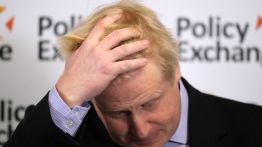
Boris Johnson has been down in the mouth in recent months. The ‘old Boris’ appeared to have been worn down by the cares of the office. Also, for a politician who loves to be loved, it has been difficult adjusting to his more divisive post-referendum status. But today was far more of the old Boris. He returned to his 2016 case for Brexit in a speech that was full of his trademark optimism and humour, including a slightly off-colour joke about dogging. Today had been billed as Boris reaching out to the 48 per cent—and there was a bit of that. But the real audience for this speech were the fellow members of the Brexit inner Cabinet.

Full text: Boris Johnson’s Brexit speech

From our UK edition

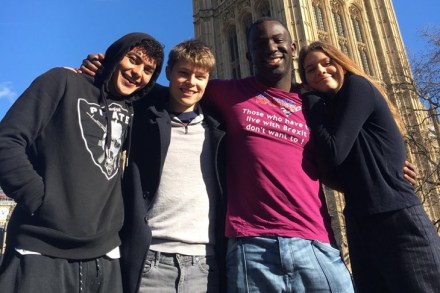
The other day a woman pitched up in my surgery in a state of indignation. The ostensible cause was broadband trouble but it was soon clear – as so often in a constituency surgery – that the real problem was something else. No one was trying to understand her feelings about Brexit. No one was trying to bring her along. She felt so downcast, she said, that she was thinking of leaving the country – to Canada. It wasn’t so much that she wanted to be in the EU; she just didn’t want to be in a Britain that was not in the EU. And I recognised that feeling of grief, and alienation, because in the last 18 months I have heard the same sentiments so often – from friends, from family, from people hailing me abusively in the street – as is their right.

Can long-term forecasters answer these questions?

From our UK edition

I find it difficult to believe some in the media are taking these latest economic forecasts for 15 years outside the EU seriously. They have all the hallmarks of the approach that the Treasury used to get the short-term forecast for the aftermath of a Brexit vote so hopelessly wrong. The first thing to stress is the forecasts which state the UK as a whole will lose 2 percent of GDP if we stay in the single market, 5 percent if we leave with a trade deal, and 8 percent if we leave without a trade deal are not saying we will be between 2 to 8 percent worse off in 15 years time. This is an estimate of slower growth, not an absolute decline. If we carry on growing on average at 2 percent per annum over the 15 years, we will be 34.

Andrea Leadsom receives anti-Brexit death threat

From our UK edition

Boris Johnson will have his work cut out on Wednesday when he attempts to give a speech uniting Remainers and Brexiteers. Last week, Brexiteers started received death threats from the mysterious 'real 48 per cent'. Zac Goldsmith was the first to go public when an 80-year-old constituent received one in the mail. Now Andrea Leadsom is the latest to receive the poison pen letter: https://twitter.

Europeans are Britain’s new minority | 12 February 2018

From our UK edition

If you ran the marketing department of a progressive organisation, which wanted to advertise its inclusiveness, how would you do it? My guess is that you would run down the checklist of identity politics and first make sure your advertising had a perfect gender balance. Showing men and women equally would not be enough, however. There would need to be racial balance: black and brown faces among the white. You would want to tick confessional boxes and feature a Muslim and a Sikh. Perhaps you would want to show a transgender man or woman, just to be on the safe side. At the end of it all, you would sit back and think, ‘there I have covered every base, no one can object now’. The advert is aired and you are a hit by a complaint you never expected.

Where the Brexit inner Cabinet is heading

From our UK edition

There have been two meetings of the Brexit inner Cabinet this week. But as I say in The Sun this week, the government is still making its way towards a detailed, negotiating position. Indeed, in one of the meetings this week, Theresa May emphasised that the ministers didn’t need to come to a decision that day. That may have led to a more constructive conversation. But as Jeremy Heywood delicately pointed out, taking these decisions won’t get easier with time. With the crunch EU council meeting next month, the UK doesn’t have much more time either. The longer the UK waits, the harder it will be to build diplomatic support for its preferred solutions. The Brexit inner Cabinet remains divided on the best way ahead.

Barometer | 8 February 2018

From our UK edition

How to sell snake oil Ex-cabinet secretary Lord O’Donnell accused Brexiteers of ‘selling snake oil’. How do you sell snake oil? Some eBay listings: — Original snake oil. £11.99 for 125ml. ‘Natural hair treatment. No chemicals. Feeds the hair and protects from precipitation. Free from alcohol. Country or region of manufacture: Saudi Arabia.’ — Snake oil strengthening hair mask with mamushi snake oil. £25.22 for 500g. ‘The effective remedy of supplementary hair care. The mask is perfect for dry and damaged hair.’ Some listed ingredients: aqua, cetearyl alcohol, paraffinum liquidum, cetrimonium chloride, mamushi oil, parfum’ (no actual snake oil).

Is Carney’s growth forecast anything to get excited about?

From our UK edition

It is really worth bothering with Mark Carney’s upgrading of the Bank of England’s growth forecast for 2018 from 1.5 per cent to 1.7 per cent? Carney, you might just remember, warned before the EU referendum that the UK would most likely suffer a technical recession if Britain voted to leave. Even in August of that year, six weeks after the vote, when it was already clear that the economy was not diving into the abyss, he was predicting a sharp slowdown. Growth in 2017, he suggested, would come out at 0.8 per cent. In the event it was 1.8 per cent. We have seen enough forecasts over the past couple of years to realise that Michael Gove was absolutely right when he said during the Leave campaign that the country has had enough of economic experts who try to foretell the future.

Brexit belongs to the Tories

From our UK edition

The Tory party is the party of Brexit, whether it likes it or not. The referendum was called by a Tory prime minister, Tory politicians led Vote Leave and it is a Tory government that is taking Britain out of the European Union. Theresa May might equivocate when asked if she’d vote Leave in another referendum, but to the average voter, Brexit is a Tory policy. Mrs May’s reluctance to say she’d back Brexit in another vote is revealing of a broader Conservative desire to avoid being too closely associated with the project. A classic example is Philip Hammond’s view that the £350 million a week supposedly promised to the National Health Service is Boris Johnson’s problem, not his.